
If you have ever wondered how to clean tea kettle crust and rust, this is the small chore that quietly fixes chalky buildup, off-tasting water, and a sluggish boil — and it takes about ten minutes of mostly hands-off soaking.
You lift the lid to fill the kettle and there it is: a chalky white crust creeping up the inside, maybe a rusty spot near the spout, and water that tastes faintly of nothing good. That crust is limescale, the mineral residue left behind when hard water boils away. It slows heating, shortens the life of an electric kettle, and can leave gritty flecks floating in your tea.
The good news is you almost certainly have what you need to remove it in your kitchen right now. This guide covers the inside (descaling) and the outside (polishing), with methods for stainless steel, glass, and electric kettles.
Quick answer
- ✓Limescale is mineral buildup from hard water — harmless to drink but bad for taste and heating.
- ✓Equal parts white vinegar and water, boiled and left to soak, dissolves most scale in an hour.
- ✓Lemon or citric acid works the same way and leaves a fresher smell.
- ✓Descale every 4-8 weeks in hard-water areas; rinse thoroughly before your next brew.
Why kettles get that white crust in the first place
The white, chalky buildup inside your kettle is limescale — mostly calcium carbonate left behind when hard water evaporates. "Hard" water simply means water rich in dissolved minerals, which most tap water is to some degree. Every time you boil and the water level drops, a thin layer of those minerals bakes onto the hot metal or glass. Over weeks it accumulates into the crust you see.
Limescale is not dangerous to drink, but it causes real problems. It insulates the heating element or base, so the kettle takes longer to boil and uses more energy. It can flake off into your cup as gritty white specks. And in electric kettles, thick scale is one of the top causes of early failure. Rust, meanwhile, is a separate issue — it appears on bare or damaged steel and near seams, and it means water is sitting on unprotected metal. Both are fixable, and both are easier to prevent than to remove once they build up. Cordless electric kettles need a slightly different approach — the base must never get wet — which our how to clean an electric kettle guide covers step by step.
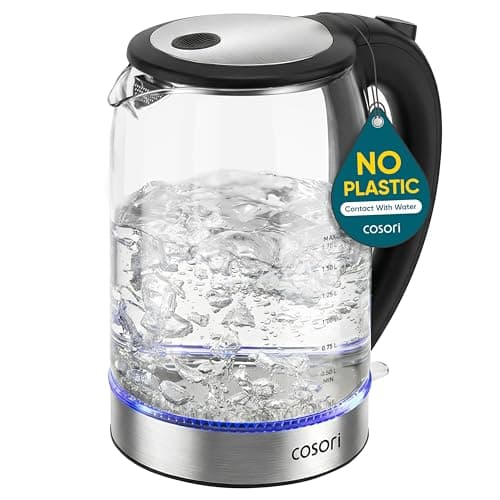
Cosori Electric Kettle, No Plastic Contact With Water, Wide
A top-rated pick our readers reach for.
Shop Now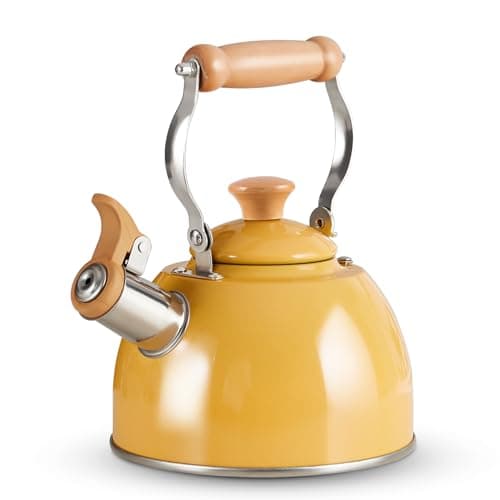
ROCKURWOK Tea Kettle, Tea Pot with Cool Touch Ergonomic Handle
A top-rated pick our readers reach for.
Shop NowProduct prices and availability are accurate as of September 14, 2026 and are subject to change. Any price and availability information displayed on Amazon at the time of purchase will apply.
The vinegar method (the reliable default)
White vinegar is mildly acidic, cheap, and dissolves limescale better than almost anything in your pantry. This is the method to reach for first.
- Fill the kettle about halfway with a 1:1 mix of white vinegar and water. For a heavily scaled kettle, use straight vinegar.
- Bring it to a boil, then switch the kettle off.
- Let it soak for 20 minutes to an hour. The acid needs contact time to break down the mineral crust — this is where the work actually happens, so don't rush it.
- Pour out the solution. Most scale will have loosened or dissolved.
- Wipe stubborn spots with a soft sponge or a soft brush. Never use steel wool — it scratches.
- Rinse thoroughly, then boil a full kettle of clean water and discard it. Repeat the rinse-boil once more so no vinegar taste lingers.
That final rinse-and-boil step is the one people skip and then wonder why their tea tastes sharp. Give it two clean boils and the flavor is gone.
Lemon or citric acid (for a fresher finish)
If you dislike the smell of vinegar, citric acid does the same chemical job and leaves a bright, clean scent. You can use fresh lemons or buy citric acid powder, which is sold for exactly this purpose.
With fresh lemon: cut one lemon into slices, drop them into the kettle, fill with water to cover the scale, boil, and soak for an hour. The juice and the pith both help.
With citric acid powder: dissolve 1-2 tablespoons in a kettle of water, boil, and soak for 20-30 minutes. Powder is more concentrated and consistent than lemons, so it is the better choice for a badly scaled kettle.
Either way, finish exactly as with vinegar: pour out, wipe any remaining softened scale, and rinse-boil with clean water twice. Citric acid is gentle enough to use on glass kettles without clouding them, which makes it a favorite for people who want to keep a glass kettle crystal clear.
Baking soda for stains and light odors
Baking soda is a mild alkaline abrasive — the opposite chemistry to vinegar — so it is better at lifting stains and neutralizing stale smells than at dissolving heavy scale. Use it as a complement, not a replacement.
A note on chemistry: don't combine baking soda and vinegar hoping for extra power. They neutralize each other and you get fizzy water that cleans less than either one alone. Use them separately.
To deodorize or brighten a dull interior, add 1 teaspoon of baking soda to a kettle of water, boil, and let it sit for 20 minutes before rinsing. For a stained spot, make a paste of baking soda and a little water, apply it with a soft cloth, and rub gently. This is also the safest way to freshen a kettle that has picked up an off smell from disuse. Rinse well afterward, as with every method.
Cleaning the outside and the spout
A clean interior deserves a clean exterior. The outside picks up fingerprints, water spots, and cooking splatter, and the spout and lid seam trap residue you might not notice.
- Stainless steel: wipe with a damp cloth and a drop of dish soap, then buff dry with a microfiber cloth in the direction of the grain to avoid streaks. A little white vinegar on the cloth removes water spots.
- Glass: the same soapy wipe, then dry with a lint-free cloth so it stays clear. Citric acid handles any cloudy mineral film.
- The spout and lid: these hidden areas collect scale and drips. Use an old soft toothbrush to reach inside the spout and around the rim of the lid.
- The base of an electric kettle: wipe the exterior only. Never submerge the electrical base or let water near the contacts.
Five minutes here keeps the kettle looking cared-for and stops grime from migrating back into your water.
Special care for electric and glass kettles
Electric kettles need one firm rule: never immerse the base or the electrical connection in water. Clean the inside with the vinegar or citric-acid soak exactly as above, but keep all liquid away from the heating contacts and the plug area. Wipe the exterior with a barely damp cloth. Many electric kettles also have a small mesh filter at the spout that traps scale flakes — pop it out, rinse or soak it, and replace it.
Glass kettles are prone to cloudy mineral film that makes them look permanently dirty even when they are clean. Citric acid is your friend here: it clears the film without scratching, and unlike some abrasives it won't leave micro-scratches that cloud the glass further over time. Avoid any gritty scrubber on glass. For both types, dry the interior with the lid off between uses so no water sits and re-deposits minerals.
How to slow the buildup between deep cleans
Descaling is easy, but doing it less often is even better. A few small habits keep scale from getting a foothold:
- Empty the kettle after each use instead of leaving water to sit and evaporate. Standing water is what deposits new scale.
- Dry the inside occasionally, especially before storing the kettle for more than a day.
- Use filtered water if your area has very hard water — fewer dissolved minerals means dramatically less scale.
- Descale on a schedule: every 4-8 weeks in hard-water areas, every few months where water is soft. Catching thin scale early makes each clean quicker.
Think of it like the rest of your teaware — a little routine care goes a long way. A well-kept kettle boils faster, lasts longer, and gives you water that tastes like nothing at all, which is exactly what good tea needs. For the rest of your setup, our teaware guide covers care for teapots, gaiwans, and infusers too.
If the pot you brew in needs the same attention as the kettle you boil in, the companion guide on how to clean a teapot covers every material from glass to Yixing clay — and if scale keeps returning fast, the water-quality notes in our tea steeping times guide explain what your kettle is trying to tell you about your tap water.
From our testing notes
A rough comparison of the common descaling agents by strength: straight white vinegar and citric-acid powder are the strongest on heavy scale; fresh lemon is moderate and best for light scale plus a fresh smell; baking soda is weakest on scale but best for stains and odors. For a badly crusted kettle, citric-acid powder (1-2 tbsp per kettle, soaked 30 minutes) tends to clear it in a single pass.
Sources & further reading
Frequently asked questions
How do I clean a tea kettle without vinegar?
Use lemon or citric acid powder instead. Boil a kettle of water with sliced lemon or 1-2 tablespoons of citric acid, soak for 20-60 minutes, then rinse and boil clean water twice. It removes limescale just as well and leaves a fresher smell than vinegar.
How often should I descale my tea kettle?
Every 4-8 weeks if you live in a hard-water area, or every few months if your water is soft. The easiest guide is to look inside: once you see a chalky film starting, it's time. Catching it early makes each cleaning faster.
Is limescale in my kettle dangerous to drink?
No, limescale is just harmless mineral deposits, mostly calcium. It won't hurt you, but it makes tea taste off, leaves gritty flecks, slows boiling, and shortens an electric kettle's life. Cleaning it is about taste and performance, not safety.
Can I use vinegar in an electric kettle?
Yes. Fill it halfway with a 1:1 vinegar-and-water mix, boil, switch it off, and soak for up to an hour, then rinse and boil clean water twice. Just keep all liquid away from the electrical base and never submerge it.
How do I remove rust from a tea kettle?
For light rust on stainless steel, make a paste of baking soda and water, rub gently with a soft cloth, and rinse. A soak in citric acid also lifts surface rust. Then dry the kettle completely after every use, since standing water is what causes rust to return.
Why does my kettle water taste like vinegar after cleaning?
You didn't rinse enough. After descaling, always boil a full kettle of clean water and pour it out, then repeat once more. Two clean rinse-boils remove any lingering vinegar or citric taste completely.
Can I mix baking soda and vinegar to clean my kettle faster?
No — they neutralize each other and end up cleaning less than either alone. Use vinegar or citric acid to dissolve scale, and use baking soda separately for stains or odors. Never combine them expecting extra power.
How do I clean a cloudy glass kettle?
Cloudiness on glass is usually mineral film. Boil a solution of citric acid or lemon, soak for 30 minutes, and the film clears without scratching. Avoid gritty scrubbers on glass, which cause micro-scratches that make it look permanently cloudy.
What's the safest way to clean the outside of a stainless steel kettle?
Wipe it with a damp cloth and a drop of dish soap, remove water spots with a little white vinegar on the cloth, then buff dry with a microfiber cloth along the grain. Avoid steel wool, which scratches the finish.