
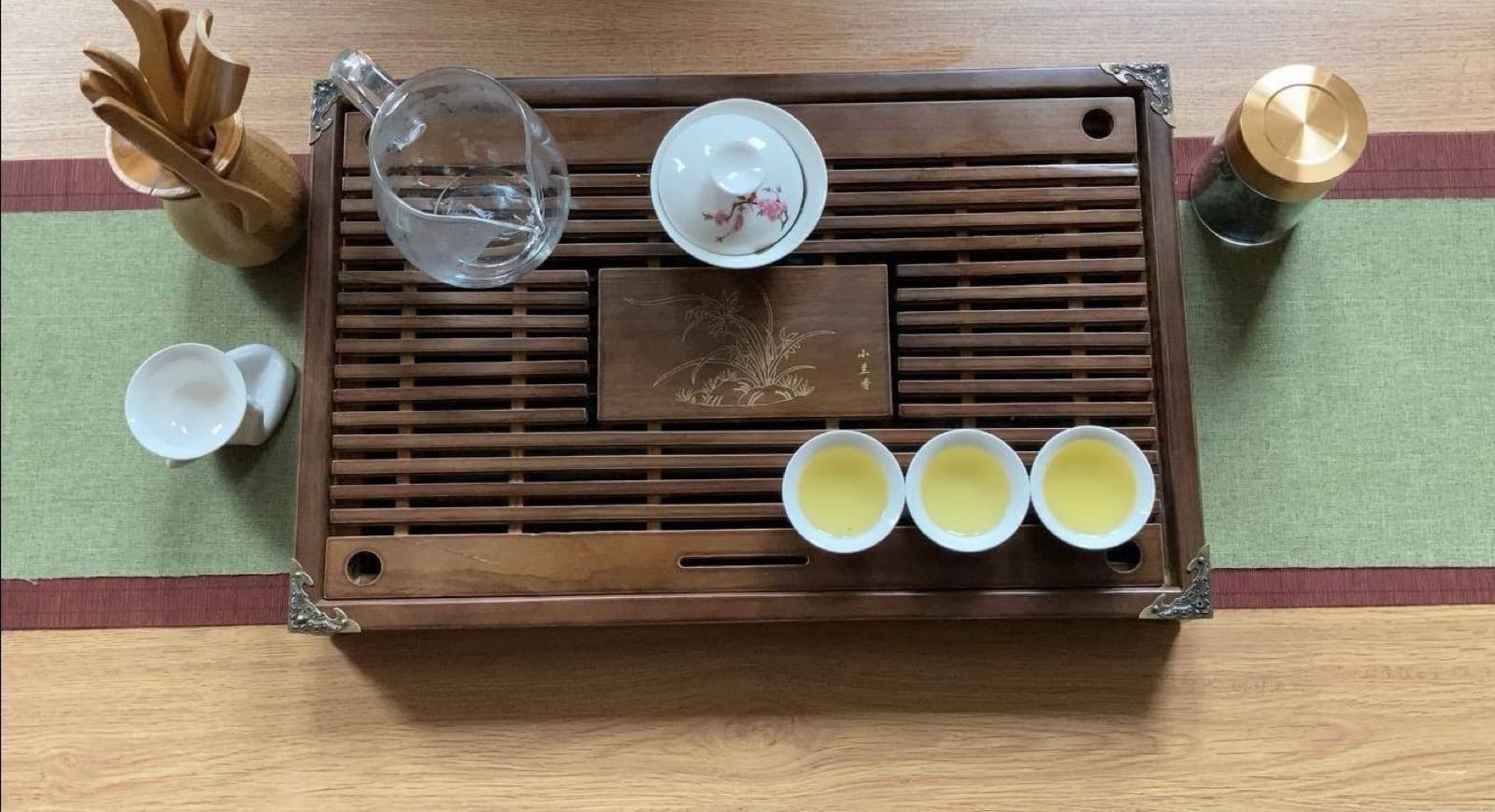
Chinese tea is the original tea — every true tea in the world descends from the Camellia sinensis plant that was first cultivated in China thousands of years ago. What makes it endlessly fascinating is variety: from the same leaf, Chinese tea makers create six completely different classes of tea, each with its own color, aroma, and personality.
If you have only ever met tea as a bag of dust in a mug, the world of Chinese tea can feel like discovering that "wine" includes everything from crisp white to aged red. This guide is your map. We'll walk through the six categories, the famous regions, and simple ways to brew each one so it tastes the way it should — sweet, layered, and never harsh.
Think of this page as the hub. Each type has its own deeper guide, and you'll find links to all of them below.
Quick answer
- ✓Chinese tea is grouped into six classes: green, white, yellow, oolong, black (hong cha), and dark/pu-erh — defined mostly by how much the leaf is oxidized.
- ✓'Black tea' in the West is called hong cha (red tea) in China; China's 'dark tea' (hei cha) is a separate, fermented category that includes pu-erh.
- ✓Most Chinese teas are brewed with multiple short infusions rather than one long steep.
- ✓Water temperature matters more than steep time: green and yellow teas want cooler water, oolong and black teas want it near boiling.
The six types of Chinese tea, at a glance
The Chinese classification system sorts tea not by leaf shape or region, but by processing — specifically how far the leaf is allowed to oxidize (react with oxygen and darken) and whether it undergoes microbial fermentation. Here is the whole family in one table.
| Type | Chinese name | Oxidation | Flavor character | Famous example |
|---|---|---|---|---|
| Green | lǜ chá (绿茶) | None (heated to stop it) | Fresh, grassy, sweet, vegetal | Longjing (Dragonwell) |
| White | bái chá (白茶) | Very light, natural | Soft, delicate, hay-like | Bai Hao Yinzhen (Silver Needle) |
| Yellow | huáng chá (黄茶) | Light, with a 'sealed yellowing' step | Mellow, rounder than green | Junshan Yinzhen |
| Oolong | wūlóng (乌龙) | Partial (10–80%) | Floral to roasted, complex | Tieguanyin, Da Hong Pao |
| Black / red | hóng chá (红茶) | Full | Malty, sweet, smooth | Keemun, Dianhong |
| Dark | hēi chá (黑茶) | Post-fermented | Earthy, mellow, aged | Pu-erh |
One source of confusion is worth clearing up now: what English speakers call black tea is hong cha — literally "red tea" — in China, named for the reddish liquor it brews. China's hei cha ("dark tea") is a different thing entirely: a post-fermented category, aged with the help of microbes, of which pu-erh tea is the most famous member.
Tea & gear for this guide
Hand-matched Amazon picks with strong owner ratings. As an Amazon Associate, Tea & Peace earns from qualifying purchases.
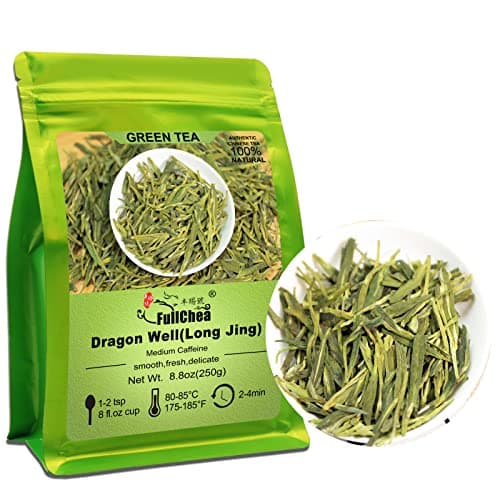
FullChea - Longjing Tea - Dragonwell Tea - Chinese Green Tea Loose Leaf
Pan-fired Chinese green tea (Longjing style) — 4.3★ across 643 ratings.
Shop Now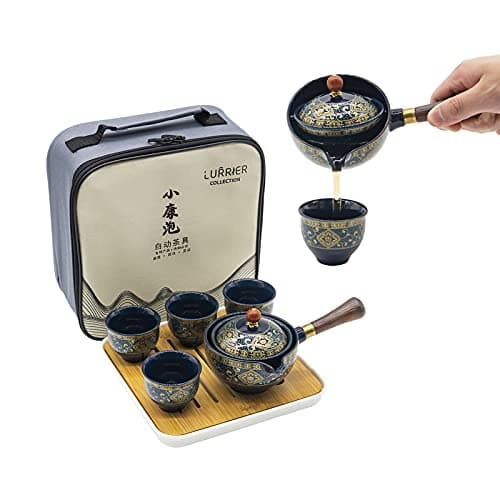
LURRIER Porcelain Chinese Gongfu Tea Set,Portable Teapot Set with 360
Gongfu tea set for traditional Chinese brewing — 4.6★ across 1,436 ratings.
Shop Now![ChaWuWarmSun [B] Longjing Dragon Well Green Tea Loose Leaf, 3.5oz/100g](/_next/image?url=https%3A%2F%2Fm.media-amazon.com%2Fimages%2FI%2F41MGeETEWUL._SL500_.jpg&w=640&q=75&dpl=dpl_3mWQXSUux5i73qaPL8F5UHoXJhfC)
ChaWuWarmSun [B] Longjing Dragon Well Green Tea Loose Leaf, 3.5oz/100g
Pan-fired Chinese green tea (Longjing style) — 4.3★ across 358 ratings.
Shop NowProduct prices and availability are accurate as of September 14, 2026 and are subject to change. Any price and availability information displayed on Amazon at the time of purchase will apply.
Green tea: China's everyday classic
Green tea is by far the most-consumed tea in China, and the country produces most of the world's supply. The defining move in green-tea making is sha qing — "kill green" — where fresh leaves are quickly pan-fired or steamed to deactivate the enzymes that cause oxidation. That locks in the leaf's fresh, green character.
The most celebrated example is Longjing, also spelled Dragonwell, from around West Lake in Hangzhou. Good Longjing has flat, sword-shaped leaves, a chestnut-sweet aroma, and a smooth, almost buttery finish. Other classics include Bi Luo Chun (tightly curled, fragrant), and Gunpowder (rolled into pellets that unfurl as they steep).
Brew green tea gently: water around 175–185°F (80–85°C), a short steep, and expect to re-infuse the leaves several times. Boiling water scorches the leaves and turns them bitter. For the full walkthrough, see our Chinese green tea guide and our general notes on how to brew green tea.
Oolong: the half-oxidized middle ground
Oolong (wūlóng) sits between green and black tea, oxidized to a degree conventionally described as anywhere from about 10% to 80%. That huge range is why no two oolongs taste alike. Lightly oxidized oolongs like modern Tieguanyin are green-gold, floral, and creamy. Heavily oxidized and roasted rock oolongs like Da Hong Pao from the Wuyi Mountains are dark, toasty, and mineral — what tea drinkers call yan yun, or "rock rhyme."
Oolong is the tea most associated with skilled, multi-infusion brewing. A good oolong can give you six, eight, even a dozen short steeps, each one revealing a slightly different note. Use hot water — 195–205°F (90–96°C) — a lot of leaf, and short steeps that lengthen gradually. Our Chinese oolong tea guide covers Tieguanyin, Da Hong Pao, and the rest in depth.
Black tea (hong cha): malty, smooth, and forgiving
Chinese black tea — hong cha — is fully oxidized, which makes it the sweetest and most forgiving type for beginners. It rarely turns bitter, takes milk well (though purists drink it neat), and holds up to slightly rough brewing.
China gave the world several benchmark black teas. Keemun (Qimen) from Anhui is the classic English-breakfast component, with a wine-like, faintly cocoa aroma. Dianhong from Yunnan is rich, malty, and often full of golden tips. Lapsang Souchong from the Wuyi area is famously smoked over pinewood, giving it a campfire aroma that people either love or find startling. Brew hong cha with near-boiling water and a 2–4 minute steep for Western-style, or short repeated steeps gongfu-style. See the full Chinese black tea guide for varieties and brewing.
Pu-erh and dark tea: the aged category
Dark tea (hei cha) is China's post-fermented class, and pu-erh from Yunnan is its star. Unlike every other tea, pu-erh is meant to change over time. It comes in two styles: sheng (raw), which ages slowly over years and mellows from bracing to smooth; and shou (ripe), which is fast-fermented in piles to taste earthy and mellow right away.
Pu-erh is usually pressed into cakes, bricks, or nests rather than sold loose, and well-aged sheng can command serious prices among collectors. It's the tea you reach for when you want something deep, warming, and grounding. Learn the difference between raw and ripe, how aging works, and how to brew it in our dedicated pu-erh tea guide.
Where Chinese tea comes from
China's tea regions each have a signature. Knowing a few helps you shop with intention rather than guessing.
- Zhejiang — home of West Lake Longjing, the definitive green tea region.
- Fujian — extraordinary range: white tea (Fuding), rock oolong (Wuyi), fragrant Tieguanyin (Anxi), and Lapsang Souchong.
- Yunnan — the ancestral home of the tea plant; source of Dianhong black and pu-erh.
- Anhui — Keemun black tea and several famous greens like Huangshan Maofeng.
- Jiangsu — Bi Luo Chun, one of China's most fragrant green teas.
Terroir is real in tea. The same cultivar grown in different soil, altitude, and climate produces noticeably different cups — which is exactly why single-origin Chinese teas are worth seeking out.
How to brew Chinese tea so it tastes right
The single biggest upgrade most people can make is to stop over-steeping and start using the right water temperature. Chinese tea is traditionally brewed with a high leaf-to-water ratio and multiple short infusions, a style called gongfu cha. But even a simple mug works if you follow a few rules.
| Tea type | Water temp | First steep (gongfu) |
|---|---|---|
| Green / Yellow | 175–185°F | 20–30 sec |
| White | 185–195°F | 30–45 sec |
| Oolong | 195–205°F | 20–30 sec |
| Black (hong cha) | 205–212°F | 15–25 sec |
| Pu-erh | 205–212°F | 10–20 sec (rinse first) |
For delicate greens, cooler water and a quick steep prevent bitterness. For pu-erh and roasted oolong, a quick "rinse" (a few-second first steep you pour off) wakes the leaves up. A small gaiwan is the most versatile brewing vessel for exploring all six types.
How to start (without buying everything at once)
You don't need a shelf of tins to begin. A practical starter path:
- Begin with black tea (hong cha). Dianhong or Keemun is sweet, easy, and hard to mess up — a confidence builder.
- Add a green tea. Try a real Longjing to taste what fresh Chinese green tea is supposed to be.
- Explore oolong. A fragrant Tieguanyin shows off the multi-infusion magic that makes Chinese tea special.
- Try pu-erh last. Its earthy depth makes more sense once your palate has a few reference points.
Buy small amounts from a specialist rather than large tins from a supermarket. Freshness and provenance matter enormously with Chinese tea, and a good vendor will tell you the harvest year, region, and cultivar. When you're ready to brew like an enthusiast, our Chinese tea set guide covers the gaiwan, pot, and cups that make it easy.
From our testing notes
A useful reference point for newcomers: brew the same oolong two ways side by side — one Western mug (1 tsp, 8 oz, boiling water, 3 minutes) and one gongfu (5–6 g in a 100 ml gaiwan, 20-second steeps). The mug gives a single flat, slightly astringent cup; the gaiwan gives a sequence of clear, evolving infusions. Same leaf, completely different experience — it's the fastest way to understand why Chinese tea is brewed the way it is.
Sources & further reading
Frequently asked questions
What are the six types of Chinese tea?
Green, white, yellow, oolong, black (called hong cha or 'red tea' in China), and dark tea (hei cha, which includes pu-erh). They all come from the same Camellia sinensis plant and are distinguished mainly by how much the leaf is oxidized and whether it's post-fermented.
Is Chinese black tea the same as Western black tea?
It's the same category — fully oxidized tea — but the names differ. In China it's called hong cha, or 'red tea,' after its reddish liquor. Confusingly, China's separate 'dark tea' (hei cha) is what includes pu-erh. So Chinese 'red' = Western 'black,' and Chinese 'black' = post-fermented dark tea.
Which Chinese tea is best for beginners?
Chinese black tea like Dianhong or Keemun is the friendliest starting point — naturally sweet, smooth, and very forgiving of brewing mistakes. From there, a good Longjing green tea and a fragrant Tieguanyin oolong round out a great beginner trio.
Does Chinese tea have caffeine?
Yes. All true teas from the tea plant contain caffeine, including green, oolong, black, and pu-erh. The amount varies by tea, leaf, and how you brew it. Herbal 'teas' like chrysanthemum are technically tisanes and are naturally caffeine-free — see our Chinese herbal tea guide.
How many times can I re-steep Chinese tea?
Far more than a typical tea bag. Brewed gongfu-style with a high leaf-to-water ratio, oolong and pu-erh commonly give 6–10+ infusions, and even green tea gives 2–3. Each steep tastes slightly different, which is a big part of the pleasure.
What temperature should I use for Chinese green tea?
Around 175–185°F (80–85°C). Boiling water scorches delicate green leaves and makes them bitter and astringent. Let a boiled kettle sit for a minute or two, or use a variable-temperature kettle.
Is loose-leaf Chinese tea better than tea bags?
Generally yes. Loose leaf preserves whole or larger leaves that unfurl and release flavor gradually, and it lets you re-steep. Most fine Chinese teas are simply not sold in bags. Our loose leaf tea guide explains why and how to brew it.
How should I store Chinese tea?
Keep green, white, and lightly-oxidized oolong teas airtight, cool, dark, and away from strong odors; they're best fresh. Pu-erh is the exception — it's meant to age in breathable storage with some airflow and stable humidity. Never store tea in the fridge unsealed, as it absorbs food smells.
What is gongfu cha?
Gongfu cha is the traditional Chinese method of brewing tea with a small pot or gaiwan, a lot of leaf, and many short infusions — the approach that gets the most out of good tea. It's covered fully in our Chinese tea ceremony guide.