

A note on wellness: Tea & Peace shares general information about tea for relaxation, comfort, and everyday wellbeing — not medical advice. Tea is a beverage, not a treatment. If you have a health concern or take medication, talk to a qualified healthcare professional before making changes.
Steam curling off a cup, the small clink of a lid, a minute where nothing else is asking for you — that is where a tea ritual begins. It is not about expensive leaves or a perfect setup. A tea ritual is simply the decision to make tea slowly, on purpose, and to let the few minutes it takes belong entirely to you.
Most of us already drink tea. Turning that habit into a ritual changes almost nothing about the tea and almost everything about how the break feels. The kettle still boils; you just stop scrolling while it does. On this page we will walk through what a tea ritual actually is, how to start one that survives a busy week, and how to shape different rituals for morning focus, an afternoon reset, and a slow wind-down at night.
What a tea ritual really is (and isn't)
A tea ritual is a small, repeated sequence of actions around making and drinking tea that you do with attention rather than on autopilot. The word ritual sounds ceremonial, but in daily life it just means the same handful of steps, in the same order, treated as a pause instead of a chore.
It is easy to imagine you need a lacquered tray, a gaiwan, and twenty minutes of silence. You don't. A ritual can be ninety seconds at a work desk. What separates a ritual from ordinary tea-making is intention: you are choosing to be present for the pour instead of racing past it.
It also isn't a wellness prescription. Tea won't fix a hard day or replace rest, sleep, or a doctor. What a ritual reliably does is create a boundary — a clean edge between one part of your day and the next. That boundary is the whole point. Everything else, from the leaf you pick to the mug you love, is decoration on top of it.
Tea & gear for this guide
Hand-matched Amazon picks with strong owner ratings. As an Amazon Associate, Tea & Peace earns from qualifying purchases.
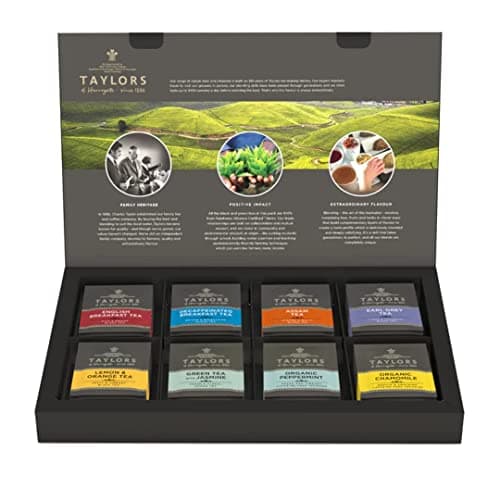
Taylors of Harrogate Assorted Specialty Teas Sampler, Variety Pack Gift
A caffeine-free herbal tea sampler to explore — 4.7★ across 29,770 ratings.
Shop Now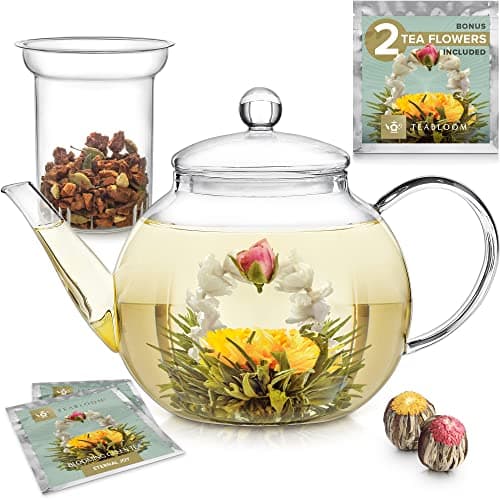
Teabloom Stovetop & Microwave Safe Glass Teapot with Removable Loose Tea
Borosilicate glass teapot with a removable infuser — 4.6★ across 26,185 ratings.
Shop Now
HOUSE AGAIN Tea Infuser, Extra Fine Mesh Tea Infusers for Loose Tea, 18/8
Fine-mesh stainless infuser for any loose tea — 4.6★ across 26,441 ratings.
Shop NowProduct prices and availability are accurate as of September 14, 2026 and are subject to change. Any price and availability information displayed on Amazon at the time of purchase will apply.
Why small rituals steady the day
Humans lean on rhythm. A repeated cue — the same kettle sound, the same warm cup in both hands — tells your body that a familiar, low-stakes moment has arrived. Ritual researchers who study everything from athletes' pre-game routines to family dinners find that predictable sequences help people feel more in control, especially around transitions and uncertainty.
Tea is an unusually good anchor for this because it is built from natural pauses. Water has to heat. Leaves have to steep. You genuinely cannot rush a three-minute brew, so the beverage itself hands you a waiting period you'd otherwise fill with your phone.
A tea ritual doesn't add time to your day. It reclaims time that was already leaking away between tasks.
Think of the ritual as three built-in beats: the heat (water coming to temperature), the steep (leaves opening), and the first sip (the reward). Each one is a natural place to take a breath. You are not meditating for an hour; you are borrowing the three quiet windows the tea was going to give you anyway.
A five-minute tea ritual, step by step
Here is a simple template you can run at any time of day. Adapt the leaf and the length to fit the mood.
- Clear a small space. Move the laptop aside, wipe the counter, set out one cup. A tidy square foot signals the start.
- Boil with attention. While the water heats, do nothing else. Watch the steam, listen for the rumble. This is the first breath.
- Measure your tea. Scoop the leaves or place the bag. Notice the smell of the dry leaf — it changes with every tea.
- Pour and time it. Add water at the right temperature and actually set a timer. The steep is the second breath.
- The first sip. Hold the cup, feel the warmth, taste before you swallow. This is the third breath and the reward.
- Stay one more minute. Don't rush back. Let the first sip land before the day resumes.
That's it. Six steps, roughly five minutes. New to brewing? Our how to make tea guide covers temperatures and timing for every type, and you can build the ritual on top of it.
Choosing tea for the time of day
Part of the pleasure is matching the leaf to the hour. Caffeine is the main lever: true teas (green, black, oolong, white, pu-erh) all contain it, while herbal tisanes like chamomile and peppermint do not.
| Time of day | Good choices | Why it fits |
|---|---|---|
| Morning | Black tea, matcha, strong oolong | Fuller caffeine to wake up gently |
| Midday | Green tea, lighter oolong | Steady lift without an afternoon crash |
| Late afternoon | Roasted oolong, decaf black | A pause without wrecking sleep |
| Evening | Chamomile, rooibos, peppermint | Caffeine-free, warm, calming to sip |
A useful rule of thumb: the closer to bedtime, the less caffeine. If you love the ritual of an evening cup but not the 3 a.m. wake-up, switch to a herbal blend after mid-afternoon. Our bedtime tea and best tea for sleep guides go deeper on caffeine-free evening options.
Building a morning tea ritual
Mornings reward a ritual because the day hasn't started pulling at you yet. The goal here is a gentle, deliberate start rather than a jolt.
Keep it repeatable. Pick one tea you genuinely like — many people settle on a reliable black tea or a bowl of matcha — and make it the same way every morning. The sameness is a feature: your brain stops making decisions and starts relaxing into the sequence.
Pair the cup with one quiet activity you already want to do: a few pages of a book, looking out a window, writing three lines in a notebook. The tea gives that activity a container. When the cup is empty, the morning window closes and the day begins. For a steady, non-jittery lift, a cup of green tea works beautifully here — see tea for focus for why the combination of caffeine and L-theanine in green tea feels so smooth.
The afternoon reset
The mid-afternoon slump is the most useful moment to install a ritual, because it doubles as a genuine break. Instead of pushing through with a fourth coffee, step away and make tea.
The reset works best as a movement ritual: get up, walk to the kettle, and let the two-minute boil pull you out of your chair and your screen. That physical break — standing, stretching, waiting — often does as much as the caffeine.
Choose something moderate so you don't disturb the evening: a second-steep green, a light oolong, or a caffeine-free herbal if it's already late. Sip it away from your desk if you can. Even five minutes at a window resets attention more than most people expect. The point isn't the tea's chemistry; it's the clean pause it forces into a long afternoon.
The evening wind-down
An evening tea ritual is the one most people fall in love with, because it marks the end of doing and the start of resting. This is where the ritual earns its keep.
Switch to caffeine-free by now: chamomile, rooibos, peppermint, lemon balm, or a dedicated sleep blend. Make the environment part of the ritual — dim the overhead lights, put the phone in another room, use a mug you only reach for at night. The warmth of the cup in your hands is a quiet signal that the day is closing.
Think of the evening cup as a hinge between the busy day and sleep, not as a sleep aid itself. A warm, unhurried drink can genuinely help you unwind, but real rest still comes from a dark room and a consistent bedtime. For a full evening sequence, see bedtime tea; for a slower, more contemplative version, try a tea meditation.
Making the ritual stick
Most rituals fail because they ask for too much. Keep yours almost embarrassingly small at first — one cup, one time of day — and let it grow only if it wants to.
A few things that help it survive a real week:
- Attach it to something you already do. Tea after brushing your teeth, tea when the kids nap, tea when you close the laptop. An existing habit is the best hook.
- Lower the friction. Keep the kettle full, the tea within reach, your favorite cup clean. Every extra step is a chance to skip it.
- Forgive the misses. Skip a day and the ritual isn't broken. Just make tea tomorrow.
- Let it be boring. The magic is in the repetition, not novelty. You are building a familiar shape, and familiar is the goal.
If you want the ritual to feel a little more special, this is where good tools quietly help — a kettle you like the sound of, a teapot that pours well, a tea infuser that makes loose leaf effortless. Our teaware guide covers the small kit that makes a daily practice smoother. And if you're just getting started, our homepage is a good hub for the calmer, cold-brew and everyday side of tea.
From our testing notes
A small, repeatable test: time your usual tea-making from kettle-on to first sip. For most single cups it lands between three and five minutes — the exact length of a short breathing break. That overlap is why tea makes such a natural ritual anchor. You are not carving out extra time; you are simply staying present for a pause the brewing already requires.
Sources & further reading
Frequently asked questions
How long does a tea ritual need to be?
As short as you want. A ritual is defined by attention, not length — ninety seconds of making tea on purpose counts. Many people run a five-minute version on weekdays and a longer, slower one on weekends. Start small; a tiny ritual you actually keep beats a grand one you abandon.
Do I need special teaware to have a tea ritual?
No. A single mug and a kettle are enough. Nice teaware can make the ritual more pleasurable, but it's decoration on top of the pause, not the pause itself. If you do want to upgrade, start with one thing you'll use daily — a good tea kettle or a simple infuser.
What tea is best for a daily ritual?
The one you'll actually drink. Reliability matters more than rarity, so pick a tea you enjoy plain and can make the same way every day. Many people keep a caffeinated tea for mornings and a caffeine-free herbal for evenings so the ritual can run at both ends of the day.
Can I have more than one tea ritual a day?
Yes, and many people do — a morning cup to start, an afternoon reset, and an evening wind-down. Just watch the caffeine as the day goes on. Shift to green or lighter teas midday and to caffeine-free herbals after mid-afternoon so the last ritual doesn't cost you sleep.
Is a tea ritual the same as a tea ceremony?
They overlap but aren't the same. A tea ceremony, like the Japanese chanoyu or Chinese gongfu cha, is a formal, traditional practice with set steps and cultural meaning. A daily tea ritual is a personal, flexible pause you design for yourself. You can borrow ideas from a ceremony without needing all its formality.
Does a tea ritual actually reduce stress?
A ritual can help you feel calmer, mostly by creating a deliberate break and a sense of control over a small part of your day. That said, tea is a beverage, not a treatment. If stress or anxiety feels persistent or overwhelming, please talk to a healthcare professional rather than relying on a cup of tea.
How do I keep a tea ritual going when I'm busy?
Shrink it and anchor it. Attach the ritual to an existing habit (right after lunch, right before bed), keep everything within arm's reach, and allow yourself to run a ninety-second version on hard days. Missing a day doesn't break the streak — you just make tea again tomorrow.
Should the evening ritual use caffeine-free tea?
Ideally, yes. Caffeine can linger for hours and interfere with sleep, so most people switch to caffeine-free herbals like chamomile, rooibos, or peppermint after mid-afternoon. That way you keep the comforting ritual without trading it for a restless night. See our bedtime tea guide for evening options.
Can loose leaf tea fit a quick daily ritual?
Absolutely. With a basket-style infuser, loose leaf takes barely longer than a bag and rewards you with better flavor and cleaner refills. Our loose leaf tea guide walks through the easy way to brew it, and a good infuser makes it a one-minute job.