
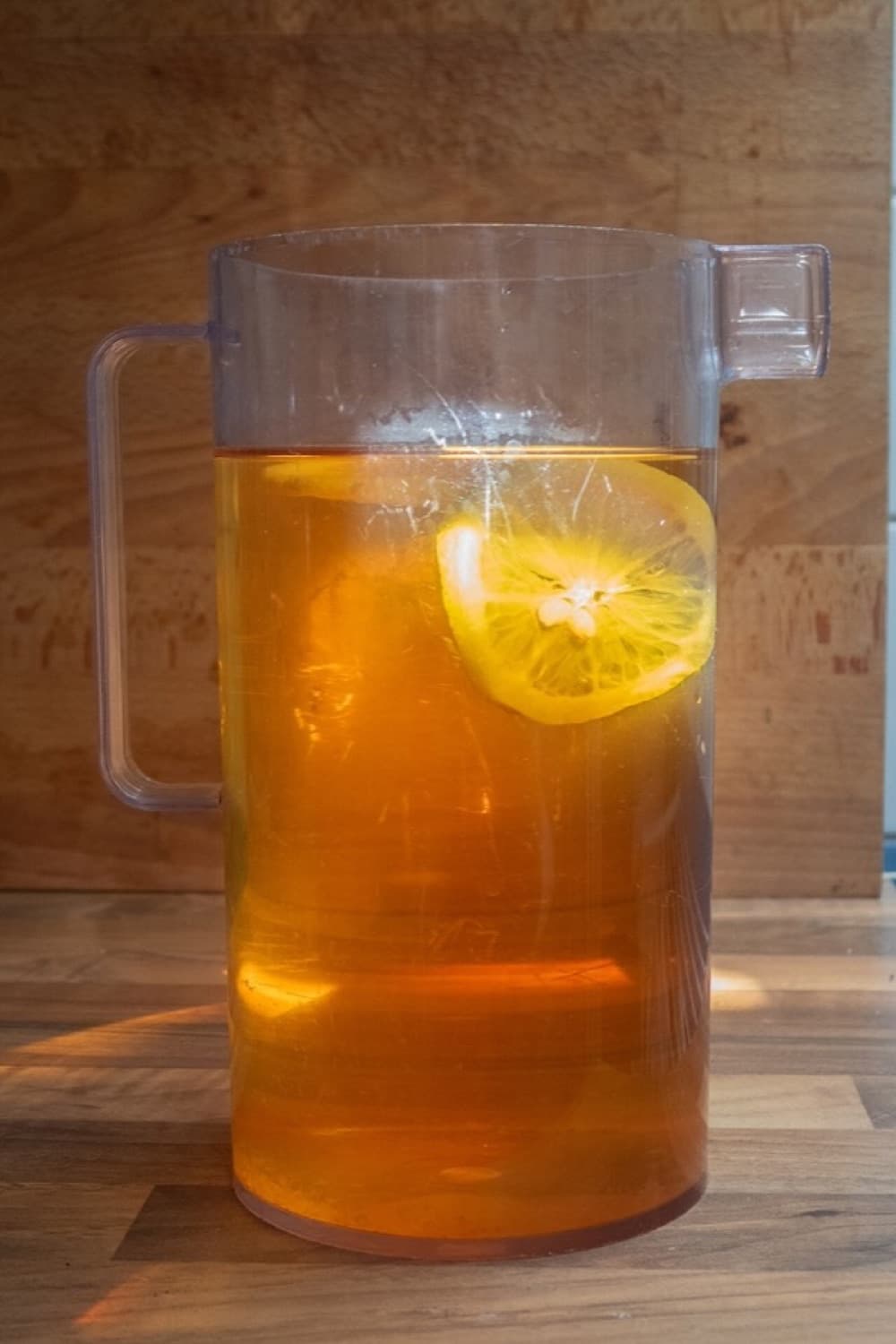
How to make iced tea comes down to a single decision: how much time you have. With ten minutes, you brew hot and pour over ice. With ten hours, you cold brew and get something smoother than any bottle. With an afternoon of sunshine, you can even make it the old-fashioned way.
Below are all three methods, spelled out with real numbers — ratios, temperatures, and steep times — plus the small tricks that separate a great glass from a watery, cloudy one. None of this is complicated. The math just has to account for one thing most first-timers miss: ice dilutes, so tea meant to be poured over it has to start out stronger than a hot cup.
Pick the method that matches your afternoon, and you'll never buy bottled tea again.
Method 1: Hot-brew and chill (ready in minutes)
This is the fastest way and the one restaurants use. The key is brewing a concentrate at roughly double strength so that a glass full of melting ice dilutes it back to normal.
For a single glass:
- Boil water and let it settle for a moment (fully boiling for black tea; around 175°F / 80°C for green).
- Steep 2 tea bags in 8 oz of water for 3–5 minutes. That's double the leaf you'd use for a hot cup.
- Remove the bags — don't leave them in to over-steep, or you'll add bitterness.
- Pour the hot concentrate over a glass packed with ice. Stir. Done.
For a 2-quart pitcher:
- Bring 1 quart (32 oz) of water to the right temperature.
- Steep 6–8 tea bags for 4–5 minutes, then remove.
- Pour the hot concentrate into a pitcher, add 1 quart of cold water and plenty of ice.
Brewed this way, tea is drinkable in under two minutes. The only rule: never let the bags sit past their steep time — that's where the bitterness and cloudiness come from.
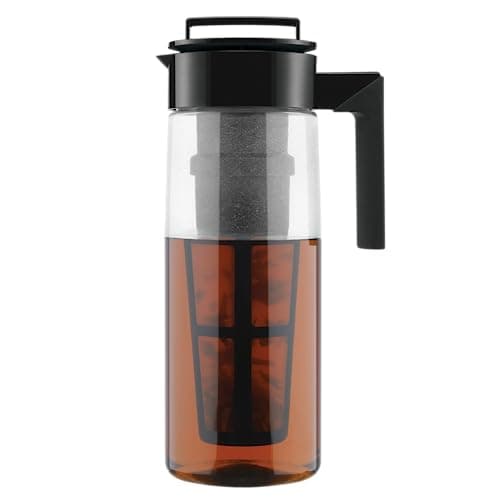
Takeya Flash Chill Iced Tea Maker - Versatile Tea Brewer for
A top-rated pick our readers reach for.
Shop Now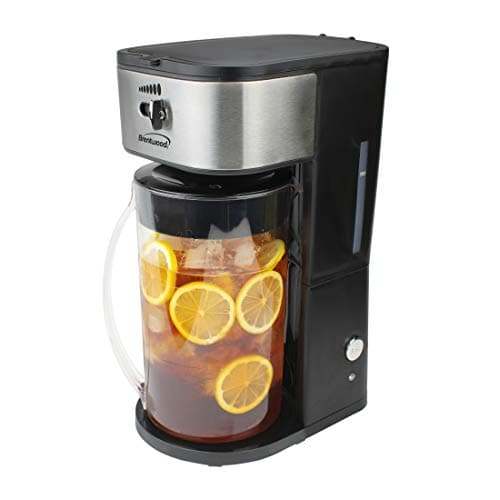
Brentwood KT-2150BK Iced Tea and Coffee Maker with 64 Ounce
A top-rated pick our readers reach for.
Shop Now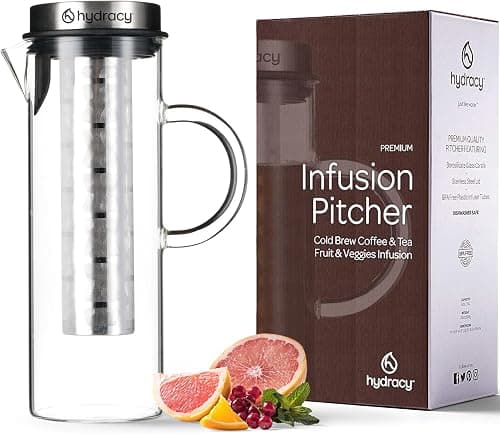
Cold Brew Coffee Maker - Large Glass Infusion Pitcher 1.6
A top-rated pick our readers reach for.
Shop NowProduct prices and availability are accurate as of September 14, 2026 and are subject to change. Any price and availability information displayed on Amazon at the time of purchase will apply.
Method 2: Cold brew (smoothest, hands-off)
Cold brewing is our favorite method and the one we reach for most. You steep tea in cold water in the fridge, and low temperature does something wonderful: it extracts flavor and aroma while leaving most of the harsh tannins and about a third of the caffeine behind. The result is naturally sweeter, never bitter, and it almost never clouds.
How to do it:
- Add 1 tea bag per 8–10 oz of cold, filtered water (or 1 tablespoon of loose leaf per 16 oz) to a pitcher or jar.
- Cover and refrigerate.
- Steep 6–12 hours — green and white teas at the shorter end, black and herbal at the longer end.
- Remove the leaves and serve over ice.
The only downside is planning ahead; there's no way to rush it. But the effort is close to zero, and the payoff is the cleanest glass of tea you can make at home. If you want the full science and more variations, our whole cold brew tea hub is built around this method, and there's a dedicated walkthrough at cold brew iced tea.
Method 3: Sun tea (charming, with a caveat)
Sun tea is the nostalgic method: a jar of tea and water left on a sunny porch to steep in the warmth of the day. It makes a mellow, gently brewed glass and needs no stove or electricity.
How it's done:
- Fill a clean glass jar with cold water and add 6–8 tea bags per 2 quarts.
- Cap it and set it in direct sun for 3–4 hours.
- Move it to the fridge once brewed, and drink within a day.
Here's the caveat we owe you honestly: sun tea sits in the 100–130°F range, which is warm enough to grow bacteria but not hot enough to kill them. Food-safety experts, including some university extension programs, recommend caution — especially for tea left out too long or made in a less-than-clean jar. If you love the ritual, keep the jar spotless, don't brew longer than a few hours, refrigerate promptly, and skip it entirely if the tea looks ropy or syrupy. For most people, cold brew delivers the same easygoing result with none of the risk.
The ratios that actually matter
Getting strength right is the difference between iced tea and tea-flavored water. Here's a cheat sheet you can keep:
| Goal | Tea | Water | Time |
|---|---|---|---|
| Single glass (hot-brew) | 2 bags | 8 oz | 3–5 min, over ice |
| 2-qt pitcher (hot-brew) | 6–8 bags | 1 qt hot + 1 qt cold | 4–5 min |
| Cold brew (per glass) | 1 bag | 8–10 oz | 6–12 hr, fridge |
| Cold brew (2-qt) | 6–8 bags | 2 qt | 8–12 hr, fridge |
Two principles hold across all of them. First, hot-brewed tea meant for ice should be about double strength so dilution doesn't ruin it. Second, more time means you need slightly less tea — cold brew extracts slowly but thoroughly, so you rarely need to over-load the leaves. When in doubt, brew a little strong; you can always add water, but you can't take tannin back out.
How to keep iced tea from going cloudy
Cloudy tea is harmless but looks murky, and it's the number-one question people ask. The haze forms when tannins and caffeine bond as hot tea cools quickly, creating light-scattering particles.
To keep your tea crystal clear:
- Cool hot-brewed tea to room temperature before refrigerating. The shock of hot-into-cold is the main trigger.
- Respect the steep time. Over-steeping loads the tea with tannin.
- Use filtered water. Hard-water minerals worsen the haze.
- Rescue a cloudy batch by stirring in a small splash of boiling water, which redissolves the particles.
Or avoid the whole issue: cold brew rarely clouds because it never pulls enough tannin to bond. It's one more reason the fridge method has become our default.
Sweetening, flavoring, and finishing your glass
Once you have a good base, the finishing touches are where iced tea gets personal.
Sweetening: Add sugar while the tea is still warm, or use simple syrup for cold tea. Dry sugar simply sinks to the bottom of a cold glass. To make simple syrup, heat equal parts sugar and water until the sugar dissolves, then cool — it keeps for weeks in the fridge and blends instantly. For a no-sugar route, a clean glass of unsweetened iced tea is genuinely satisfying on its own.
Flavoring ideas that work:
- A few slices of lemon, orange, or peach
- Fresh mint or basil, lightly bruised
- A splash of lemonade (that's an Arnold Palmer)
- A knob of muddled ginger for a spicy edge
- Frozen berries that double as flavored ice cubes
Better ice: Freeze leftover tea into cubes so they chill your glass without watering it down. It's a tiny trick that makes a real difference on a hot day.
Common mistakes and quick fixes
Most iced tea problems trace back to a handful of easy-to-avoid missteps:
Watery tea? You didn't brew strong enough for the ice. Double the leaf next time, or use tea ice cubes.
Bitter tea? You over-steeped, brewed green tea too hot, or left the bags in. Pull them on time and cool the water for greens.
Gritty sweetness? You stirred dry sugar into cold tea. Switch to simple syrup or sweeten while hot.
Cloudy tea? You chilled it too fast or over-steeped. Cool to room temp first, or cold brew.
Flat, dull flavor? The tea is old or the water was off. Fresh tea and filtered water fix most of it.
Get these five right and you've essentially mastered the drink. From here, the fun is in the variations — try a specific style like thai iced tea or a lighter iced green tea once the basics feel automatic.
From our testing notes
A practical benchmark from repeated testing: two black tea bags steeped in 8 oz of boiling water for four minutes, then poured over a full glass of ice, land at drinking temperature (around 50°F) in about 90 seconds while still tasting full-strength. Drop to a single bag and the same glass tastes noticeably thin once the ice melts — proof that the double-strength rule isn't optional for hot-brewed iced tea.
Sources & further reading
Frequently asked questions
What is the fastest way to make iced tea?
Hot-brew a concentrate. Steep two tea bags in 8 oz of hot water for 3–5 minutes, then pour it straight over a glass packed with ice. Because you brewed at double strength, the melting ice dilutes it to just-right in under two minutes. It's the quickest route to a cold glass.
How much tea do I use per gallon of iced tea?
For a gallon (16 cups), use roughly 12–16 tea bags, or about 6–8 tablespoons of loose-leaf tea, adjusted to taste. Brew a strong concentrate with part of the water, then dilute with cold water and ice. Start on the stronger side if you'll be serving it over lots of ice.
Do you make iced tea with hot or cold water?
Both work. Hot water brews in minutes but needs double strength to survive the ice. Cold water (cold brew) takes 6–12 hours in the fridge but produces a smoother, sweeter, less bitter glass that rarely clouds. Choose hot for speed, cold for quality.
How do I make iced tea without it getting cloudy?
Let hot-brewed tea cool to room temperature before refrigerating, don't over-steep, and use filtered water. Cloudiness comes from tannins bonding when tea cools too fast. Cold brewing avoids it almost entirely. If a batch does cloud, stir in a small splash of boiling water to clear it.
Can I make iced tea with regular tea bags?
Absolutely. Standard supermarket tea bags work perfectly for iced tea — they're just smaller portions, so you may need two per glass for hot-brewing. Loose leaf gives a bit more control and flavor, but bags are the easy default and cold brew especially with bags couldn't be simpler.
Why does my iced tea taste bitter?
Bitterness usually means over-steeping, water that was too hot (especially for green tea), or leaving the bags in the pitcher. Pull the tea on time, use cooler water for delicate teas, and consider cold brewing, which extracts far less of the tannin that causes bitterness.
How long should I steep tea for iced tea?
For hot-brewing, 3–5 minutes for black tea and 2–3 minutes for green, then remove the leaves. For cold brew, 6–12 hours in the fridge — shorter for green and white, longer for black and herbal. Steeping longer than needed adds bitterness, not strength.
Is homemade iced tea better than bottled?
Almost always. Bottled tea is often heavily sweetened, made from concentrate, and dosed with preservatives. Homemade tea costs a few cents a glass, lets you control the sugar, and tastes fresher. Once you've made a good cold brew, most bottled versions taste flat by comparison.
Can I sweeten iced tea after it's cold?
You can, but use simple syrup rather than dry sugar. Granulated sugar won't dissolve in cold liquid and settles at the bottom in a gritty layer. Simple syrup (equal parts sugar and water, heated until clear, then cooled) blends into cold tea instantly and evenly.
Is it safe to make sun tea?
It can be, but with care. Sun tea steeps at a warm temperature that can allow bacteria to grow if the jar isn't clean, the tea brews too long, or it sits out too long. Use a spotless jar, brew no more than a few hours, refrigerate promptly, and discard anything ropy or sour. Cold brew is a safer route to the same easygoing flavor.