
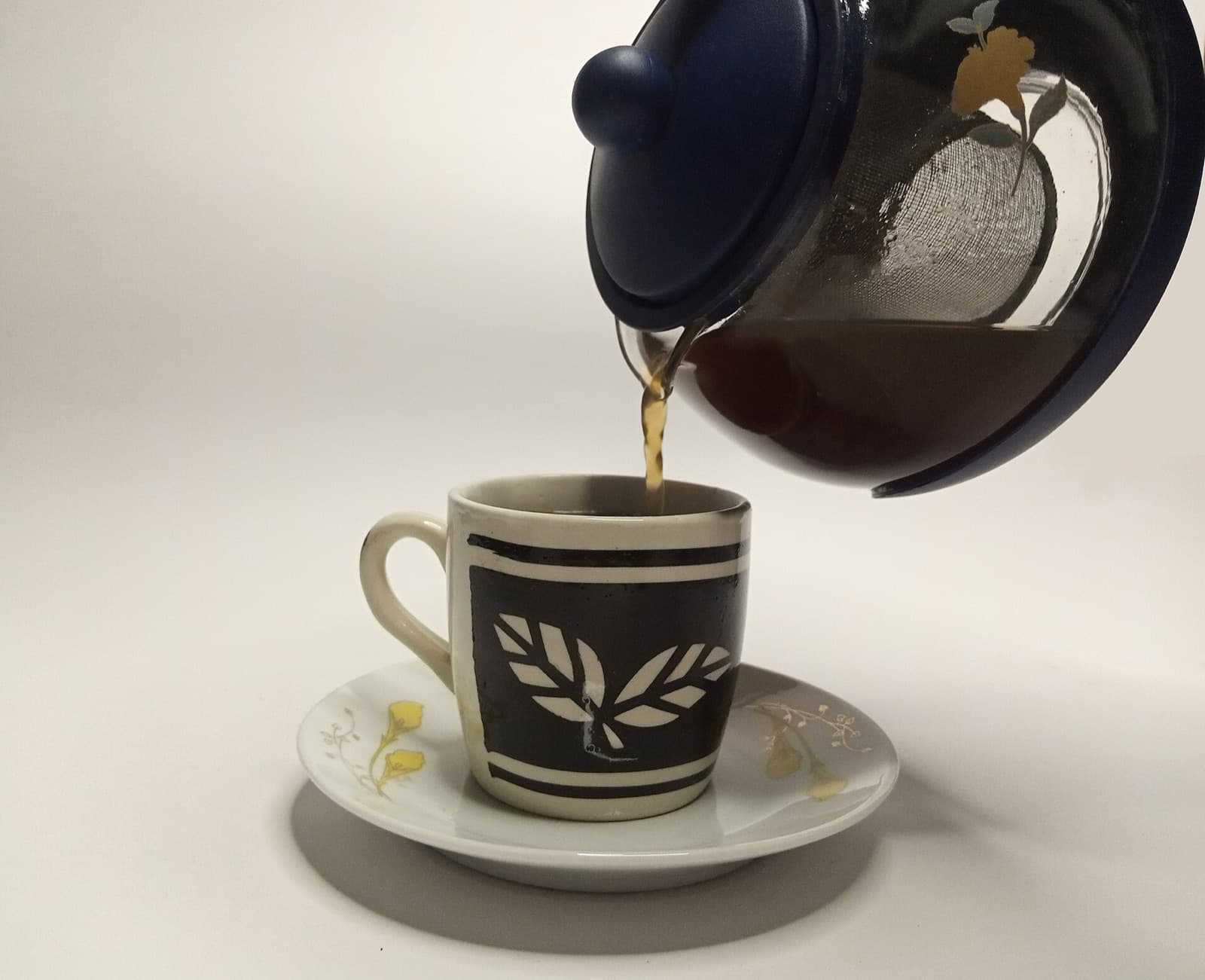
The kettle clicks off, steam curls up, you pour boiling water straight over the leaves — and that single habit is exactly why learning how to make tea well starts with unlearning it. That rush of too-hot water is why so many cups come out bitter. Great tea isn't complicated or fussy. It comes down to three small decisions: how much leaf, how hot the water, and how long you let it steep.
Get those three right for the type of tea in front of you and almost anything tastes better — the cheap grocery-store bag included. Get them wrong and even a beautiful loose-leaf tea turns harsh.
This guide gives you a reliable default method, a temperature-and-time chart you can keep by the kettle, and the specific tweaks each type of tea wants. No special gear required to start.
The three things that actually matter
Forget everything ornate you've read. A good cup rests on three levers, and you adjust them together:
- Leaf amount — the standard starting point is about 1 teaspoon (2–3 grams) of loose tea, or one tea bag, per 8-ounce cup. More leaf means a fuller, faster brew.
- Water temperature — delicate teas want cooler water; robust teas want hotter. This is the single most-overlooked variable, and it's the usual reason a cup tastes bitter.
- Steep time — the longer the leaves sit, the stronger and more astringent the cup. Taste as you go rather than guessing.
Everything else — the pot, the timer, the fancy kettle — just helps you control those three. If your tea is bitter, it's nearly always too-hot water or too-long a steep. If it's weak and watery, use more leaf rather than steeping longer, which mostly just adds bitterness. If you want the exact grams and teaspoons for each tea, the tea to water ratio chart has them.
Cosori Electric Kettle, No Plastic Contact With Water, Wide
A top-rated pick our readers reach for.
Shop Now
ROCKURWOK Tea Kettle, Tea Pot with Cool Touch Ergonomic Handle
A top-rated pick our readers reach for.
Shop NowProduct prices and availability are accurate as of September 14, 2026 and are subject to change. Any price and availability information displayed on Amazon at the time of purchase will apply.
A simple brewing chart by type
Keep this near your kettle. Temperatures assume you're brewing loose leaf or a good-quality bag in an 8-ounce cup.
| Tea type | Water temp | Steep time | Leaf per cup |
|---|---|---|---|
| White | 175–185°F | 2–5 min | 1.5 tsp |
| Green | 160–180°F | 1–3 min | 1 tsp |
| Yellow | 170–180°F | 2–3 min | 1 tsp |
| Oolong | 185–205°F | 2–5 min | 1–2 tsp |
| Black | 200–212°F | 3–5 min | 1 tsp |
| Pu-erh / dark | 200–212°F | 3–5 min | 1 tsp |
| Herbal / tisane | 208–212°F | 5–7 min | 1–2 tsp |
No thermometer? Use these cues: boiling is 212°F; wait about 30 seconds off the boil for oolong, one minute for white, and two minutes (or add a splash of cold water) for green. Herbal tisanes have no fragile tea leaf to scorch, so they can take a full rolling boil and a long steep.
Step-by-step: the basic method
Here's the reliable default that works for any leaf tea. Adjust the temperature and time to the chart above.
- Heat fresh water. Start with cold, fresh water and bring it to the right temperature for your tea. Reheated or long-boiled water tastes flat because it's lost dissolved oxygen.
- Warm the vessel (optional but nice). Swirl a little hot water in your cup or pot and tip it out. A warm vessel keeps the brew at temperature.
- Add the leaf. One teaspoon per cup, in an infuser, basket, or straight into the pot.
- Pour and time it. Pour the water over the leaves and start a timer. Cover if you can — it holds heat and aromatics.
- Taste, then strain. Near the end of the range, taste. When it's right, remove the leaves so it doesn't keep getting stronger.
- Serve. Add milk, lemon, or honey to taste — though many good teas need nothing at all.
That's the whole method. Everything advanced is just a variation on these six steps.
Bags vs loose leaf: does it change the method?
The method is identical; the quality often isn't. Most tea bags are filled with fannings and dust — the smallest broken bits of leaf — which brew fast and strong but lose nuance quickly. Loose leaf gives the leaves room to unfurl and release flavor gradually, which is why a good loose tea tastes rounder and can be re-steeped.
If you're using bags, don't strangle the bag or squeeze it hard at the end; that presses out bitter compounds. Just lift it out when the time's up. If you're ready to level up, our guide to loose leaf tea covers why it's worth it and the small amount of gear you need. Either way, the three levers — leaf, heat, time — stay the same.
Type-by-type tweaks worth knowing
The chart gets you 90% of the way. These small adjustments handle the rest:
- Green tea is the one most people scorch. Never use boiling water. Cooler water and a short steep keep it sweet — see how to brew green tea for the full anti-bitterness method.
- Black tea is forgiving and the best match for milk. If you take milk, a slightly longer, stronger steep stands up to it.
- Oolong rewards multiple short infusions rather than one long one. Steep the same leaves three or four times, adding a little time each round.
- White tea is subtle; give it a touch more leaf and a gentle temperature so its softness comes through.
- Herbal tisanes want the opposite of green tea — full boiling water and a long steep, because there's no fragile tea leaf to burn.
- Matcha isn't steeped at all; it's whisked. See our matcha tea guide for that method.
Common mistakes (and easy fixes)
Most tea problems trace back to a handful of habits:
Bitter, harsh cup? Water too hot or steeped too long. Lower the temperature and shorten the time.
Weak, watery cup? Not enough leaf. Add more tea rather than steeping longer.
Flat, dull cup? Stale tea or over-boiled water. Buy smaller amounts of fresher tea and use freshly heated water.
Cloudy iced tea? That's usually from refrigerating a hot-brewed batch too fast. Cold brewing avoids it entirely.
That last one is worth dwelling on in summer: brewing with cold water instead of hot is the most forgiving method there is, because low temperature simply can't extract the bitter compounds. Our cold brew tea homepage walks through it, and it works for nearly every type in this guide.
Water quality: the ingredient nobody thinks about
Tea is mostly water — well over 98% of what's in your cup — so the water you use matters far more than most people assume. If your tap water tastes even faintly of chlorine, that flavor carries straight into the brew and flattens the tea's delicate notes.
A few practical guidelines:
- Use fresh, cold water and heat it once. Water that's been sitting in the kettle or boiled repeatedly loses dissolved oxygen and tastes dull, which mutes the tea.
- Filter if your tap water is hard or heavily chlorinated. A simple carbon filter (a pitcher or faucet filter) noticeably brightens green and white teas in particular.
- Avoid distilled water. Totally mineral-free water actually makes tea taste hollow — a little natural mineral content helps flavor develop. Spring or good filtered tap water is ideal.
- Watch the softeners. Chemically softened water high in sodium can make tea taste odd; filtered water is a safer bet.
You don't need anything fancy. But if you've dialed in your leaf, temperature, and time and the cup still tastes muddy, the water is the usual last suspect. Swapping to filtered water is often the cheapest upgrade to your daily cup, and it costs nothing to try with a pitcher you may already own.
The calm part: making tea a small ritual
Once the mechanics are second nature, the nicest thing about learning how to make tea is that it gives you a few unhurried minutes on purpose. Heating the water, measuring the leaf, waiting for the steep — none of it can be rushed, and that's the point.
You don't need a ceremony. But if you want to lean into it, a consistent little sequence — same cup, same spot, same three minutes — turns a drink into a pause. We wrote more about that in our tea ritual guide. Tea is a beverage, not a treatment, so think of this as a gentle habit rather than a health claim: a reliable, quiet moment you can give yourself once or twice a day.
From our testing notes
A quick way to prove how much temperature matters: brew two cups of the same green tea, one with water rested to about 175°F and one straight off a rolling boil, both for two minutes. The boiled cup comes out noticeably darker and more astringent. It's the fastest way to convince anyone that 'how to make tea' is mostly a temperature question, not a technique question.
Sources & further reading
- USDA FoodData Central — Beverages, tea, black, brewed (water content per 100 g) (read 2026-09-10)
- Harvard T.H. Chan School of Public Health — The Nutrition Source: Tea (brewing temperatures and times; caffeine) (read 2026-09-10)
- UK Tea & Infusions Association — How to make a perfect brew (black 90–98°C, green ~80°C) (read 2026-09-10)
- Tea — Wikipedia
- Steeping — Wikipedia
Frequently asked questions
How long should you steep tea?
It depends on the type: green tea 1–3 minutes, black tea 3–5 minutes, oolong 2–5 minutes, white tea 2–5 minutes, and herbal tisanes 5–7 minutes. Taste near the end of the range and pull the leaves when it's right, since over-steeping mostly adds bitterness.
What temperature should water be for tea?
Lighter teas want cooler water and darker teas want hotter. Green sits around 160–180°F, white and oolong 175–205°F, and black, pu-erh, and herbal teas take a full or near-full boil (200–212°F). Too-hot water is the most common cause of bitter tea.
How much tea should I use per cup?
A good default is about 1 teaspoon (2–3 grams) of loose leaf, or one tea bag, per 8-ounce cup. Use more leaf for a stronger cup rather than steeping longer, which just increases bitterness.
Can I make tea without a kettle?
Yes. Heat water in a pot on the stove or in the microwave, then pour it over your leaves or bag. You just won't have precise temperature control, so err on the side of letting boiling water cool for a minute before brewing delicate green or white tea.
Do I need loose leaf tea to make good tea?
No — a fresh, decent tea bag brewed at the right temperature beats loose leaf brewed carelessly. That said, loose leaf generally tastes fuller and can be re-steeped. See our loose leaf tea guide if you want to try it.
Should I squeeze the tea bag when I'm done?
It's best not to. Squeezing or pressing the bag forces out bitter tannins and can make the cup harsh. Just lift the bag out cleanly when the steep time is up.
Why does my homemade tea taste bitter?
Almost always because the water was too hot or the tea steeped too long for its type. Lower the temperature, shorten the time, and taste as you go. Green tea in particular should never be brewed with boiling water.
Can I reuse tea leaves for a second cup?
Often yes, especially with loose oolong, green, and pu-erh. Quality whole leaves can give several infusions, each a little different. Add a bit of time to each successive steep. Broken tea from bags usually only gives one good cup.
Does the water I use really change how tea tastes?
Yes, more than most people expect — tea is over 98% water, so chlorine or off-flavors carry straight into the cup. Use fresh, filtered water if your tap tastes of chlorine or is very hard, and heat it only once. Avoid distilled water, which makes tea taste hollow.
Should I cover my tea while it steeps?
If you can, yes. Covering the cup or pot holds heat and traps the aromatic compounds that would otherwise escape with the steam, giving a fuller-flavored cup. It's a small step that makes a noticeable difference, especially with fragrant teas like oolong.