
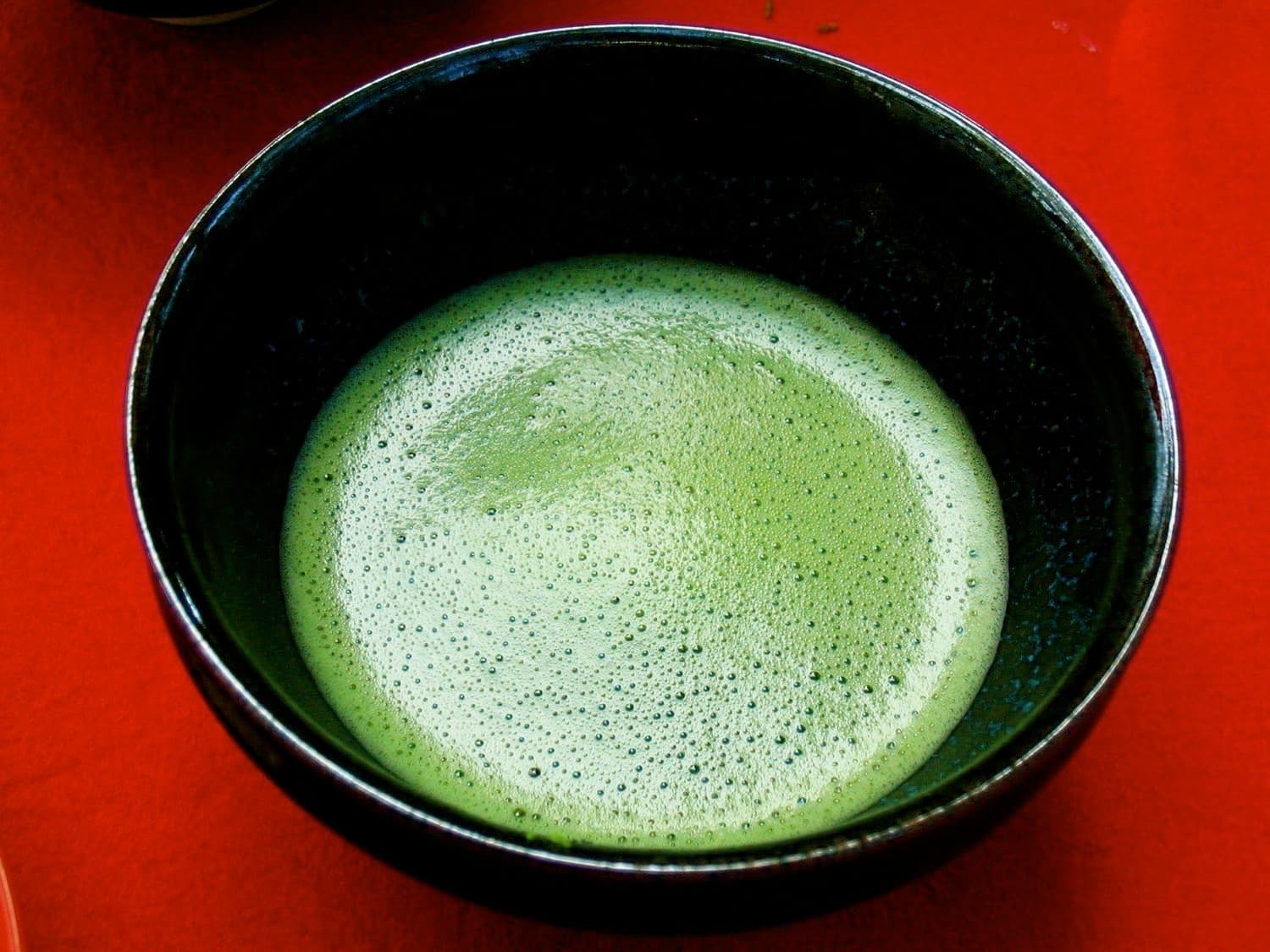
Matcha tea is finely stone-ground powder made from shade-grown green tea leaves — and unlike any other tea, you don't steep it and throw the leaves away; you whisk the whole powdered leaf into water and drink all of it. That one difference is why matcha is more vivid, more intense, and more nourishing per bowl than a standard cup of green: nothing gets strained out.
Growing the leaves in shade for weeks before harvest boosts their chlorophyll and amino acids, which is what gives good matcha its electric-green color and its smooth, savory-sweet flavor. Then the dried leaves are ground so fine they feel like talc.
This guide covers what matcha actually is, how to tell ceremonial grade from culinary grade, how to whisk a smooth, lump-free bowl step by step, and the everyday ways to use the powder beyond the traditional bowl.
What matcha is — and why it's different from steeped green tea
Matcha starts as a green tea leaf, but two things set it apart. First, the plants are shaded for roughly three to four weeks before harvest. Starved of direct sun, the leaves produce more chlorophyll (that intense green) and more amino acids like L-theanine (that savory sweetness and calm-alert feel). Second, after drying, the best leaves are de-stemmed, de-veined, and stone-ground into an ultrafine powder called tencha-turned-matcha.
Because you whisk the powder directly into water rather than steeping and straining, you consume the entire leaf. That means more flavor, a more striking color, and more of the leaf's caffeine and L-theanine in a single serving than a typical steeped green tea. It's the same plant family, but a fundamentally different way of drinking it — closer to eating the leaf than infusing it.
Tea & gear for this guide
Hand-matched Amazon picks with strong owner ratings. As an Amazon Associate, Tea & Peace earns from qualifying purchases.
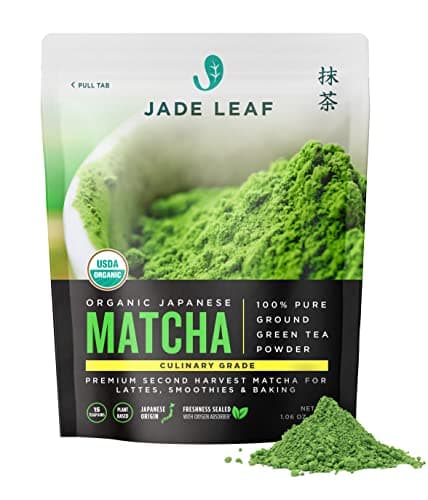
Jade Leaf Matcha Organic Culinary Grade Matcha Powder - Japanese Green
Stone-ground Japanese matcha for lattes and cold brew — 4.5★ across 83,436 ratings.
Shop Now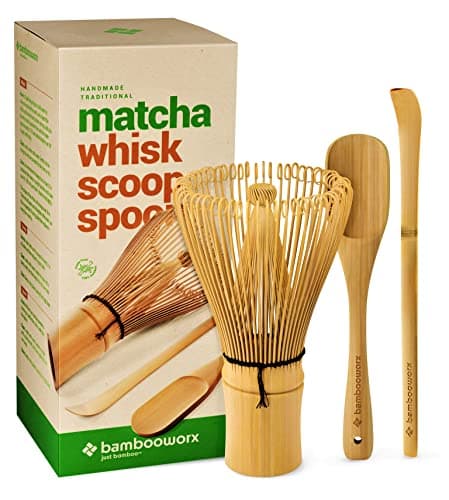
BambooWorx Matcha Whisk Set - (Chasen), Traditional Scoop (Chashaku), Tea
Bamboo whisk, scoop, and bowl to whisk matcha right — 4.6★ across 11,248 ratings.
Shop Now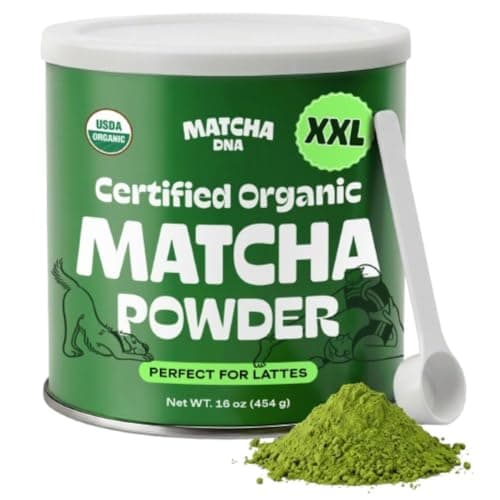
Matcha DNA Organic Matcha Powder - XXL 16oz TIN – Matcha Green Tea - USDA
Stone-ground Japanese matcha for lattes and cold brew — 4.4★ across 16,706 ratings.
Shop NowProduct prices and availability are accurate as of September 14, 2026 and are subject to change. Any price and availability information displayed on Amazon at the time of purchase will apply.
Ceremonial vs culinary grade: which to buy
Matcha is usually sold in two broad grades, and buying the wrong one for your purpose is the most common beginner mistake.
| Grade | Made from | Color & taste | Best for |
|---|---|---|---|
| Ceremonial | Youngest leaves, first harvest | Vivid green, smooth, naturally sweet, no bitterness | Drinking whisked with just water |
| Culinary | Later, more mature leaves | Duller green, stronger and more astringent | Lattes, smoothies, baking, cooking |
Ceremonial grade is meant to be whisked with nothing but water, so it needs to taste good on its own — smooth and sweet, never harsh. Culinary grade is bolder and a bit more bitter, which is exactly what you want when it has to cut through milk, sweetener, or batter.
If you're drinking it straight, spend up for ceremonial. If you're making lattes or baking, culinary is the smarter, cheaper choice. A dull, yellowish-brown powder at any price is a sign of old or low-quality matcha — good matcha is vibrantly green.
The gear you need to whisk matcha
You can make matcha with almost nothing, but a few traditional tools make it much easier to get a smooth, frothy bowl:
- A bamboo whisk (chasen) — the many fine prongs break up clumps and build froth far better than a fork or spoon. The single most useful tool.
- A bowl (chawan) — any wide, shallow bowl works; the width gives your whisk room to move.
- A fine sieve — sifting the powder before whisking is the real secret to a lump-free bowl.
- A bamboo scoop (chashaku) or a regular half-teaspoon for measuring.
No bamboo whisk? A small electric milk frother or a jar you can shake will do in a pinch, though they froth differently. But if you drink matcha regularly, an inexpensive chasen pays for itself in smoother bowls. For a wider look at brewing tools, see our teaware guide.
How to whisk matcha, step by step
Here's the traditional method for a smooth, frothy bowl (this makes usucha, or thin matcha):
- Sift the powder. Push 1–2 teaspoons (about 1–2 grams) of matcha through a fine sieve into your bowl. This is the step most people skip — and it's why their matcha is lumpy.
- Add a little hot water. Not boiling — about 175°F, the same gentle heat as any green tea. Start with just 2 ounces.
- Whisk briskly. Move the chasen in a rapid "W" or "M" zig-zag, not a circle. Keep your wrist loose. After 15–20 seconds you'll see a fine, uniform froth.
- Top up. Add another 2–4 ounces of water to reach your preferred strength, whisking briefly again.
- Drink it fresh. Matcha separates as it sits, so enjoy it within a few minutes, giving it a quick re-whisk if needed.
The two things that matter most: sift first and don't use boiling water. Get those right and lumps and bitterness both disappear.
Everyday ways to use matcha
Traditional whisked matcha is wonderful, but the powder is versatile. Some easy, reliable uses:
- Matcha latte. Whisk culinary matcha with a little hot water, then add steamed or frothed milk (dairy or oat both work well) and a touch of sweetener.
- Iced matcha. Whisk with a splash of hot water, pour over ice, and top with cold milk or water — a summer staple.
- Cold-whisked or shaken matcha. Shake matcha with cold water in a sealed jar for a smooth, low-bitterness cold drink; our cold brew tea homepage covers the cold approach across teas.
- Smoothies. A teaspoon of culinary matcha adds color and a gentle lift.
- Baking. Fold matcha into cookies, cakes, or frosting for flavor and that unmistakable green.
Use ceremonial grade for anything you drink plain, and save culinary grade for these mixed and cooked uses where bolder flavor is an asset.
How to spot good matcha (and avoid the duds)
Matcha quality varies enormously, and price alone won't tell you what's in the tin. A few reliable signals separate the good from the tired:
- Color. Fresh, high-quality matcha is a vivid, almost electric jade green. A dull, yellowish, or brownish-green powder means old, oxidized, or lower-grade leaf that will taste flat and bitter.
- Origin. The most respected matcha comes from Japan, with regions like Uji (near Kyoto), Nishio, and Kagoshima especially known for it. A clear stated origin is a good sign; vague labeling is not.
- Texture. Real matcha is ground incredibly fine — it feels like talcum powder and clumps softly. Gritty or sandy powder points to coarser grinding and lower quality.
- Smell. Good matcha smells fresh, sweet, and grassy. A hay-like, dusty, or stale aroma is a warning.
- Packaging. Because matcha oxidizes fast, quality producers use airtight, opaque tins or resealable foil, often with a harvest or best-by date. Clear plastic tubs on a bright shelf are a red flag.
When you open a good tin, the color and aroma should more or less announce themselves. If the powder looks drab and smells of nothing, no whisking technique will rescue it — start with better matcha. For the tools that make whisking easier, see our teaware guide.
Caffeine, calm, and drinking matcha sensibly
Because you drink the whole leaf, a bowl of matcha delivers more caffeine and more L-theanine than a typical steeped green tea — often somewhere between a strong green tea and a cup of coffee, depending on how much powder you use. Many people describe the effect as "calm energy": alert and focused without the sharp spike or crash, thanks to the L-theanine tempering the caffeine.
That said, matcha is concentrated, so it's easy to have more caffeine than you realize if you drink several bowls. If you're caffeine-sensitive, keep to one serving and have it earlier in the day. Matcha is a beverage, not a treatment, and no single food is a health cure — enjoy it for the flavor and the gentle lift, and if you're managing caffeine or a health condition, talk to a professional. For a fuller comparison of the two lifts, see our matcha vs coffee guide.
From our testing notes
A clear demonstration of why grade matters: whisk a ceremonial matcha and a culinary matcha the same way, each with 175°F water. Whisked plain, the ceremonial bowl is smooth and faintly sweet while the culinary bowl tastes noticeably more astringent — but add milk and sweetener and that same culinary matcha cuts through beautifully where the delicate ceremonial one gets lost. Matching the grade to the use, not just buying the priciest tin, is what makes better matcha.
Sources & further reading
- Kochman J. et al., 'Health Benefits and Chemical Composition of Matcha Green Tea: A Review', Molecules 2021;26(1):85 (caffeine 18.9–44.4 mg per g of matcha) (read 2026-09-10)
- FDA — Spilling the Beans: How Much Caffeine is Too Much? (per 12 fl oz: green tea 37 mg, black tea 71 mg, coffee 113–247 mg; 400 mg/day guidance) (read 2026-09-10)
- Matcha — Wikipedia
- Theanine — Wikipedia
Frequently asked questions
What is matcha tea?
Matcha tea is finely stone-ground powder made from shade-grown green tea leaves. Instead of steeping and straining, you whisk the whole powder into water and drink all of it, which makes matcha more intense in color, flavor, and caffeine than ordinary steeped green tea.
What's the difference between ceremonial and culinary matcha?
Ceremonial grade uses the youngest first-harvest leaves and is smooth and naturally sweet, meant to be whisked with just water. Culinary grade is made from more mature leaves, tastes stronger and slightly bitter, and is intended for lattes, smoothies, and baking where it's mixed with other ingredients.
How do you whisk matcha without lumps?
Sift the powder through a fine sieve first, then whisk with water around 175°F using a bamboo whisk in a rapid zig-zag (W or M) motion rather than a circular stir. Sifting is the step most people skip, and it's the main cause of lumps.
What water temperature is best for matcha?
About 175°F — the same gentle heat as other green teas, never boiling. Water that's too hot scorches the powder and makes matcha bitter. Let a boiled kettle rest a couple of minutes before whisking.
Do I need a bamboo whisk to make matcha?
It helps a lot, but you can improvise. A small electric milk frother or shaking the matcha with water in a sealed jar will break up the powder, though they froth differently than a bamboo chasen. If you drink matcha often, the traditional whisk gives the smoothest results.
How much caffeine is in matcha?
Because you drink the whole leaf, matcha typically has more caffeine than a steeped green tea, often landing between a strong green tea and a cup of coffee depending on how much powder you use. It also contains L-theanine, which is why the lift tends to feel calm and steady. Matcha is a beverage, not a treatment, so moderate your intake if you're caffeine-sensitive.
Can I make matcha with cold water or milk?
Yes. Cold-whisking or shaking matcha with cold water gives a smooth, low-bitterness drink, and matcha lattes with hot or cold milk are popular. Use culinary grade for these mixed drinks and save ceremonial grade for whisking with plain water. See our cold brew tea homepage for the cold method.
How should I store matcha to keep it fresh?
Matcha is delicate and oxidizes quickly once opened. Keep it in an airtight container away from light, heat, air, and moisture, and use it within a few weeks to a couple of months of opening. Good matcha is vividly green; a dull, brownish powder is a sign it's gone stale.
How can I tell if matcha is good quality?
Look for a vivid, jade-green color, a fine talc-like texture, a fresh sweet-grassy aroma, and a clear Japanese origin such as Uji, Nishio, or Kagoshima. Dull, yellowish, gritty powder sold in clear tubs is usually old or low grade and will taste flat and bitter no matter how you whisk it.
Why does my matcha taste bitter and grassy in a bad way?
Usually one of three causes. Water that's too hot is the most common — matcha scorches above about 175°F, so let boiled water rest several minutes. Culinary grade instead of ceremonial is the second: culinary matcha is made for baking and lattes where sugar and milk balance it, and drinking it straight is genuinely harsh. Third is age — matcha oxidizes fast once opened, turning dull olive rather than vivid green, and stale matcha tastes flat and bitter no matter how carefully you whisk it.