
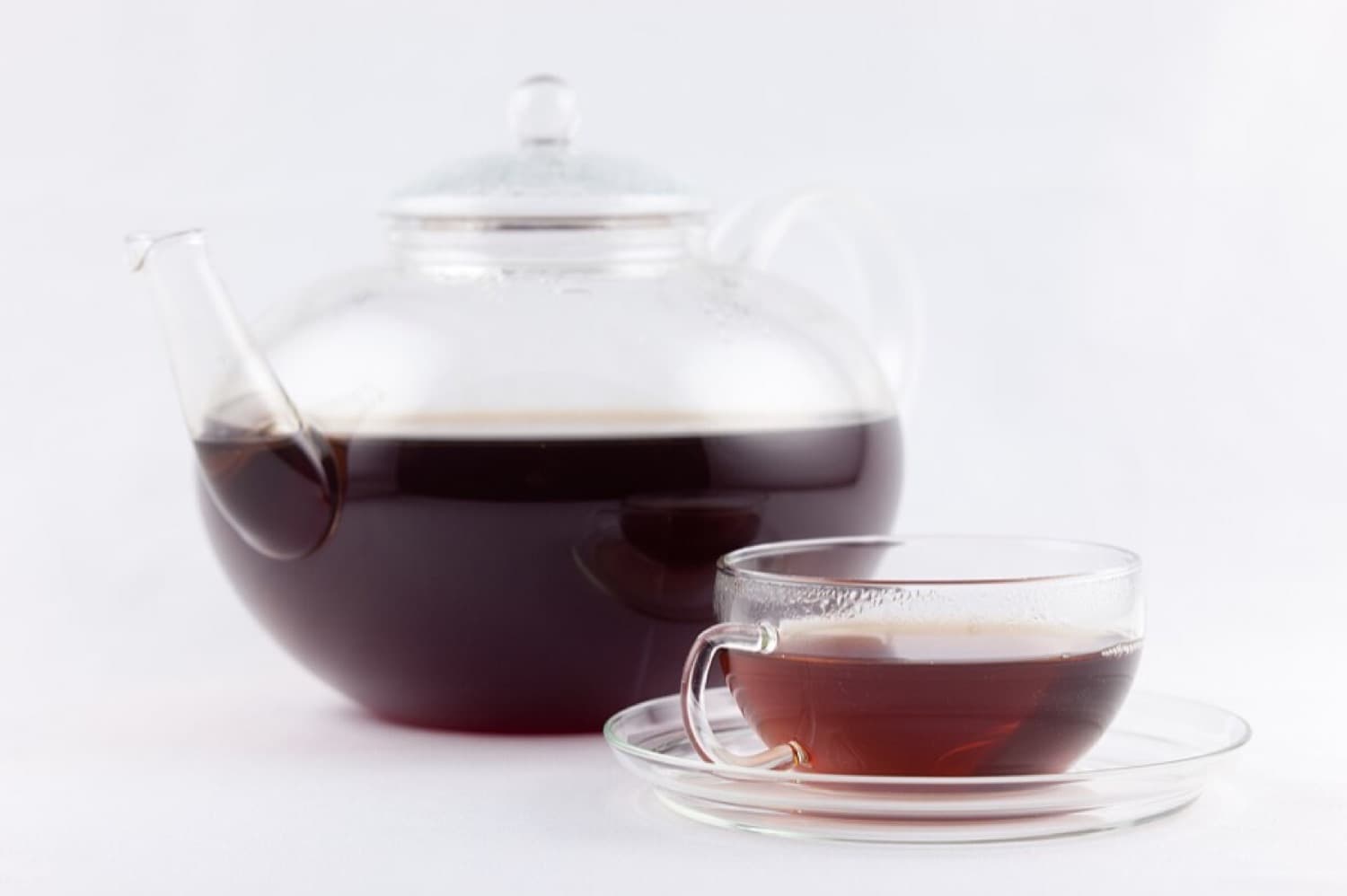
A tea pot is the vessel that turns tea from a solitary mug into something you share — a pot in the middle of the table, cups filled twice, a conversation that lingers because nobody wants to leave while there's still tea. (Whether you write it 'tea pot' or 'teapot,' it's the same beloved object.)
Buying one is more interesting than it first appears, because the material changes everything: how the tea tastes, how long it stays hot, whether one pot suits all your teas or just one. This guide walks through glass, porcelain, cast iron, and unglazed clay teapots, explains which tea each one flatters, covers the features that actually matter, and gives honest picks. Whether you want a single do-everything pot or a specialist for your favorite brew, you'll know what to look for.
Quick answer
- ✓Glass and porcelain teapots are neutral and versatile — the best choice for one do-everything pot.
- ✓Cast iron holds heat longest and suits robust black teas; it needs careful drying.
- ✓Unglazed clay (like Yixing) seasons over time but must be dedicated to one tea type.
- ✓A built-in strainer or removable infuser basket matters more than the pot's looks.
The materials, and what each one does for your tea
Material is the heart of choosing a teapot, because it shapes flavor, heat retention, and how many teas one pot can handle.
| Material | Character | Best for |
|---|---|---|
| Glass | Neutral, lets you see the brew | Any tea; blooming and green teas |
| Porcelain / ceramic | Neutral, holds heat well | Any tea; the classic all-rounder |
| Cast iron (tetsubin) | Retains heat a long time; heavy | Robust black teas, long sessions |
| Unglazed clay (Yixing) | Porous, seasons over time | One dedicated tea (oolong, pu-erh) |
| Stoneware | Rustic, good heat retention | Everyday black and herbal tea |
The key division is neutral vs. porous. Glass, porcelain, and glazed ceramic don't absorb flavor, so one pot brews green today and black tomorrow. Unglazed clay soaks up the character of whatever you brew, which is why it's dedicated to a single tea. If you want one teapot, choose a neutral material. If you're buying a specialist for a tea you adore, clay or cast iron rewards that focus. For the clay tradition specifically, see our chinese oolong tea guide.
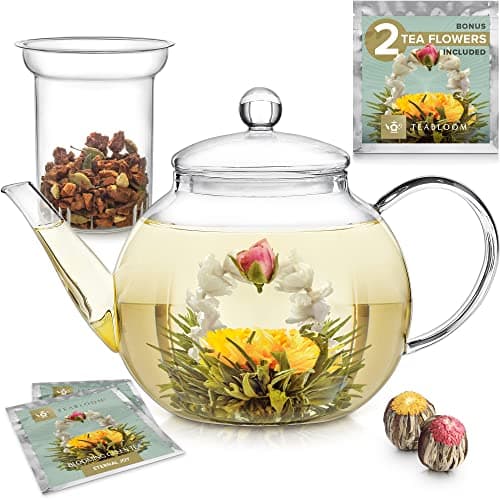
Teabloom Stovetop & Microwave Safe Glass Teapot with Removable
A glass pick — a consistent favorite with strong owner ratings.
Shop Now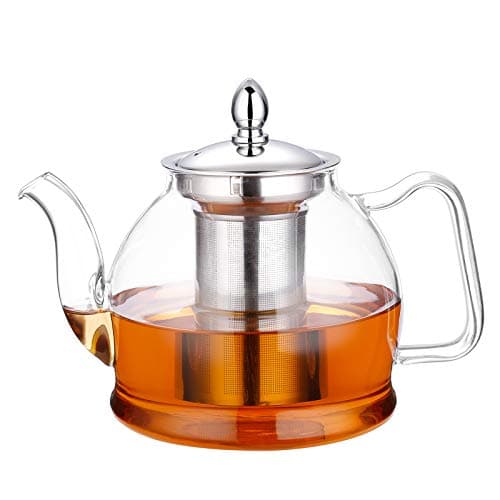
HIWARE 1000ml Glass Teapot with Removable Infuser, Stovetop
A glass 1000ml pick — a consistent favorite with strong owner ratings.
Shop Now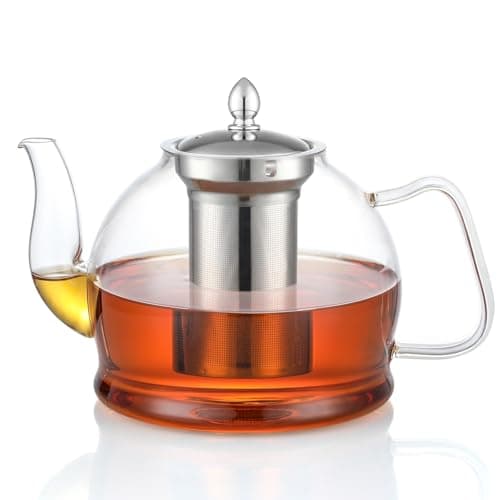
HIWARE 1500ml Glass Teapot with Removable Infuser, Stovetop
A glass 1500ml pick — a consistent favorite with strong owner ratings.
Shop Now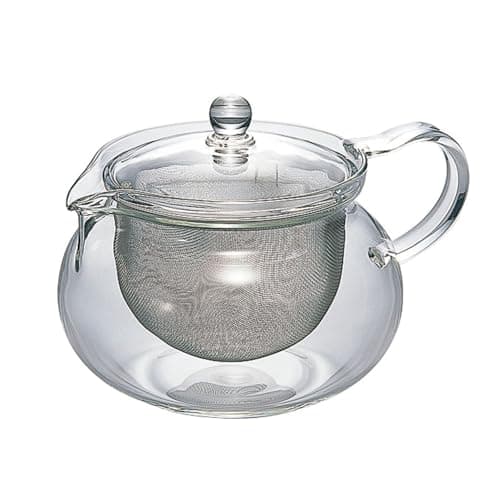
Hario ChaCha Kyusu "Maru" Tea Pot, 700ml
A well-made 700ml pick — a consistent favorite with strong owner ratings.
Shop Now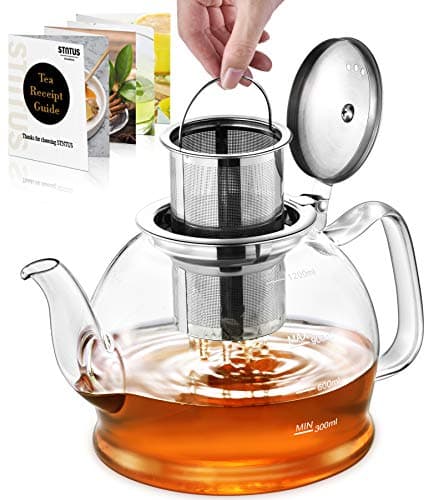
STNTUS Glass Teapot, 40 oz. / 1200 ml for Loose Tea, With
A glass, stainless steel 40 oz pick — a consistent favorite with strong owner ratings.
Shop Now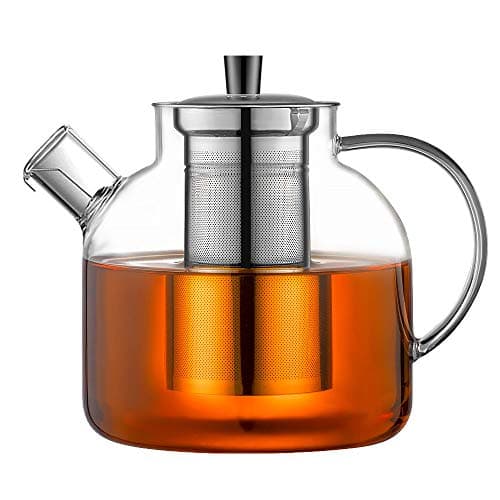
1500ml(50oz) Glass Teapot with Removable Infuser, Ehugos
A glass 1500ml pick — a consistent favorite with strong owner ratings.
Shop NowProduct prices and availability are accurate as of September 14, 2026 and are subject to change. Any price and availability information displayed on Amazon at the time of purchase will apply.
Glass and porcelain: the versatile all-rounders
For most people, the ideal first teapot is glass or porcelain, and here's why they're such safe, satisfying choices.
Glass teapots (usually borosilicate) are neutral and transparent, so you watch the color deepen and the leaves dance — genuinely lovely with blooming teas, green teas, and herbal blends where color is part of the pleasure. They're easy to clean and never hold onto flavor. The trade-offs: they lose heat faster than iron or thick ceramic, and they're more fragile.
Porcelain and ceramic teapots are the timeless classic — neutral like glass but with better heat retention and a reassuring sturdiness. A white porcelain pot suits absolutely any tea and never imparts a taste. Many come with a removable infuser basket or a built-in spout strainer, which is exactly what you want.
Either way, you get a pot that handles your whole tea shelf. If you drink a variety of teas and want one dependable vessel, start here. It pairs naturally with a good tea infuser if the pot doesn't already include a basket.
Cast iron and clay: the specialists
Some teapots are made to do one thing exceptionally well, and they reward a drinker who knows their favorite tea.
Cast iron (tetsubin) teapots — enamel-lined for brewing — hold heat longer than anything else, keeping a pot of robust black tea hot through a long, unhurried session. They're heavy, striking, and durable, but they demand care: dry them completely after every use, inside and out, or they rust. They're best for bold teas rather than delicate greens.
Unglazed clay, above all Yixing zisha from China, is the connoisseur's pot. The porous clay absorbs a trace of each brew, and over months it 'seasons,' rounding and deepening the tea's flavor. The catch is the reason it's special: because it holds flavor, you dedicate one clay pot to one tea type — all oolong, or all pu-erh, never mixed. Never wash it with soap; hot water only. If you've found the tea you love most, a dedicated clay pot is a beautiful, long-term relationship. Our gaiwan guide covers the neutral alternative if you'd rather stay flexible.
Features that actually matter
Beyond material, a handful of practical features separate a teapot you'll love from one that frustrates you:
- A clean pour. The spout should pour in a controlled stream and cut off without dribbling down the side. This is the most common complaint about cheap teapots — read reviews for it specifically.
- A built-in strainer or removable basket. You need to keep leaves out of the cup. A wide, fine-mesh removable basket is ideal because it also gives leaves room to expand; a built-in spout strainer works if the holes are fine.
- The right capacity. Match it to your table (see the next section).
- A comfortable, cool handle. You'll lift it full and hot, repeatedly.
- A secure lid. A lid that stays put when you pour, ideally with a little catch or a knob you can hold.
Get these right and the material almost matters less — a well-made pot in any neutral material serves beautifully. Prioritize pour and strainer over decoration.
What size teapot should you buy?
Capacity is easy to get wrong in both directions — too small and you're constantly re-brewing, too large and the tea cools before you finish it.
- Solo or two people (roughly 350-600 ml): a small pot brews one or two mugs' worth and stays hot because you drink it quickly. Ideal for everyday personal use.
- Small gathering (around 700-1,000 ml): the sweet spot for a household or a couple of guests — a couple of cups each with a top-up.
- A full table (1,000 ml and up): good for entertaining, but the tea cools as it sits, and if it's over-steeping on the leaves it can turn bitter. Consider decanting into a warmed second vessel, or use a pot with a removable infuser you can lift out once it's brewed.
A common mistake is buying a big showpiece pot and then brewing bitter, lukewarm tea in it most days. If you usually drink alone, a small pot (or a mug and a good infuser) serves you better. Match the pot to your everyday reality, not your once-a-year dinner party.
One teapot or a small collection?
A fair question once you're shopping: do you buy one versatile pot, or start a little collection? The honest answer depends on how you drink.
Buy one good neutral pot if you drink a range of teas casually and want simplicity. A glass or porcelain teapot with a removable basket handles everything from morning green to evening herbal, and one well-chosen pot beats a shelf of half-used ones. This is the right call for most people.
Consider a small collection if you drink several teas seriously and notice the differences. A common, sensible set looks like this:
- A neutral glass or porcelain pot for everyday variety and for delicate teas.
- A cast-iron pot for long, slow sessions of robust black tea.
- A dedicated clay pot for the one tea you love most — all oolong, or all pu-erh.
That trio covers nearly every situation without clutter. The trap to avoid is buying beautiful pots faster than you use them; a teapot earns its shelf space by being poured from, not admired. Start with one neutral pot, live with it a while, and add a specialist only when a specific tea makes you wish for one. For the clay tradition, our chinese tea set guide goes deeper.
Caring for your teapot so it lasts
A teapot cared for well becomes a lifelong companion; neglected, even a fine one stains, cracks, or sours.
- Neutral pots (glass, porcelain, ceramic): rinse with hot water after use, use mild soap when needed, and air-dry. Remove tannin stains with a gentle baking-soda paste or a soak.
- Unglazed clay: never soap — it destroys the seasoning. Rinse with hot water, wipe the outside, air-dry fully with the lid ajar.
- Cast iron: dry completely after every single use to prevent rust; never leave water sitting inside.
- All lids: store slightly ajar so no moisture is trapped and nothing turns musty.
- Descale if needed: hard-water spots respond to the same citric-acid trick used on kettles — see how to clean a tea kettle.
That small routine keeps every pot pouring clean, tasting true, and looking cared-for. A good teapot is meant to be used daily and passed on. For how it fits your wider kit, see the teaware overview — and remember, the point of a pot is to slow down and share, which is the whole spirit of Tea & Peace.
From our testing notes
A quick heat-retention comparison from everyday use: fill a glass, a porcelain, and a cast-iron teapot with the same boiling water and the cast iron stays hottest longest by a wide margin, porcelain sits in the middle, and glass cools fastest. That's why cast iron suits slow black-tea sessions and glass suits teas you'll finish quickly.
Sources & further reading
Frequently asked questions
What's the best teapot for someone who drinks many types of tea?
A neutral glass or porcelain teapot with a removable infuser basket. Because these materials don't absorb flavor, one pot brews green, black, oolong, and herbal teas without any carryover. Save porous unglazed clay for when you want a pot dedicated to a single favorite tea.
Why can't I use a Yixing clay teapot for different teas?
Unglazed clay is porous and absorbs a little of each brew's character. Over time it seasons to one tea and would muddy others, so you dedicate a clay pot to a single type, like oolong or pu-erh. For versatility, choose neutral glass or porcelain instead.
Is a cast iron teapot good for everyday tea?
It's excellent for robust black teas and long sessions because it holds heat so well, but it's heavy and must be dried completely after every use to avoid rust. It's less suited to delicate green teas. For an everyday do-everything pot, porcelain or glass is easier.
What size teapot is best for one person?
A small pot of about 350-600 ml is ideal for one or two people. It brews a mug or two and stays hot because you drink it quickly. Larger pots let tea cool and can over-steep on the leaves, turning bitter, if you drink slowly.
How do I stop tea from over-steeping in a teapot?
Use a teapot with a removable infuser basket so you can lift the leaves out once the tea has brewed, or decant the finished tea into a second warmed pot. Leaving leaves sitting in the water is what makes a pot of tea grow bitter and stewed.
Can I put a teapot in the dishwasher?
Many glazed ceramic and glass teapots are dishwasher-safe, but check the maker's guidance. Never put unglazed clay or cast iron in the dishwasher — clay loses its seasoning and iron rusts. Hand-rinsing with hot water is the safest choice for any teapot.
Do I need a separate infuser if my teapot has a strainer?
Not necessarily. A teapot with a good built-in strainer or a roomy removable basket handles loose leaf on its own. If your pot only has a few large spout holes that let fragments through, adding a fine-mesh strainer when you pour helps keep the cup clear.
What size teapot should I buy?
Match it to how you actually drink rather than to entertaining you imagine doing. For one or two people, a 500-700ml pot is the sweet spot — big enough for refills, small enough that the last cup isn't stone cold. Family or guest use wants 1-1.2 litres. Beyond that, tea cools and over-steeps before it's poured, which is why large pots usually disappoint; two medium pots beat one enormous one.