
Which tea infuser should you actually buy? It is the most-asked question from anyone switching from tea bags to loose leaf, and the honest answer is shorter than the wall of gadgets at the store suggests: get a roomy basket, skip the cramped little balls, and you'll make far better tea.
The job of a tea infuser is simple — hold the leaves in the water while they steep, then lift them out. But the design matters enormously, because loose leaves need room to expand. A tea infuser that crowds the leaves brews thin, weak tea no matter how much you use. This guide explains why, compares the main styles, and gives specific picks so you can choose one and get on with drinking good tea.
Quick answer
- ✓The best everyday tea infuser is a wide fine-mesh basket that gives leaves room to unfurl.
- ✓Ball and 'tea egg' infusers cramp the leaves and brew weaker tea — fine only in a pinch.
- ✓Fine mesh beats large holes for catching small leaf fragments.
- ✓For the fullest flavor, brew loose and pour through a strainer instead of confining the leaves at all.
Why the design of a tea infuser matters so much
Here is the single most important thing to understand: dry tea leaves expand dramatically when they steep — many teas swell to several times their dry size as they rehydrate and open. Water needs to flow freely around and through those opened leaves to pull out flavor. That is the whole game.
When leaves are packed into a tiny sphere, they can't fully open, and water can't circulate. The result is weak, one-note tea even when you've used plenty of leaf. This is the number-one reason people conclude that loose leaf 'isn't worth it' — they were using a cramped infuser, not making a fair comparison. Give the same tea a wide basket and it tastes completely different: fuller, rounder, more of everything the leaf has to offer. So when you shop for a tea infuser, the first question isn't the price or the shape's cuteness — it's simply: do the leaves have room to move?
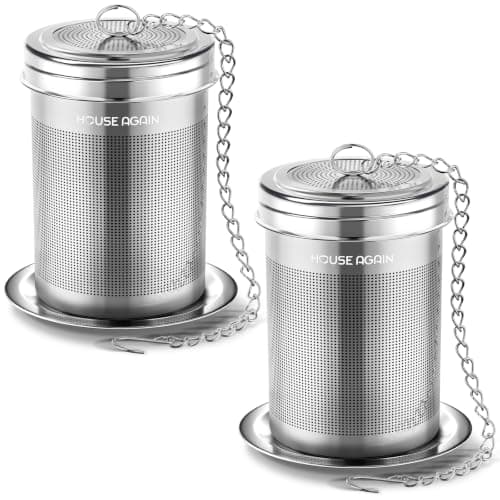
HOUSE AGAIN Tea Infuser, Extra Fine Mesh Tea Infusers for Loose
A stainless steel pick — a consistent favorite with strong owner ratings.
Shop Now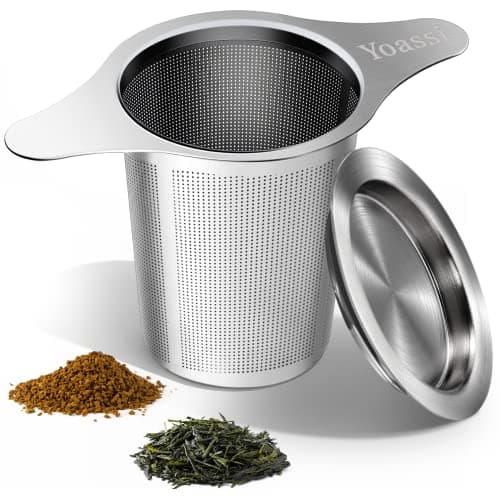
Extra Fine 18/8 Stainless Steel Tea Infuser Mesh Strainer with
A stainless steel pick — a consistent favorite with strong owner ratings.
Shop Now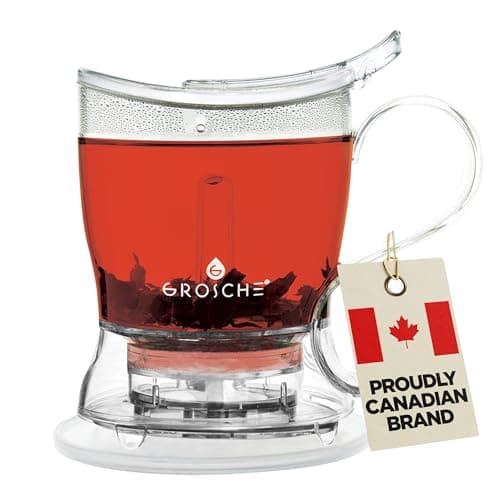
GROSCHE Aberdeen Tea Infuser Teapot & Smart Tea Maker
A BPA-free pick — a consistent favorite with strong owner ratings.
Shop Now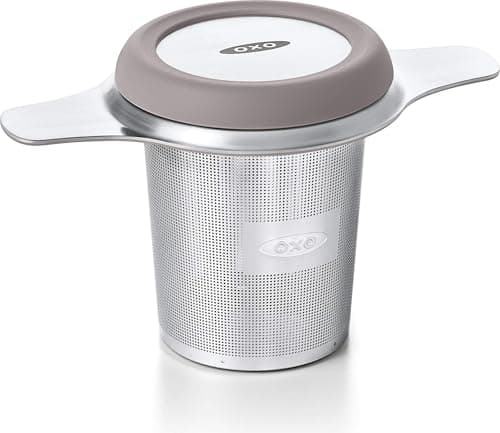
OXO Brew Tea Infuser Basket
A well-made pick — a consistent favorite with strong owner ratings.
Shop Now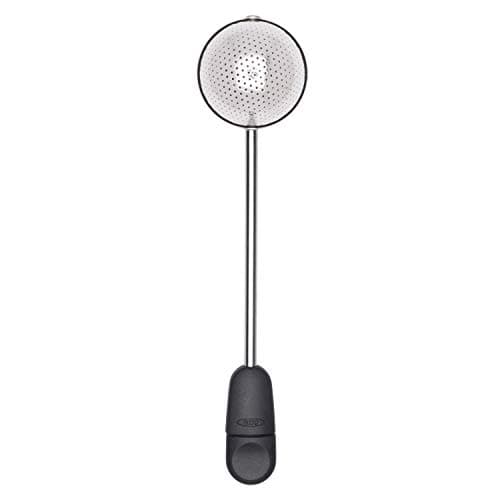
OXO BREW Twisting Ball Tea Infuser
A well-made pick — a consistent favorite with strong owner ratings.
Shop Now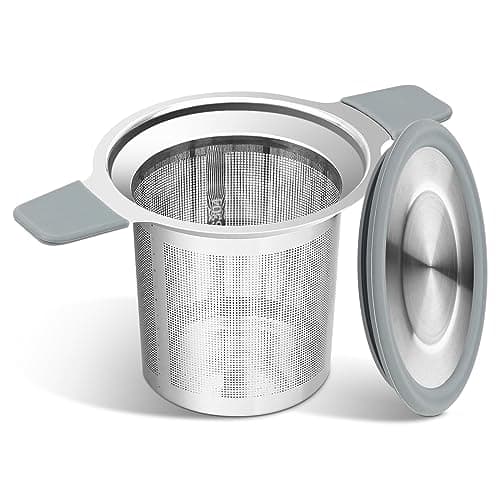
Ohtomber Tea Infuser Strainers, Stainless Steel Loose Leaf Tea
A stainless steel pick — a consistent favorite with strong owner ratings.
Shop NowProduct prices and availability are accurate as of September 14, 2026 and are subject to change. Any price and availability information displayed on Amazon at the time of purchase will apply.
The main types of tea infuser, ranked
There are more infuser styles than anyone needs. Here they are, honestly ranked from best to worst for everyday brewing:
| Infuser type | Room for leaves | Verdict |
|---|---|---|
| Basket infuser (fine mesh) | Excellent | Best all-round choice; use this |
| Loose + separate strainer | Unlimited | Fullest flavor, one extra step |
| Built-in basket (in a mug or pot) | Very good | Great if you want an all-in-one |
| Large 'tea sac' / paper filter | Good | Handy for travel, single-use |
| Ball / 'tea egg' | Poor | Cramps leaves; weak tea |
| Silicone novelty shapes | Very poor | Cute, too small, hard to clean |
The pattern is clear: the more room the leaves get, the better the cup. A fine-mesh basket that nearly fills your mug is the sweet spot of flavor and convenience. Novelty silicone infusers shaped like animals or divers are fun gifts but make genuinely worse tea — the chamber is tiny. If someone gave you one, keep it for weak herbal blends and buy a basket for real tea.
Basket infusers: the everyday winner
A basket infuser is a fine-mesh cup that sits inside your mug or teapot, usually with a lid that doubles as a drip tray when you lift it out. It is what we recommend to almost everyone, for good reasons:
- The leaves get room to fully expand, so you extract full flavor.
- Fine mesh catches even small, broken leaves — important for teas like rooibos or cut black tea that shed fines.
- It fits most mugs and many teapots, so one infuser serves your whole kitchen.
- The lid keeps heat in while steeping and gives you a place to rest the dripping basket afterward.
When choosing one, look for a basket wide and deep enough that it isn't crammed, mesh fine enough to stop fragments, and stainless steel construction that won't rust or hold odors. Brands like Finum and OXO make consistently well-regarded baskets. This is the infuser that makes loose leaf tea genuinely easy, and it's the piece we'd tell a beginner to buy first.
When a strainer beats an infuser
If you want the absolute best cup and don't mind one extra step, skip the infuser entirely: brew your leaves loose in the pot or mug, then pour through a fine-mesh strainer into your cup. Nothing confines the leaves at all, so extraction is complete — this is how tea is served in most traditional settings.
The trade-off is simply that you handle wet leaves afterward and rinse a strainer. For a single mug it's barely more effort than emptying a basket. For a teapot serving several people, brewing loose and straining is often easier than fishing out a basket, and it tastes better. Many teapots come with a built-in strainer at the spout for exactly this reason. If you're brewing Chinese teas in a small vessel, a strainer over a fairness pitcher is standard — see our gaiwan guide. For everyday Western-style mugs, though, a good basket infuser gets you 95% of the way with less fuss.
Materials, mesh, and what to avoid
A few practical notes on construction will save you from buying the wrong thing:
- Stainless steel mesh is the standard: durable, doesn't rust, doesn't hold flavor. This is what you want for the basket itself.
- Fine mesh over perforated metal. Baskets with a few large punched holes let small leaf bits through into your cup. Woven fine mesh catches them.
- Food-grade silicone is fine for lids and rims (it grips the mug edge), but avoid infusers where the whole steeping chamber is silicone and tiny.
- Avoid rust-prone or thinly plated metals in cheap sets; they can leave a metallic taste and corrode.
- Check the size against your mug. An infuser that's too small for your favorite mug defeats the purpose — you want it to nearly fill the vessel so leaves spread out.
Get these right and an infuser lasts years. It's a small purchase that quietly determines whether every future cup tastes full or flat. For how it fits with the rest of your kit, see the teaware overview.
How to use and clean a tea infuser
Using one well takes seconds, and a couple of habits keep your tea tasting clean:
- Add the leaves to the basket — roughly one teaspoon per cup of water, adjusting to taste. Don't overfill; leave room to expand.
- Lower it into hot water at the right temperature for your tea, and steep for the recommended time.
- Lift it out when the time's up. Leaving the infuser in leads to over-steeping and bitterness, which is the main advantage of an infuser over a bag you forget about.
- Rinse right away with hot water. Loose leaves come out easily when fresh; dried-on leaves need a soak.
- Deep-clean occasionally — mesh can clog with fine particles and tannin stains over time. A soak in a mild vinegar solution clears it, much like descaling. (Our kettle-cleaning guide uses the same trick.)
That's the whole routine. An infuser you rinse promptly stays clean and never passes an old, stale flavor into fresh tea.
Common mistakes people make with tea infusers
A few avoidable habits quietly ruin cups that should have been good. If your loose leaf tea keeps underwhelming you, one of these is usually why:
- Overpacking the basket. Cramming in leaves so they can't expand defeats the whole purpose. Leave room — a loosely filled basket brews better than a stuffed one.
- Choosing an infuser that's too small for the mug. A tiny infuser bobbing in a big mug means the leaves never spread out. Match the infuser to the vessel so it nearly fills it.
- Leaving the infuser in the whole time you drink. Loose leaf keeps extracting; lift the basket out when the timer's up or the last mouthfuls turn bitter and astringent.
- Never deep-cleaning the mesh. Old tannin and oils build up in the weave and pass a stale, flat taste into fresh tea. Soak it clean now and then.
- Blaming the tea instead of the tool. If a tea tastes thin, try it in a roomy basket before writing it off. Nine times out of ten the leaf was fine and the infuser was the problem.
Fix these and even inexpensive tea tastes noticeably better — no upgrade to the leaf required.
Matching the infuser to how you drink tea
The 'best' infuser depends a little on your habits, so here's a quick self-guide:
- You brew one mug at a time, daily: a wide fine-mesh basket infuser. Simplest, best flavor for the effort.
- You brew a pot to share: a teapot with a built-in strainer, or brew loose and pour through a strainer.
- You want a travel mug that brews as you go: an infuser mug with a built-in basket and a lid.
- You drink very fine or powdery teas (rooibos, cut herbals): prioritize the finest mesh you can find.
- You mostly drink tea bags but want to dabble: a basket infuser is a cheap, low-commitment way to try loose leaf without changing anything else.
Whatever you choose, the golden rule holds: give the leaves room. Do that and even modest tea tastes better. It's the least glamorous piece of teaware and one of the most consequential — and a calm, unhurried cup is exactly what we're about at Tea & Peace.
From our testing notes
A simple test that shows why room matters: brew the same loose black tea two ways for the same time and temperature — once in a pinched ball infuser, once in a wide basket. The basket cup consistently pours a darker, fuller color, because the opened leaves had room for water to circulate. Same leaf, same water, very different cup.
Sources & further reading
Frequently asked questions
What is the best type of tea infuser?
A wide, fine-mesh basket infuser. It gives the leaves room to fully expand for the strongest flavor, catches small fragments, and fits most mugs and teapots. Ball-shaped and novelty infusers cramp the leaves and make weaker tea.
Why does my tea taste weak with a ball infuser?
Because the ball is too small for the leaves to open. Tea leaves swell to several times their dry size when steeping, and water can't circulate through a packed ball. Switch to a roomy basket infuser and the same tea will taste noticeably fuller.
How many leaves do I put in a tea infuser?
About one teaspoon of loose leaf per cup of water is a good starting point, then adjust to taste. Don't overfill the basket — the leaves need room to expand, so a loosely filled infuser brews better than a packed one.
Can I use a tea infuser in any mug?
Most basket infusers fit standard mugs, but check the dimensions before buying. You want the basket to sit securely and be wide enough to give the leaves room. An infuser that's too small for your favorite mug defeats the purpose.
How do I clean a tea infuser that's stained or clogged?
Rinse it with hot water right after each use so leaves don't dry on. For built-up tannin stains or clogged mesh, soak it in a mild white-vinegar solution for a while, then rinse well — the same acid trick used to descale a kettle.
Is a tea infuser better than tea bags?
Generally yes, because loose leaf tea in a roomy infuser is usually higher quality and fresher than the small, broken leaves in most bags. You also control the amount and can re-steep good leaves. A basket infuser makes the switch from bags nearly effortless.