
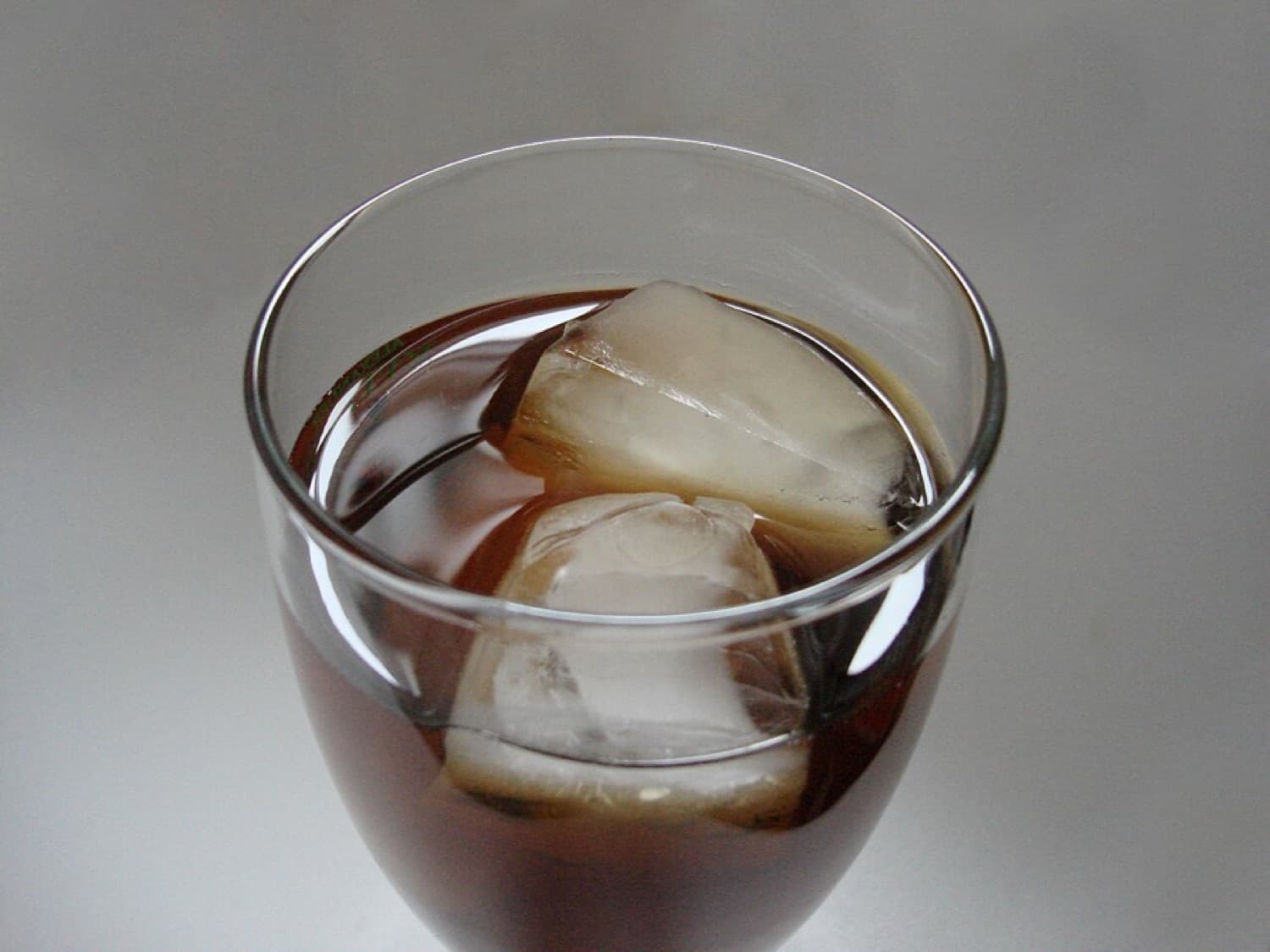
The ideal cold brew tea ratio is about 1 tablespoon of loose-leaf tea (or one tea bag) for every 8 ounces of cold water. That single number is the foundation of a good pitcher, and getting it right matters more than almost anything else.
Why? Because cold water extracts flavor slowly and gently. There's no boiling heat to force the leaves open, so the amount of tea you use largely decides how bold or how thin your final cup tastes. Get the ratio right and everything else, timing, straining, serving, falls into place.
Below you'll find exact measurements for every common batch size, how to scale up for a crowd, and how to nudge the ratio when you're serving over a lot of ice. It all builds on the core method in our cold brew tea guide.
The Standard Ratio at a Glance
For most teas, aim for a 1:16 ratio by volume in loose-leaf terms, roughly 1 tablespoon of tea per 8-ounce cup of water. Here's how that scales:
| Water | Loose-leaf tea | Tea bags |
|---|---|---|
| 1 cup (8 oz) | 1 Tbsp | 1 bag |
| 2 cups (16 oz) | 2 Tbsp | 2 bags |
| 1 quart (32 oz) | 4 Tbsp (¼ cup) | 4 bags |
| Half gallon (64 oz) | 8 Tbsp (½ cup) | 8 bags |
| 1 gallon (128 oz) | 1 cup | 16 bags |
This is your reliable starting point. From here you can dial stronger or lighter based on the tea and your taste. A pitcher-sized batch (1 quart) with 4 tablespoons is the most common home batch and a great place to begin.
Why 1:16 rather than the tighter ratios used for hot brewing? Cold water extracts less efficiently, so cold brew generally needs a touch more leaf per ounce of water than a hot cup to reach full flavor. The 1-tablespoon-per-cup guideline builds that in. It also happens to line up neatly with tea bags, one bag holds roughly a tablespoon's worth of leaf, which is why the same ratio works whether you brew loose or bagged. Keep this number in your head and you can eyeball a good pitcher without any measuring tools at all. For hot tea, the numbers shift; our general tea to water ratio chart covers every type by weight.
Tea & gear for this guide
Hand-matched Amazon picks with strong owner ratings. As an Amazon Associate, Tea & Peace earns from qualifying purchases.
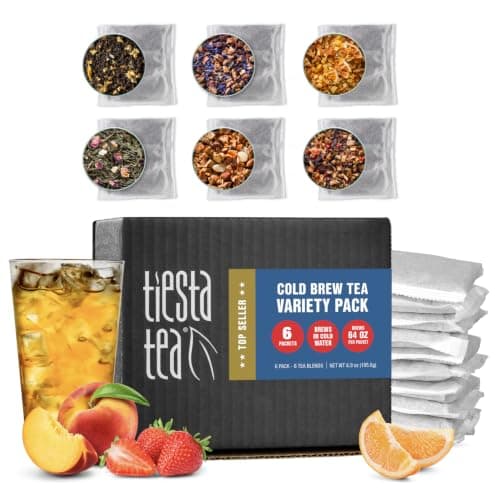
Tiesta Tea - 6-Pack Cold Brew Variety, Loose Leaf, Medium to Non
Tea made for smooth, low-bitterness cold brewing — 4.6★ across 8,891 ratings.
Shop Now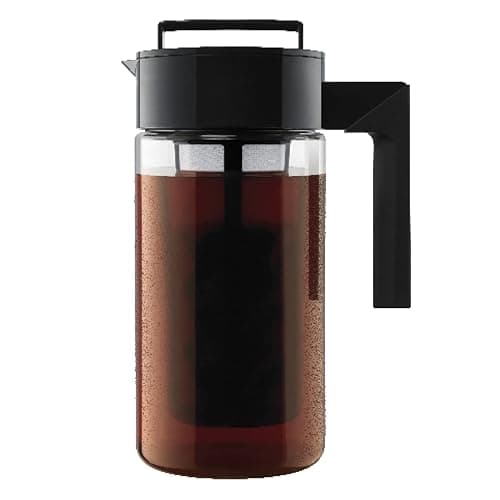
Takeya Deluxe Cold Brew Coffee Maker - BPA-Free Tritan Pitcher with
Airtight brewing pitcher — doubles for cold-brew tea — 4.6★ across 67,470 ratings.
Shop Now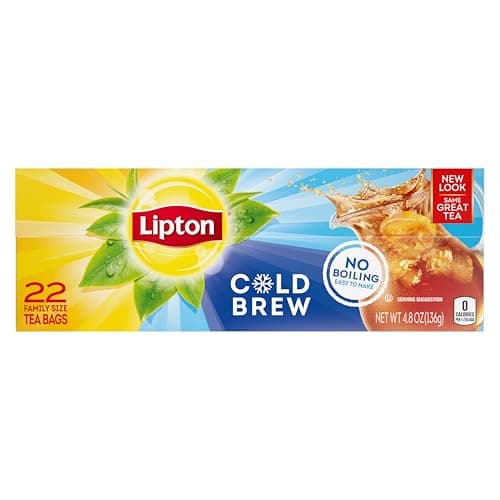
Lipton Cold Brew Iced Tea Bags, Family Size Zero Calories, Easy-To-Make
Tea made for smooth, low-bitterness cold brewing — 4.8★ across 2,206 ratings.
Shop NowProduct prices and availability are accurate as of September 14, 2026 and are subject to change. Any price and availability information displayed on Amazon at the time of purchase will apply.
By Weight vs. By Volume
Tablespoons are convenient, but tea leaves vary wildly in density. A tablespoon of fluffy white tea weighs far less than a tablespoon of tightly rolled gunpowder green. If you want consistency batch to batch, weigh your tea.
A solid rule by weight is about 1 gram of tea per 30-40 ml of water (roughly 8 grams per liter). For a standard 1-liter pitcher, that's around 8-10 grams of leaf. A small kitchen scale removes the guesswork, especially if you're brewing loose-leaf teas of different shapes.
That said, most home brewers do just fine with the tablespoon method. Weight matters most when you've found a ratio you love and want to reproduce it exactly every time.
Adjusting the Ratio for Ice
Here's the mistake that catches everyone: you brew a perfectly balanced pitcher, pour it over a tall glass of ice, and within minutes it tastes watered down. Melting ice dilutes your carefully measured brew.
The fix is to brew stronger than you plan to drink. If you serve over lots of ice, bump the ratio up to about 1.5 tablespoons per cup, or 6 tablespoons for a quart. As the ice melts, the tea settles back into balance.
Another approach is to freeze some of the brewed tea into ice cubes. Then your ice dilutes the drink with more tea instead of plain water, keeping the flavor consistent to the last sip. This trick works beautifully for cold brew iced tea served on hot afternoons.
Making a Concentrate
Sometimes you want a cold brew concentrate, a stronger base you dilute to order. It's handy for saving fridge space, for serving a crowd, or for topping with milk or sparkling water.
To make a concentrate, roughly double the tea in your ratio: about 2 tablespoons of loose leaf (or 2 bags) per cup of water instead of one. Steep as usual. The result is intense and full, meant to be cut with water, ice, milk, or lemonade at serving time.
A simple dilution guide:
| Concentrate | Water/mixer to add | Result |
|---|---|---|
| 1 part | 1 part | Bold, full-strength tea |
| 1 part | 2 parts | Standard, easy-drinking tea |
Concentrates are especially useful for milk-based drinks or for making a big batch of cold brew iced tea without a giant pitcher. Just remember: a concentrate carries more caffeine per ounce, so account for that if you're sensitive.
Ratio Tweaks by Tea Type
The base ratio works across the board, but small adjustments suit each tea's character:
- Green and white tea: stick to 1 Tbsp per cup, or slightly less. They're delicate and can turn vegetal if overloaded. See cold brew green tea.
- Black tea: 1 to 1.25 Tbsp per cup for a bolder, fuller body. It stands up to a heavier hand.
- Oolong: 1 Tbsp per cup; its layered flavor comes through without crowding.
- Herbal and hibiscus: 1 Tbsp per cup, but taste as you go, hibiscus is potent and tart, so some prefer a touch less.
When in doubt, err on the side of slightly more tea. A cold brew that's a little strong is easy to dilute with water or ice; a weak one can't be rescued.
How the Ratio Interacts With Steep Time
Ratio and steep time work together like two dials on the same machine. Use more tea and you can steep for less time; use less tea and you'll want to steep longer to reach the same strength.
This gives you flexibility depending on your schedule. Short on time? Bump the ratio up to 1.5 tablespoons per cup and your brew will be ready an hour or two sooner. Brewing overnight anyway? Stick to the standard 1 tablespoon and let the longer steep do the work.
A rough rule of thumb:
- Standard ratio (1 Tbsp/cup): steep the full recommended time for the tea type.
- Heavier ratio (1.5 Tbsp/cup): you can shorten the steep by roughly 20 percent.
- Lighter ratio (0.75 Tbsp/cup): add a couple of hours to compensate.
Because cold water extracts gently, you have a lot of room to play. For the timing side of the equation, see our cold brew tea steep time chart, and remember both dials also affect cold brew tea caffeine.
Common Ratio Mistakes
A few predictable slip-ups throw the ratio off. Watch for these:
- Measuring dry-packed vs. fluffed. Scooping tightly compressed tea gives you more leaf per tablespoon than a loose scoop. Fluff the tea first, or weigh it, for consistency.
- Forgetting to account for ice. If you brew at the standard ratio and serve over lots of ice, you've effectively diluted your ratio. Brew stronger, or use tea ice cubes.
- Reusing spent leaves at full ratio. Second-steep leaves have less to give, so a second batch at the same water volume comes out weak. Add fresh tea or reduce the water.
- Guessing at big batches. Eyeballing a gallon is where ratios go wrong. Multiply the standard measurement rather than estimating.
Avoid these and your ratio stays reliable from a single cup to a party-sized pitcher. When you nail the ratio, the rest of the cold brew tea method is nearly foolproof.
Scaling Up for a Crowd
Making cold brew for a party or a week of drinks? The ratio holds no matter the size, you just multiply. For a full gallon, use about 1 cup of loose tea or 16 tea bags.
A few practical tips when scaling up:
- Use a container large enough that the leaves have room to move and hydrate fully.
- Give the mixture a stir an hour in so no clumps of dry leaf float on top.
- Strain into a clean pitcher for storage, and keep only what you'll drink within 3-4 days, cold brew is fresh and unpasteurized.
If you brew big batches often, a large pitcher with a built-in filter saves a lot of straining. Our best cold brew tea pitcher picks include half-gallon models built exactly for this.
From our testing notes
A useful reference point: 1 standard tea bag holds roughly 2 grams of tea, which maps almost exactly to 1 tablespoon of most loose-leaf blends and to one 8-ounce cup of water. That 1 bag : 1 cup shorthand is why the ratio is so easy to scale without a scale.
Sources & further reading
Frequently asked questions
What is the best cold brew tea ratio for beginners?
Start with 1 tablespoon of loose tea (or 1 tea bag) per 8 ounces of cold water. For a standard quart pitcher, that's 4 tablespoons or 4 bags. Taste the result and adjust up or down next time, this ratio gets you a balanced cup on the first try.
How much tea do I use for a 1-liter pitcher?
About 4 tablespoons of loose-leaf tea, or 4 tea bags, per liter. By weight, aim for 8-10 grams. If you'll serve it over lots of ice, nudge up to 5-6 tablespoons so it doesn't dilute.
Can I use the same ratio for tea bags and loose leaf?
Yes, one tea bag per cup roughly matches one tablespoon of loose leaf, since most bags hold about 2 grams. It's the simplest way to keep your ratio consistent. See our cold brew tea bags guide for more.
Should I use more tea for cold brew than hot brew?
Often a little more, yes. Cold water extracts less efficiently than boiling water, so a slightly higher tea-to-water ratio helps cold brew reach full flavor. Compare the two approaches in our cold brew vs hot brew tea guide.
My cold brew is too strong. What do I do?
Simply dilute it with cold water or ice until it tastes right, no need to start over. Next batch, reduce the tea by 25 percent or shorten the steep time. It's always easier to fix an over-strong brew than a weak one.
Does a stronger ratio mean more caffeine?
Generally yes, more tea leaf in the water means more caffeine extracted, along with more flavor. If you're watching caffeine, use the standard ratio and a shorter steep. Our cold brew tea caffeine page explains the details.
How do I measure loose tea without a scale?
A standard tablespoon works well as a volume measure, about 1 level tablespoon per cup of water. Fluffy teas may need a slightly heaped spoon; dense, rolled teas a level one. A scale gives more precision, but tablespoons are perfectly practical for home brewing.
Is the cold brew ratio the same for herbal teas?
It's a good starting point, but adjust to taste. Hibiscus is potent and tart, so some people use slightly less than a tablespoon per cup, while mild herbs like chamomile can take a full tablespoon or more. Because herbal teas are hard to over-steep, you can safely experiment with both ratio and time.
Does the ratio change for iced tea versus room-temperature drinking?
The brewing ratio stays the same, but if you'll pour it over ice, brew a bit stronger so melting doesn't dilute the flavor. A quick trick is freezing some brewed tea into cubes, then your ice reinforces the tea instead of watering it down. See our cold brew iced tea recipe for more.
What ratio should I use for a cold brew concentrate?
Double the standard ratio, about 2 tablespoons of loose leaf (or 2 bags) per cup of water, to make a concentrate you dilute at serving time. Cut it roughly one part concentrate to one or two parts water, milk, or lemonade. Concentrates save fridge space and are great for milk-based tea drinks.