
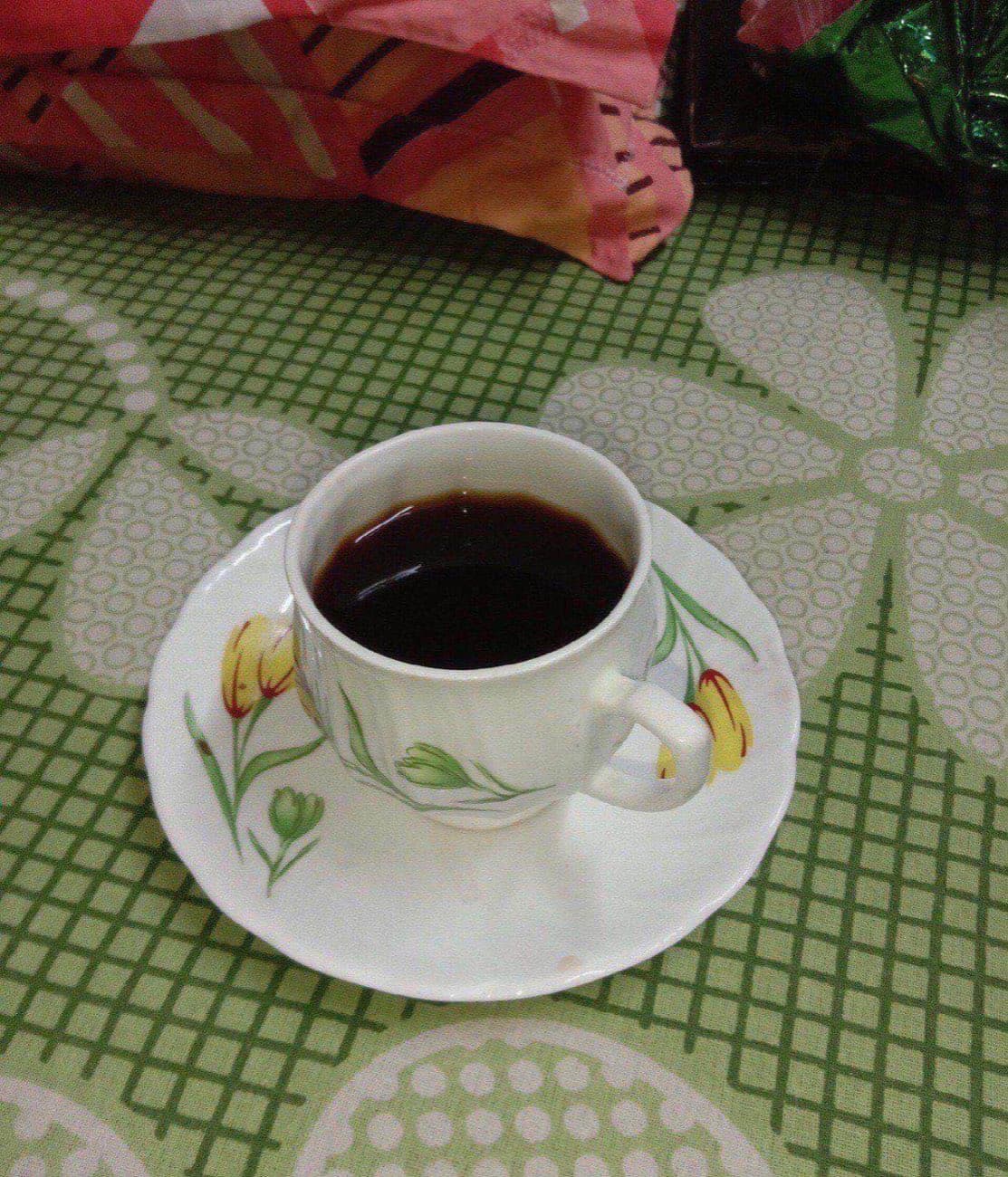
A cup of cold brew tea caffeine content typically lands somewhere between about 20 and 60 milligrams, depending mostly on the type of tea and how long you steep it. That's generally a bit less than the same tea brewed hot, and well below a cup of coffee.
The reason comes down to chemistry: caffeine dissolves faster in hot water than in cold. Cold brewing extracts caffeine slowly over hours rather than seconds, so a cold-steeped cup often ends up gentler, though the long steep time does close some of the gap.
If you're managing your caffeine, whether chasing a lift or avoiding the jitters, this guide breaks down what to actually expect from a glass. It builds on the fundamentals in our cold brew tea hub.
Caffeine by Tea Type
Caffeine varies far more by tea type than by brewing method. Here's a rough guide for an 8-ounce cup of cold brew, using standard ratios and steep times:
| Tea | Approx. caffeine per cup |
|---|---|
| Herbal / hibiscus | 0 mg (caffeine-free) |
| Rooibos | 0 mg |
| White tea | 15-30 mg |
| Green tea | 20-35 mg |
| Oolong tea | 25-45 mg |
| Black tea | 30-60 mg |
| Cold brew coffee (for comparison) | 113-247 mg per 12 oz (FDA) |
These are approximate, actual caffeine depends on the specific tea, leaf quantity, and steep length. But the pattern holds: herbal is zero, green and white are moderate, black is highest among teas, and all of them sit far below coffee.
It's worth stressing how big the coffee gap is, because it surprises people switching over. Even the most caffeinated black tea cold brew, made strong and steeped long, rarely reaches half the caffeine of a comparable cold brew coffee. If you're moving from coffee to tea specifically to cut back, cold brew tea is a genuine step down rather than a lateral move. And unlike coffee, tea lets you pick your caffeine level simply by choosing the type: reach for black when you want a lift, green or white for something gentler, herbal for none at all.
Tea & gear for this guide
Hand-matched Amazon picks with strong owner ratings. As an Amazon Associate, Tea & Peace earns from qualifying purchases.

Tiesta Tea - 6-Pack Cold Brew Variety, Loose Leaf, Medium to Non
Tea made for smooth, low-bitterness cold brewing — 4.6★ across 8,891 ratings.
Shop Now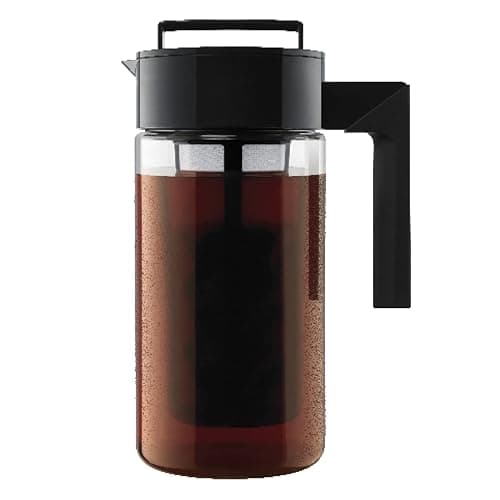
Takeya Deluxe Cold Brew Coffee Maker - BPA-Free Tritan Pitcher with
Airtight brewing pitcher — doubles for cold-brew tea — 4.6★ across 67,470 ratings.
Shop Now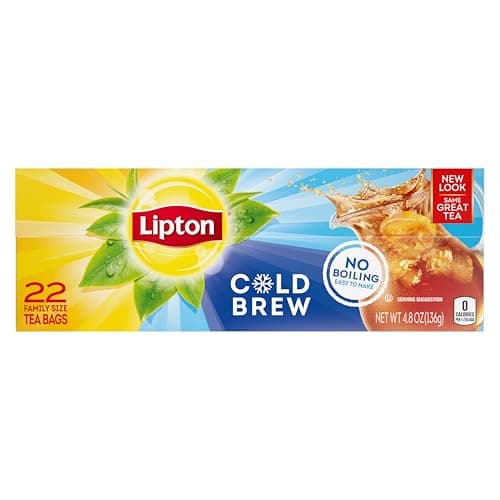
Lipton Cold Brew Iced Tea Bags, Family Size Zero Calories, Easy-To-Make
Tea made for smooth, low-bitterness cold brewing — 4.8★ across 2,206 ratings.
Shop NowProduct prices and availability are accurate as of September 14, 2026 and are subject to change. Any price and availability information displayed on Amazon at the time of purchase will apply.
Does Cold Brew Have Less Caffeine Than Hot?
Usually, yes, a little. Because caffeine extracts more slowly in cold water, a cold brew often contains somewhat less caffeine than the same tea brewed hot for a few minutes.
But it's not a dramatic difference, and it isn't guaranteed. Cold brew's long steep time (6-12 hours versus 3-5 minutes) gives caffeine plenty of time to accumulate. A black tea cold-brewed for 12 hours can end up with caffeine levels close to, or occasionally matching, a quick hot brew.
So the honest answer: cold brewing tends to nudge caffeine down and smooth out how it feels, but if you want meaningfully less caffeine, the bigger levers are choosing a lower-caffeine tea and steeping for less time. See how the methods differ overall in cold brew vs hot brew tea.
What Affects the Caffeine Level
Several factors move the number up or down:
- Tea type: the biggest factor by far, black tops the true teas, herbal has none.
- Amount of tea: more leaf per cup means more caffeine. A stronger cold brew tea ratio raises it.
- Steep time: longer steeping extracts more caffeine, up to a point.
- Leaf grade: finely broken leaves (like those in many tea bags) can release caffeine slightly faster than whole leaf.
- Water temperature: colder water extracts more slowly than room temperature.
Want a lower-caffeine cup? Use a moderate amount of a green or white tea, and steep it toward the shorter end of its range. Want more kick? Reach for black tea, use a bit more, and steep longer.
The Smooth-Energy Effect
Caffeine from tea often feels different from coffee, even at similar amounts, and cold brew can accentuate that. Tea contains L-theanine, an amino acid that promotes a calm, focused state. Paired with caffeine, it tends to produce steady alertness rather than a sharp spike and crash.
Cold brew's low bitterness also makes it easy to sip slowly, so you take in caffeine more gradually than gulping a hot cup. Many people describe cold brew green or oolong tea as giving a gentle, even lift, ideal for an afternoon that needs focus without the buzz.
That balance is why tea is a favorite for calm productivity. If steady concentration is your goal, our tea for focus guide explores it further.
Lower-Caffeine and Caffeine-Free Options
If you love cold brew but want to cut caffeine, especially for evenings, you have great options:
- Herbal tisanes: hibiscus, chamomile, peppermint, and berry blends are naturally caffeine-free and cold-brew beautifully. Try our cold brew hibiscus tea.
- Rooibos: a South African red "tea" that's caffeine-free, naturally sweet, and smooth cold.
- Decaf tea: decaffeinated black and green teas cold-brew just like the regular versions, with only trace caffeine.
- White tea, short steep: among true teas, white steeped briefly is on the lower end.
These let you enjoy a tall, refreshing glass of cold brew any time of day without worrying about sleep. A caffeine-free cold brew is a lovely part of an evening wind-down.
A Note on Caffeine and Health
Caffeine affects everyone differently. Health authorities generally consider up to about 400 mg of caffeine per day safe for most healthy adults, but individual tolerance varies widely, and pregnant people and those with certain conditions are often advised to consume less.
Even the most caffeinated cold brew tea sits far below coffee, so a glass or two rarely pushes anyone near daily limits. Still, if caffeine keeps you up or makes you jittery, favor green, white, or herbal cold brews and drink them earlier in the day.
Tea is a beverage to enjoy, not a medical treatment. If you have specific concerns about caffeine and your health, talk to a qualified healthcare professional rather than relying on general guidelines.
Timing Caffeine Through Your Day
Because cold brew is so easy to make ahead, it's a natural fit for matching your caffeine to the clock. A little planning lets you enjoy tea from morning to night without disrupting sleep.
A simple daily rhythm many tea drinkers follow:
- Morning: a bolder black or oolong cold brew for a real lift.
- Early afternoon: a moderate green or white cold brew for steady, calm focus, this is where tea's L-theanine really shines.
- Evening: a caffeine-free herbal or rooibos cold brew to wind down.
Keeping two or three pitchers in the fridge, one caffeinated, one light, one herbal, means you always have the right glass for the moment. Because cold brew tastes smooth and un-bitter even hours after brewing, a pitcher stays pleasant all day. If calm evenings are your goal, pair a caffeine-free cold brew with the ideas in our calming tea guide.
How to Brew for More or Less Caffeine
You have real control over the caffeine in your glass. To dial it down or up:
For less caffeine:
- Choose green, white, or herbal tea.
- Use the standard ratio, not extra tea.
- Steep toward the shorter end of the range.
- Serve over ice, which dilutes as it melts.
For more caffeine:
- Choose black tea.
- Use a slightly heavier ratio.
- Steep 12 hours or longer.
- Freeze brewed tea into ice cubes so it doesn't dilute.
A little experimentation goes a long way. Once you know how your favorite tea behaves, you can brew a cup that fits the moment, energizing in the morning, mellow in the evening.
From our testing notes
A useful benchmark from published caffeine data: an 8-ounce cup of brewed black tea averages around 40-50 mg of caffeine versus 90-100 mg for the same size cup of coffee. Cold brewing that black tea tends to land at or slightly below the tea figure, which is why even a strong glass stays comfortably under a single coffee.
Sources & further reading
- FDA — Spilling the Beans: How Much Caffeine is Too Much? (per 12 fl oz: green tea 37 mg, black tea 71 mg, coffee 113–247 mg; 400 mg/day guidance) (read 2026-09-10)
- USDA FoodData Central — Beverages, tea, black, brewed (20 mg caffeine per 100 g) (read 2026-09-10)
- USDA FoodData Central — Beverages, tea, green, brewed, regular (12 mg caffeine per 100 g) (read 2026-09-10)
- USDA FoodData Central — Beverages, tea, Oolong, brewed (16 mg caffeine per 100 g) (read 2026-09-10)
- Lantano C. et al., 'Effects of alternative steeping methods on composition, antioxidant property and colour of green, black and oolong tea infusions', J Food Sci Technol 2015 (read 2026-09-10)
- Wikipedia: Caffeine content of common beverages
- Wikipedia: Theanine
Frequently asked questions
How much caffeine is in a cup of cold brew tea?
Roughly 20-60 mg per 8-ounce cup for true teas, depending on type and steep time. Green and white tea land lower (around 15-35 mg), black tea higher (30-60 mg), and herbal teas have none. All are well below coffee's 113-247 mg per 12 oz (FDA).
Does cold brew tea have more caffeine than hot tea?
Usually slightly less, because cold water extracts caffeine more slowly. However, cold brew's long steep time narrows the gap, and a 12-hour black tea brew can approach hot-brewed levels. The difference is modest, not dramatic.
Which cold brew tea has the most caffeine?
Black tea, brewed with a heavier ratio and a long steep, gives the most caffeine among true teas, typically 30-60 mg per cup and sometimes more. Oolong is next, followed by green and white. Herbal teas have none.
Is cold brew tea good before bed?
A caffeine-free option is best for evenings, herbal blends like chamomile or hibiscus, or rooibos. If you want a true tea, choose a short-steeped white or a decaf. Avoid strong black tea cold brew close to bedtime if caffeine affects your sleep.
Does longer steeping increase caffeine?
Yes, caffeine keeps extracting over the steep, so a longer brew has more. That's why a 12-hour black tea cold brew is more caffeinated than a 6-hour one. If you want less, steep for less time and use a green or white tea.
How does cold brew tea caffeine compare to cold brew coffee?
Tea has far less. Cold brew coffee runs 113-247 mg per 12 oz (FDA) per cup, while cold brew tea is typically 20-60 mg, roughly a quarter to a third as much. If you're switching from coffee to cut caffeine, cold brew tea is a big step down.
Can I make decaf cold brew tea?
Yes, decaffeinated black and green teas cold-brew exactly like regular ones, leaving only trace caffeine. Naturally caffeine-free herbal teas and rooibos are another easy route. Both give you a refreshing glass without the caffeine.
Does adding more tea increase caffeine?
Yes, more tea leaf in the water means more caffeine extracted, along with more flavor. If you're watching caffeine, stick to the standard cold brew tea ratio rather than a heavy hand.
Is the caffeine in cold brew tea gentler than coffee?
Many people find it feels smoother. Tea's L-theanine pairs with caffeine to give steadier alertness, and cold brew's low bitterness makes it easy to sip slowly. The effect is often described as calm focus rather than a jittery spike.
How much cold brew tea can I safely drink?
Most healthy adults can have several glasses within the general 400 mg daily caffeine guideline, since each cup is fairly low. Tolerance varies, though, and some people should limit caffeine. Tea isn't medical advice, if you're unsure, check with a healthcare professional.
Does cold brew hibiscus tea have caffeine?
No, hibiscus is a herbal tisane made from the flower, not the tea plant, so it's naturally caffeine-free. That makes cold brew hibiscus tea a great choice for evenings or for anyone avoiding caffeine.
Why does cold brew caffeine feel smoother than coffee?
Tea contains L-theanine, an amino acid that promotes calm focus and takes the edge off caffeine's jolt. Combined with cold brew's low bitterness, which lets you sip slowly, the caffeine tends to arrive as steady alertness rather than a spike. Many people describe it as energized but calm.
Does the type of water change the caffeine level?
Not meaningfully. Water quality affects taste, not caffeine, the caffeine comes from the tea leaves and how much you use and how long you steep. For flavor, filtered water is best; for caffeine, focus on tea type, ratio, and steep time instead.
Does the caffeine in cold brew tea hit differently than coffee?
Most people report it does, and there's a plausible mechanism: tea contains L-theanine, an amino acid that promotes calm alertness and appears to smooth out caffeine's edge. Cold brewing extracts theanine readily while pulling less caffeine overall, so the ratio shifts further in that direction. The practical result is a gentler, longer curve rather than coffee's sharper spike — though individual sensitivity varies enough that the only real test is your own afternoon.