
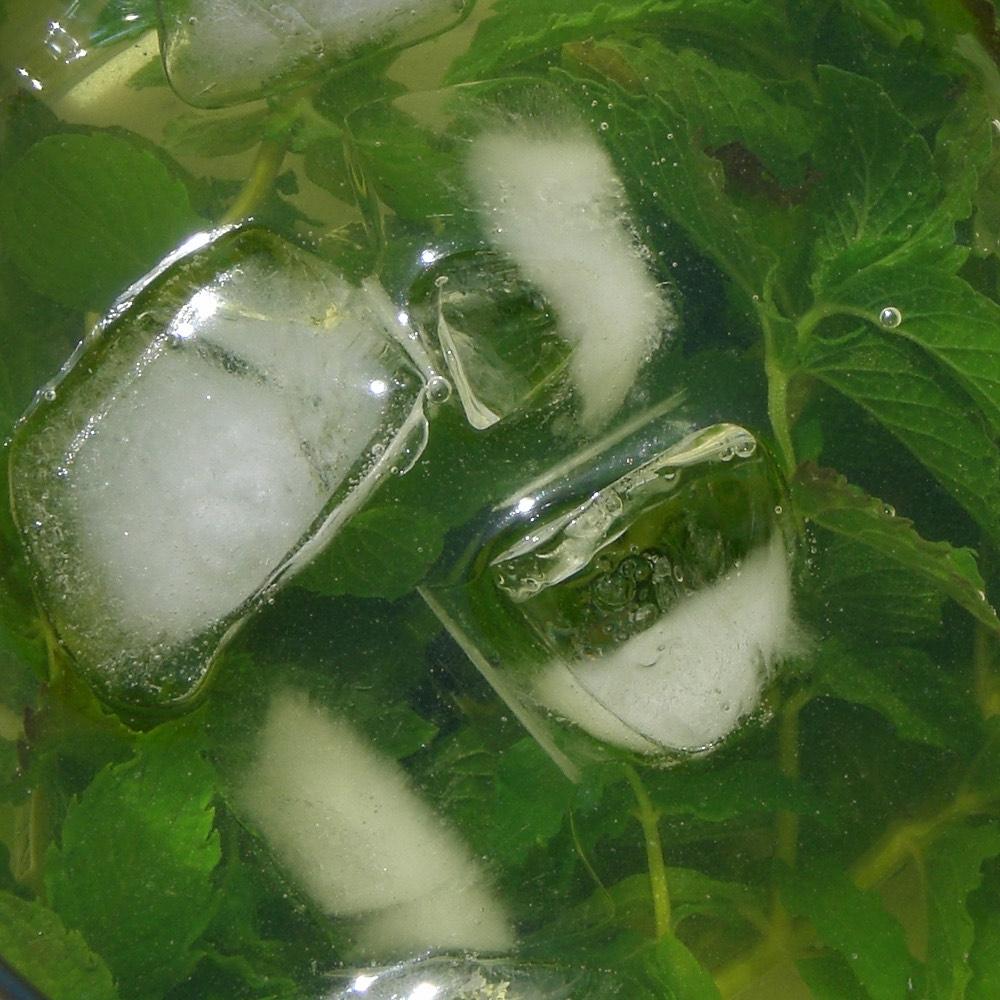
To make cold brew herbal tea safely, pour water at a rolling boil over the herbs, steep at least 5 minutes, then chill the concentrate with cold water or ice and refrigerate it. Germany's Federal Institute for Risk Assessment (BfR) advises boiling water for every herbal and fruit infusion, because dried plant material can, in rare cases, carry germs such as salmonella that only adequate heat reliably kills. The exception is a blend sold for cold infusion: follow its label.
That still gets you iced hibiscus and chilled mint on a hot day; it just changes the order. Boiling water does the safety step first and the refrigerator does the chilling. This guide covers why herbal tea gets different advice from green or black tea, a hot-bloom-then-chill method with a worked example, what a 2024 Swiss government laboratory found when it tested cold-brew herbal products, a full section on hibiscus (the herbal tea people chill most), and the storage rules.
Why herbal tea gets different advice from real tea
"Herbal tea" is not tea in the botanical sense. Hibiscus, peppermint, chamomile and rooibos are dried flowers, leaves and stems from other plants, and the BfR describes herbal and fruit infusions as "tea-like beverages" that should always be prepared with boiling water on hygienic grounds. Its explanation, from its press release Boiling water a must for herbal teas:
- In some cases, germs such as bacteria, yeast or mould may be present in products of plant origin, and in isolated cases they may be pathogenic bacteria like salmonella.
- Only adequate heating can kill germs of this kind with any degree of certainty, so consumers should never prepare herbal tea with warm water.
- Incorrectly prepared, contaminated herbal tea can become a major health risk for small children and sick individuals.
- The advice applies to both loose herbs and tea bags.
- Infused tea should not be allowed to stand for several hours, because spores can survive boiling and germinate in warm liquid.
The BfR even rules out hot-water dispensers for herbal tea: their water is typically only 80–85°C, which it says is not enough to reliably kill any germs present.
A Swiss government laboratory made the cold-brew connection explicit in 2024. The Kantonales Laboratorium Basel-Stadt noted that steeping with hot water brings a reduction in germs, and that this germ-reducing step is missing when tea is steeped cold — so cold-steeped tea carries an increased risk of taking in any harmful germs that may be present.
None of this means ordinary herbal tea is commonly contaminated; the BfR's own wording is "in rare cases." It means the heat step is the safeguard, and a plain cold steep removes it. That's the difference between cold brewing true tea, where a long cold steep is the standard method, and cold brewing herbs.
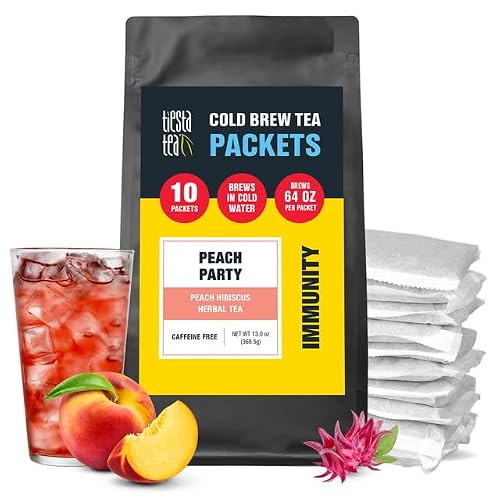
Tiesta Tea Peach Party Cold Brew Peach Hibiscus Herbal Tea, 10 packets
A blend sold for cold brewing: non-caffeinated, each packet makes a 64 oz pitcher per its listing. Follow the packet's directions and any drink-within time.
Shop Now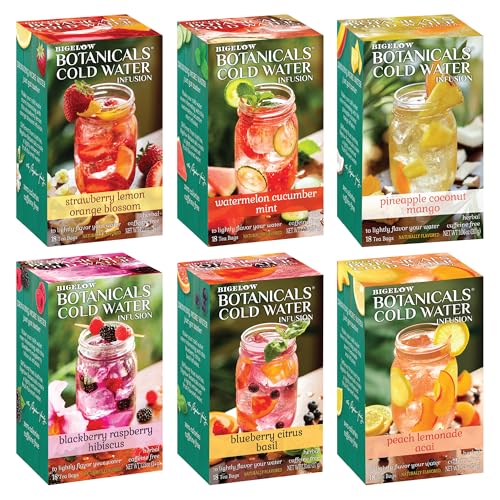
Bigelow Botanicals Cold Water Infusion Variety Pack
Caffeine-free botanicals designed to infuse in cold water, for flavoured water rather than a strong iced tea.
Shop Now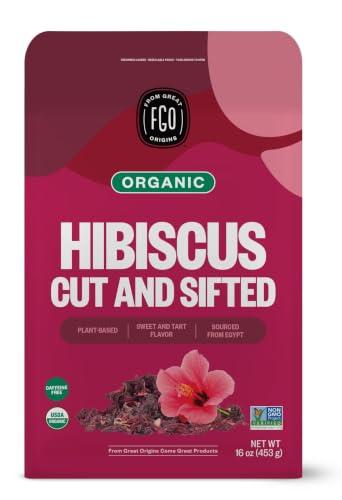
FGO Organic Hibiscus Flowers, Cut and Sifted, 16 oz
Loose hibiscus, the herbal tea this page covers most. Use the hot-bloom-then-chill method rather than a raw cold steep.
Shop Now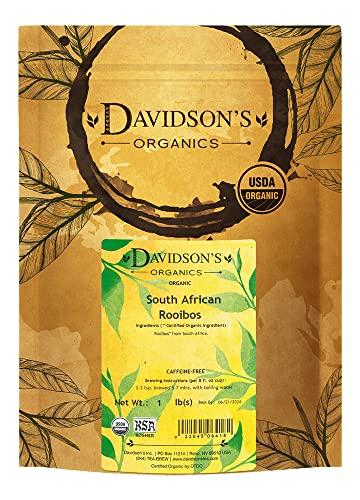
Davidson's Organics South African Rooibos, Loose Leaf, 16 oz
Loose rooibos, caffeine-free and naturally sweet when chilled. Same method: a short hot bloom, then into the fridge.
Shop Now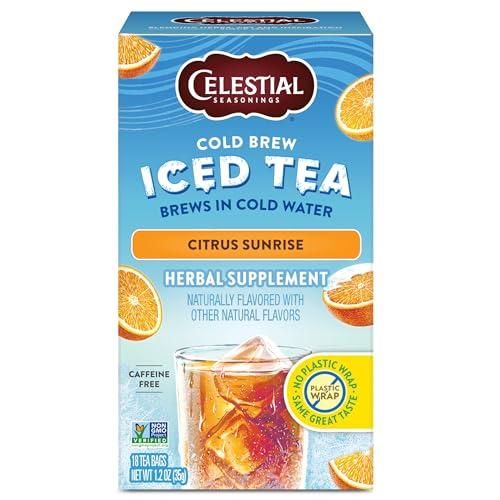
Celestial Seasonings Cold Brew Citrus Sunrise Iced Tea, 18 bags
A blend sold for cold brewing. Follow the box's directions and any drink-within time.
Shop Now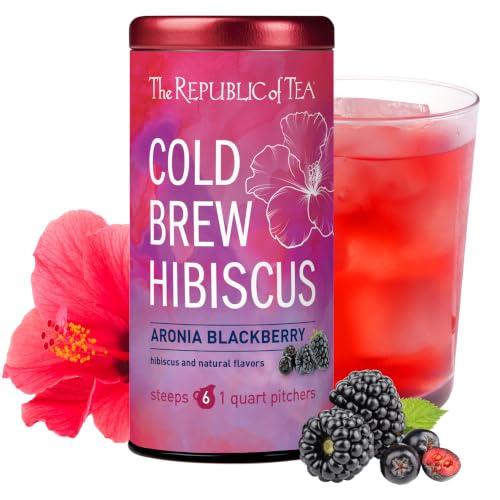
The Republic of Tea Cold Brew Hibiscus Aronia Blackberry Iced Tea, 6 ct
Another cold-brew hibiscus blend, with aronia and blackberry. Follow the box's directions.
Shop NowProduct prices and availability are accurate as of November 22, 2026 and are subject to change. Any price and availability information displayed on Amazon at the time of purchase will apply.
The hot-bloom-then-chill method
This method keeps the BfR's heat step and still ends with a cold, smooth pitcher. It works for any loose herbal blend or herbal tea bag.
- Measure the herbs for the finished volume. Use the amount the package recommends for the total amount of iced tea you want — but plan to brew it in only about half that volume of water.
- Bring water to a rolling boil. Not a kettle that switched off a while ago, and not a hot-water dispenser; the BfR says dispenser water at 80–85°C is not hot enough.
- Pour the boiling water over the herbs in a heatproof jug or pot.
- Steep for at least five minutes, covered. Five minutes is the BfR's minimum; herbal infusions can go longer for a stronger flavor without the bitterness that tea leaves develop.
- Strain or remove the bags. You now have a hot concentrate.
- Chill it fast. Add the other half of the volume as cold water, or pour the concentrate over plenty of ice. This brings the temperature down quickly, so the infusion does not stand warm — the BfR warns that heat-resistant spores can germinate if infused tea stands for hours.
- Refrigerate promptly. The CDC advises refrigerating perishable food within 2 hours (1 hour above 90°F) and keeping the fridge at 40°F or below.
The result tastes closer to cold brew than to "leftover hot tea," because it spends only minutes hot and the rest of its life cold. If you want a softer, rounder flavor, use fewer herbs rather than a shorter hot steep; the five minutes are the safety part, the quantity is the flavor part.
The same principle is how brands make iced tea from hot water: Lipton's family-size method steeps bags in boiling water, then fills the pitcher with ice or cold water. Twinings' iced-tea recipe works the same way and gives herbal tea 4 minutes; for a herbal infusion, use the BfR's 5-minute minimum. Our how to make iced tea guide covers the concentrate approach for black and green tea.
Worked example: a 2-quart pitcher. Say your herbal tea's box recommends 1 bag per 8 oz cup. A 2-quart pitcher is 64 oz, so you need 8 bags. Put all 8 in a heatproof jug, pour in 32 oz (4 cups) of water at a rolling boil, cover and steep 5 minutes, then remove the bags. Add 32 oz of cold water or ice to reach 64 oz and refrigerate. The bags were dosed for the full 64 oz; only the hot stage used half the water.
What about blends sold for cold brewing?
Supermarket shelves now carry herbal and fruit blends labelled for cold infusion, with instructions to steep in cold water. These are a different case from ordinary herbal tea, and there is some useful independent testing of them.
In a campaign from January to April 2024, the Kantonales Laboratorium Basel-Stadt collected 15 different cold-brew teas — 13 in Basel-Stadt and 2 in Aargau — and tested them after preparing each one with cold water exactly as its label instructed. Where the label said how long the prepared drink could be kept, the lab stored it for that period and tested it again. It checked for salmonella, Shiga-toxin-producing E. coli and the hygiene indicator E. coli, and counted the spore-formers Bacillus cereus and Clostridium perfringens.
The results were reassuring for those products:
- No salmonella, Shiga-toxin-producing E. coli, C. perfringens or hygiene-indicator E. coli was found in any of the 15 samples.
- One sample contained a single colony-forming unit of B. cereus per gram of tea, which the lab described as harmless if the tea is drunk promptly, since B. cereus usually causes food poisoning only at counts in the hundreds of thousands per gram.
- The lab concluded that the producers of the products it examined have the microbiological risks of cold-steeped tea well under control.
Two practical takeaways follow. Products sold specifically for cold infusion are a reasonable choice for genuine cold brewing, provided you follow the label exactly, including any "drink within" time. And that finding applies to those products, not to ordinary herbal tea bags or loose herbs, which are made with a boiling-water preparation in mind and carry the BfR's hot-water advice.
What that looks like on a shelf. Tiesta Tea's Peach Party packet, for example, is sold as a non-caffeinated cold-brew herbal blend, each packet making a 64 oz pitcher, according to its product listing. Bigelow describes its Botanicals Cold Water Infusions as botanicals that "slowly create a light and refreshing infused water". For bags designed for cold water in general, see cold brew tea bags.
Hibiscus, mint, rooibos and chamomile at a glance
Hibiscus, peppermint, chamomile and rooibos are the herbal teas people most often want cold. USDA FoodData Central lists brewed chamomile and hibiscus at 0 mg caffeine. Harvard's Nutrition Source names chamomile and peppermint among naturally caffeine-free herbal teas, and rooibos contains none. Yerba mate and guayusa are herbal-style drinks that do contain caffeine. The hot step is the same for all four; only the chilling notes differ.
| Herbal tea | Hot step | Chilling notes |
|---|---|---|
| Hibiscus | Rolling boil, 5+ minutes | Tart, deep red concentrate; dilutes well over ice (full section below) |
| Peppermint | Rolling boil, 5+ minutes | Pour over ice; add clean fresh mint leaves at serving |
| Rooibos | Rolling boil, 5+ minutes | Mild and rounded; a good base for citrus |
| Chamomile | Rolling boil, 5+ minutes | Delicate; if it tastes faint iced, use more flowers rather than a shorter hot step |
The five minutes at a rolling boil are the fixed part of every recipe. Dilution, sweetener, fruit and fresh herbs are all taste. For what each herb is and how they compare hot, see herbal tea; for caffeine across cold brews, see cold brew tea caffeine.
Cold brew hibiscus tea: the herbal tea people chill most
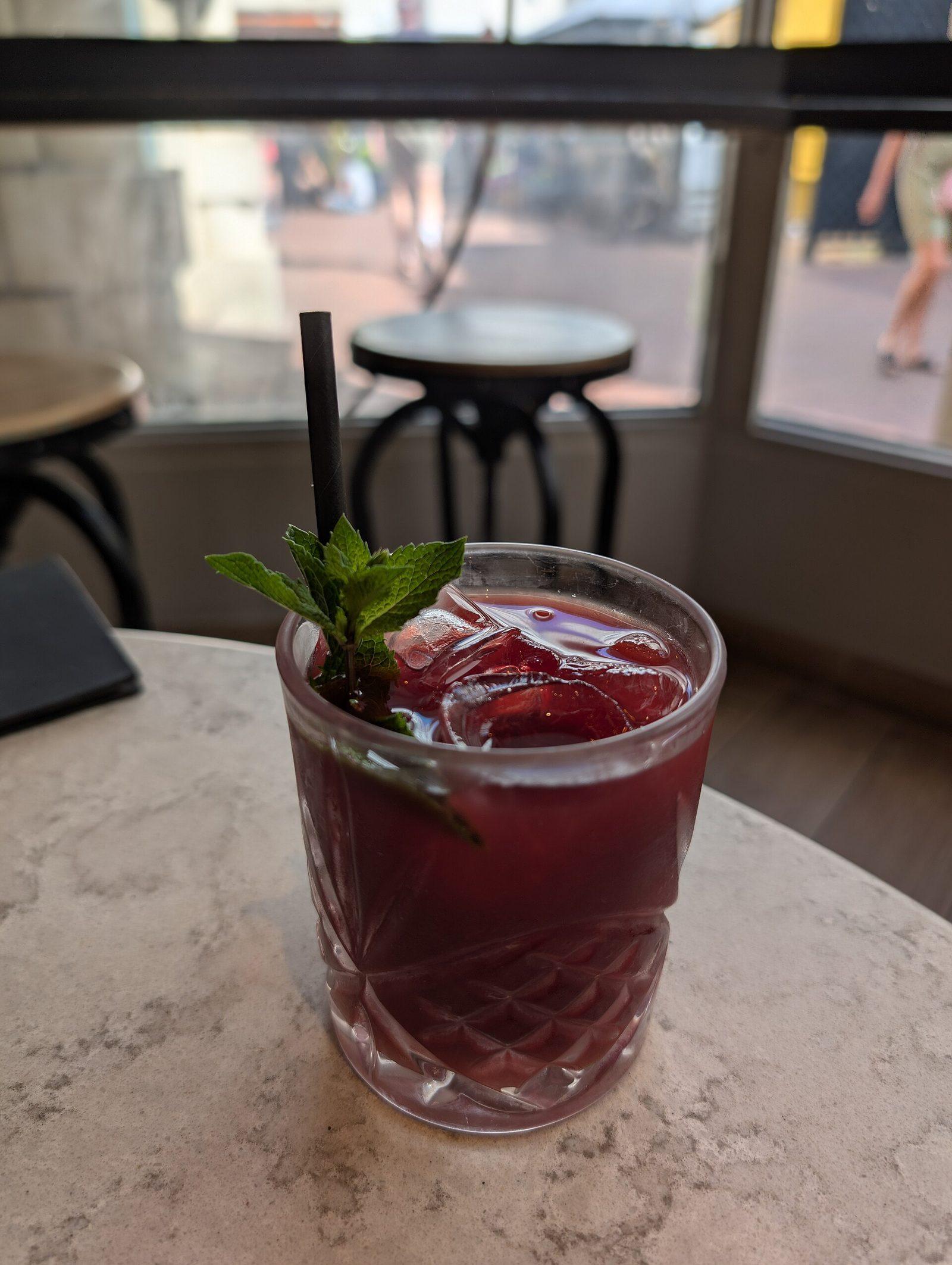
Hibiscus "tea" is an infusion of the crimson or deep magenta calyces (the sepals around the seed pod) of the roselle plant, Hibiscus sabdariffa, according to Wikipedia's entry on the drink. It isn't made from the tea plant, which is why USDA FoodData Central lists brewed hibiscus at 0 mg of caffeine. It tastes tart, something like cranberry.
It is chilled all over the world. Wikipedia records agua de Jamaica in Mexico, Central America and parts of South America and the Caribbean, karkadeh in Egypt, bissap in Burkina Faso and Senegal, zobo in Nigeria and sobolo in Ghana. Caribbean versions are known as sorrel. Many of these are served sweetened and chilled, though the drink is technically an infusion.
Making it cold, safely. Hibiscus suits the hot-bloom method well because it gives up its colour and tartness quickly in boiling water.
- Use the amount your package recommends for the finished volume.
- Pour water at a rolling boil over the petals or bags, using about half the final volume, and steep at least 5 minutes, covered.
- Strain, then add the other half as cold water or ice.
- Refrigerate right away.
If you'd rather steep hibiscus in cold water, choose a blend sold for cold infusion and follow its label, including any drink-within time. That's the kind of product the Basel laboratory tested.
Sweetening and blends. Hibiscus is sour enough that many recipes sweeten it. Dissolve sugar or honey in the hot concentrate, before the cold water goes in. Mint, ginger, citrus peel and cinnamon are common partners in the traditional versions above.
Staining. The colour that makes hibiscus striking also tints plastic. A glass pitcher or jar avoids a permanent pink tinge; our cold brew tea maker guide lists glass options.
Health questions. The BfR's food-safety advice applies to everyone, and especially to small children and anyone who is ill. Beyond that, this site doesn't make health claims about hibiscus. If you're pregnant, take medication or have a health condition, ask your clinician before drinking it daily.
Storing herbal iced tea safely
Once brewed and chilled, herbal iced tea should be treated like any other perishable drink.
Refrigerate it. The CDC's guidance is to keep the refrigerator at 40°F or below and to refrigerate perishable food within 2 hours, or within 1 hour if it has been somewhere above 90°F, such as a hot car or a picnic. A pitcher of iced hibiscus left on the patio all afternoon falls outside that window.
Don't let it stand warm. The BfR's advice is that infused herbal tea should not be left to stand for several hours, because spores that survive boiling can germinate in warm liquid. That is the reason the method above chills the concentrate immediately instead of letting it cool slowly on the counter.
Follow the label for cold-infusion products. If a blend made for cold water gives a "consume within" time, that is the window its maker designed for; the Basel laboratory tested products over exactly those stated windows.
Keep the equipment clean. Use a pitcher you can wash thoroughly, and add fresh garnishes — mint leaves, citrus slices — at serving time rather than leaving them to soak for days.
Be most careful for the most vulnerable drinkers. The BfR singles out small children and sick individuals as the people for whom a contaminated, incorrectly prepared herbal tea can be a major health risk. For them, stick to the boiling-water method.
No food-safety body publishes a fridge life for home-made herbal iced tea, so this page doesn't invent one. For labelled cold-infusion products, use the label's window. For everything else, drink it within a day or two, keep it sealed, and pour it out if it smells or looks off. The cold brew tea hub covers cold brewing true tea, where a long cold steep is the standard method.
This page is general food-safety information, not medical advice. If you are preparing drinks for an infant, someone who is pregnant, or someone who is ill or immunocompromised, follow the advice of their doctor.
Worth knowing
Reference point from a government laboratory, not a kitchen test: in January–April 2024 the Kantonales Laboratorium Basel-Stadt prepared 15 retail cold-brew teas exactly as labelled, stored them for their stated shelf life, and found no salmonella, Shiga-toxin-producing E. coli, C. perfringens or indicator E. coli in any sample. It framed that as manufacturers controlling a real risk, because cold steeping lacks the germ-reducing step that hot water provides.
Sources & further reading
- German Federal Institute for Risk Assessment (BfR) — 'Boiling water a must for herbal teas', press release 14 Dec 2005 (read 2026-10-11)
- Kanton Basel-Stadt, Kantonales Laboratorium — 'Keine Keimbelastung bei untersuchten Cold Brew Tees', 14 Oct 2024 (15 cold-brew teas tested) (read 2026-10-11)
- CDC — Four Steps to Food Safety (fridge at or below 40°F; refrigerate within 2 hours, 1 hour above 90°F) (read 2026-10-11)
- USDA FoodData Central — brewed herbal teas, caffeine 0 mg (hibiscus, chamomile) (register, read 2026-09-09)
- Harvard T.H. Chan School of Public Health — The Nutrition Source: Tea (chamomile, peppermint naturally caffeine-free) (read 2026-10-11)
- South African Rooibos Council — FAQ (rooibos is naturally caffeine-free) (read 2026-10-11)
- Wikipedia — Hibiscus tea (roselle calyces, Hibiscus sabdariffa; agua de Jamaica, karkadeh, bissap, zobo, sobolo, sorrel) (read 2026-11-15)
- USDA FoodData Central — Beverages, tea, hibiscus, brewed (0 mg caffeine) (read 2026-09-10)
- Twinings — Iced Tea recipe (herbal variation: steep 4 minutes, then ice) (read 2026-11-15)
- Bigelow — Bigelow Botanicals Cold Water Infusions (read 2026-11-15)
- Amazon Creators API — product titles and prices (refreshed daily)
Frequently asked questions
Does cold brew herbal tea need to steep 8–12 hours?
Time in cold water does not do the job that boiling water does. Germany's BfR advises making herbal and fruit infusions with water at a rolling boil for at least five minutes, so the safer route is a five-minute hot steep, then chilling. For blends sold specifically for cold infusion, follow the time printed on the pack.
Is it safe to cold brew herbal tea?
Food-safety authorities advise against it for ordinary herbal tea. The BfR says herbal teas should always be made with boiling water because dried plant material can, in rare cases, carry germs like salmonella, and a Swiss state lab notes cold steeping lacks the germ-reducing step of hot water. Products made for cold infusion were clean in that lab's 2024 testing.
Can I leave herbal tea out overnight?
It's best not to. The BfR warns that spores can survive boiling and germinate in infused tea left to stand for hours. Chill the tea promptly after brewing and keep it refrigerated.
Is water from a hot-water dispenser hot enough for herbal tea?
According to the BfR, no. Dispenser water is generally only 80–85°C, which it says is not enough to reliably kill germs that may be present. Use water at a rolling boil.
Does hibiscus tea have caffeine?
No. USDA FoodData Central lists brewed hibiscus tea at 0 mg of caffeine, as it does chamomile. Harvard's Nutrition Source lists peppermint as naturally caffeine-free, and rooibos contains none; yerba mate and guayusa are the herbal-style exceptions that do contain caffeine.
Can children drink cold brew herbal tea?
If you give herbal tea to children, use the boiling-water method. The BfR specifically names small children and sick individuals as the groups for whom incorrectly prepared herbal tea can be a major health risk. Ask your pediatrician about herbal teas for infants and young children.
How do you make cold brew hibiscus tea?
Use the amount your package recommends for the finished volume, pour water at a rolling boil over it using about half that volume, and steep at least 5 minutes. Then add the rest as cold water or ice and refrigerate. For a no-heat version, choose a hibiscus blend sold for cold infusion and follow its label.
Will hibiscus stain my pitcher?
It can tint plastic. A glass jar or pitcher avoids it, and rinsing the container soon after use helps.