
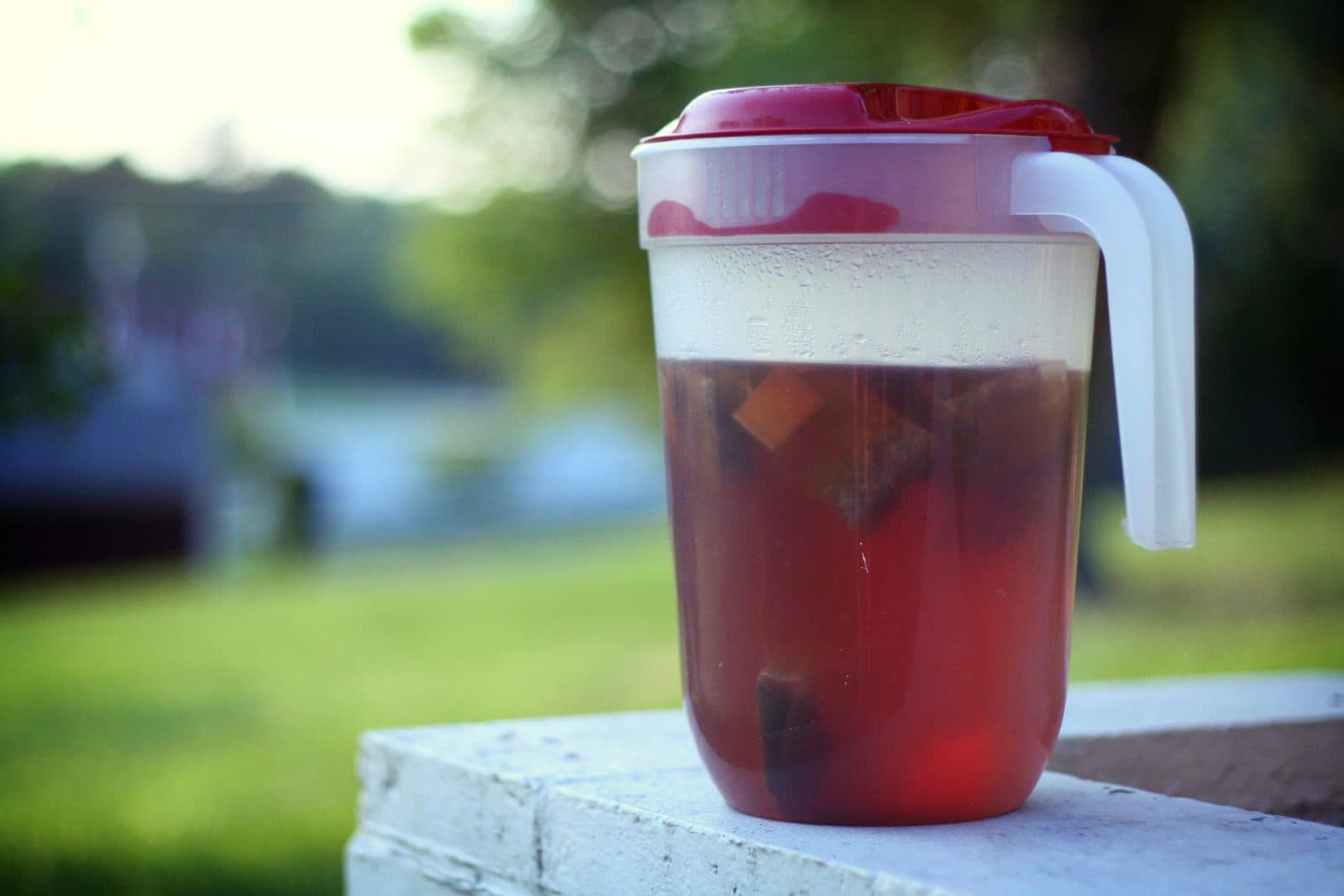
A gallon jar on a sunny porch step, tea bags drifting like tethered kites, the water slowly turning amber by mid-afternoon — that is the picture most people have when they search for how to make sun tea. It is a summer ritual for a lot of families, and it is easy to see why: no kettle, no stove, and a pitcher of smooth iced tea by dinner.
The catch is the part of the picture you cannot see. Sunlight warms the jar, but not nearly enough to make it hot. Food-safety specialists at Ohio State University Extension point out that sun tea does not get hotter than about 130°F, which is not hot enough to kill bacteria in the water or on the tea leaves, and the jar then spends hours in the temperature range where bacteria multiply fastest.
So this page does two things. It explains how to make sun tea and what the sources say about the risk, without scaremongering. Then it shows the method we recommend for the same smooth result: brewing in the refrigerator.
What sun tea is, and why it tastes so smooth
Sun tea is iced tea brewed by putting tea bags or loose leaves in a large glass container of water and leaving it in the sun for hours. The Wikipedia entry on iced tea sums up its two genuine advantages: it often gives a smoother flavor, and it uses no electricity or fuel.
The smoothness has a simple explanation. Hot water extracts everything in the leaf quickly, including the bitter, astringent compounds that make over-steeped tea harsh. Warm water extracts more slowly and more gently, so the same tea bags give a rounder, softer drink. A 2015 study in the Journal of Food Science and Technology (Lantano et al.) comparing steeping methods found hot infusion extracted compounds rapidly, while cold infusion worked far more slowly over a long steep — the same principle, taken all the way down to refrigerator temperature.
That is the important point for anyone deciding how to make sun tea: the smooth taste comes from the low temperature and long time, not from the sunlight itself. Sunlight is just a free, imprecise heater. The refrigerator gives you the same slow extraction at a temperature that keeps bacteria in check, which is why the rest of this guide keeps steering you toward it.
Our cold brew tea hub explains how temperature and time trade off.
Tea & gear for this guide
Amazon picks matched to this guide. As an Amazon Associate, Tea & Peace earns from qualifying purchases.
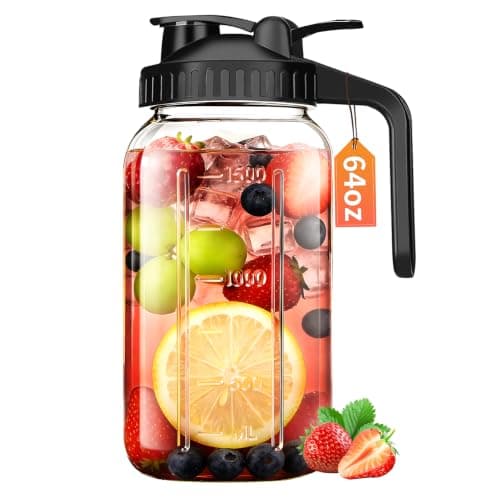
64 oz Mason Jar Pitcher with Lid
A glass jar with a spigot, the traditional sun tea vessel.
Shop Now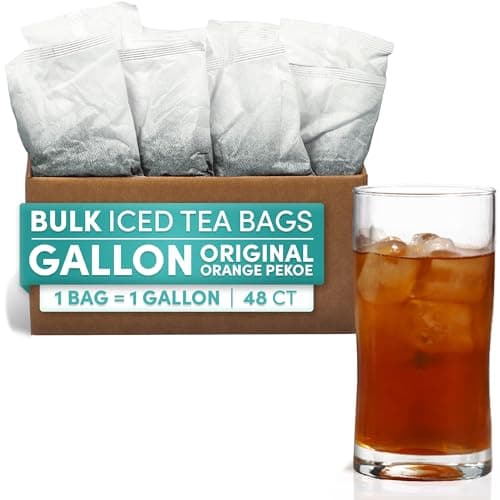
Black Orange Pekoe Iced Tea Bags
Family-size tea bags, one per jar, as in the lower-risk routine.
Shop Now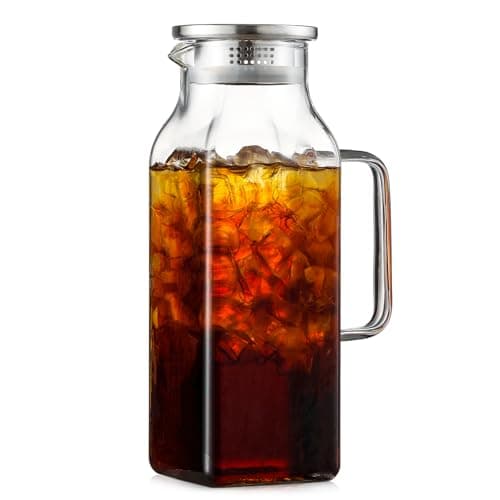
2 Quart (2 Liter 68 oz) Square Glass Pitcher with Lid and Spout
The safer swap: the same jar method in a covered pitcher in the fridge.
Shop Now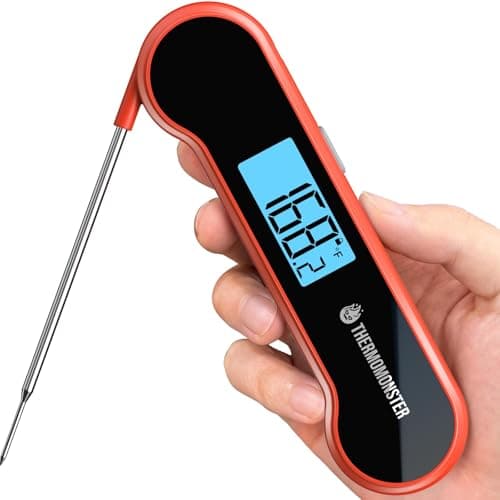
0.5 Sec Instant Read Meat Thermometer Digital for Cooking
The page's food-safety section turns on temperature, so a thermometer lets you check it.
Shop Now
HOME GROWN Common Mint Seeds, 1,800 Seeds
Fresh mint, one of the classic sun tea flavors.
Shop Now
Product prices and availability are accurate as of October 31, 2026 and are subject to change. Any price and availability information displayed on Amazon at the time of purchase will apply.
The food-safety problem, straight from the sources
Safety callout. Ohio State University Extension's food-safety guidance says making tea by leaving it in the sun is “highly discouraged.” Sun tea “will not get hotter than 130 degrees Fahrenheit,” which is “not hot enough to kill bacteria in the water or in the tea leaves,” and it “generally sits around at room temperature for a long period of time.” The bacterium most often named is Alcaligenes viscolactis, a “ropy” bacterium “commonly found in soil and water.” The same guidance adds that this holds “even if the statistical risk of illness is not great.”
The US Centers for Disease Control and Prevention (CDC) explains why time and temperature matter so much: bacteria “can multiply rapidly” in the “Danger Zone” between 40°F and 140°F. Its general rule for perishable food is never to leave it out for more than 2 hours — or 1 hour above 90°F. A jar of tea on a hot porch spends its entire brewing time inside that zone, and usually for far longer than an hour.
What does contamination look like? The Wikipedia summary of iced tea advises discarding tea that appears thick, syrupy, or has rope-like strands in it — and notes it may be hazardous even without those signs. That last part matters: you cannot reliably judge safety by looking.
Keep it in proportion: the Ohio State guidance acknowledges the statistical risk is not great. But the method skips the one step — real heat — that would kill whatever is in the water or on the leaves, then holds the tea where bacteria thrive. Since the refrigerator gives an equally smooth drink without that trade-off, there is little reason to take it.
If you still want to make sun tea: a lower-risk routine
If you still want to know how to make sun tea the traditional way, these steps reduce the risk. They do not eliminate it, and none of them makes sun tea as safe as refrigerator brewing.
- Start with a scrupulously clean jar. Ohio State's guidance is to wash, rinse, and sanitize tea-making equipment regularly. Skip jars with spigots unless you can take the spigot apart and clean it; in 1996 Cincinnati health inspectors found high levels of coliform bacteria in the spigots of restaurant iced-tea dispensers that were not being cleaned daily.
- Use cold, safe drinking water from a source you would happily drink untreated.
- Add the tea — bags with the strings outside the lid make removal easy.
- Keep the time in the sun as short as you can. Measured against the CDC's food-safety rule (no more than 1 hour above 90°F), a multi-hour steep in direct summer sun does not fit, which is why the shorter, the better.
- Remove the tea and refrigerate immediately. The CDC advises keeping refrigerators at 40°F or below.
- Make only what you will drink soon. Ohio State recommends brewing only enough tea that can be consumed within a few hours.
- Discard anything thick, syrupy, or stringy without tasting it, and when in doubt, throw it out.
Notice how much of this routine is about getting the tea cold quickly. That is the real lesson.
The safer swap: refrigerator “sun tea”
Refrigerator tea — tea steeped in cold water in the fridge — is what Ohio State's guidance recommends instead of sun tea, and it is the method this site is built around. The Wikipedia summary of iced tea notes it has a dual advantage: it prevents the growth of harmful bacteria and the tea is already cold without adding ice. It gives you the same smooth, mellow pitcher with none of the guesswork.
- Choose your tea. Black tea gives the classic sun-tea flavor; green, oolong, and herbal teas work too.
- Measure. Follow the package if it has cold-brew directions — Lipton's Cold Brew family-size bags, for example, specify one bag per quart. Our cold brew tea ratio guide covers loose leaf and regular bags.
- Combine with cold water in a clean pitcher or jar.
- Refrigerate. Ohio State describes the steep as “six hours to overnight depending on how strong you like your tea.”
- Remove the tea and serve over ice, with lemon or a little sweetener if you like.
That is genuinely all there is to it. If you want more detail on timing by tea type, see cold brew tea steep time; for a fuller walkthrough with troubleshooting, our step-by-step how to make cold brew tea guide is the place to start. And if you like the idea of tea bags in a jar, cold brew tea bags explains which bags work best.
If you came here asking how to make sun tea, this is the version we would hand you: the same jar, the same tea bags, just a colder shelf.
Short on time? Brew hot, then chill
If you want iced tea today rather than tomorrow morning, the fastest safe route is to start hot. The Ohio State guidance, citing the Centers for Disease Control and the National Tea Association, recommends brewing tea bags at 195°F for three to five minutes, and notes that standard hot brewing is always hot enough to ensure undesirable microbes are killed.
The method:
- Brew a concentrated batch with hot water, using more tea than you would for a single mug, for three to five minutes.
- Remove the tea.
- Let it cool, then add cool water to bring the temperature down gradually before refrigerating or adding ice.
That gradual cooling is not only about speed. Ohio State explains that iced tea turns cloudy when tannins come out of solution because the tea is cooled too quickly. Adding cool water first, rather than dumping hot tea straight onto ice, helps keep it clear.
Hot-brewed iced tea tastes a little brisker than sun tea, because hot water pulls out more tannins. Our how to make iced tea guide covers the method in full.
Sun tea vs fridge tea vs hot-brewed iced tea
Here is how the three methods compare, using only what the sources above state about temperatures, times, and safety:
| Sun tea | Refrigerator tea | Hot-brewed, then chilled | |
|---|---|---|---|
| Brewing temperature | No hotter than about 130°F (Ohio State) | At or below 40°F, the CDC's fridge target | 195°F recommended (Ohio State, citing CDC and the National Tea Association) |
| Brewing time | Hours in the sun | Six hours to overnight (Ohio State) | Three to five minutes, plus cooling |
| Where it sits during brewing | Inside the CDC's 40–140°F “Danger Zone” | Below it | Above it, then cooled |
| Kills microbes during brewing? | No (not hot enough) | No, but keeps them from multiplying | Yes, per Ohio State |
| Taste | Smooth, mellow | Smooth, mellow | Brisker; can cloud if chilled fast |
| Needs energy? | No | The fridge you already run | A kettle or stove |
The refrigerator delivers sun tea's smooth taste while keeping the tea out of the danger zone for the whole steep. Hot brewing is the choice when speed matters.
Flavors, teas, and serving ideas
Everything people love to add to sun tea works just as well in a fridge-brewed pitcher.
Teas that work well. Classic black tea bags give the familiar American iced-tea flavor; see cold brew black tea for options. Green tea turns sweet and soft when cold brewed, and our cold brew green tea recipe shows the shorter steep it prefers. Hibiscus and mint make caffeine-free pitchers.
Add-ins. Steep a few strips of lemon or orange peel, a handful of fresh mint, or sliced peaches with the tea. Wash fruit and herbs first, and keep the pitcher refrigerated.
Sweetening. Sugar dissolves poorly in cold tea, so make a simple syrup by dissolving sugar in an equal amount of hot water, cool it, and stir it in to taste. Honey can be handled the same way.
Serving. Pour over ice with a lemon wheel or a sprig of mint, or freeze some tea into cubes so the glass does not get watery.
For more pitcher ideas, our iced tea guide collects classic styles. Whatever you choose, the smooth taste comes from slow, gentle extraction — and the refrigerator does that safely.
Worth knowing
Reference comparison built from the cited sources rather than our own temperature logging: the brewing temperatures that matter here are 130°F (the maximum Ohio State Extension gives for sun tea), 40–140°F (the CDC's bacterial “Danger Zone”), 40°F (the CDC's refrigerator target) and 195°F (the hot-brewing temperature Ohio State cites). Sun tea is the only common iced-tea method whose entire steep falls inside the danger zone.
Sources & further reading
- Ohio State University Extension, Live Smart Ohio — Is Sun Tea Safe? (130°F maximum; Alcaligenes viscolactis; brew at 195°F for 3–5 min; refrigerator cold brew six hours to overnight; sanitize equipment) (read 2026-10-11)
- CDC — Four Steps to Food Safety (Danger Zone 40–140°F; 2-hour / 1-hour above 90°F rule; refrigerator at 40°F or below) (read 2026-10-11)
- Iced tea — Wikipedia (sun and refrigerator tea; discard if thick or ropy; 1996 Cincinnati dispenser spigot findings) (read 2026-10-11)
- Lipton — Cold Brew Family Size tea bags (one bag per quart) (read 2026-10-11)
- Lantano C. et al., “Effects of alternative steeping methods on composition, antioxidant property and colour of green, black and oolong tea infusions”, J Food Sci Technol 2015 (hot vs cold extraction) (read 2026-10-11)
Frequently asked questions
Is sun tea safe to drink?
It carries a risk that refrigerator-brewed tea does not. Ohio State University Extension says sun tea does not get hotter than about 130°F, which is not hot enough to kill bacteria, and it sits for hours in the 40–140°F range where the CDC says bacteria multiply rapidly. The risk of illness is not great, but brewing in the fridge avoids it.
Why does sun tea get slimy or stringy?
Thick, syrupy, or rope-like tea is a sign of bacterial growth; Ohio State names a “ropy” bacterium, Alcaligenes viscolactis, which is common in soil and water. Throw it out without tasting it, and remember tea can be unsafe even when it looks normal.
How long should sun tea sit in the sun?
There is no time that makes it as safe as fridge brewing. Measured against the CDC's rule for perishable food — no more than 2 hours at room temperature, or 1 hour above 90°F — a multi-hour steep in summer sun does not fit, so keep it short and refrigerate immediately.
What temperature does sun tea reach?
According to Ohio State University Extension, sun tea does not get hotter than 130°F. That is warm enough to brew slowly but below the temperatures used for hot brewing, which Ohio State gives as 195°F for tea bags.
What is refrigerator tea?
Refrigerator tea is tea steeped in cold water in the fridge, typically for six hours to overnight. It gives the same smooth flavor as sun tea while staying cold the whole time. Our how to make cold brew tea guide explains the method.
How long does sun tea last in the fridge?
Treat it as short-lived. Ohio State's guidance is to brew only as much tea as can be consumed within a few hours, and to refrigerate it promptly. If it turns thick or stringy, discard it.
Can you make sun tea with herbal tea?
You can, but the same temperature problem applies — herbal leaves and flowers can carry bacteria too. Cold brewing herbal tea in the refrigerator is the safer way to get the same smooth result.
Can I make sun tea on a windowsill or a cloudy day?
Indoors or on a cloudy day the jar simply warms less and steeps more slowly, which means longer at room temperature, not less risk. Moving the jar into the refrigerator is the better choice.
How many tea bags do you need for a gallon of sun tea?
Follow the package directions for the tea you use. As one example, Lipton's Cold Brew family-size bags call for one bag per quart, which would be four for a gallon. Our cold brew tea ratio guide gives ratios for regular bags and loose leaf.
Does sun tea taste different from regular iced tea?
Yes, it is usually smoother and less bitter, because warm water extracts tannins more gently than hot water. Refrigerator tea tastes much the same as sun tea, while hot-brewed iced tea tends to be brisker.