
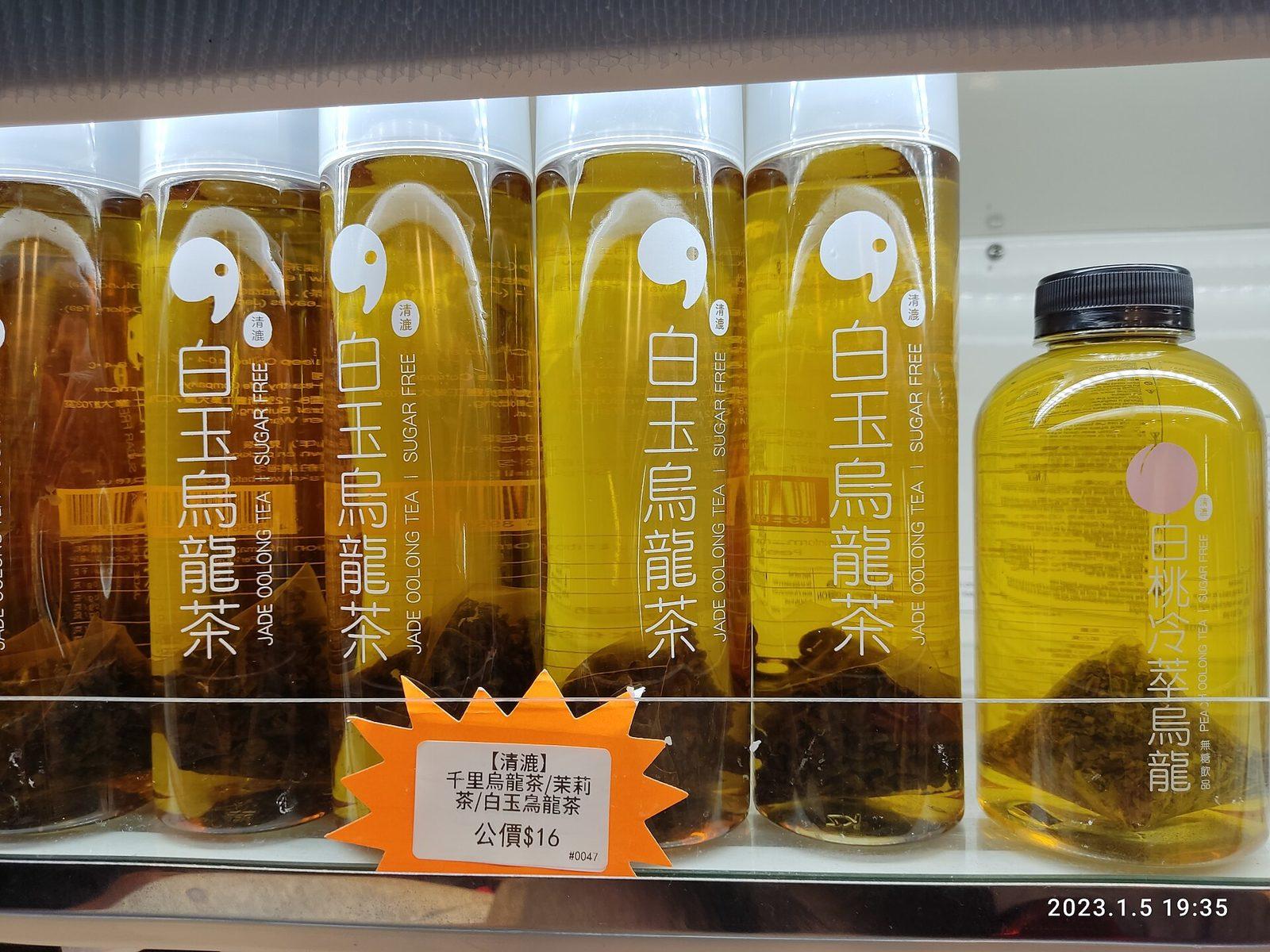
For cold brew oolong tea, use 8–20 g of leaf per litre and steep it 6–10 hours in the fridge. Taiwan's Tea Research and Extension Station (TRES) uses 1 part leaf to 50 parts water at 2–7°C: 6 hours for Tieguanyin and Dong Ding, 8 for high-mountain oolong and 10 for Oriental Beauty.
Oolong covers more ground than any other tea category, from barely oxidised Pouchong to dark, roasted Wuyi teas, and the instructions change with it. Below: the TRES times by style next to what a 2021 Taiwanese tasting panel preferred, the producers' instructions side by side, whether a tightly rolled leaf really needs longer, a worked 1-litre bottle, and what the rinse and hygiene studies found. The general method is on our cold brew tea guide; for the leaf itself, see oolong tea.
Quick answer
- ✓Use 8–20 g of oolong per litre and steep 6–10 hours in the fridge; this page uses 10 g per litre.
- ✓Taiwan's TRES protocol: 1 : 50 at 2–7°C, 6 h for Tieguanyin and Dong Ding, 8 h for high-mountain, 10 h for Oriental Beauty.
- ✓A 2021 tasting panel preferred lightly oxidised oolongs cold; dark oolongs come out paler because thearubigins dissolve poorly in cold water.
- ✓Cold oolong had about 62% of the hot caffeine in one study; rinsing cuts pesticide residue but only 0–11% of the caffeine.
Five Taiwanese oolongs in cold water
In 2021, researchers in Taiwan (Liu et al., Foods) cold-brewed seven teas for a panel of 108 consumers. Five were oolongs. The paper also records the cold-infusion protocol TRES set for these teas. Oxidation ("fermentation") percentages are the conventional figures in the paper's own table, not lab measurements.
| Oolong | Listed oxidation | Leaf, per Wikipedia | TRES cold time at 2–7°C, 1 : 50 | What the panel found |
|---|---|---|---|---|
| Wenshan Pouchong (Baozhong) | 12–15% | Twisted, rope-like | 6 h | Liked; grouped with the lightly oxidised teas |
| High-mountain (gaoshan) | 20–30% | Alishan: large rolled leaves | 8 h | Liked |
| Dong Ding | 20–30% | Tightly rolled | 6 h | Liked |
| Tieguanyin (the sample was heavily roasted) | 30–40% | — | 6 h | Only sample with a "roasted" note; the authors call roast "not indispensable but could be advantageous" cold |
| Baihao (Oriental Beauty) | 60–70% | — | 10 h | Ranked among the two least-liked cold infusions, with the black tea |
Two findings matter for a home pitcher. First, the panel preferred the lightly oxidised oolongs cold; the authors conclude these "could be the best raw materials" for cold tea. One cluster of tasters, about 28% of the panel, preferred Pouchong, high-mountain and Dong Ding and "almost could not accept" Oriental Beauty and the black tea. Second, the darker teas lost colour: the authors report that thearubigins, the brown pigments of heavily oxidised teas, dissolve poorly in cold water, so a cold Oriental Beauty or roasted oolong is paler than the same tea hot.
What this means for choosing. If you are buying an oolong to cold brew, a lightly oxidised Taiwanese one is the choice this study supports. Roasted oolongs work, with a lighter body than hot. Very dark oolongs behave more like cold brew black tea.
Tea & gear for this guide
Amazon picks matched to this guide. As an Amazon Associate, Tea & Peace earns from qualifying purchases.
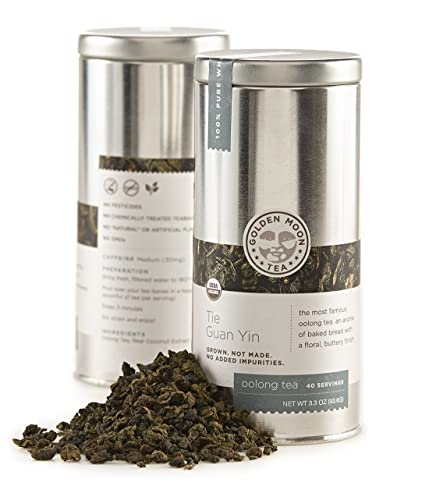
Golden Moon Organic Tie Guan Yin Oolong Tea
Tieguanyin is the light, floral oolong the page uses for the cold brew recipe.
Shop Now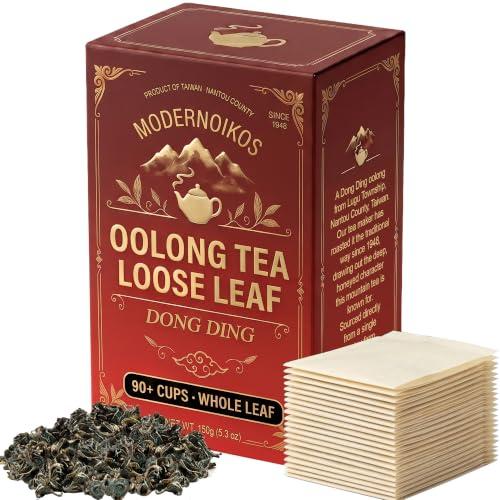
MODERNOIKOS Dong Ding Oolong Tea Loose Leaf
A roasted oolong for the darker, toasty side of the light-vs-roasted comparison.
Shop Now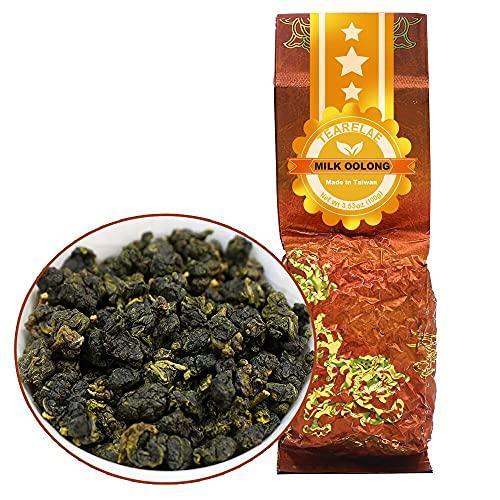
TEARELAE Taiwan Milk Oolong Tea, 3.53oz/100g
Milk oolong (jin xuan) gives a creamy, buttery cold brew without any dairy.
Shop Now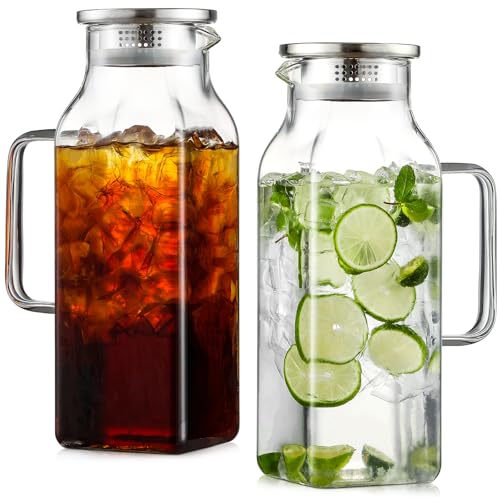
2 Pack 2.2Liters/75 oz Square Glass Pitcher with Lid and Handle
Rolled oolong unfurls a lot, so a roomy pitcher helps with the re-steep trick.
Shop Now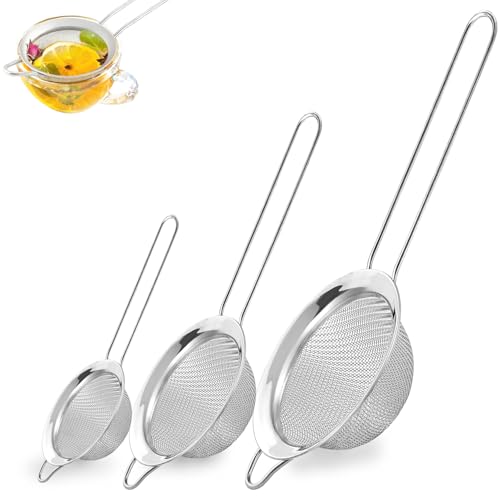
3Pcs Fine Mesh Strainer with Handle
Strain the first batch and keep the leaves for the second cold steep.
Shop Now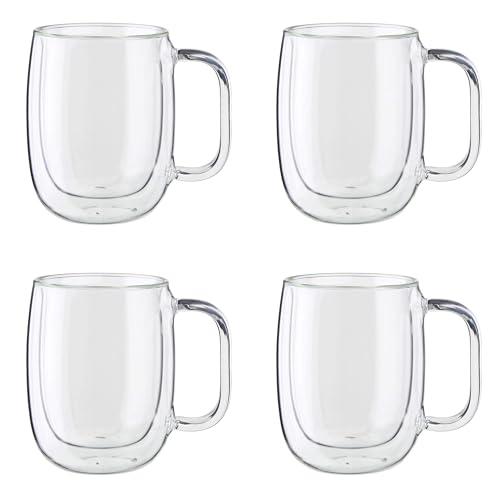
Zwilling Sorrento Plus 4-Pc Double Wall Insulated Glass Coffee Mug Set
Clear double-wall glasses show oolong's gold-to-amber color.
Shop NowProduct prices and availability are accurate as of November 16, 2026 and are subject to change. Any price and availability information displayed on Amazon at the time of purchase will apply.
Producers and labs, side by side
| Source | Dose | Conditions | Time |
|---|---|---|---|
| TRES sensory protocol (as reported by Liu et al. 2021) | 1 : 50 leaf to water (20 g per litre) | Room-temperature water, then 2–7°C | 6 h (Pouchong, Dong Ding, Tieguanyin), 8 h (high-mountain), 10 h (Oriental Beauty) |
| TRES method as modified by Wu et al. 2022 (Foods, GABA oolong) | 4.5 g in 450 mL (10 g per litre) | 1 h at room temperature, then 2–7°C | 8 h; tasted within 24 h |
| Valley of Tea, light oolong (incl. Tieguanyin) | 8–10 g per litre | Fridge, 3–5°C | 6–8 h |
| Valley of Tea, dark/roasted oolong (incl. Da Hong Pao, heavy-roast Dong Ding) | 8–10 g per litre | Fridge, 3–5°C | 8–10 h |
| Rishi Tea & Botanicals | 2–3 Tbsp per 1,000 mL | Cold filtered water, fridge | 6–8 h; ball-rolled oolong "may need significantly more time" |
| Crema (retailer brew guide) | 15–20 g per litre | Cold or room-temperature water, fridge | 8–10 h |
Where they disagree. The dose runs from 8 g to 20 g per litre, a factor of 2.5. TRES's own protocol uses twice the leaf of the version Wu and colleagues adapted from it, and gives tightly rolled Dong Ding the same 6 hours as twisted Pouchong. Valley of Tea, by contrast, gives roasted oolongs 2 more hours than light ones.
What this page uses: 10 g per litre, 6–8 hours for light oolongs and 8–10 hours for roasted ones. 10 g is where Valley of Tea's upper end meets the Wu et al. lab method, and the roast split follows Valley of Tea because it is the only source that gives one. Use TRES's 20 g per litre if you want a strong pour, or dilute it. Our cold brew tea ratio calculator uses one all-tea default of 15 g per litre, which sits between them. One caution on the Wu et al. method: its first hour is at room temperature. In Okazaki's 2016 study, cold-brewed tea held at 20°C showed little bacterial change for about 6 hours, so one hour is within that window, but the fridge-only methods avoid the question.
Does a rolled leaf really need longer?
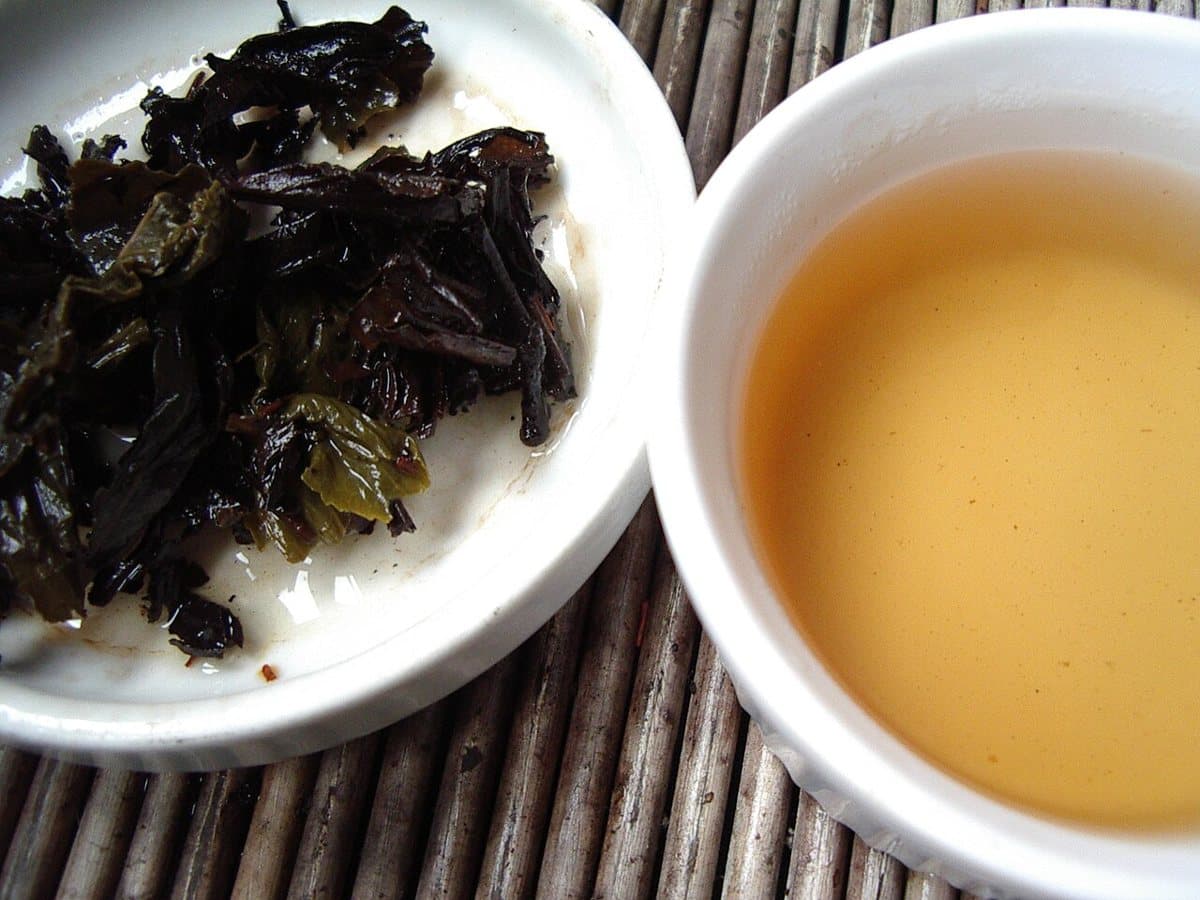
Many oolongs are rolled tight. Wikipedia describes some as "wrap-curled into small beads, each with a tail" and others as long, curly leaves; Baozhong (Pouchong) is twisted like rope, and Da Hong Pao looks like knotted ropes or twisted strips. Rishi says ball-rolled oolong "may need significantly more time" in cold water.
The TRES times don't follow leaf shape, though. They give the tightly rolled Dong Ding the same 6 hours as twisted Pouchong (and Tieguanyin the same again), and the longest time, 10 hours, to Oriental Beauty, the most oxidised of the five. TRES's schedule tracks oxidation more than rolling: 6 hours for the light teas, 10 for the most oxidised oolong and for black tea.
How to reconcile them. Use TRES's time as the first check and Rishi's advice as the fallback: if a ball-rolled leaf is still mostly closed and the tea tastes thin at the end of the window, give it more time. Rishi also offers a shortcut: pour just enough water at 165°F (74°C) or hotter over the leaves to cover them, then fill the rest of the pot with cold water. Rishi gives no reason or timing data for it, and we found no study comparing it with a straight cold steep.
Worked example: two 1-litre bottles
Bottle A, a roasted Tieguanyin. On this page's numbers: 10 g of leaf in 1 litre of cold, filtered water, 8–10 hours in the fridge. Started at 10 pm, it is ready between 6 am and 8 am. On TRES's numbers it would take 20 g (1,000 ÷ 50) and 6 hours, ready at 4 am. Rishi's version is 2–3 tablespoons, 6–8 hours, with more time if the beads are still closed.
Bottle B, an Oriental Beauty. TRES: 20 g, 10 hours (10 pm to 8 am). Valley of Tea: 8–10 g, 8–10 hours. Because the 2021 panel found this the least-liked cold oolong and the colour much paler cold, the higher TRES dose is the better bet here than the low end of Valley of Tea's.
Caffeine, roughly. USDA FoodData Central lists brewed oolong at 16 mg per 100 g, which is 160 mg per litre and about 57 mg in a 12 fl oz (355 mL) glass when brewed hot. Yuann et al. (2015) measured a cold oolong at about 62% of the same tea's hot caffeine (about 240 vs 385 mg per litre, read from their chart, at 20 g per litre for 24 h). Applying that ratio: 57 × 0.62 ≈ 35 mg per 12 fl oz glass. That combines two sources and assumes the ratio carries over, so treat it as an estimate. The cold brew tea caffeine calculator shows the USDA figure and labels it.
| Bottle A (roasted Tieguanyin) | Bottle B (Oriental Beauty) | |
|---|---|---|
| This page | 10 g, 8–10 h | 10 g, 8–10 h |
| TRES | 20 g, 6 h | 20 g, 10 h |
| Valley of Tea | 8–10 g, 8–10 h (roasted) | Not listed by name |
| Rishi | 2–3 Tbsp, 6–8 h+ | 2–3 Tbsp, 6–8 h |
| Rough caffeine per 12 fl oz | ≈35 mg | ≈35 mg (same USDA basis) |
Rinse first, and the second steep
Rinsing. Rinsing rolled oolong with hot water before the first infusion is traditional in China, and Gao et al. (J Agric Food Chem, 2019) measured what it does. Rinses of 5 to 30 seconds carried 0.2–24% of eight pesticides into the rinse water and cut the pesticide risk in the following infusion by 5–59%, while caffeine, EGCG and other compounds fell by only 0–11%. So a rinse removes some residue and very little of anything else, and it does not decaffeinate the tea. Taiwan's Ministry of Agriculture adds that TRES tests found longer cold steeps dissolve more from the leaf, possibly including very small amounts of water-soluble pesticide residue, but that most tea pesticides are fat-soluble; it considers cold brew from traceable or organic-certified tea safe to drink. No study we found tested rinsing before a cold brew specifically. If you rinse, a few seconds with hot water and a discard is the traditional version; Chinese tea ceremony covers the gongfu context.
A second cold steep. Oolong is famous for repeated hot infusions, and for hot water there are measurements: Yang, Hwang and Lin (2007) found that at 70°C the second infusion of a bag tea held the most caffeine and catechins, while at 85°C and 100°C the first did, with later infusions declining. For green tea, Zimmermann and Drees (2025) found a second hot infusion held a median 83% of the first's caffeine. Nobody we found has measured a second cold steep of oolong. Refilling the leaves is reasonable to try, but we can't tell you how strong it will be, and the leaves should stay in the fridge between steeps.
Caffeine and catechins in cold oolong
Yuann et al. (2015) is the one study that compared hot and cold oolong side by side under the same method (1 g per 50 mL; 90°C for 6 minutes vs 4°C for 24 hours). Cold-brewed oolong had about 62% of the hot caffeine, and its total phenolics and DPPH radical-scavenging were not significantly different from hot. Reducing power, another antioxidant measure, was lower cold. Lantano et al. (2015) included an oolong among teas that extracted more "healthy molecules" cold but slowly, and Yang et al. (2007) found caffeine and catechins in cold oolong and Pouchong bag teas rose with steeping time and stayed "markedly lower" than in hot water. None of these measured effects in people. The full study comparison is on cold brew vs hot brew tea.
Keeping it clean and how long it lasts
In Okazaki's 2016 survey of 19 commercial teas (a Japanese study), the three cold-brew oolong bag teas carried the fewest microbes: bacteria under 1.5 × 10² CFU per gram in two, and none detected in the third. Green-tea-based products carried more, up to 3.8 × 10⁴ CFU per gram for a jasmine tea. The author cites earlier work linking green tea's higher counts to its steaming-based processing. That is one survey of a few brands, so it is a reason for confidence, not a reason to leave oolong out of the fridge: in the same study every cold brew she tested that started with bacteria grew quickly at 35°C.
Taiwan's Ministry of Agriculture gives the same advice in plain terms: in summer heat, cold-brewed tea can sour or exceed bacterial limits, so drink it soon or keep it refrigerated and pour it in portions. It adds that ripe pu-erh and other dark teas should be boiled for 1–2 minutes because of possible microbial growth, which does not apply to oolong.
How long: Valley of Tea says 2–3 days, strained, in an airtight container in the fridge. The Wu et al. lab method finished its tastings within 24 hours, for flavour rather than safety. This page uses 2–3 days. Aromatic teas pick up fridge smells, so seal the bottle. More storage detail is on cold brew tea steep time.
Worth knowing
Worked example, computed from the published ratios: for a 1-litre bottle, TRES's 1 : 50 means 20 g of leaf, the Wu et al. lab method 10 g, and Valley of Tea 8–10 g. The caffeine estimate of about 35 mg per 12 fl oz glass multiplies USDA's 16 mg per 100 g (57 mg per 355 mL, hot) by the 0.62 cold-to-hot ratio Yuann et al. measured for oolong.
Sources & further reading
- Liu S.L., Jaw Y.M., Wang L.F. et al., 'Evaluation of Sensory Quality for Taiwanese Specialty Teas with Cold Infusion Using CATA and Temporal CATA by Taiwanese Consumers', Foods 2021;10(10):2344 (TRES cold protocol 1:50 at 2–7°C: green 4 h; Pouchong, Dong Ding, Tieguanyin 6 h; high-mountain 8 h; Baihao and black 10 h; Table 1 oxidation degrees; panel of 108) (read 2026-11-15)
- Wu M.C., Liou B.K., Chen Y.S. et al., 'Understanding Young Taiwanese Consumers' Acceptance, Sensory Profile, and Drivers of Liking for GABA Oolong Tea Beverages with Cold Infusions', Foods 2022;11(19):2989 (TRES-modified method: 4.5 g in 450 mL, 1 h room temperature, then 2–7°C for 8 h; evaluated within 24 h) (read 2026-11-15)
- Valley of Tea — Cold Brew Tea 101 (light oolong 8–10 g/L, 6–8 h; dark/roasted 8–10 g/L, 8–10 h; 3–5°C; keeps 2–3 days) (read 2026-11-15)
- Rishi — How to Cold Brew Tea (2–3 Tbsp per 1,000 mL; black and oolong 6–8 h) (read 2026-11-15)
- Rishi — Cold Brew Teas collection page (ball-rolled oolong may need significantly more time; hot start at 165°F or hotter, then cold water) (read 2026-11-15)
- Crema — Cold Steeped Tea brew guide (15–20 g/L; oolong 8–10 h) (read 2026-11-15)
- Yuann J.-M.P. et al., MC-Transaction on Biotechnology 2015;7(1):e3 (oolong caffeine ≈240 mg/L cold vs ≈385 hot; phenolics and DPPH not significantly different; reducing power lower cold; read from Figures 1, 2, 3, 5) (read 2026-11-15)
- Gao W. et al., J Agric Food Chem 2019;67(19):5384–93 (rinsing rolled oolong 5–30 s: 0.2–24% of pesticides into rinse; risk down 5–59%; caffeine, EGCG down 0–11%) (read 2026-10-11)
- Taiwan Ministry of Agriculture — FAQ on cold-brewed tea safety, 14 Dec 2017 (TRES tests; pesticides mostly fat-soluble; refrigerate; boil ripe pu-erh 1–2 min) (read 2026-11-15)
- Okazaki K., Tea Research Journal 2016;122:21–25 (19 commercial teas; three cold-brew oolong bag teas: bacteria <1.5×10² CFU/g or not detected) (read 2026-11-15)
- Yang D.J., Hwang L.S., Lin J.T., J Chromatogr A 2007;1156:312–20 (oolong and pouchong bag teas; repeated hot infusions; cold steeping 4/25°C) (read 2026-11-15)
- Zimmermann B.F., Drees L., Heliyon 2025;11(4):e42651 (second green tea infusion: median caffeine 83% of the first) (read 2026-11-15)
- Lantano C. et al., J Food Sci Technol 2015;52(12):8276–83, abstract (read 2026-11-15)
- USDA FoodData Central — Beverages, tea, Oolong, brewed, fdcId 174120 (16 mg caffeine per 100 g) (read 2026-11-15)
- Wikipedia: Oolong; Baozhong tea; Da Hong Pao; High-mountain tea (leaf shapes) (read 2026-11-15)
Frequently asked questions
How long should I cold brew oolong tea?
6–10 hours in the fridge for most oolongs. Taiwan's TRES protocol gives 6 hours for Pouchong, Dong Ding and Tieguanyin, 8 for high-mountain oolong and 10 for Oriental Beauty; Valley of Tea gives light oolongs 6–8 hours and roasted ones 8–10.
How much oolong per litre for cold brew?
8–20 g, depending on the source: Valley of Tea 8–10 g, the Wu et al. lab method 10 g, Crema 15–20 g and TRES 20 g (1 : 50). This page uses 10 g; go higher for dark or roasted oolongs, which come out paler cold.
Which oolong is best for cold brew?
In a 2021 Taiwanese consumer study, lightly oxidised oolongs (Pouchong, high-mountain, Dong Ding) were preferred cold, and Oriental Beauty ranked among the least liked. That is one panel of 108 people, but it is the only study we found that compared oolongs cold.