
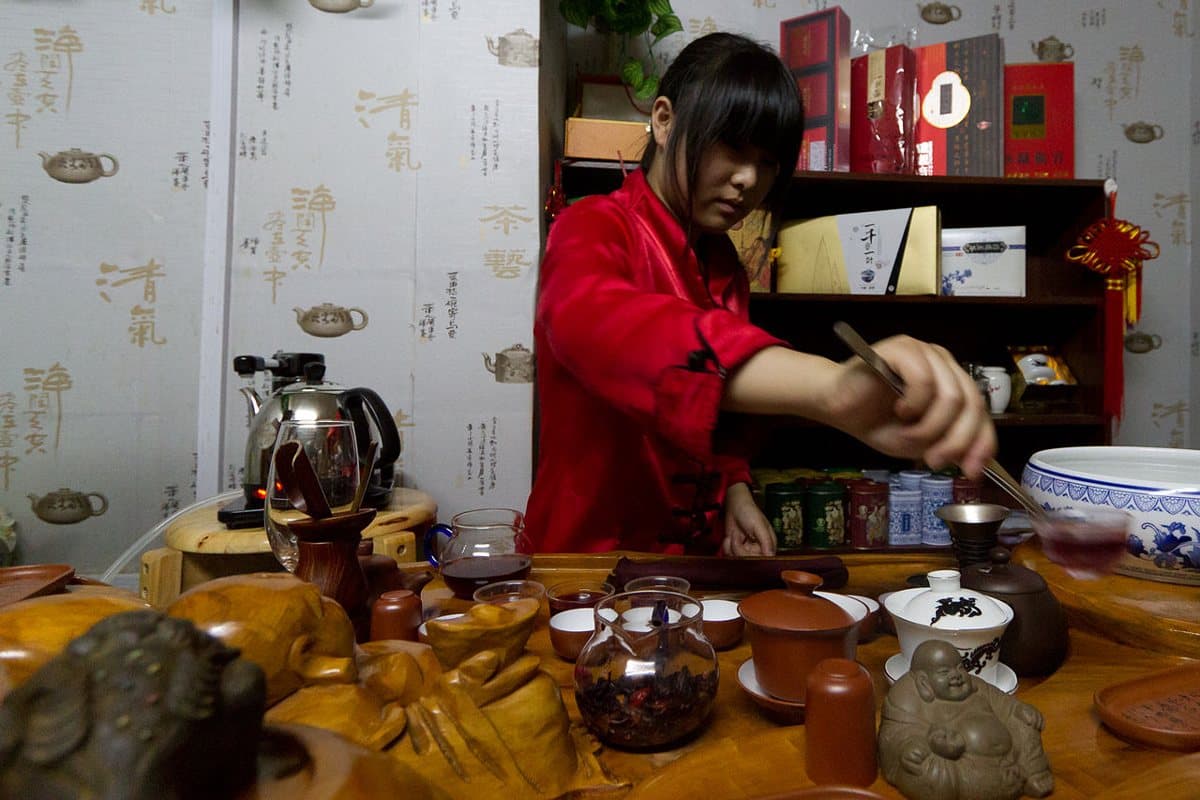
The gongfu tea ceremony — gongfu cha, literally "making tea with skill" — is the Chinese method of brewing a large amount of leaf in a small vessel through many short infusions, so one tea unfolds across a whole sitting instead of a single cup. Despite the word "ceremony," it is not a religious rite and there is no examination board: it's a technique with a rhythm to it, closer to pour-over coffee than to liturgy. You can perform it with about $30 of equipment on any table. This guide covers the gear, the eight steps, the timing, and the small courtesies — everything needed to run your first session today.
Quick answer
- ✓Gongfu brewing = lots of leaf, tiny pot, many steeps of 10–45 seconds each.
- ✓Minimum gear: a gaiwan (~$15), a strainer, and any small cups. Everything else is optional.
- ✓Rinse the leaves once, then steep repeatedly, adding ~5–10 seconds per round.
- ✓Oolong, pu-erh, and Chinese black teas shine brightest brewed this way.
- ✓The point is attention, not perfection — spilled water is part of the tradition.
What Gongfu Cha Actually Is (and Isn't)
Gongfu brewing came out of Chaozhou in southern China, refined over centuries around oolong tea, and spread through Fujian, Guangdong, and Taiwan into the default "serious" brewing style of the Chinese tea world. The name uses the same gongfu as the martial art — skill earned through practice — and that's the honest frame: it's a craft, not a performance.
What it isn't: the highly choreographed, incense-and-silence event sometimes staged for tourists, and it isn't the Japanese tea ceremony (chanoyu), which is a different tradition with different tea, tools, and philosophy. Everyday gongfu cha in a Chinese home is unceremonious — a tray, a pot, small cups, conversation. The Chinese tea ceremony overview covers the cultural background and regional traditions; this page is the practical how-to.
Tea & gear for this guide
Hand-matched Amazon picks with strong owner ratings. As an Amazon Associate, Tea & Peace earns from qualifying purchases.
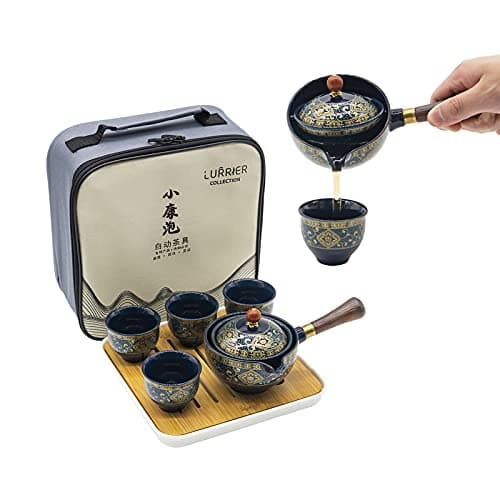
LURRIER Porcelain Chinese Gongfu Tea Set,Portable Teapot Set with 360
Gongfu tea set for traditional Chinese brewing — 4.6★ across 1,436 ratings.
Shop Now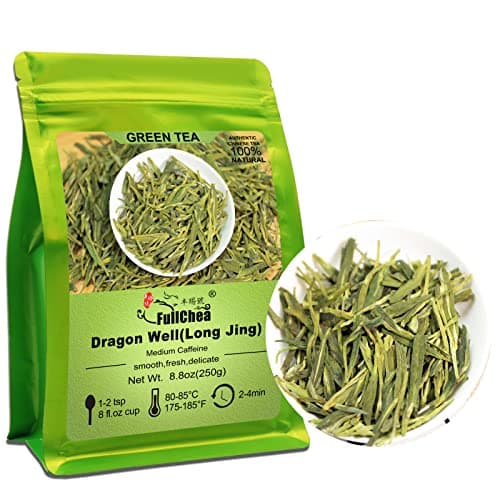
FullChea - Longjing Tea - Dragonwell Tea - Chinese Green Tea Loose Leaf
Pan-fired Chinese green tea (Longjing style) — 4.3★ across 643 ratings.
Shop Now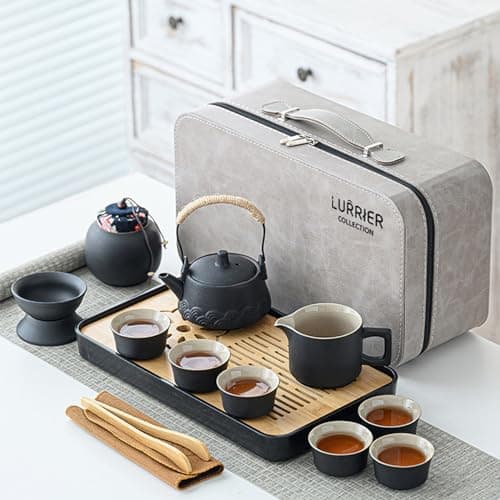
LURRIER Gongfu tea sets, Portable Ceramic TeaSet, Asian Tea sets for
Gongfu tea set for traditional Chinese brewing — 4.4★ across 267 ratings.
Shop NowProduct prices and availability are accurate as of September 14, 2026 and are subject to change. Any price and availability information displayed on Amazon at the time of purchase will apply.
The Gear: What You Need vs What's Nice to Have
Genuinely required:
- A gaiwan — the lidded bowl, ~100–150 ml. This is the single most versatile brewing vessel in tea, and decent porcelain ones cost under $20. (Alternative: a small Yixing-style teapot.)
- A strainer — catches leaf fragments as you pour.
- Cups — small ones, 30–60 ml. Espresso cups work fine to start.
Nice to have, not required:
- A gongdao bei ("fairness pitcher") — you decant each steep into it so every cup pours at equal strength.
- A tea tray or deep plate — catches the rinse water and spills.
- A kettle you can re-heat quickly — gongfu sessions use hot water repeatedly; a gooseneck kettle with temperature control removes all friction.
A complete starter setup is genuinely a gaiwan, a strainer, and two cups. Our Chinese tea set guide covers full sets if you'd rather buy everything at once, and the gaiwan guide goes deep on choosing and handling the bowl itself.
Which Teas to Brew Gongfu Style
Gongfu brewing rewards teas with layers to reveal across many steeps:
- Oolong — the style's native tea. Rolled Tieguanyin and roasted Wuyi rock oolongs both run 8–12 infusions.
- Pu-erh — ripe or aged raw; pu-erh practically demands gongfu brewing, easily passing ten steeps.
- Chinese black teas — Dianhong and Keemun turn honeyed and complex in short steeps.
- White tea — aged white cakes especially.
Delicate Japanese greens and most herbal tisanes gain little from the method — brew those Western style per the tea steeping times chart. Whatever you choose, use good leaf: gongfu brewing magnifies quality in both directions, and it will amplify a stale supermarket tea's flaws just as faithfully as it unfolds a good oolong's virtues. Chinese tea is the natural hunting ground.
The 8 Steps of a Gongfu Session
- Heat the water. 195–212°F depending on tea (boiling for pu-erh and roasted oolong; slightly cooler for light oolong and black).
- Warm the vessels. Pour hot water into the empty gaiwan, swirl, pour it through the pitcher and cups, discard. This preheats everything so the brew doesn't cool on contact.
- Dose the leaf. Generously — 5–7 grams for a 100–150 ml gaiwan, which looks like a third to half full of dry rolled oolong. This is the biggest visible difference from Western brewing.
- Rinse. Cover the leaves with hot water and pour it off within ~5 seconds. This wakes the leaf, opens rolled teas, and warms them through. Some drinkers rinse pu-erh twice; light oolongs once is plenty.
- First steep. Fill, lid on, count roughly 10–15 seconds, pour everything out through the strainer into the pitcher (or directly into cups). Pour it all out — leaf sitting in water between steeps is the classic beginner error and stews the next round.
- Serve. Fill each cup from the pitcher. Small cups, drunk while genuinely hot, in two or three sips.
- Steep again, and again. Add ~5–10 seconds each round: 15, 20, 30, 45 seconds, a minute... A good oolong holds character past steep eight; each round tastes slightly different, which is the entire point.
- Finish and look at the leaves. When the flavor fades, the session is over. Tip the spent leaves out and look — whole unfurled leaves are the signature of well-made tea, and inspecting them is a traditional close to the session.
Timing Cheat Sheet by Tea Type
Seconds per steep, assuming ~5–7 g of leaf per 100–150 ml gaiwan:
| Tea | Rinse | Steep 1 | Steep 2 | Steep 3 | Add per steep after |
|---|---|---|---|---|---|
| Light oolong (rolled) | 1× | 15 s | 20 s | 25 s | +10 s |
| Roasted oolong | 1× | 10 s | 15 s | 20 s | +10 s |
| Ripe pu-erh | 1–2× | 10 s | 10 s | 15 s | +5–10 s |
| Aged raw pu-erh | 1× | 10 s | 15 s | 20 s | +10 s |
| Chinese black | 1× | 10 s | 15 s | 20 s | +10 s |
| White (aged cake) | 1× | 15 s | 20 s | 30 s | +15 s |
Treat every number as a starting point. Too strong? Shorten the next steep or cool the water. Too weak? Add leaf next session rather than dragging the timing out — concentration of leaf is the engine of the whole method.
The Etiquette That's Actually Used
Gongfu tradition carries social customs, and a few are worth knowing because you'll encounter them in any Chinese tea house:
- The finger tap. When someone fills your cup, tapping two fingers lightly on the table says "thank you" without interrupting conversation — folklore traces it to a disguised emperor's servants "bowing" with their fingers.
- Serve others before yourself. The host fills their own cup last, always.
- Don't fill cups to the brim. A common saying holds that you fill tea cups about seven-tenths full — the remainder is said to be left for friendship.
- The rinse water isn't served. It's poured over the tray, or traditionally over a clay tea pet if one lives on your table.
None of this is graded. Brewing alone, the only etiquette is paying attention — which is also the answer to how gongfu cha became the natural centerpiece of a mindful tea ritual.
Common Beginner Mistakes
- Leaving water on the leaves between steeps. Always decant fully. A gaiwan that keeps dribbling means tilt the lid gap wider and pour more decisively.
- Too little leaf. Western instincts say a teaspoon; gongfu wants three to four times that. Underleafed gongfu tastes like weak Western tea with extra work.
- Burned fingers. Grip the gaiwan by the flared rim with thumb and middle finger, index finger resting on the lid knob — the rim stays cool even when the bowl is scalding. Practice with cool water first; everyone spills the first week.
- Boiling delicate teas. Light oolongs go bitter-edged off a full boil; give the kettle two minutes.
- Rushing. The method's rhythm — steep, pour, sip, repeat — is the product. A session takes twenty minutes to an hour. If you want fast tea, cold brew overnight instead: how to make cold brew tea.
A 5-Minute Version for Busy Days
Purists brew twelve steeps; real life sometimes allows three. A compressed session that keeps the spirit:
- Heat water while you dose the gaiwan (5–6 g).
- Rinse 5 seconds, discard.
- Three steeps — 15, 25, 40 seconds — decanted into one large mug instead of small cups.
You lose the cup-by-cup unfolding but keep gongfu's core advantage: concentrated leaf and short steeps extract sweetness and aroma while leaving harsh tannins behind. Even this abbreviated form usually beats a single 4-minute Western steep of the same tea — and the leaves are still good for more rounds after dinner.
Where to Go Deeper
Once the basic rhythm feels natural, three directions reward exploration. First, vessels: an unglazed Yixing clay pot, dedicated to one tea family, slowly seasons and rounds the brew — the teaware guide explains the clay question honestly. Second, water: mineral content changes tea more than most upgrades in leaf price; try the same oolong with filtered vs hard tap water and taste the difference. Third, tea itself: work through the Chinese tea brands worth trusting and taste one region at a time.
The tradition's own advice is the best last word: he cha — drink tea. Skill accumulates in the fingers by making tea often, not by reading about it. Start with tonight's session. For how many infusions each tea will actually give you, and how to time the later ones, see how many times can you steep tea.
From our testing notes
Timing our own sessions: a 6-gram dose of rolled Tieguanyin in a 120 ml gaiwan gave us eleven distinct steeps before fading — total liquid, about 1.3 liters of tea from one dose of leaf. Steeps four through six were the peak, noticeably fuller than steep one. The same 6 grams brewed Western-style in a 350 ml mug was pleasant but done after two brews. Same tea, same day, same water; the method alone roughly doubled what the leaf delivered.
Sources & further reading
Frequently asked questions
What does gongfu cha literally mean?
"Tea with skill" or "tea made with effort" — gongfu (功夫) is the same word used for kung fu, meaning ability developed through practice. It refers to the brewer's technique, not a ceremony script.
Is the gongfu tea ceremony religious?
No. It has philosophical roots in Chinese culture and pairs naturally with quiet attention, but everyday gongfu brewing is a social, secular practice — closer to a coffee ritual than a rite. Formal choreographed versions exist mainly for performance and instruction.
How is gongfu cha different from the Japanese tea ceremony?
Different countries, teas, and aims. Japanese chanoyu whisks powdered matcha in a highly codified sequence where the ceremony itself is the point. Gongfu cha steeps whole-leaf tea (usually oolong or pu-erh) many times, and the tea's flavor is the point. Neither derives from the other.
How much tea do I use for gongfu brewing?
About 1 gram per 15–20 ml of vessel — so 5–7 grams in a standard 100–150 ml gaiwan. Visually: a third to half the gaiwan full of dry rolled oolong, or a loose covering layer of pu-erh. It looks like too much; it isn't.
Why do you rinse the tea first?
The 5-second rinse wakes and opens the leaves so the first real steep extracts evenly, warms the leaf through, and washes off any dust from processing and storage. For tightly rolled or compressed teas it's near-essential; for delicate light teas it's optional but traditional.
Can I do gongfu brewing with tea bags?
Not meaningfully — bag tea is broken leaf blended for one strong steep, and it dumps everything, tannin included, in the first infusion. Gongfu's whole mechanism depends on whole leaves releasing slowly across rounds. Any affordable whole-leaf oolong will work; bags won't.
How many times can I re-steep the leaves in a session?
Good oolong: 6–12 steeps. Pu-erh: often 10–15. Chinese black: 5–8. The tea tells you when it's done — when a steep tastes thin and watery even after doubling the time, the session is over.
Do I need a tea tray?
No — a deep plate or shallow bowl catches rinse water and drips just as well. Trays earn their place once you brew for guests regularly and want the pouring to be carefree. Start without one.