
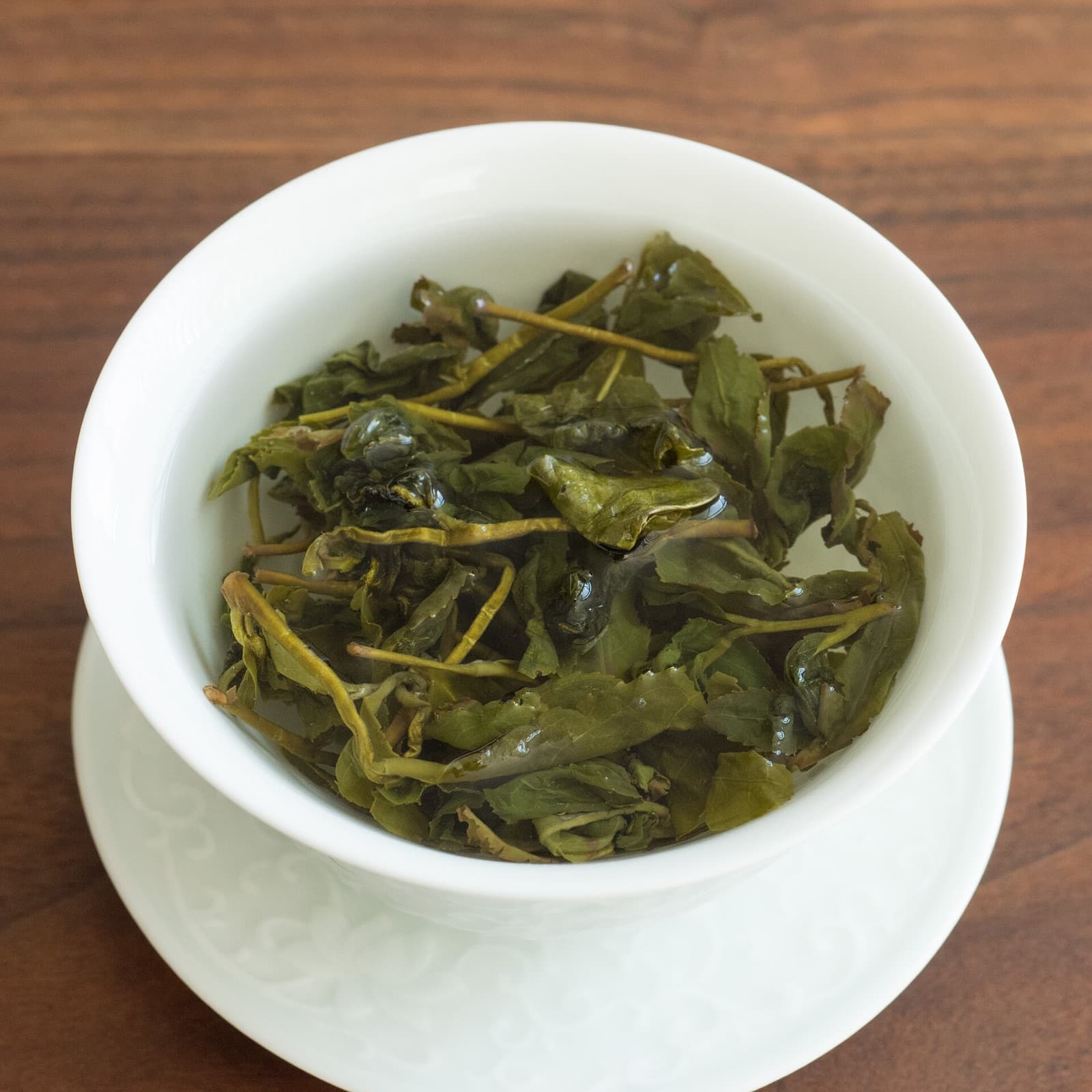
Asking how many times can you steep tea gets two very different answers depending on who you ask, and both are right. A teabag drinker will tell you once, maybe twice, because a bag of fine-cut leaf gives up nearly everything in the first steep and the second is pale and flat. A gongfu drinker will tell you eight, ten, fifteen times, because a heavy dose of whole rolled oolong in a small gaiwan is designed to be steeped repeatedly for seconds at a time, and the third infusion is often the best one. The real answer sits on a spectrum set by three things: how whole the leaf is, how much of it you used relative to the water, and how long each steep runs. Once you see those three levers, you can predict the resteep count of almost any tea before you brew it — and stop throwing away leaves that had three good cups left in them. This guide gives the count by tea type, explains what changes from steep to steep, and shows how to time the later rounds so they stay worth drinking.
Quick answer
- ✓Teabags and CTC black tea: 1–2 steeps. Whole-leaf black: 2–3. Whole-leaf green: 2–3. Rolled oolong: 5–8 Western-style, 8–12 gongfu. Pu-erh: 8–15.
- ✓Each resteep needs more time: add 30–60 seconds per round Western-style, 5–10 seconds gongfu-style.
- ✓Leaf wholeness and leaf-to-water ratio decide the count more than the tea's category does.
- ✓Pour every steep fully off the leaves; leaf left soaking between rounds stews and ruins the next cup.
- ✓Stop when the cup tastes like faintly flavored water — usually a sudden drop, not a slow fade.
The Short Answer, by Tea Type
Counts below assume roughly 2.5–3 g of leaf per 8 oz mug for the Western column and 5–7 g per 100–150 ml gaiwan for the gongfu column, with water at the temperature each tea wants. More leaf, cooler water or shorter steeps push the count up; the opposite pulls it down.
| Tea | Western mug, 2–5 min steeps | Gongfu, 10–45 sec steeps | What limits it |
|---|---|---|---|
| Teabag / CTC black | 1–2 | — | fine cut extracts almost fully in steep one |
| Whole-leaf black (Keemun, Dianhong, orthodox Assam) | 2–3 | 5–7 | tannin front-loads; later steeps go thin |
| Whole-leaf green (Dragonwell, sencha) | 2–3 | 3–5 | aroma fades fast; sencha drops off sharply |
| White (silver needle, white peony) | 3–4 | 5–8 | slow extractor; keeps giving at low heat |
| Rolled oolong (Tieguanyin, high-mountain) | 4–6 | 8–12 | pellets unfurl over several rounds |
| Strip oolong (Da Hong Pao, Dan Cong) | 3–5 | 6–10 | roast and fruit peak in rounds 2–4 |
| Ripe pu-erh (shou) | 4–6 | 10–15 | very durable; ends sweet and pale |
| Aged raw pu-erh (sheng) | 4–6 | 10–15+ | the longest-running tea there is |
| Herbal (chamomile, mint, hibiscus) | 1–2 | — | flowers and petals exhaust quickly |
The pattern is leaf shape. Anything cut small is a one-steep tea. Anything whole, tightly rolled or compressed unfolds slowly and rewards repetition — which is exactly why the Chinese gongfu tea ceremony was built around oolong and pu-erh and not around teabags.
Tea & gear for this guide
Hand-matched Amazon picks with strong owner ratings. As an Amazon Associate, Tea & Peace earns from qualifying purchases.

Prince of Peace Organic Oolong Tea, 100 Tea Bags – 100% Organic Black Tea
Partially oxidized oolong with layered flavor — 4.6★ across 8,786 ratings.
Shop Now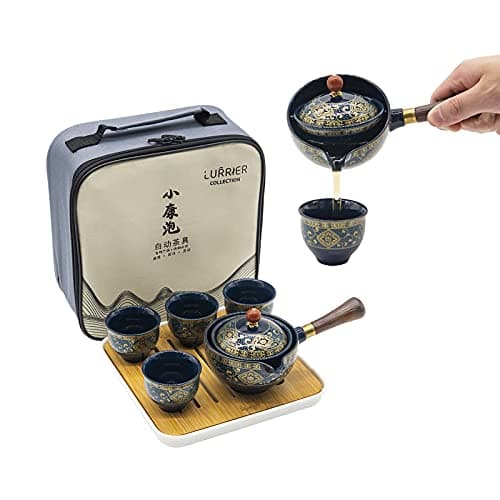
LURRIER Porcelain Chinese Gongfu Tea Set,Portable Teapot Set with 360
Gongfu tea set for traditional Chinese brewing — 4.6★ across 1,436 ratings.
Shop Now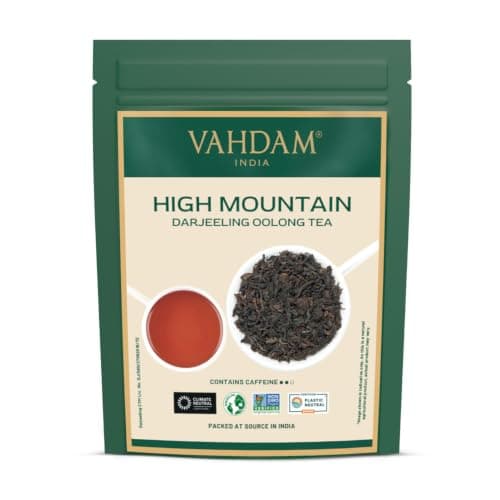
VAHDAM, High Mountain Oolong Tea Leaves From Himalayas (50+ Cups, 3.53oz)
Partially oxidized oolong with layered flavor — 4.6★ across 3,925 ratings.
Shop NowProduct prices and availability are accurate as of September 28, 2026 and are subject to change. Any price and availability information displayed on Amazon at the time of purchase will apply.
What Actually Changes from Steep to Steep
Steeping is extraction, and the compounds in a tea leaf do not all leave at the same rate. The light, aromatic oils and the sweet amino acids come out first and fastest; caffeine follows through the early-middle of the process; the heavy, astringent tannins extract slowest but keep coming for as long as leaf sits in hot water. A 2015 study in the Journal of Food Science and Technology comparing hot and cold steeping found hot water has rapid extractive power but degrades some compounds, while cold water extracts more slowly and more gently — the same kinetics that explain why a first hot steep is the most aromatic and the later ones the most tannic.
So the first steep is bright and fragrant but often thin, because the leaf has not fully opened. The second and third are the fullest — the leaf is open, the aroma is still there, and body has caught up. From there the cup gets progressively lighter and sweeter as the aromatics run out and only the slow, gentle compounds are left. That sweet, pale tail is the signature of a good tea; a cheap tea goes from strong to nothing with no tail at all.
Caffeine follows the same curve. Most of it leaves in the first two steeps, so a fifth steep of oolong is a genuinely low-caffeine cup — one reason evening gongfu sessions do not have to end badly. What does not happen is a "reset": resteeping cannot bring back aroma that the first steep drove off, which is why over-brewing steep one hurts every steep after it.
How to Time the Resteeps
Each round needs a little longer than the one before, because there is less left to extract. The increments are simple.
Western-style, mug or pot: add 30 to 60 seconds per resteep. A green tea steeped 2 minutes goes 2½, then 3; a black tea steeped 3 minutes goes 4, then 5. If the second cup tastes thin at the longer time, that tea is done. Our tea steeping times chart has the first-steep windows.
Gongfu-style, gaiwan or small pot: rinse the leaf for a few seconds and discard, then steep 10–15 seconds, and add 5 to 10 seconds per round — 15, 20, 30, 45 seconds, a minute, and onward. When the tea starts to fade, jump the increments: 90 seconds, then 2 minutes, then 3. The last worthwhile steeps of a good oolong or pu-erh can run five minutes and still taste sweet.
Two habits matter more than the exact seconds. Pour every steep completely off the leaves. Leaf left sitting in an inch of water between rounds keeps extracting into that puddle and stews the next infusion — the most common reason a second cup tastes bitter. And keep the water hot for later rounds; a cooling kettle under-extracts exactly when the leaf needs more help, which reads as "this tea only had two steeps in it" when it had four.
Why Some Teas Run Out and Others Keep Going
Whole leaf, and especially rolled or compressed leaf, is the reason a tea resteeps. A rolled Tieguanyin pellet is a whole leaf folded on itself; each steep unfurls it a little further and exposes new surface, so extraction is metered out across rounds. A pu-erh cake has been pressed so tightly that hot water needs several infusions just to loosen it. Fine-cut leaf has no such reserve — every surface is exposed from the start, so it gives everything at once.
The second factor is the ratio. At a high leaf-to-water ratio there is simply more tea in the vessel than one short steep can exhaust, which is the mechanism behind gongfu's long sessions; at a low ratio a single long steep takes most of what the leaf has. This is why the same oolong resteeps twelve times in a gaiwan and four times in a mug — nothing about the leaf changed, only the dose and the clock. The tea to water ratio guide covers the numbers.
The third is processing. Roasted and oxidized teas (dark oolongs, black, ripe pu-erh) hold together longer under repeated hot water than delicate green teas do, whose aromatics are volatile and leave early. Green tea's short resteep count is not a flaw in the leaf; it is the price of the freshness that makes it worth drinking.
When to Stop, and What to Do with Spent Leaves
Stop when the cup tastes like faintly tea-flavored water rather than tea. It is usually a noticeable drop, not a slow fade: one steep is sweet and light, the next is nearly nothing. Pushing past that point with ten-minute steeps mostly extracts bitterness from what little is left. Tip the leaves out and look at them — whole, fully open, evenly colored leaves are the mark of a well-made tea, and inspecting them is the traditional end of a gongfu session.
Leaves that still have life in them can be saved between sessions. Drain them well and leave them loosely covered at room temperature for a few hours — a morning's oolong will happily resume after lunch. Do not leave wet leaves overnight; they sour. And do not try to "revive" leaves by refrigerating them wet; cold, damp leaf goes flat and can pick up fridge smells.
There is one more use for leaves that have given their last cup. Wet spent leaves go straight into the fridge in a jar of cold water for a final, very gentle infusion — an old trick that yields a faint, sweet, nearly caffeine-free glass by the next morning. It is the same principle as cold brew tea, applied to leaf that hot water has already had its way with, and it is a pleasant way to send off a tea that resteeped well. The black tea and oolong tea guides note which varieties repay this treatment.
From our testing notes
We ran one 6-gram dose of a rolled Taiwanese high-mountain oolong through a 120 ml gaiwan to see where it actually gave out. The first steep was pale and mostly aroma; three and four were the fullest, thick and floral; by seven it had turned light and sweet; nine was still pleasant at a 90-second steep; ten, at three minutes, was the first cup that tasted like water. The same tea in a mug at a Western dose, steeped 3 minutes then 4 then 5, was clearly done after the third. Same leaves, same kettle — the ratio and the clock were the whole difference between three cups and nine.
Sources & further reading
Frequently asked questions
Can you steep a teabag twice?
Yes, but expect a much lighter cup. Teabags hold finely cut leaf that gives most of its flavor in the first steep; a second steep of 4 to 5 minutes gives a pale, mild tea that some people like for the evening. A third is usually just colored water. Family-size or pyramid bags with larger leaf do a little better.
How many times can you steep green tea?
Two to three times for whole-leaf green tea brewed Western-style, up to five in short gongfu steeps. The first steep is the most aromatic and the second usually the fullest; by the third the fresh, grassy top notes have faded. Keep the water at 160–180°F for every round — hot water on a resteep is what turns green tea bitter.
How many times can you steep oolong tea?
Rolled oolongs are the champions: four to six steeps in a mug, eight to twelve in a gaiwan, sometimes more. The pellets unfurl over several rounds, so steeps two through four are often better than the first. Strip-style roasted oolongs run slightly fewer but peak in the same middle rounds.
How many times can you steep pu-erh?
Ripe pu-erh and aged raw pu-erh routinely give ten to fifteen gongfu steeps and four to six in a large mug — they are the most durable teas there are. The late steeps go pale and sweet rather than bitter, and many drinkers consider that tail the best part of the session.
Does resteeping tea reduce the caffeine?
Each steep has less caffeine than the one before, because most of it extracts in the first one or two infusions. A fourth or fifth steep of oolong or pu-erh is a genuinely low-caffeine cup. Resteeping does not make the first cup lower in caffeine, though — the old idea of a 30-second "rinse to decaffeinate" removes only a small fraction.
How long should the second steep be?
About 30 to 60 seconds longer than the first for a mug or pot, and 5 to 10 seconds longer for gongfu brewing. If the second steep still tastes thin at that time, extend the third by a full minute; if it tastes strong, the first steep was probably too short rather than the tea being unusually durable.
Can I resteep tea the next day?
It is better not to. Wet leaves left overnight at room temperature sour and can grow mold; refrigerated wet leaves go flat and absorb fridge odors. Leaves can rest a few hours between steeps in the same day. If you want to stretch a tea across days, brew it as a cold brew instead and store the liquid, not the leaves.
Why does my second cup of tea taste bitter?
Almost always because leaf was left sitting in leftover water between steeps and kept extracting into it. Pour each infusion completely off the leaves, drain the pot or gaiwan, and the next steep starts clean. The second common cause is water that was hotter for the resteep than for the first steep.