
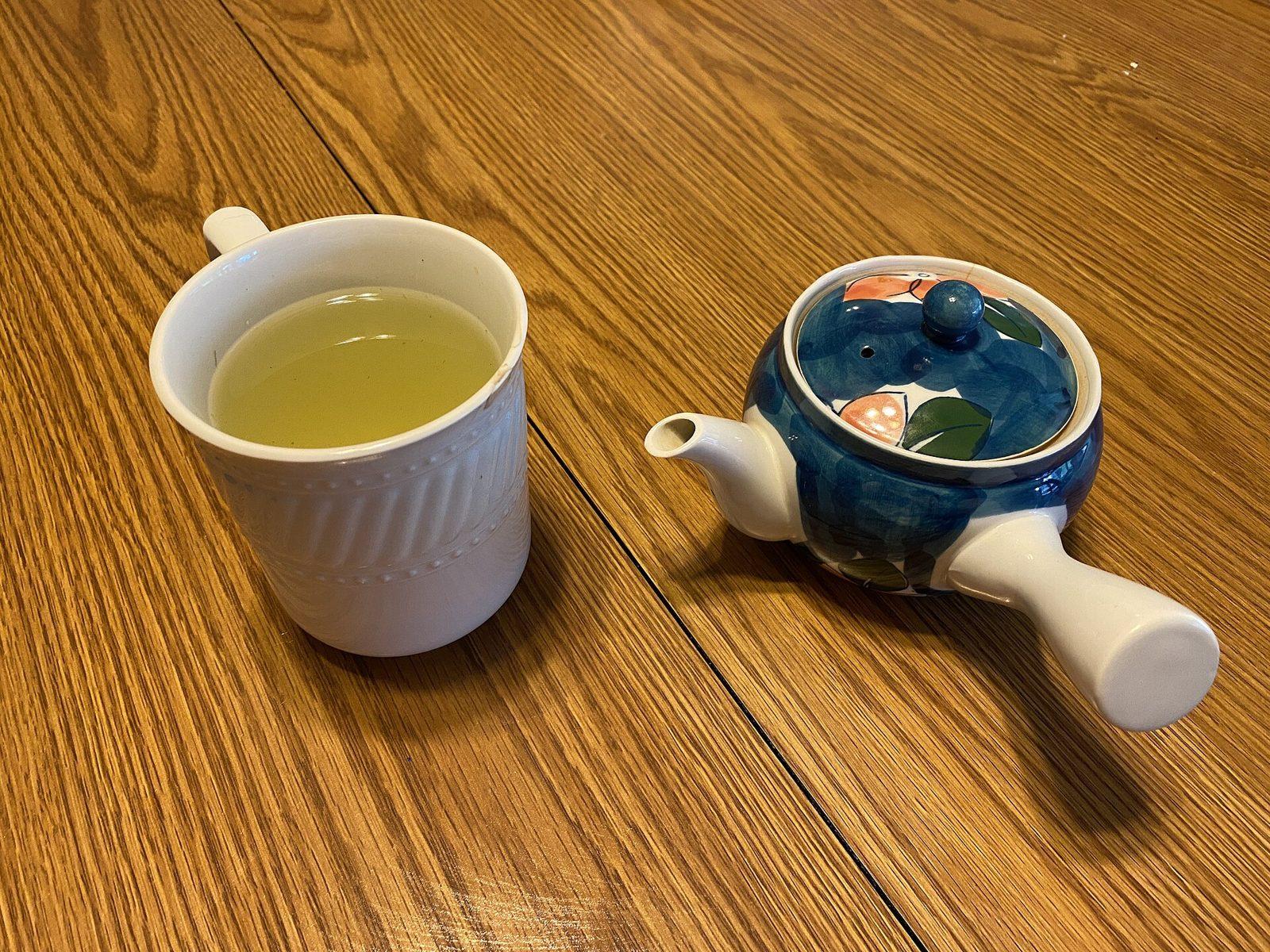
How long to steep tea depends on the type: 3–5 minutes for black tea, 1–3 for green, 2–3 for oolong, 2–5 for white and 3–6 for herbal, according to the Tea Association of the USA's steeping guide, with water from 175°F up to a full boil.
Those ranges are a good start, but the published instructions disagree. Twinings says 2 minutes for green tea and Lipton says 4. The ISO 3103 tasting standard steeps black tea for 6 minutes, and Harvard's Nutrition Source gives green tea anything from 4 to 15. This page puts every published time in one table, with the water and conditions each was written for, then says which time we recommend for each tea and why. It also covers the two most-asked versions of the question, green tea and tea bags, what over- and under-steeped tea tastes like, and how much is left in the leaf for a second steep, from a 2025 study that measured it.
Quick answer
- ✓Black 3–4 minutes at a full boil; green 2 minutes at about 80°C (176°F); oolong 3; white 2; herbal at least 5 at a rolling boil.
- ✓Tea bags: use the box time (Lipton black 3–4, Bigelow green 3, Twinings green 2), then take the bag out.
- ✓Published times differ more than twofold: ISO 3103 steeps black tea 6 minutes, but it is a tasting-lab method, not a recipe.
- ✓For a stronger cup, add leaf, not minutes. Longer steeps add bitterness (Harvard) and caffeine (Astill et al.).
- ✓A second steep of whole-leaf green tea kept a median 83% of the first cup's caffeine (Zimmermann and Drees, 2025).
Steep times and temperatures by tea type
The table below is the Tea Association of the USA's steeping guide, read on 15 November 2026, with the UK Tea & Infusions Association's named-tea times added beside it. Both are industry bodies, and both assume a cup-sized serving: the US chart uses one teaspoon of loose tea or one bag per 6 oz cup, the UK one uses one bag or one rounded teaspoon per cup.
| Tea | Water (Tea Association of the USA) | Minutes (Tea Association of the USA) | Named teas, minutes (UK Tea & Infusions Association) |
|---|---|---|---|
| White | 185°F | 2–5 | — |
| Green | 175–185°F | 1–3 | sencha 2–2½; jasmine 2–3; gunpowder 3–4; genmaicha 3–4 |
| Oolong | 185–205°F (85–96°C) | 2–3 | oolong 3–5 |
| Black | 212°F (100°C) | 3–5 | Assam, Darjeeling, Kenya, Earl Grey, Ceylon Dimbula 3–4; Ceylon Uva 3; Lapsang Souchong 4–5 |
| Herbal | 212°F (100°C) | 3–6 | — (see the herbal note below) |
Two notes on reading it. The US chart prints its white and green Celsius values as "80°C" even though 185°F works out to 85°C, so the Fahrenheit numbers are the ones to trust; the UK body gives green tea "around 80°C" (176°F) and black tea 90–98°C (194–208°F). And the herbal row has a floor that the chart does not show: Germany's Federal Institute for Risk Assessment (BfR) advises boiling water and at least 5 minutes for herbal and fruit infusions, bags included, on hygiene grounds.
The overall shape is consistent across every source on this page: the less processed the leaf, the cooler and shorter the steep. Green and white sit at the cool, short end; black and herbal at a full boil for longer. The tea water temperature guide covers how to hit each temperature without a thermometer, and types of tea explains what the categories mean.
Tea & gear for this guide
Amazon picks matched to this guide. As an Amazon Associate, Tea & Peace earns from qualifying purchases.
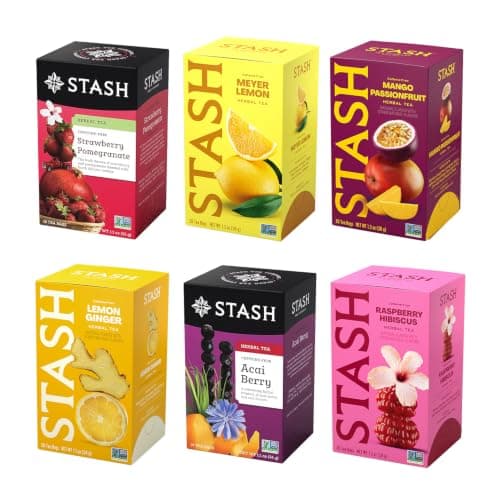
Stash Tea Fruity Herbal Tea 6 Flavor Tea Sampler
Herbal tisanes: tea without the tea plant.
Shop Now
Product prices and availability are accurate as of November 16, 2026 and are subject to change. Any price and availability information displayed on Amazon at the time of purchase will apply.
How long to steep green tea
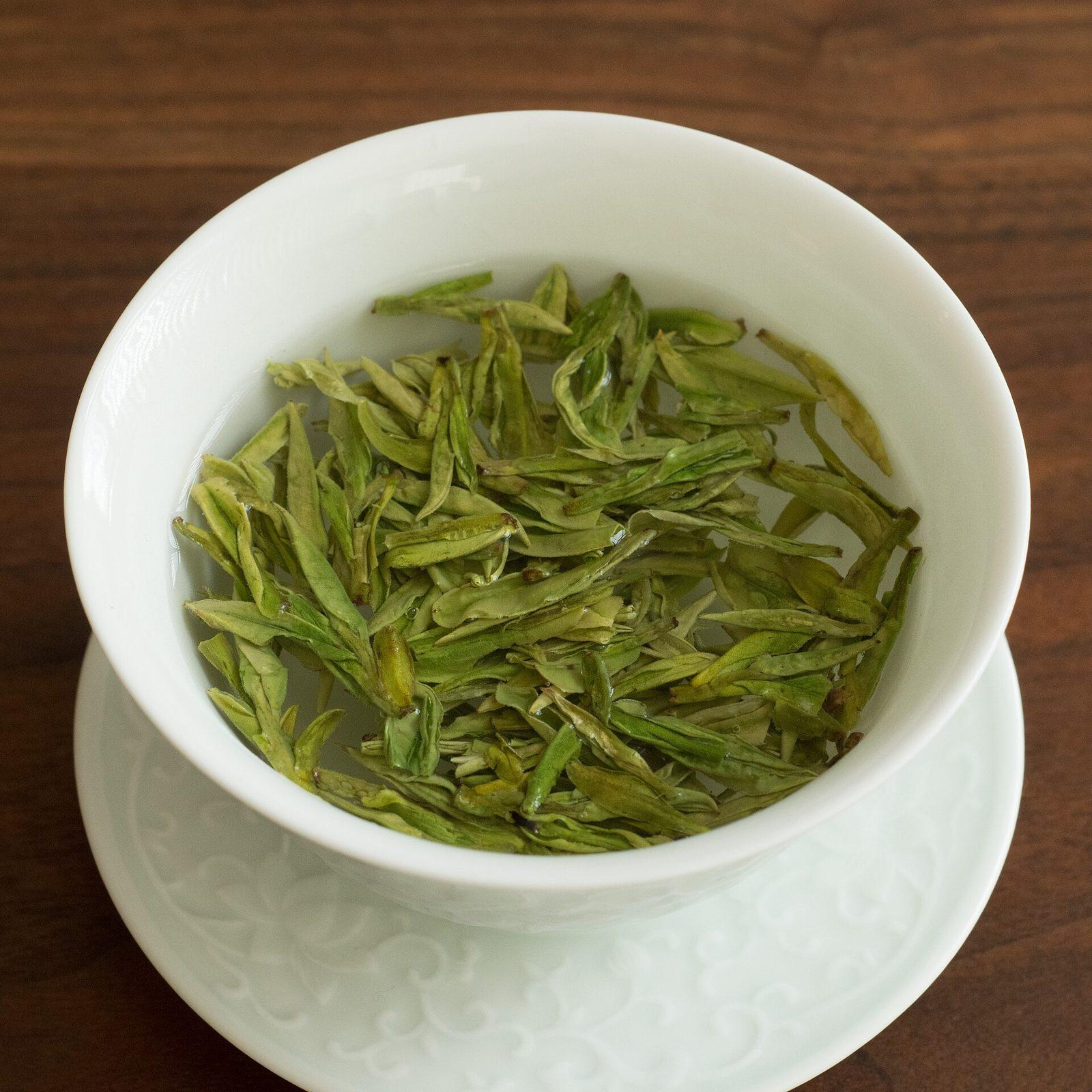
Steep green tea for 1–3 minutes in water around 175–185°F, which is the Tea Association of the USA's range; for loose Japanese sencha, the World Green Tea Association in Shizuoka uses 1–2 minutes at about 70°C (158°F). Green tea has the widest spread of published times of any tea, so it is worth seeing them together:
- High-grade sencha, loose: 1–2 minutes at about 70°C, 2–3 g of leaf per serving (World Green Tea Association).
- Sencha, loose: 2–2½ minutes; jasmine 2–3; gunpowder and genmaicha 3–4 (UK Tea & Infusions Association, which puts green tea at around 80°C).
- Twinings green: 2 minutes at 80°C (Twinings Canada brewing chart).
- Bigelow green bags: 3 minutes in water "just below boiling", cup covered.
- Lipton green bags: 4 minutes in 8 fl oz of 212°F water, then remove the bag.
- Harvard's Nutrition Source: 180°F for "4–15 minutes", the longest window any source here gives.
The pattern behind the spread is temperature. The shortest times come with the coolest water (sencha at 70°C), and the longest brand time comes with boiling water (Lipton at 212°F). Fine-cut leaf in a bag also extracts faster than whole leaf: a 2001 Unilever study (Astill et al., Journal of Agricultural and Food Chemistry) found particle size, bag versus loose leaf, infusion time and agitation all change how much caffeine and polyphenol ends up in the cup.
What this page uses: 2 minutes at about 80°C for loose Chinese green tea, 1–2 minutes at 70°C for sencha, and the printed box time for bags. Two minutes is the one figure inside the US range, the UK sencha and jasmine ranges and Twinings' chart at once. If the cup is bitter, cool the water before you shorten the time; the how to brew green tea guide covers the other causes of bitterness. Matcha has no steep time, because the powder is whisked in and drunk.
For a second steep of sencha, the World Green Tea Association's rule is to raise the water temperature and shorten the brewing time.
How long to steep a tea bag
Steep a black tea bag for 3–4 minutes, a green tea bag for 2–4 minutes and an herbal bag for at least 5 minutes, then take the bag out. Those are the ranges the makers print for their own bags, read on 15 November 2026:
| Bag | Minutes | Water | Source |
|---|---|---|---|
| Lipton black | 3–4 | 8 fl oz, boiling | Lipton black tea page |
| Bigelow black | 2–4 | rolling boil | Bigelow brewing guide |
| Twinings black | 3–5 | 100°C | Twinings brewing chart |
| Lipton green | 4 | 8 fl oz, 212°F | Lipton green tea brewing page |
| Bigelow green | 3 | just below boiling | Bigelow brewing guide |
| Twinings green | 2 | 80°C | Twinings brewing chart |
| Bigelow herbal | 4 | rolling boil | Bigelow brewing guide |
| Twinings herbal | 3–4 | 100°C | Twinings brewing chart |
| Any herbal or fruit bag | at least 5 | rolling boil | BfR (hygiene advice) |
Each brand's time applies to its own bags; a Lipton bag steeped on Twinings' clock is a different cup. For herbal bags, the BfR's 5-minute minimum overrides the shorter brand times, because the reason for it is killing germs that dried plant material can carry in rare cases, not flavor.
Take the bag out when the time is up. The UK Tea & Infusions Association suggests removing the bag after brewing and before adding milk, and says "milk in last is best" for a bag brewed in a mug. A bag left in keeps extracting while you drink, so the bottom of the mug ends up stronger than the top. Squeezing the bag pushes out the most concentrated liquid; agitation was one of the factors Astill's group measured.
Big mugs need more bags, not more minutes. Lipton's green tea instructions portion one bag for 8 fl oz, and Bigelow recommends one bag per cup and 4–6 bags per teapot. Extra time pulls bitterness along with flavor (Harvard's Nutrition Source: "the longer tea steeps, the stronger the flavor with bitter notes"), so one bag left 8 minutes in a 24 oz mug tends to be weak and harsh at once. The tea to water ratio guide has the amounts for pots and pitchers.
Bigelow and the Tea Association of the USA both say to cover the cup while it steeps, which keeps the water hot for the few minutes that matter.
Who says what: every published steep time in one table
No single authority sets "the" steep time, and the published numbers disagree by more than a factor of two. Here they are side by side, each with the conditions it was written for. Rows read on 15 November 2026 unless marked.
| Source | Tea | Minutes | Water | Conditions |
|---|---|---|---|---|
| ISO 3103 (via its Wikipedia summary) | black | 6 | freshly boiling | 2 g per 100 ml; a lab method for side-by-side tasting, not everyday brewing |
| ISO 3103 | leafy green | 5 | freshly boiling | same lab method |
| ISO 3103 | fine-cut ("fanning") green | 3 | freshly boiling | same lab method |
| Harney & Sons (read 2026-10-11) | English Breakfast | 5 | 212°F (100°C) | its own blend |
| Harney & Sons (read 2026-10-11) | Irish Breakfast (Assam) | 4–5 | 212°F | its own blend |
| Harvard Nutrition Source | black and oolong | about 4–5 | about 210°F (99°C) | general guidance |
| Harvard Nutrition Source | green | 4–15 | 180°F (82°C) | general guidance |
| UK Tea & Infusions Association | Assam, Darjeeling, Earl Grey | 3–4 | 90–98°C (194–208°F) | 1 bag or rounded tsp per cup |
| UK Tea & Infusions Association | oolong | 3–5 | not stated for oolong | per cup |
| Tea Association of the USA | black / oolong / green / white / herbal | 3–5 / 2–3 / 1–3 / 2–5 / 3–6 | 212 / 185–205 / 175–185 / 185 / 212°F | 1 tsp or bag per 6 oz |
| Twinings | black / oolong / green / white / herbal | 3–5 / 2–3 / 2 / 1–2 / 3–4 | 100 / 80 / 80 / 80 / 100°C | 1 bag or tsp per 175 ml cup |
| Lipton | black bag / green bag | 3–4 / 4 | boiling / 212°F | 8 fl oz per bag |
| Bigelow | black / green / herbal bags | 2–4 / 3 / 4 | rolling boil / just below / rolling boil | 1 bag per cup |
| World Green Tea Association | high-grade sencha | 1–2 | about 70°C (158°F) | 2–3 g per serving |
| BfR (read 2026-10-11) | herbal and fruit infusions | at least 5 | rolling boil | hygiene minimum |
The longest times have two explanations. ISO 3103 is built to expose a tea's faults for professional tasters, and the Wikipedia summary of the standard notes it is not meant to define how tea should be brewed for drinking. Harney's 5-minute breakfast teas are brewed to stand up to milk. At the other end, Twinings' 1–2 minute white tea and the 70°C sencha method are built around delicate leaf and cooler water.
Harvard's 4–15 minutes for green tea is the outlier. It is the only source here that goes past 5 minutes for green tea, and it also says longer steeping brings bitter notes, so this page does not use its upper end.
The times we recommend, and why
Where the sources overlap, this page uses the overlap; where they don't, it uses the figure with the strongest reason behind it.
- Black tea: 3–4 minutes at a full boil. This is the overlap of Lipton (3–4), the UK Tea & Infusions Association's Assam, Darjeeling and Earl Grey (3–4), Twinings (3–5) and the Tea Association of the USA (3–5). Go to 5 minutes for a strong cup with milk, which is Harney's breakfast-tea time. ISO 3103's 6 minutes is a tasting-lab number.
- Green tea: 2 minutes at about 80°C (176°F). Two minutes falls inside the US range, Twinings' chart and the UK sencha and jasmine ranges. Sencha: 1–2 minutes at 70°C. Bags: the box time.
- Oolong: 3 minutes at 185–205°F. It is the one minute value that sits in both the 2–3 minute ranges (Tea Association of the USA, Twinings) and the UK body's 3–5.
- White tea: 2 minutes at about 185°F, then taste. The Tea Association of the USA says 2–5 and Twinings says 1–2, so 2 minutes is the only time in both.
- Herbal: at least 5 minutes at a rolling boil. The BfR's hygiene minimum outranks the shorter flavor times from Bigelow (4) and Twinings (3–4), and still sits inside the US chart's 3–6.
Example (a calculation, not a tasting): a 12 oz mug of black tea using Lipton's 8 fl oz-per-bag portion needs 1½ bags, so use 2 bags for 3–4 minutes rather than 1 bag for 6. The same mug by ISO 3103's lab ratio of 2 g per 100 ml would take about 7 g of leaf (12 oz ≈ 355 ml), which shows how much stronger the tasting-lab cup is than the 1-teaspoon household cup.
For everything else about the brew, such as how much leaf, which vessel and when to add milk, see how to make tea.
What over-steeped and under-steeped tea taste like
Over-steeped tea tastes stronger first and then bitter and drying. Harvard's Nutrition Source puts it in one line: "The longer tea steeps, the stronger the flavor with bitter notes." The Astill study found infusion time is one of the main factors in how much caffeine and polyphenol ends up in the cup, so a long steep is also a higher-caffeine cup.
Under-steeped tea is lighter and milder. Twinings' guidance is simply to shorten the brew for a milder cup and lengthen it for a stronger one. The leaf hasn't finished giving: in a 2025 University of Bonn study of 17 loose green teas brewed to their label instructions (Zimmermann and Drees, Heliyon), the first infusion pulled out a median of only 40% of the leaf's theanine and 10–14% of its galloylated catechins (EGCG and ECG). Most of what the leaf holds is still in it after one normal steep.
Fixes that work:
- Too strong or bitter: add hot water to the cup, and next time cool the water before you cut the time, especially for green tea.
- Too weak: put the leaves or bag back for another minute; nothing is lost by stopping early and resuming. For a stronger cup from the start, add leaf rather than time.
- Left in all day: for black and green tea it's a flavor problem. For herbal tea, the BfR also advises against letting an infusion stand for several hours, because spores that survive boiling can germinate in warm liquid.
The black tea, oolong tea and herbal tea guides describe what a well-steeped cup of each should taste like.
How many times can you steep tea?
Whole-leaf tea gives a good second steep, and the best measurement of that comes from the Bonn study above. Its second infusions, made by pouring hot water back onto the wet leaves, still held a median of 83% of the first cup's caffeine, 96% of its EGCG, 106% of its ECG and 58% of its theanine. Even the weakest sample's second cup kept 62% of the first cup's caffeine. The authors explain why the second steep holds up: the soaked leaf is more permeable, so a larger share of what is left comes out.
What that means for re-steeping:
- Expect a second cup with most of the caffeine. A re-steep is not decaf. Rinsing leaves doesn't decaffeinate them either: a 2019 study (Gao et al., Journal of Agricultural and Food Chemistry) found that rinsing cut caffeine and other compounds in the infusion by only 0–11%.
- Go hotter and shorter for sencha. That's the World Green Tea Association's rule from the second serving on.
- Expect less from bags. The Bonn authors suggest fine particles, as in simple tea bags, give lower second-infusion percentages because the first steep already extracts more. Astill's study also lists particle size as a main factor.
- Pour each steep fully off the leaves so they aren't sitting in water between rounds, and re-steep the same session.
How many rounds beyond two? No standards body or study in our sources publishes a count, so this page doesn't give one. Gongfu brewing, the Chinese method of steeping a large amount of leaf in a small pot for seconds at a time, is built around many short infusions, and the Chinese tea ceremony guide walks through it. The practical stopping point is the cup that tastes like faintly flavored water. Whole, tightly rolled leaf such as oolong opens over several steeps; loose leaf tea explains why it outlasts bagged leaf.
Cold brewing is a separate clock
Cold water changes the time scale from minutes to hours, and none of the hot times above transfer. The only exceptions are bags made specifically for cold water: Lipton's cold brew family-size bags take 5 minutes in cool water, and Twinings lists 3–5 minutes at 15°C (59°F) for its cold-brewed iced tea. Ordinary leaf and bags need hours in the fridge, and the times by type are on the cold brew tea steep time page. The cold brew tea hub covers the full method, and how to make iced tea covers hot-brewed iced tea, where you steep for the usual time with extra leaf and then pour over ice.
Worth knowing
Worked example (a calculation from published ratios, not a kitchen test): Lipton portions one bag per 8 fl oz, so a 24 oz travel mug needs 24 ÷ 8 = 3 bags steeped for the normal 3–4 minutes. One bag steeped longer in the same mug gets the bitterness of extra time without the strength of extra leaf.
Sources & further reading
- Tea Association of the USA — How to Brew, steeping guide chart (1 tsp or bag per 6 oz; white 185°F 2–5 min; green 175–185°F 1–3; oolong 185–205°F 2–3; black 212°F 3–5; herbal 212°F 3–6) (read 2026-11-15)
- UK Tea & Infusions Association — How to make a perfect brew (brewing-time table; black 90–98°C, green ~80°C; remove bag before milk) (read 2026-11-15)
- World Green Tea Association (Shizuoka) — How to prepare Japanese tea: Sencha (70°C, 1–2 min; hotter and shorter from the second serving) (read 2026-11-15)
- Twinings Canada — Brewing, recommended brew times (black 100°C 3–5 min; green, oolong, white 80°C; herbal 100°C 3–4; cold-brewed iced tea 15°C 3–5) (read 2026-11-15)
- Twinings USA — How to brew the perfect cup of tea (same times; milder = shorter, stronger = longer) (read 2026-11-15)
- Lipton — Black Tea (8 fl oz boiling water, 3–4 minutes) (read 2026-11-15)
- Lipton — Learn to brew green tea (8 fl oz at 212°F, 4 minutes, remove the bag) (read 2026-11-15)
- Lipton — Cold Brew Family Size tea bags (5 minutes in cool water) (read 2026-09-10)
- Bigelow Tea — How to make the perfect cup (black 2–4, green 3, herbal 4 min; 1 bag per cup, 4–6 per pot; cover the cup) (read 2026-11-15)
- Harney & Sons — English Breakfast (5 min at 212°F) and Irish Breakfast (4–5 min) product pages (read 2026-10-11)
- Harvard T.H. Chan School of Public Health — The Nutrition Source: Tea (black/oolong ~210°F 4–5 min; green 180°F 4–15 min; longer = stronger with bitter notes) (read 2026-11-15)
- Wikipedia: ISO 3103 (summary: 2 g per 100 ml boiling water; black 6 min, leafy green 5, fanning green 3; not a recipe for everyday tea) (read 2026-11-15)
- German Federal Institute for Risk Assessment (BfR) — Boiling water a must for herbal teas, 14 Dec 2005 (rolling boil, at least 5 min; don't let infusions stand for hours) (read 2026-10-11)
- Astill C. et al., 'Factors affecting the caffeine and polyphenol contents of black and green tea infusions', J Agric Food Chem 2001;49(11):5340–7 (read 2026-10-11)
- Zimmermann B.F., Drees L., 'Let's have another cup of green tea!', Heliyon 2025;11(4):e42651 — first vs second infusion of 17 loose green teas (read 2026-11-15)
- Gao W. et al., 'Rinsing Tea before Brewing Decreases Pesticide Residues in Tea Infusion', J Agric Food Chem 2019;67(19):5384–93 (caffeine etc. down only 0–11%) (read 2026-10-11)
- Wikipedia: Gongfu tea ceremony (cultural background: many short infusions of a large amount of leaf) (read 2026-11-15)
Frequently asked questions
How long should you steep tea if you don't know the type?
Three minutes is the one whole-minute time that falls inside the Tea Association of the USA's ranges for white, green, oolong, black and herbal tea. Taste it, then adjust by 30 seconds next time. For herbal tea, give it at least 5 minutes at a full boil, per Germany's BfR.
Is 10 minutes too long to steep tea?
For black, green, white and oolong tea, yes: every tea brand and tea-industry body on this page stops at 5 minutes or less (only the ISO 3103 tasting method, at 6 minutes for black, and Harvard, at up to 15 for green, go longer), and Harvard's Nutrition Source notes that longer steeping brings bitter notes. Ten minutes is fine for an herbal infusion, which the BfR says needs at least 5.
Does steeping tea longer give more caffeine?
Yes. Astill et al. (2001) found infusion time is one of the main factors in how much caffeine reaches the cup, along with the amount of leaf, particle size and agitation. For a stronger cup without the extra bitterness, add leaf instead of time.
Do tea bags steep faster than loose leaf?
Usually, because bagged tea is finely cut and particle size is one of the main extraction factors Astill's group measured. That's why bag instructions run 2–4 minutes and why a forgotten bag turns harsh sooner than whole leaf.
Should you squeeze the tea bag?
Only if you want a stronger, more astringent cup. Agitation is one of the factors that raises caffeine and polyphenol in the cup (Astill et al.). If your tea tends toward bitter, lift the bag out and let it drip.
Is a second steep almost caffeine-free?
No. In Zimmermann and Drees' 2025 study of 17 loose green teas, the second infusion kept a median of 83% of the first cup's caffeine, and never less than 62%.