
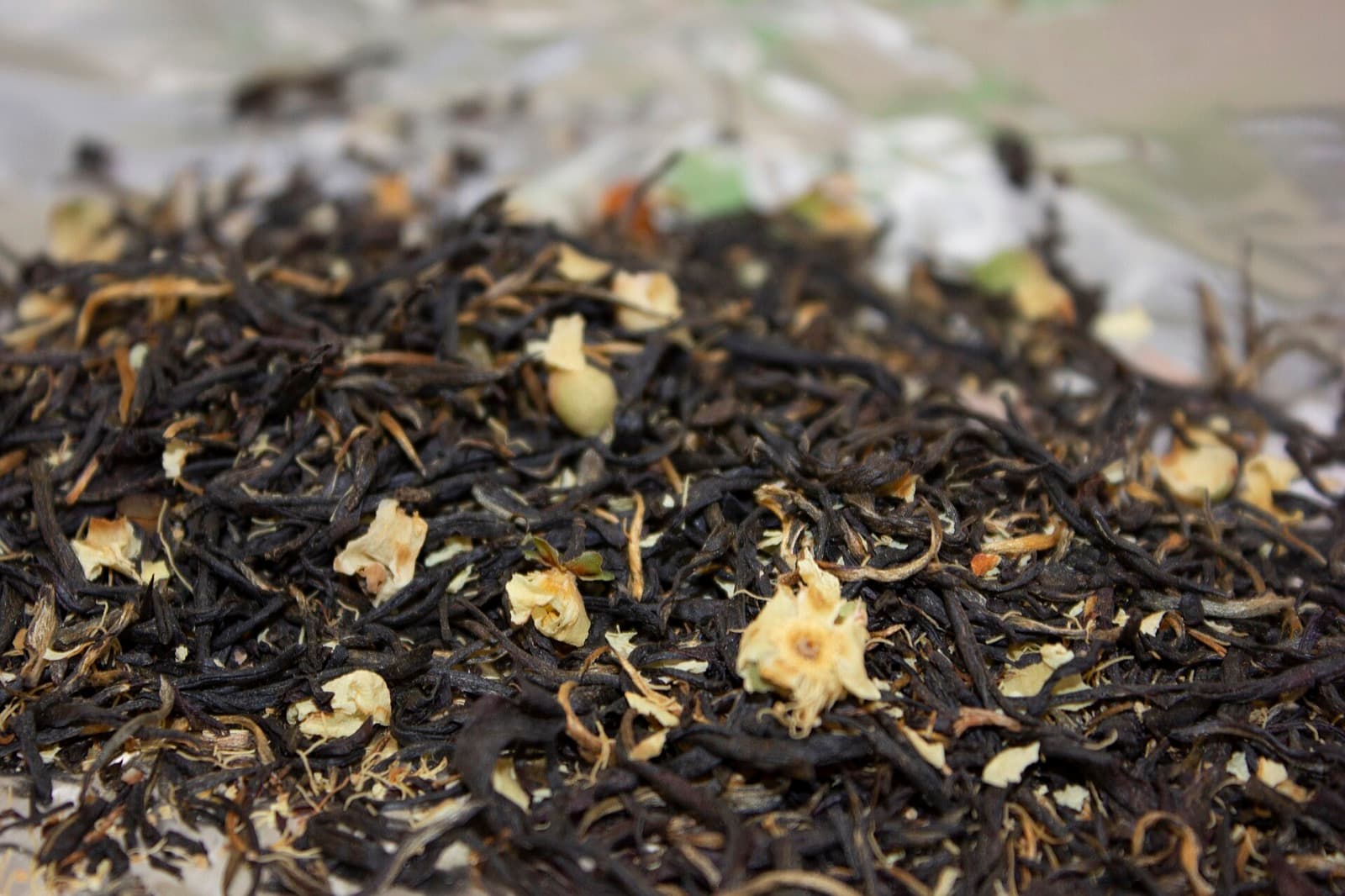
The standard tea to water ratio is 2 grams of leaf per 100 milliliters of water — the amount the international tea-tasting standard specifies, and close to what most tea shops mean by "one teaspoon per cup." Get that number roughly right and almost every other brewing variable becomes forgiving; get it badly wrong and no amount of fiddling with time or temperature will save the cup. A weak, thin tea is nearly always under-leafed, and a harsh one that turns bitter in two minutes is very often over-leafed rather than over-steeped. This guide gives you the ratio in grams and teaspoons, a chart for each type of tea, the reasons weight beats volume, and how to scale from a mug to a gallon pitcher without guessing.
Quick answer
- ✓Baseline: 2 g of tea per 100 ml of water (ISO 3103) — about 1 heaped teaspoon, or 4–5 g, per 8 oz mug.
- ✓Everyday Western brewing runs a little lighter: 2–3 g per 8 oz for black and green, more for fluffy white tea.
- ✓A teaspoon is a poor unit — rolled oolong, CTC black and silver-needle white can differ three-fold in weight per spoon.
- ✓Gongfu brewing inverts the ratio: 5–7 g per 100–150 ml, steeped for seconds and repeated many times.
- ✓Scale by weight: about 8–10 g per liter for hot tea, 30–38 g per US gallon, and 1.5× that if it will be poured over ice.
The Standard Ratio (and Where It Comes From)
ISO 3103 is the international standard for preparing a cup of tea for sensory testing, and it fixes the ratio at 2 grams of tea per 100 ml of freshly boiled water, brewed in a porcelain pot for six minutes for black tea. It was written so that tasters in different countries would evaluate the same tea under the same conditions, not as advice for your kitchen — six minutes is longer than most people enjoy — but the 2:100 ratio underneath it is the reference point the whole tea trade uses.
Translate it to a mug and it comes to about 4.7 g for 8 fl oz (237 ml), which is a generous heaped teaspoon of most black teas. Everyday Western brewing usually lands a little under that — a level teaspoon, 2 to 3 g, per cup — which is why shop instructions say "one teaspoon per cup, one for the pot": the extra spoon brings a pot back up toward the standard.
Harvard's Nutrition Source describes the common method for black and oolong as water at about 210°F for 4 to 5 minutes and green tea at around 180°F, and none of those times work without enough leaf in the cup. Ratio comes first, then temperature, then time. The how to make tea guide walks the sequence; this page is about the first step.
Tea & gear for this guide
Hand-matched Amazon picks with strong owner ratings. As an Amazon Associate, Tea & Peace earns from qualifying purchases.
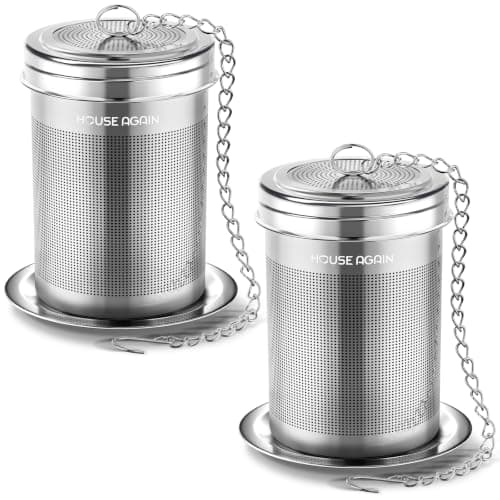
HOUSE AGAIN Tea Infuser, Extra Fine Mesh Tea Infusers for Loose Tea, 18/8
Fine-mesh stainless infuser for any loose tea — 4.6★ across 26,441 ratings.
Shop Now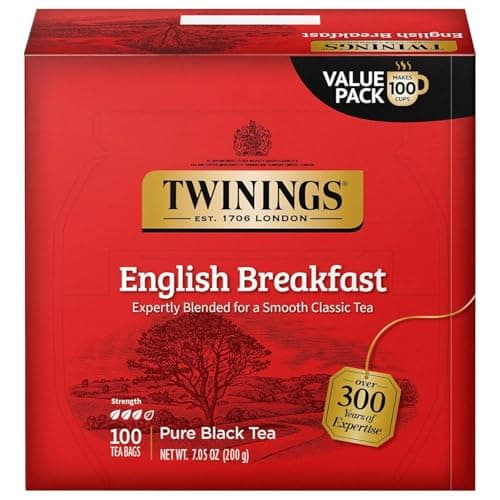
English Breakfast Black Tea
Brisk, malty black tea for hot or iced — 4.8★ across 20,190 ratings.
Shop Now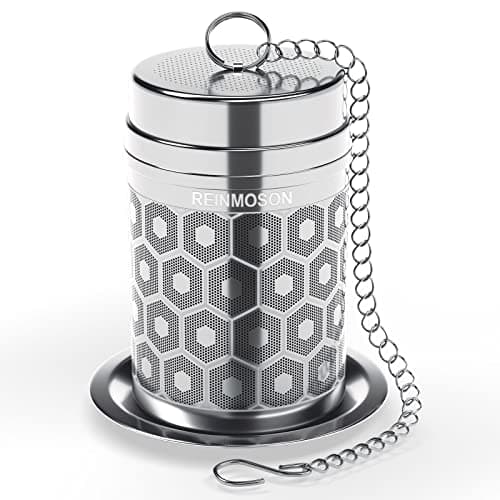
Reinmoson Tea Strainers for Loose Tea, Extra Fine Mesh Tea Infuser, 304
Fine-mesh stainless infuser for any loose tea — 4.7★ across 12,790 ratings.
Shop NowProduct prices and availability are accurate as of October 3, 2026 and are subject to change. Any price and availability information displayed on Amazon at the time of purchase will apply.
The Tea to Water Ratio Chart
Grams are the reliable unit. Teaspoons are given for convenience and assume a level teaspoon of that particular leaf shape.
| Tea | Per 8 oz mug (237 ml) | Level teaspoons | Per liter | Gongfu (per 100 ml) |
|---|---|---|---|---|
| Black, orthodox (Assam, Ceylon, Keemun) | 2.5–3 g | 1–1½ | 10–12 g | 5–6 g |
| Black, CTC or teabag-cut | 2–2.5 g | 1 | 8–10 g | — |
| Green, Chinese (Dragonwell, Bi Luo Chun) | 2.5–3 g | 1½–2 | 10–12 g | 4–5 g |
| Green, Japanese (sencha, gyokuro) | 3–4 g | 1½–2 | 12–15 g | 5–6 g |
| Oolong, rolled (Tieguanyin, high-mountain) | 3–4 g | 1 (pellets are dense) | 12–15 g | 6–7 g |
| Oolong, strip (Da Hong Pao, Dan Cong) | 3–4 g | 2 | 12–15 g | 6–8 g |
| White (silver needle, white peony) | 3–4 g | 2–3 (very light leaf) | 12–15 g | 5–6 g |
| Pu-erh, ripe or aged raw | 3–4 g | 1½–2 | 12–15 g | 6–8 g |
| Herbal, whole (chamomile, mint) | 2–3 g | 1–2 | 8–12 g | — |
| Herbal, dense (hibiscus, rooibos) | 2–3 g | 1 | 8–12 g | — |
Read the pattern rather than memorizing cells: light, fluffy leaf (white tea, whole-leaf green) needs more spoons to reach the same weight; dense leaf (rolled oolong, CTC black) needs fewer. The gram column barely moves across the table — most teas want 2.5 to 4 g per mug — which is the whole argument for owning a scale.
Why Weight Beats Volume
A teaspoon measures space, not tea. Rolled oolong pellets pack tightly, so a level spoon weighs several grams; silver-needle white tea is all air and down, so a level spoon can weigh a fraction of that. Follow "one teaspoon per cup" for both and you will over-brew the oolong and under-brew the white by a wide margin, then blame the tea.
A pocket scale that reads to 0.1 g costs less than most tins of tea and removes the guessing permanently. If you would rather not weigh every cup, calibrate your spoon once for each tea you drink regularly:
- Put an empty cup on the scale and zero it.
- Add level teaspoons of the tea one at a time, noting the running weight.
- Divide the total by the number of spoons to get grams per spoon for that tea.
- Write it on the tin. From then on, the spoon is a scale.
You will find the number changes as a tin ages and settles, and that two teas from the same category can differ noticeably. That is normal; it is the reason the scale exists.
Gongfu Ratios: Lots of Leaf, Very Little Water
Chinese gongfu brewing looks like a wild over-dose by Western standards — 5 to 7 g of leaf in a 100 to 150 ml gaiwan, roughly three times the ISO ratio — and it works because the steeps are short, ten to forty-five seconds, and repeated many times. The high ratio is what lets one dose of leaf unfold across eight or more infusions, each a little different. Our gongfu tea ceremony guide covers the method; the ratio is the engine of it.
Two practical notes. First, the ratio scales with the vessel, not the drinker: a 100 ml gaiwan takes 5 g whether one person or four are drinking, because the whole infusion is poured out every time. Second, if a gongfu session tastes too strong, shorten the steep or cool the water before reducing the leaf — reducing the leaf is what makes later infusions collapse early.
Scaling Up: Pots, Pitchers and Gallons
Ratios are linear, so scaling is arithmetic, with two adjustments. For a teapot or a liter of hot tea, multiply the per-mug weight by about four: 8 to 12 g per liter covers most black and green teas, 12 to 15 g for oolong, white and pu-erh. A US gallon is 3.8 liters, so a gallon of hot black tea wants roughly 30 to 38 g of leaf — about 12 to 15 teabags, since a standard bag holds around 2 to 2.5 g.
The first adjustment is ice. Tea that will be poured over ice or served in a glass of ice should be brewed at about one and a half times the normal ratio, because the ice melts into it; brewed at normal strength it tastes watery by the second sip. The how to make iced tea guide has the full method. The second is time: large volumes cool more slowly and keep extracting longer, so a big pot brewed to the same clock as a mug will taste stronger. Pull it a little early, or decant it off the leaves.
Cold brewing is the exception that follows its own chart. Because cold water extracts slowly and pulls fewer tannins, the usual cold brew tea ratio is about 1 tablespoon (or one bag) per 8 oz — a touch heavier than hot tea by weight — steeped for hours in the fridge rather than minutes in a pot.
Adjusting for Taste, Water and Method
The chart is a starting point; three things move it.
Taste. Adjust in half-gram steps and change one variable at a time. If a tea is thin, add leaf before adding time; adding time mostly adds tannin. If a tea is harsh, reduce leaf or lower the temperature before shortening the steep — a very short steep of a heavy dose tastes thin and harsh.
Water. Hard water (the US Geological Survey classes anything above about 120 mg/L of calcium carbonate as hard) mutes aroma and flattens delicate teas, and drinkers in hard-water areas often use a little more leaf to compensate; filtered or softer water lets you use less. The same tea at the same ratio can taste noticeably different in two cities for this reason alone.
Method. Teabags are cut fine and extract fast, so the low end of the chart is enough. Whole-leaf tea in a large pot extracts slowly and wants the high end. Black tea brewed for milk wants more leaf than black tea taken plain — the black tea water ratio guide goes into that case specifically. And once the ratio is settled, the two remaining levers are the tea water temperature and the steep time from our tea steeping times chart. Ratio, heat, time, in that order.
From our testing notes
We weighed ten level teaspoons each of four teas from our shelf to see how far the 'one teaspoon' rule bends. The rolled Tieguanyin was heaviest by a wide margin, the CTC breakfast blend next, a sencha noticeably lighter, and the silver-needle white came to roughly a third of the oolong's weight for the same ten spoons. Brewed by the spoon, the oolong was nearly undrinkable and the white tea was barely tea; brewed at 3 g each, all four were exactly right. The scale has lived next to the kettle since.
Sources & further reading
- ISO 3103:2019 — Tea: preparation of liquor for use in sensory tests (2 g per 100 ml) (read 2026-09-10)
- Wikipedia: ISO 3103 (method summary — 2 g per 100 ml, 6 min black / 5 min leafy green / 3 min fine green)
- Harvard T.H. Chan School of Public Health — The Nutrition Source: Tea (brewing temperatures and times) (read 2026-09-10)
- US Geological Survey — Hardness of Water (classification by mg/L calcium carbonate) (read 2026-09-10)
- Wikipedia: Gongfu tea ceremony
Frequently asked questions
How much tea per cup of water?
About 2 to 3 grams of loose tea per 8 oz cup for everyday brewing — a level to slightly heaped teaspoon of most black or green teas — and up to 4 g for fluffy white teas or rolled oolongs. The international tasting standard is a little stronger at 2 g per 100 ml, which is roughly 4.7 g per 8 oz.
How many teaspoons of loose tea per cup?
One level teaspoon per cup is the standard advice, and it works for dense teas like CTC black and rolled oolong. Light, whole-leaf teas — white tea, large-leaf green — need two or even three level teaspoons to reach the same weight. Weighing once and writing the grams-per-spoon on the tin ends the guessing.
What is the tea to water ratio in grams?
2 g per 100 ml is the reference (ISO 3103). Practical everyday ranges are 2.5–3 g per 8 oz for black and Chinese green, 3–4 g for Japanese green, oolong, white and pu-erh, and 5–7 g per 100 ml for gongfu brewing.
How much loose tea for a teapot?
Scale the per-cup weight by the pot's volume: a 4-cup (about 1 liter) pot takes roughly 8 to 12 g of black or green tea, 12 to 15 g of oolong, white or pu-erh. The old "one for each cup and one for the pot" rule is a rough way of arriving at the same number.
How many tea bags for a gallon of tea?
A standard teabag holds about 2 to 2.5 g, so a US gallon (3.8 liters) of hot tea wants 12 to 15 bags for normal strength. If it will be served over ice, use 18 to 22 bags, or brew it as a concentrate and dilute. Family-size iced-tea bags hold several times more leaf, so follow their count instead.
Is the ratio different for green tea?
Only slightly by weight — Chinese greens sit at 2.5–3 g per 8 oz and Japanese greens a little higher at 3–4 g. The bigger difference for green tea is temperature: it wants water well below boiling, around 175–180°F, and over-leafing green tea at high heat is the fastest route to bitterness.
Why does my tea taste weak even with the right ratio?
Usually water temperature or leaf size. Water that has cooled too far under-extracts even at a correct ratio, and very large whole leaves need more time than a fine cut. Check that the water is at the right temperature for the tea, then extend the steep by 30 to 60 seconds before adding more leaf.
Does the ratio change for cold brew?
Yes, and it goes the other way from what most people expect: cold brew uses slightly more tea by weight, about a tablespoon or one bag per 8 oz, because cold water extracts slowly. It then compensates with time — 6 to 12 hours in the fridge — and produces a smoother, lower-tannin cup than the same leaf brewed hot.
Can I reuse the leaves and keep the same ratio?
Yes. Resteeping does not change the ratio, only the time: each subsequent steep of the same leaves needs 30 to 60 seconds longer Western-style, or 5 to 10 seconds longer gongfu-style. Whole-leaf oolong, pu-erh and good green tea reward this; teabags and CTC black mostly give up after one.
Do I need a scale to brew tea?
Not strictly, but a 0.1 g pocket scale is the single cheapest thing that makes tea consistent, because teaspoons of different teas vary so much in weight. If you would rather not weigh every cup, weigh once per tea to learn what your spoon holds and go by spoons afterwards.
What ratio do tea competitions and professional tasters use?
The ISO 3103 method: 2 g of tea per 100 ml of freshly boiled water, six minutes for black tea (five for leafy green, three for fine-cut green), in a lidded porcelain pot. It is deliberately strong and long so that faults show up; for drinking, most people prefer a slightly lighter ratio and a shorter steep.