
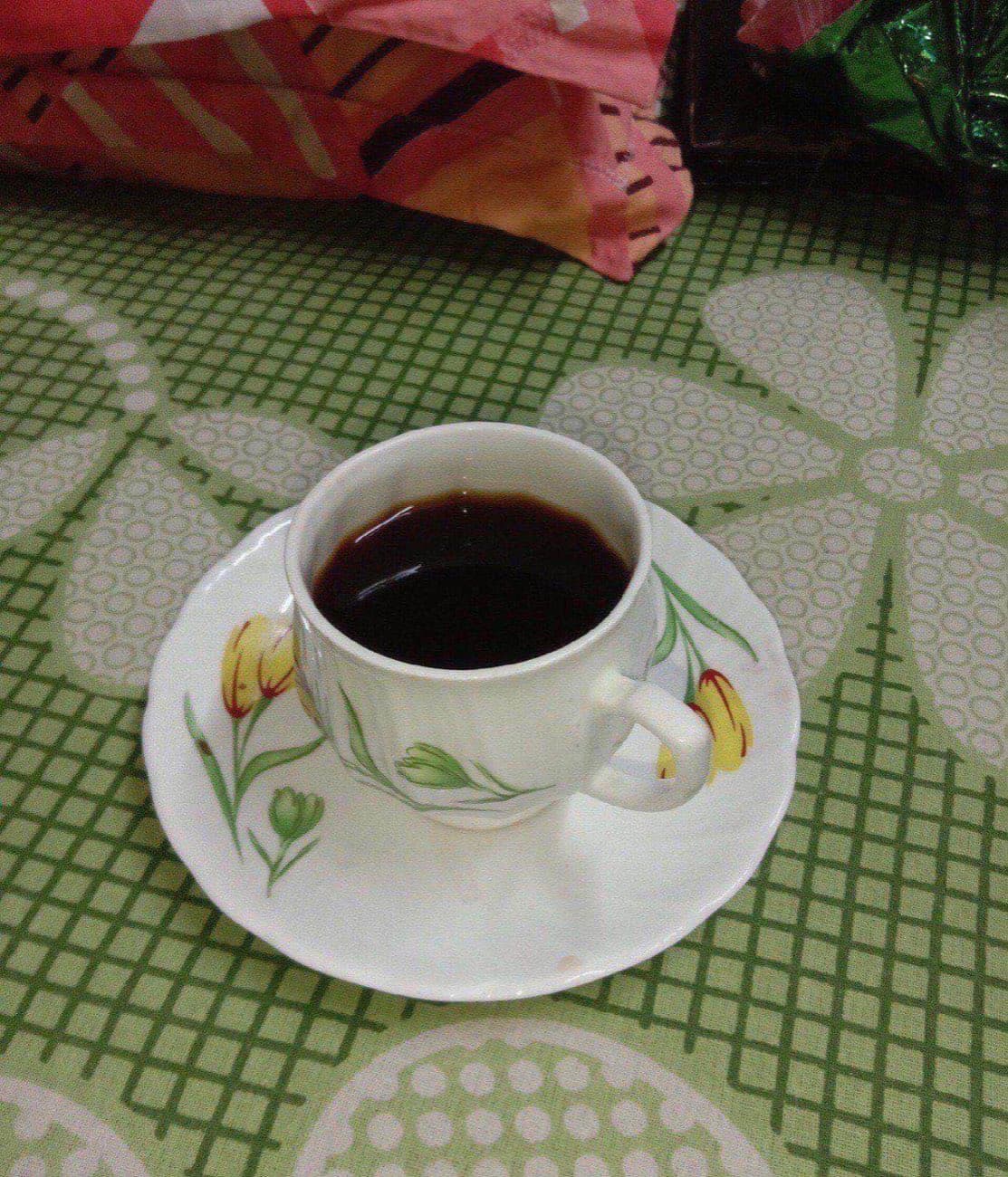
Black tea is the deep amber cup that steam curls off of on a cold morning — the brisk, malty, familiar brew behind English Breakfast, Earl Grey, and most of the world's iced tea. It is the most-consumed type of true tea on the planet, and for good reason: it is bold, sturdy, endlessly blendable, and it holds up to milk, lemon, and ice without falling apart.
But 'black tea' is a huge umbrella. Under it you will find the honeyed elegance of a Keemun, the muscatel snap of a Darjeeling, and the smoky punch of a Lapsang Souchong. This guide unpacks what black tea actually is, walks through its major varieties, breaks down the flavor language, and gives you a brewing method that avoids the two classic mistakes: bitterness and blandness.
What black tea is (and why it is called that)
Black tea is fully oxidized tea made from Camellia sinensis, the same plant behind green, white, and oolong tea. After picking, the leaves are withered, rolled to break their cells, then left to oxidize completely before being dried. That full oxidation is what turns the leaf dark and develops the deep, malty, sometimes fruity character we associate with the cup.
Interestingly, in China black tea is called hong cha, meaning 'red tea,' after the reddish color of the liquor rather than the dark dry leaf. The Western name stuck to the leaf color instead. Either way, it is the far end of the oxidation spectrum from green tea. To see how it relates to its half-oxidized cousin, our guide to oolong tea covers the flexible middle ground, and the types of tea overview maps the whole family. For a region-by-region tour — Assam, Darjeeling, Ceylon, Keemun and the rest — see our types of black tea guide.
Tea & gear for this guide
Hand-matched Amazon picks with strong owner ratings. As an Amazon Associate, Tea & Peace earns from qualifying purchases.
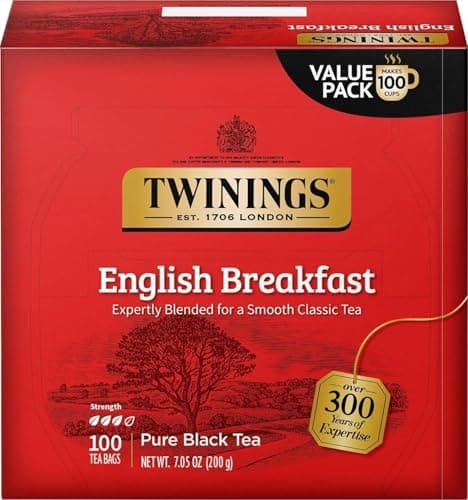
English Breakfast Black Tea
Brisk, malty black tea for hot or iced — 4.8★ across 20,190 ratings.
Shop Now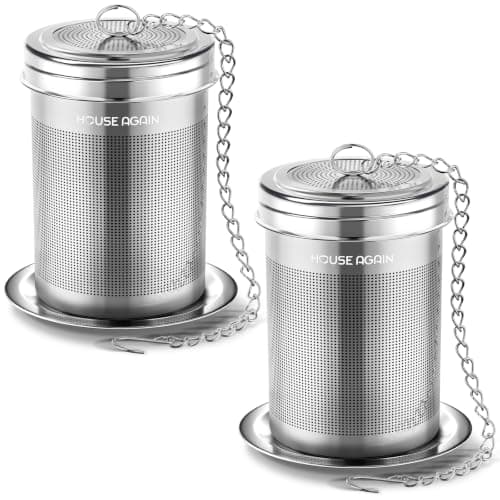
HOUSE AGAIN Tea Infuser, Extra Fine Mesh Tea Infusers for Loose Tea, 18/8
Fine-mesh stainless infuser for any loose tea — 4.6★ across 26,441 ratings.
Shop Now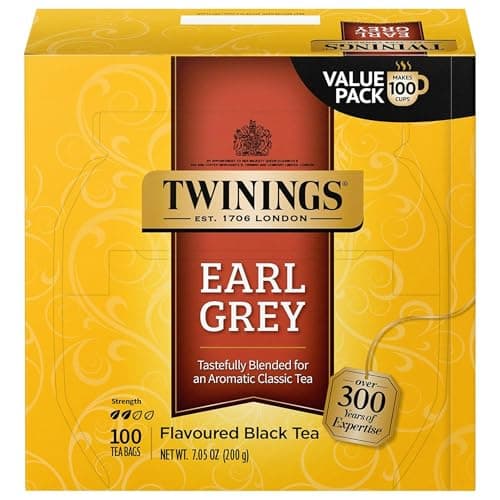
Earl Grey Black Tea
Brisk, malty black tea for hot or iced — 4.7★ across 13,032 ratings.
Shop NowProduct prices and availability are accurate as of September 14, 2026 and are subject to change. Any price and availability information displayed on Amazon at the time of purchase will apply.
The major black tea varieties
Most black teas are named for a region, an estate, or a blend. Here are the ones worth knowing, with their signature notes:
| Variety | Origin | Flavor character |
|---|---|---|
| Assam | India | Malty, brisk, full-bodied; the classic breakfast base |
| Darjeeling | India | Light, floral, 'muscatel'; often called the champagne of teas |
| Ceylon | Sri Lanka | Bright, citrusy, crisp; great for iced tea |
| Keemun | China | Wine-like, cocoa, gentle smoke; smooth and refined |
| Dianhong (Yunnan) | China | Honey, malt, peppery; often with golden tips |
| Lapsang Souchong | China | Pine-smoked, campfire, bold |
| Earl Grey | Blend | Black tea scented with bergamot citrus oil |
Breakfast blends like English and Irish Breakfast are usually Assam-forward for strength. If Chinese styles pull you in, our guide to Chinese black tea goes deeper on Keemun, Dianhong, and the smoky classics.
How to read black tea flavor notes
The tasting words on a tea tin are not marketing fog — they describe real, repeatable characteristics. A few of the most useful:
- Malty — a bready, slightly sweet richness, most famous in Assam.
- Brisk — a lively, mouth-cleaning astringency, prized in Ceylon and breakfast blends.
- Muscatel — a fruity, almost grape-like note unique to fine Darjeeling.
- Astringent — a drying, tannic grip; pleasant in balance, harsh in excess.
- Smoky — from pine-smoke processing (Lapsang) or roast.
Astringency is the one to understand, because it is where brewing goes wrong. Black tea is rich in tannins, and over-steeping or boiling-hot water for too long drags out too many of them, leaving that puckery, bitter finish. The fix is not weaker tea — it is better timing, which the next section covers.
How to brew black tea without bitterness
Black tea is the most forgiving true tea when it comes to water temperature, but it still has a sweet spot. Here is a dependable method:
- Use 1 teaspoon of loose leaf (about 2–3 grams) per 8 oz cup.
- Heat water to a full or near boil, 200–212°F.
- Steep 3–4 minutes for most black teas; 2–3 for delicate Darjeeling.
- Remove the leaves promptly — do not let them sit.
The single most common mistake is leaving the bag or leaves in the cup while you drink. Black tea keeps extracting tannins, and a cup that started balanced turns bitter within minutes. If your tea is consistently harsh, shorten the steep before you blame the leaf. For the general fundamentals of ratio and temperature across every tea, see how to make tea.
Milk, lemon, sugar: why black tea takes them well
Black tea is the one true tea that genuinely welcomes additions, and there is chemistry behind it. Its robust tannins and full body stand up to milk without disappearing, which is why a builder's tea or a masala chai works. If you love spiced, milky tea, our recipe for how to make chai tea starts from a strong black base for exactly this reason.
A few pairing notes:
- Milk softens astringency and rounds the body — best with malty Assam and breakfast blends.
- Lemon brightens and lightens; the acid actually lightens the tea's color. Great with Ceylon.
- Sugar or honey balances a very brisk cup, though a well-brewed tea often needs little.
One rule: never add milk to a delicate, floral Darjeeling or a smoky Lapsang — you will bury what makes them special. Save the milk for the sturdy styles.
Black tea and caffeine
Black tea sits at the higher end of the true-tea caffeine range, typically around 40–70 mg per 8 oz cup, though this varies with leaf, ratio, and steep time. That is still well below a same-size cup of drip coffee, which often runs 90–120 mg or more.
What many drinkers notice is that black tea's lift feels smoother than coffee's, and that is not just folklore — tea contains L-theanine, an amino acid that pairs with caffeine to produce a calmer, more sustained alertness. If you are watching your intake, remember that longer steeps and more leaf mean more caffeine, and that a second, shorter steep of the same leaves pulls noticeably less. As always, tea is a beverage rather than a health protocol; if caffeine affects your sleep or heart rate, adjust to what feels right for you.
How black tea took over the world
No other tea has shaped history quite like black tea. Because full oxidation makes the leaf stable and slow to spoil, black tea could survive long sea voyages in a way that delicate green tea could not — and that single practical fact turned it into the engine of a global trade. The tea clippers racing from China, the plantations the British planted across India and Ceylon, the Boston Tea Party, the enduring British ritual of afternoon tea: all of it centers on black tea.
Today it remains the most-consumed type of true tea in the world, and its habits vary wonderfully by place:
- Britain & Ireland — strong builder's tea with milk, the everyday cup.
- India — spiced, milky masala chai simmered on the stove, the subject of our how to make chai tea recipe.
- Russia & Central Asia — brewed as a strong concentrate (zavarka) and diluted to taste, often from a samovar.
- Middle East — small glasses of dark, sweet tea, central to hospitality.
- United States — overwhelmingly iced and sweet, especially across the South.
Understanding these traditions is half the fun of black tea. The same fully oxidized leaf becomes a completely different drink depending on who is pouring it, which is a good reminder that there is no single 'right' way to enjoy a cup.
Buying and storing black tea
Black tea is the most stable of the true teas, which is part of why it dominated the global trade routes for centuries — it survives shipping and time far better than green tea. Still, freshness matters for flavor.
A few practical pointers:
- Loose leaf over dust. Whole and broken leaves keep their aromatics longer than the fine dust in many low-grade bags. Our loose leaf tea guide explains why the leaf grade matters so much.
- Airtight and opaque. Keep it away from light, heat, moisture, and strong smells.
- Use within 1–2 years. Black tea does not spoil, but its brightness fades over time.
Bought a bag that tastes flat? It is likely stale, not off. It is still safe — just past its prime, and better used for a strong iced tea than a delicate hot cup.
From our testing notes
A simple side-by-side worth doing at home: steep one black tea for 3 minutes and an identical cup for 6 minutes. The longer steep is noticeably darker and drier on the tongue — a direct taste of tannin extraction. It is the fastest way to convince yourself that timing, not leaf quantity, is the main lever for a smooth cup.
Sources & further reading
- FDA — Spilling the Beans: How Much Caffeine is Too Much? (per 12 fl oz: green tea 37 mg, black tea 71 mg, coffee 113–247 mg; 400 mg/day guidance) (read 2026-09-10)
- USDA FoodData Central — Beverages, tea, black, brewed (20 mg caffeine per 100 g) (read 2026-09-10)
- Harvard T.H. Chan School of Public Health — The Nutrition Source: Tea (brewing temperatures and times; caffeine) (read 2026-09-10)
- Black tea — Wikipedia
- Darjeeling tea — Wikipedia
Frequently asked questions
Is black tea stronger than green tea?
In flavor and usually in caffeine, yes. Black tea is fully oxidized, giving it a bolder, deeper taste, and it typically carries more caffeine than green tea, roughly 40–70 mg per cup versus 20–45 mg. The gap varies with how each is brewed, though.
How much caffeine is in a cup of black tea?
Usually around 40–70 mg per 8 oz cup, depending on the variety, how much leaf you use, and how long you steep. That is generally less than half of what you would get from the same amount of drip coffee.
What is the best black tea for beginners?
A quality Ceylon or a classic English Breakfast blend is an easy, crowd-pleasing start — bright, balanced, and forgiving. From there, try a Keemun for a smoother, cocoa-like cup or a Darjeeling if you prefer something lighter and floral.
Why does my black tea taste bitter?
Almost always over-steeping or water that is too hot for too long, which pulls out excess tannins. Try steeping for 3 minutes instead of 5, and remove the leaves as soon as the time is up rather than letting them sit in the cup.
Can I drink black tea with milk?
Yes, and sturdy styles like Assam and breakfast blends are made for it — the tea's body stands up to dairy. Avoid adding milk to delicate Darjeeling or smoky Lapsang Souchong, where it would cover the flavors you are paying for.
Is Earl Grey a type of black tea?
Earl Grey is a flavored black tea, made by scenting a black tea base with oil of bergamot, a citrus fruit. The base is usually a Ceylon or Chinese black tea, and the bergamot gives it its signature perfumed, citrusy aroma.
What is the difference between black tea and red tea?
In China, what the West calls black tea is called hong cha, or 'red tea,' after the color of the brewed liquor. Confusingly, 'red tea' in some Western shops means rooibos, a caffeine-free herbal from South Africa. Context tells you which is meant.
Does black tea stain teeth?
Black tea's tannins can contribute to surface staining over time, similar to coffee and red wine. Rinsing with water after drinking and normal dental care keep it in check. This is a cosmetic point, not a health warning.
Is black tea good for making iced tea?
It is the classic choice. Bright Ceylon and breakfast blends make a crisp, refreshing glass. For a smoother, less bitter result, try cold brewing it — our cold brew black tea recipe skips the harshness entirely, and the Tea & Peace homepage is our hub for cold-brew methods across every tea.
Does adding milk to black tea destroy its antioxidants?
The research is genuinely mixed and often overstated in both directions. Milk proteins do bind to some tea polyphenols, which is exactly why milk softens astringency — but studies measuring antioxidant activity in blood after drinking tea with and without milk have produced conflicting results, with several finding no meaningful reduction. The honest position: drink it the way you enjoy it. A cup of milky tea you actually drink daily beats a black cup you skip.