
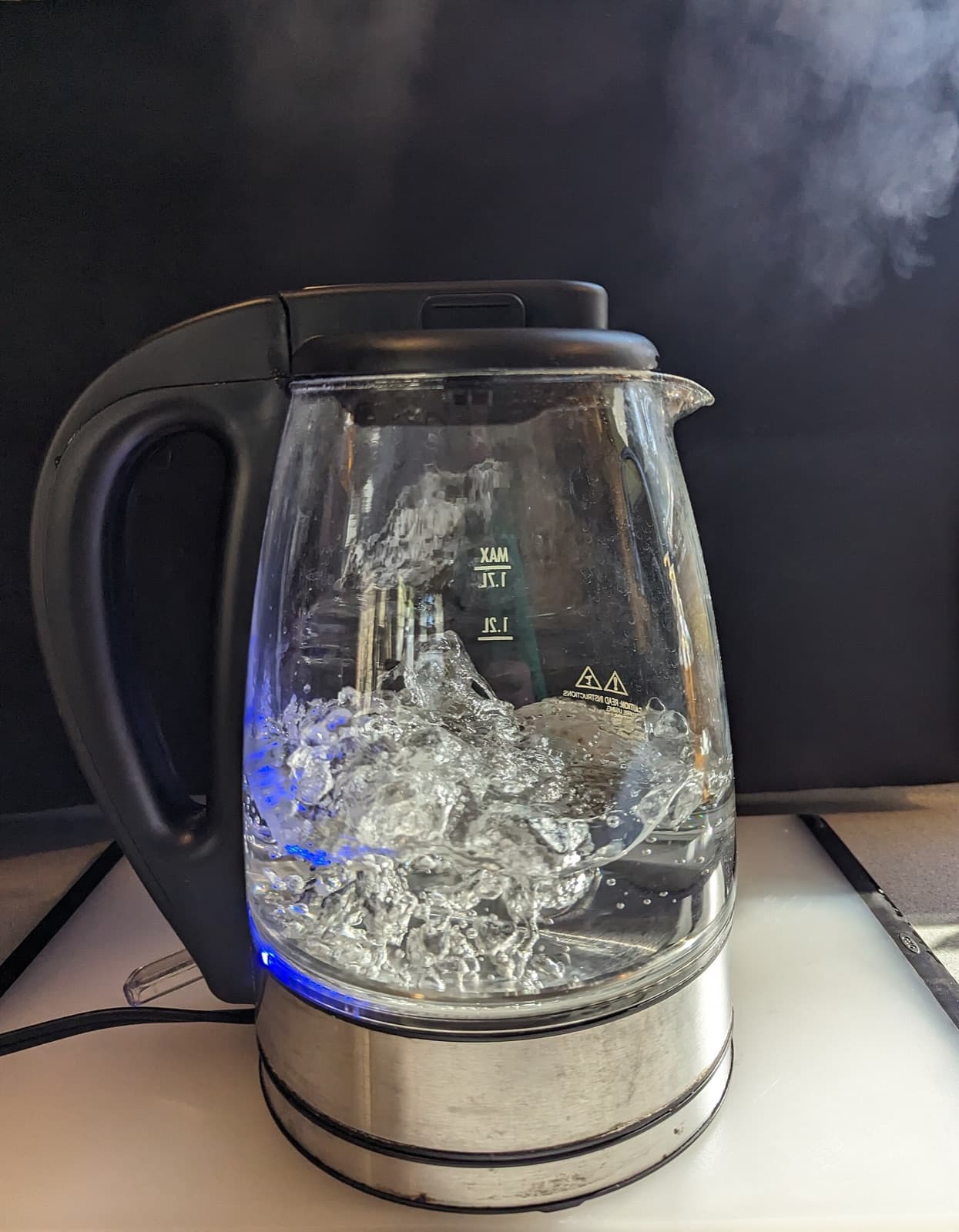
The right tea water temperature is a full boil, 100°C (212°F), for black and herbal tea, about 80°C (176°F) for green tea, about 85°C (185°F) for white tea and about 90°C (194°F) for oolong, which is where the Tea Association of the USA, the UK Tea & Infusions Association and Twinings overlap.
Those are the middle of the road. The published figures for green tea alone run from 50°C (World Green Tea Association, for gyokuro) to a full 212°F boil (Lipton, for its own green tea bags), and a variable-temperature kettle may itself be off by 10°F. This page puts eleven sources in one table with the conditions each one assumes, explains which number it recommends for each tea and why, and then does the part nobody else publishes: the arithmetic for hitting 70, 80 or 85°C with an ordinary kettle and a measuring cup of cold water, and what altitude does to "boiling".
Quick answer
- ✓Black and herbal: a full boil, 100°C (212°F). Herbal must be a rolling boil for at least 5 minutes (BfR, on hygiene grounds).
- ✓Green: about 80°C (176°F); Japanese sencha 70°C, gyokuro 50°C (World Green Tea Association). White about 85°C; oolong about 90°C.
- ✓No variable kettle? Mix boiling and cold tap water: 1 part cold to 3 parts boiling lands near 80°C (our arithmetic, 20°C tap water).
- ✓At 5,000 ft water boils at about 202–203°F (94–95°C), so "boiling" is already cooler (CSU and NMSU Extension).
- ✓Brewing and drinking temperatures differ: IARC links drinks above 65°C with oesophageal cancer risk, so let the cup cool.
Eleven published temperatures, side by side
No two sources agree exactly, and the spread is widest for green tea. Every row below is the source's own instruction, read on 15 November 2026 unless marked; Celsius or Fahrenheit conversions in brackets are ours.
| Source | Green | White | Oolong | Black | Herbal | What it is written for |
|---|---|---|---|---|---|---|
| Tea Association of the USA | 175–185°F | 185°F | 185–205°F | 212°F | 212°F | 1 tsp or bag per 6 oz cup |
| UK Tea & Infusions Association | around 80°C | — | — | 90–98°C | — | "always read the instructions on pack" |
| Twinings (Canada brewing chart) | 80°C | 80°C | 80°C | 100°C | 100°C | its own teas, 175 ml cup |
| Harvard Nutrition Source | 180°F (82°C) | — | about 210°F | about 210°F (99°C) | — | general guidance |
| Breville BKE820XL kettle presets | 175°F (79°C) | 185°F (85°C) | 195°F (91°C) | 212°F | — | preset buttons; the manual says ±10°F (5°C) |
| Lipton | 212°F (its green bags) | — | — | boiling | — | its own bags, 8 fl oz |
| Bigelow | just below boiling | — | — | rolling boil | rolling boil | its own bags |
| Stash | at least 170°F (77°C) | at least 170°F | at least 170°F | at least 170°F | — | its own loose teas; "try not to let your water reach a rolling boil" (2016 page) |
| World Green Tea Association | sencha about 70°C (158°F); gyokuro 50°C (122°F) | — | — | — | — | Japanese teas in a small pot |
| ISO 3103 | freshly boiling | — | — | freshly boiling | — | a tasting-lab method for comparing teas |
| BfR (Germany, read 2026-10-11) | — | — | — | — | rolling boil, at least 5 min | hygiene advice for herbal and fruit infusions |
Three patterns stand out:
- Green tea spans 50°C to 100°C. The coolest figure is for shaded Japanese gyokuro, which the World Green Tea Association brews at 50°C to draw out its theanine; the hottest is Lipton's instruction for its own green tea bags. Most sources cluster at 175–185°F (79–85°C).
- Oolong is where brands split. Twinings brews all its oolong at 80°C, while the Tea Association of the USA goes as high as 205°F (96°C) and Breville's oolong button sits at 195°F.
- "Boiling" is not one instruction. Twinings says to pour "as soon as it reaches boiling" because over-boiling reduces oxygen; Stash says not to let it reach a rolling boil at all; Bigelow wants a rolling boil for black and herbal tea; the UK body gives black tea 90–98°C, just off the boil.
The how long to steep tea page lines up the matching steep times from the same sources.
Tea & gear for this guide
Amazon picks matched to this guide. As an Amazon Associate, Tea & Peace earns from qualifying purchases.
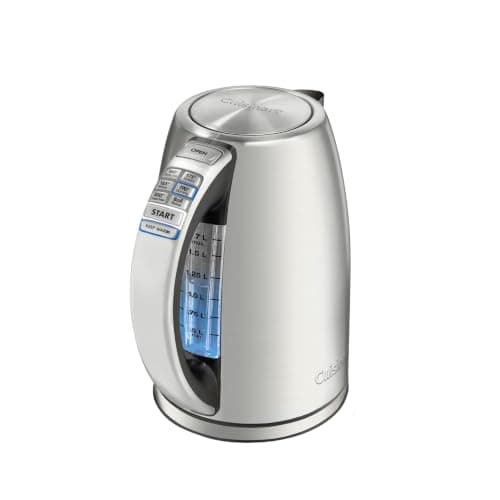
Cuisinart Electric Kettle, 1500W
A kettle with preset temperatures hits every row of the chart.
Shop Now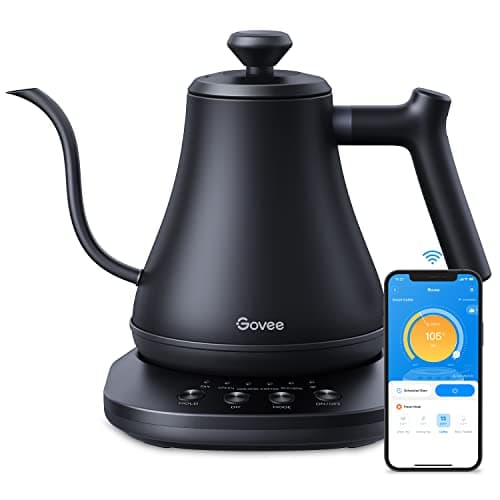
Govee Smart Electric Kettle, WiFi Variable Temperature Gooseneck Tea
A gooseneck with temperature control, for gongfu and pour-over precision.
Shop Now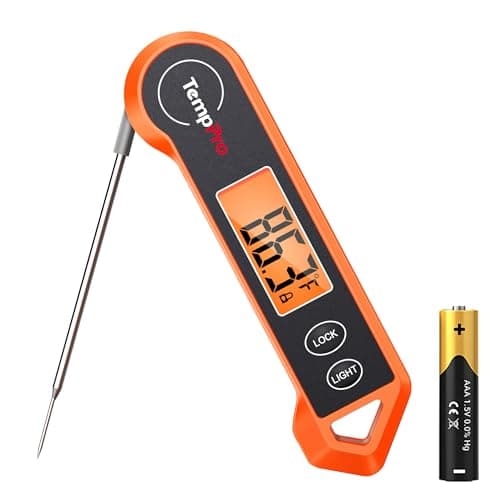
TempPro TempSwift 1 Sec Instant Read Meat Thermometer Digital
An instant-read thermometer, if you are not ready to buy a new kettle.
Shop Now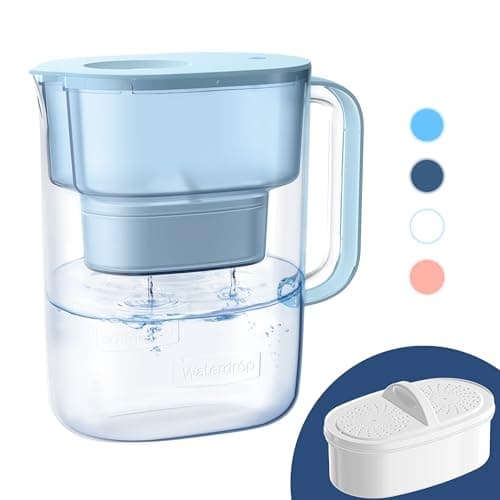
Waterdrop PT-07B Water Filter Pitcher
Filtered water, for the section on whether hard water matters.
Shop Now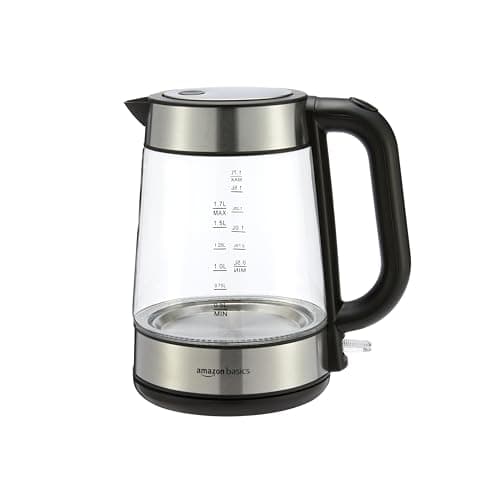
Amazon Basics Electric Kettle with Glass Carafe for Tea and Coffee
A glass kettle shows the bubble stages behind the no-thermometer method.
Shop Now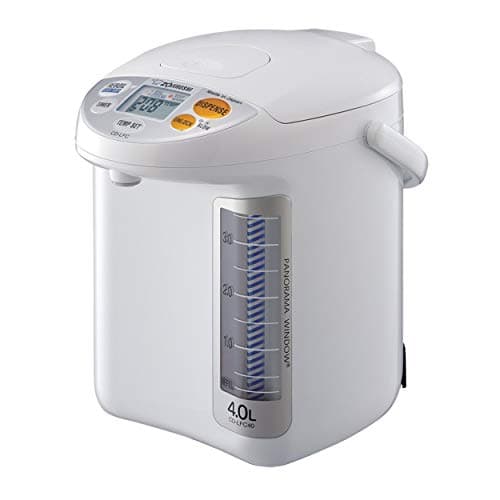
Zojirushi CD LFC40 Micom Water Boiler and Warmer
A water boiler keeps water at a set temperature all day.
Shop NowProduct prices and availability are accurate as of November 16, 2026 and are subject to change. Any price and availability information displayed on Amazon at the time of purchase will apply.
The temperature this page recommends for each tea, and the reasoning
Where sources overlap, the overlap wins. Where they don't, the reason behind a number decides.
- Black tea: a full boil, 100°C (212°F). The Tea Association of the USA, Twinings, Lipton, Bigelow and Breville's top button all say boiling, and the UK body's 90–98°C covers water poured a moment after the kettle clicks off. No source here recommends brewing black tea below 90°C.
- Herbal tea: a rolling boil, then at least 5 minutes. This is the one temperature set by safety rather than taste. Germany's Federal Institute for Risk Assessment (BfR) says herbal and fruit infusions, loose or bagged, need water at a rolling boil and at least five minutes, because germs are present in the dried plants "in rare cases". It also says water from hot-water dispensers, typically 80–85°C, is not hot enough. Herbal tea covers the infusions themselves.
- Green tea: about 80°C (176°F). That is the UK Tea & Infusions Association's figure, Twinings' figure and Breville's preset (175°F), and it sits inside the US range. For Japanese teas use the World Green Tea Association's own numbers: 70°C for high-grade sencha and 50°C for gyokuro. For a bag, the box wins: Lipton's green bags are designed for 212°F and 4 minutes, so a cooler cup of a Lipton bag is a different drink, not a better one. The how to brew green tea guide goes deeper on bitterness.
- White tea: about 85°C (185°F). The Tea Association of the USA and Breville both say 185°F. Twinings says 80°C, so if a white tea tastes harsh, that is the next step down.
- Oolong: about 90°C (194°F). Breville's 195°F button is the one figure in the middle of the US range (185–205°F), and it sits 10°C above Twinings' 80°C. If a light, floral oolong turns harsh, try Twinings' 80°C; the oolong tea guide covers the styles.
One rule ties these together and holds in every source on this page: the less processed the leaf, the cooler the water. Steep times follow the same direction, which is why the temperature and the clock should be changed together, not one at a time.
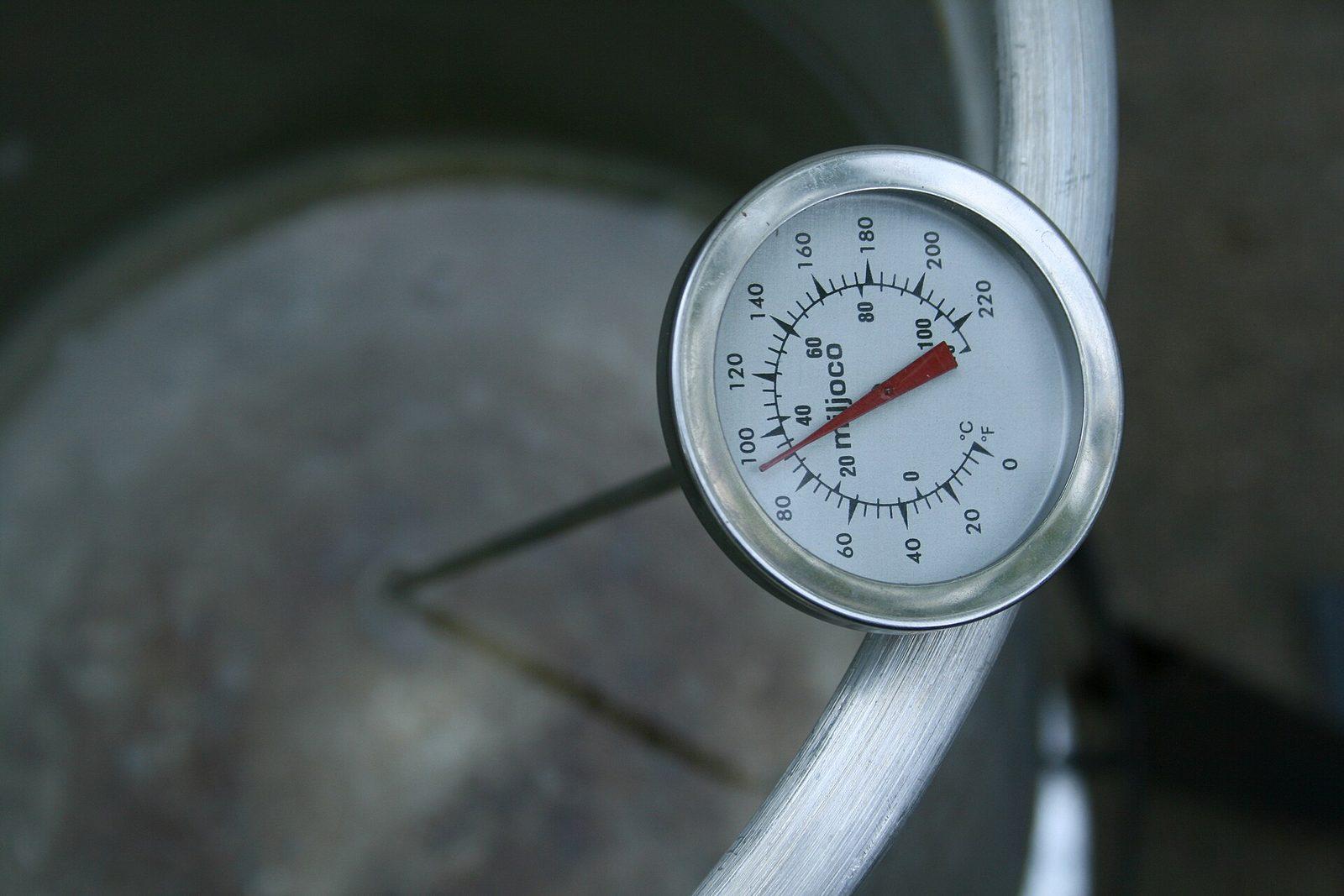
How to hit 70, 80 or 85°C without a variable kettle
The reliable way is to mix boiling water with cold water in a measured ratio. Waiting for the kettle to cool works too, but no source we could find has measured how fast a home kettle cools, so there is no honest number of minutes to give: it depends on the kettle's size, material, lid and how full it is. Mixing depends only on the two temperatures.
The arithmetic is the heat balance for two lots of water: the share of cold water you need is (boiling point − target) ÷ (boiling point − cold-water temperature). With 100°C boiling water and 20°C (68°F) tap water:
| Target | For | Cold-water share | 250 ml cup | 8 fl oz cup | With 4°C fridge water |
|---|---|---|---|---|---|
| 85°C (185°F) | white tea | 18.8% | 47 ml cold + 203 ml boiling | 1½ oz cold + 6½ oz boiling | 15.6% |
| 80°C (176°F) | most green tea | 25.0% | 62 ml + 188 ml | 2 oz + 6 oz | 20.8% |
| 75°C (167°F) | delicate green | 31.3% | 78 ml + 172 ml | 2½ oz + 5½ oz | 26.0% |
| 70°C (158°F) | high-grade sencha | 37.5% | 94 ml + 156 ml | 3 oz + 5 oz | 31.3% |
| 50°C (122°F) | gyokuro | 62.5% | 156 ml + 94 ml | 5 oz + 3 oz | 52.1% |
These are our own calculations, not measurements. They assume no heat is lost to the cup or pot, so the real result lands a little cooler, which is the reason to pre-warm the vessel as the World Green Tea Association does (it pours hot water into the pot and cups first, then discards it). Put the cold water in first and pour the boiling water onto it, so the measured amounts stay exact. Use fresh cold water for both parts; the UK Tea & Infusions Association advises freshly drawn water, boiled once.
The Japanese cooling-vessel method. For gyokuro, the World Green Tea Association pours boiling water into a separate "water cooler jar" and waits until it reaches 50°C. Moving water between cool ceramic vessels does lower its temperature, but we found no measured figure for how much per pour, so this page does not give one. Check it once with a thermometer and you will know your own cups.
Variable kettles are close, not exact. Breville's BKE820XL manual says its presets "may vary ± 10°F (5°C)" and that the kettle is "not calibrated for commercial or scientific use". That spread is as wide as the gap between the green and white tea settings, so for gyokuro or high-grade sencha a thermometer is still worth having. The teaware guide covers kettles.
Altitude: when boiling water isn't 100°C
Water boils cooler the higher you live, so "use boiling water" quietly means something different in Denver than in Boston. Two university extension services publish the numbers; they differ by one degree at 5,000 feet.
| Elevation | Colorado State Univ. Extension | New Mexico State Univ. (Guide E-215) | In °C (CSU figure) |
|---|---|---|---|
| Sea level | 212°F | 212°F | 100°C |
| 2,000 ft | 208°F | 208°F | 97.8°C |
| 5,000 ft | 203°F | about 202°F | 95.0°C |
| 7,500 ft | 198°F | 198°F | 92.2°C |
| 10,000 ft | 193°F | — | 89.4°C |
NMSU's rule of thumb is a drop of about 1°F for each 500 ft of elevation, which gives 202°F at 5,000 ft and 192°F at 10,000 ft, a degree either side of the CSU table.
What it changes:
- Black tea up to about 7,500 ft is still in range. A boil at 198°F (92°C) is inside the UK Tea & Infusions Association's 90–98°C. At 10,000 ft, 193°F (89°C) falls just below it. Neither extension guide covers tea, but both say the same thing for cooking: a lower boiling point needs more time. Applied to tea, that is our reasoning, not a tested rule.
- Green and white tea need less cold water. Redo the mixing formula with your local boiling point. At 5,000 ft (about 94.5°C), reaching 80°C with 20°C tap water takes (94.5 − 80) ÷ (94.5 − 20) = 19.5% cold water instead of 25%: about 1½ oz cold to 6½ oz boiling in an 8 oz cup.
- Herbal tea: the BfR's instruction is a rolling boil for at least five minutes, and it does not address altitude. We found no source on whether a lower boil changes its hygiene advice, so this page doesn't guess.
Too hot, too cool: what the sources say actually changes
Temperature is a speed control for extraction. Lantano and colleagues' 2015 comparison of hot, cold and hot-then-iced infusions of green, black and oolong tea found hot water extracts quickly but degrades some compounds, while cold water extracts slowly. Unilever's Astill study (2001) found that leaf grade, whether the tea is in a bag, the amounts of tea and water, infusion time and agitation all change how much caffeine and polyphenol ends up in the cup. And Harvard's Nutrition Source notes that "the longer tea steeps, the stronger the flavor with bitter notes", which is why hotter water and longer steeps should not be stacked.
In practice: if a green or white tea is bitter, drop the temperature one row in the mixing table before you shorten the time. If a black tea tastes thin, check that the water was used straight off the boil (Twinings: pour "as soon as it reaches boiling"), that the pot was warmed, and that there was enough leaf; the tea to water ratio page has the amounts. Cold brewing takes temperature out of the picture and replaces it with hours, covered on the cold brew tea hub and in cold brew green tea.
Brewing temperature is not drinking temperature
Tea is brewed near boiling but should not be drunk there. The International Agency for Research on Cancer (IARC, 2016) classified drinking very hot beverages, defined as above 65°C (149°F), as "probably carcinogenic" (Group 2A) for oesophageal cancer, on limited evidence and based on the temperature, not on tea itself. IARC also stresses that a classification describes the strength of the evidence, not the size of the risk.
A freshly made mug stays above that line for a while. In a study from an NHS burns centre (Jamnadas-Khoda et al., Burns 2010), black tea made with kettle-boiled water in 230 ml ceramic mugs at 22°C room temperature was still above 65°C after 10 minutes; milky drinks started at 75–77°C, and 10 ml of milk instead of 5 ml cooled the drink faster. A separate analysis (Brown and Diller, Burns 2008) notes that tea and coffee are often served at 160–185°F (71–85°C) and cites a preferred coffee drinking temperature of about 140°F (60°C) from a 300-person study. So: brew hot, then give the cup a few minutes, or add milk, before drinking. The how to make tea guide covers the order for milk.
Worth knowing
Worked example (arithmetic, not a kitchen test): a 12 oz mug of Chinese green tea at 80°C, using 20°C tap water. Cold share = (100 − 80) ÷ (100 − 20) = 25%, so 3 fl oz cold water plus 9 fl oz boiling water. At 5,000 ft, where water boils near 94.5°C, the share falls to 19.5%: about 2⅓ oz cold plus 9⅔ oz boiling.
Sources & further reading
- Tea Association of the USA — How to Brew, steeping chart (green 175–185°F, white 185°F, oolong 185–205°F, black and herbal 212°F) (read 2026-11-15)
- UK Tea & Infusions Association — How to make a perfect brew (black 90–98°C, green around 80°C; freshly drawn water; boiling more than once reduces oxygen) (read 2026-11-15)
- Twinings Canada — Brewing (pour as soon as it boils; black 100°C, green, oolong and white 80°C, herbal 100°C) (read 2026-11-15)
- Harvard T.H. Chan School of Public Health — The Nutrition Source: Tea (black and oolong about 210°F, green 180°F; longer steeps add bitter notes) (read 2026-11-15)
- Breville BKE820XL Variable Temperature Kettle instruction booklet (presets 175/185/195/200/212°F; may vary ±10°F (5°C); not calibrated for scientific use) (read 2026-11-15)
- Lipton — Learn to brew green tea (8 fl oz at 212°F, 4 minutes) (read 2026-11-15)
- Bigelow Tea — How to make the perfect cup (green just below boiling; black and herbal at a rolling boil) (read 2026-11-15)
- Stash Tea — How to Brew Tea, 17 Feb 2016 (loose teas at a minimum of 170°F; avoid a rolling boil) (read 2026-11-15)
- World Green Tea Association — How to prepare Japanese tea: Sencha (about 70°C; pre-warm pot and cups) (read 2026-11-15)
- World Green Tea Association — How to prepare Japanese tea: Gyokuro (50°C via a water cooler jar, 3–4 g per person, 2½ minutes) (read 2026-11-15)
- Wikipedia: ISO 3103 (freshly boiling water; a sensory-test method, not a recipe for everyday tea) (read 2026-11-15)
- German Federal Institute for Risk Assessment (BfR) — Boiling water a must for herbal teas, 14 Dec 2005 (rolling boil, at least 5 min; 80–85°C dispenser water not enough) (read 2026-11-15)
- Colorado State University Extension — High Elevation Food Preparation Guide, reviewed Oct 2025 (Table 1: boiling point 212/208/203/198/193°F at sea level/2,000/5,000/7,500/10,000 ft) (read 2026-11-15)
- New Mexico State University — Guide E-215: High-Altitude Cooking, rev. Nov 2015 (about 202°F at 5,000 ft; about 1°F lower per 500 ft) (read 2026-11-15)
- Lantano C. et al., 'Effects of alternative steeping methods on composition, antioxidant property and colour of green, black and oolong tea infusions', J Food Sci Technol 2015;52(12):8276–83 (read 2026-11-15)
- Astill C. et al., 'Factors affecting the caffeine and polyphenol contents of black and green tea infusions', J Agric Food Chem 2001;49(11):5340–7 (read 2026-11-15)
- IARC Press Release No. 244, 15 June 2016 — drinking very hot beverages (above 65°C) Group 2A (read 2026-10-11)
- IARC — Debunking the myths of the Monographs: Volume 116 (classification = strength of evidence, not level of risk) (read 2026-10-11)
- Jamnadas-Khoda B. et al., 'How would you like your tea, vicar?', Burns 2010;36(3):356–9 (230 ml mugs; black tea >65°C at 10 min; milky drinks 75–77°C) (read 2026-11-15)
- Brown F., Diller K.R., 'Calculating the optimum temperature for serving hot beverages', Burns 2008;34(5):648–54 (served 160–185°F; preferred 140±15°F, n=300) (read 2026-11-15)
Frequently asked questions
What temperature should water be for green tea?
About 80°C (176°F) for most green tea: the UK Tea & Infusions Association, Twinings and Breville's green-tea preset all sit there, inside the Tea Association of the USA's 175–185°F. Japanese teas go cooler, 70°C for high-grade sencha and 50°C for gyokuro (World Green Tea Association). Green tea bags follow their box; Lipton's say 212°F.
Should black tea be made with boiling water?
Yes. The Tea Association of the USA, Twinings, Lipton and Bigelow all say boiling, and the UK Tea & Infusions Association's 90–98°C covers water poured just after the kettle switches off. Twinings advises pouring as soon as it boils rather than letting it boil on.
How do I get 80°C water without a thermometer?
Mix one part cold tap water with three parts boiling water: 2 fl oz cold plus 6 fl oz boiling in an 8 oz cup. That is our heat-balance calculation for 20°C tap water and 100°C boiling water; with fridge-cold water, use about one part in five. Pre-warm the cup, because a cold cup takes some heat.
How accurate are variable-temperature kettles?
Close, but not lab-grade. Breville's BKE820XL manual says its presets may vary by ±10°F (5°C) and that it is not calibrated for scientific use. For most tea that is fine; for gyokuro at 50°C, check with a thermometer.
Is it safe to drink tea straight after brewing?
It is better to wait. IARC classes drinking beverages above 65°C as probably carcinogenic, and black tea in a 230 ml ceramic mug was still above 65°C after 10 minutes in Jamnadas-Khoda et al.'s 2010 measurements. Milk lowers the starting temperature.