
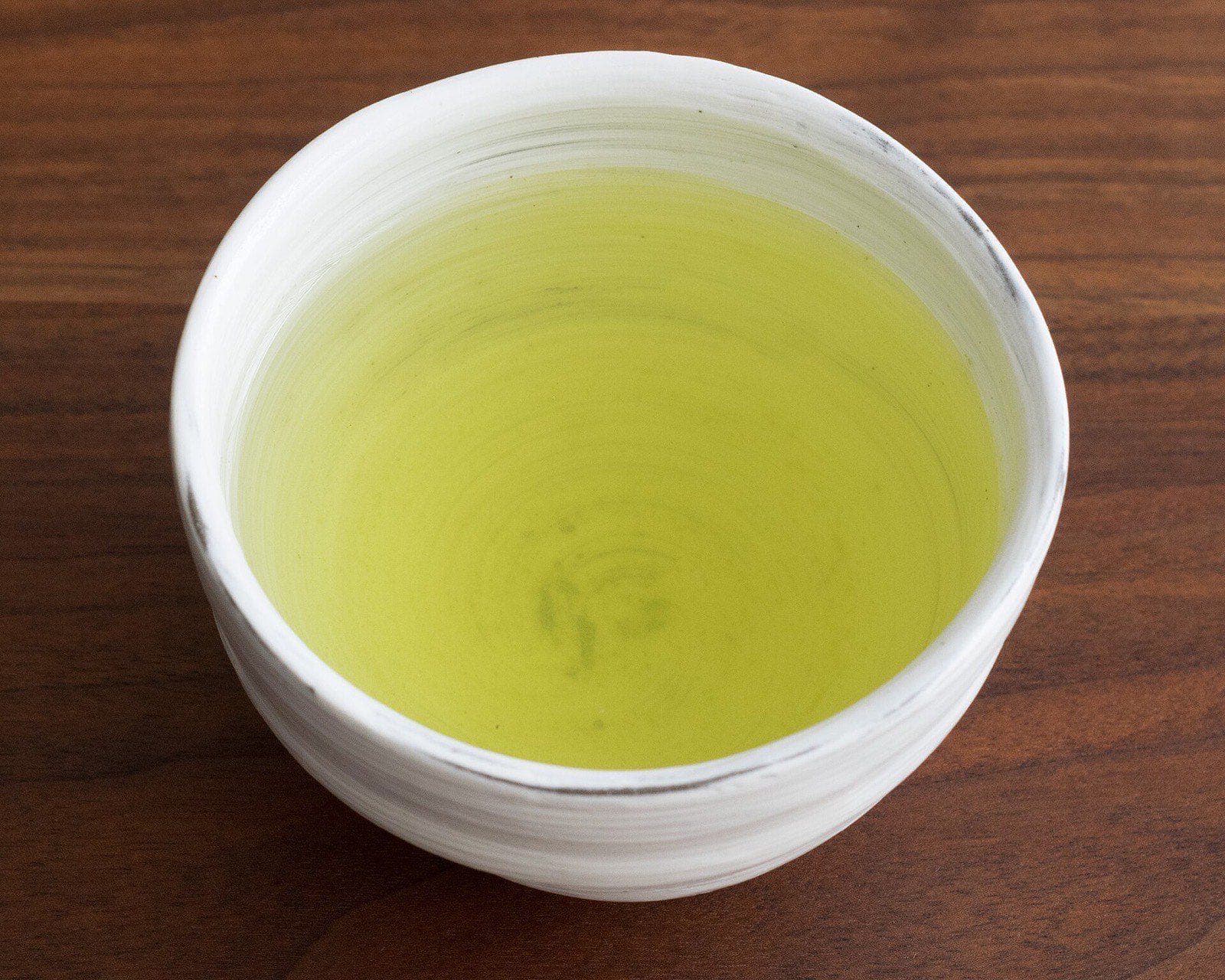
Pour a good green tea and the first thing you notice is the smell — fresh-cut grass, warm rice, sometimes a whiff of the sea. Take a sip and it's clean and vegetal, a little savory, with a sweetness that lingers if it's been brewed with care. That fresh, alive quality is the signature of green tea, and it comes from a single choice in how the leaf is made: the oxidation is stopped almost as soon as it begins.
Because the leaf stays close to its natural state, green tea keeps more of the character of the plant than any type except white. It's also the most varied — a Japanese sencha and a Chinese Dragon Well taste like cousins, not twins.
This guide walks through the main varieties, what each one tastes like, how to brew green tea so it's smooth rather than bitter, and how to choose a bag or tin worth your time.
Quick answer
- ✓Green tea is barely oxidized, which keeps it fresh, grassy, and lightly savory.
- ✓Japanese greens are steamed (marine, umami); Chinese greens are pan-fired (toasty, nutty).
- ✓Brew cool (160–180°F) and short (1–2 min) — boiling water is what makes it bitter.
- ✓It's the most perishable tea; buy fresh and store it airtight and dark.
- ✓Moderate caffeine, plus L-theanine for a calm-but-alert feel.
What makes green tea 'green'
Every true tea starts as the same leaf from Camellia sinensis. What makes green tea green is that its oxidation is halted almost immediately after picking — before the leaf can brown and deepen the way it does in oolong or black tea. Producers do this with heat: either steaming the leaves (the Japanese approach) or firing them in a hot pan or drum (the Chinese approach).
That quick heat locks in the leaf's fresh, vegetal character and its green color. It also preserves more of the leaf's natural compounds, including the catechins and the amino acid L-theanine that give green tea its particular flavor and its calm, steady lift. Everything distinctive about green tea flows from this one decision to stop oxidation early. For the bigger picture of how green fits among the other categories, see our types of tea overview.
Tea & gear for this guide
Hand-matched Amazon picks with strong owner ratings. As an Amazon Associate, Tea & Peace earns from qualifying purchases.
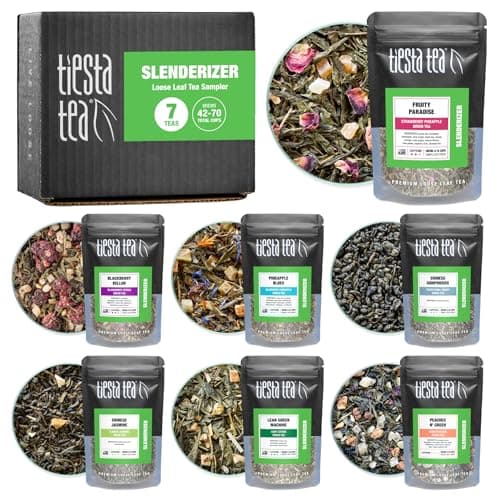
Tiesta Tea - 7 Green Teas Dry Flight Sampler, Loose Leaf, Medium Caffeine
Bright, grassy loose-leaf green tea — 4.6★ across 8,891 ratings.
Shop Now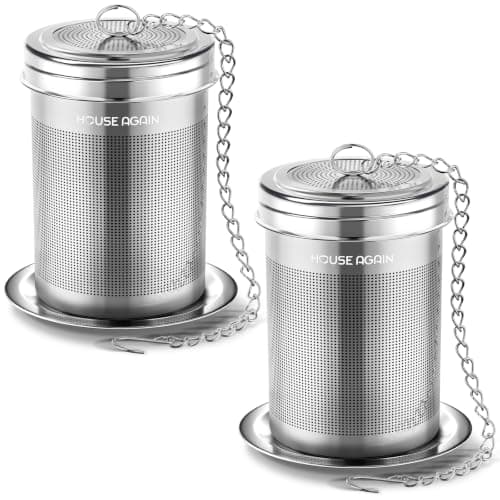
HOUSE AGAIN Tea Infuser, Extra Fine Mesh Tea Infusers for Loose Tea, 18/8
Fine-mesh stainless infuser for any loose tea — 4.6★ across 26,441 ratings.
Shop Now
Tiesta Tea - Top 8 Favorites Sampler Set, Loose Leaf, Up to 80 Cups, High
Bright, grassy loose-leaf green tea — 4.6★ across 8,891 ratings.
Shop NowProduct prices and availability are accurate as of September 14, 2026 and are subject to change. Any price and availability information displayed on Amazon at the time of purchase will apply.
Steamed vs pan-fired: two great traditions
The single biggest flavor divide in green tea is how the oxidation was stopped, and it splits neatly along national lines.
Japanese greens are steamed. Steaming gives a bright green color and a flavor that's marine, grassy, and rich in umami — savory and almost brothy. Sencha and gyokuro live here.
Chinese greens are pan-fired (or roasted). Firing in a hot wok gives a mellower, toastier, nuttier cup with less of the seaweed note. Dragon Well (Longjing) and Gunpowder live here.
Neither is better; they're different pleasures. If you like savory, brothy flavors, start Japanese. If you like toasty, chestnut-like warmth, start Chinese. Our chinese green tea guide goes deeper on the pan-fired side.
The main varieties worth knowing
A quick tour of the greens you're most likely to meet:
| Variety | Origin | Flavor note |
|---|---|---|
| Sencha | Japan | Grassy, fresh, lightly savory |
| Gyokuro | Japan | Shade-grown, deeply umami, sweet |
| Matcha | Japan | Powdered whole leaf, creamy, intense |
| Dragon Well (Longjing) | China | Pan-fired, chestnut-sweet, smooth |
| Gunpowder | China | Rolled pellets, bold, slightly smoky |
| Bi Luo Chun | China | Delicate, fruity, floral |
| Genmaicha | Japan | Green tea + toasted rice, cozy, nutty |
Matcha is the outlier: it's shade-grown, stone-ground into a fine powder, and whisked into water rather than steeped, so you drink the whole leaf. That gives it a far more intense flavor and effect than steeped green — the full method is in our matcha tea guide.
How green tea tastes — and how to read a good one
Well-made green tea balances three things: a fresh vegetal quality (grass, greens, seaweed), a savory umami roundness, and a gentle sweetness in the finish. A little astringency is normal and even pleasant; harsh bitterness is not — that's a brewing fault, not the tea's nature.
When you taste a green, notice the finish. A good one leaves a clean, slightly sweet aftertaste (the Japanese call the sweet aftertaste amami). A poor or over-brewed one leaves your mouth dry and puckered. If your cup is bitter, the leaf is rarely the problem — the water was almost certainly too hot. That's such a common issue that we gave it a dedicated guide: how to brew green tea without bitterness.
How to brew green tea properly
Green tea is the most heat-sensitive of the true teas, so the rules are gentler than for black:
- Water: 160–180°F, never boiling. Boiling water scorches the leaf and releases bitter tannins. Rest a boiled kettle a couple of minutes, or add a splash of cold water.
- Leaf: about 1 teaspoon per 8-ounce cup.
- Time: 1–2 minutes. Green over-steeps fast; use a timer and strain promptly.
- Re-steep. Good loose greens give two or three infusions — the second is often the sweetest.
The short version: cooler and shorter than you think. This is the number-one thing people get wrong, and fixing it transforms the cup. For all types side by side, see how to make tea.
Cold-brewing green tea for a sweeter cup
There's an even more foolproof route to smooth green tea: don't heat the water at all. Cold brewing steeps the leaves in cold water in the fridge for several hours, and because cold water can't pull out the bitter tannins, the result is naturally sweet, mellow, and impossible to over-brew.
It's my standard suggestion for anyone who thinks they dislike green tea — usually they've only had it brewed scorching hot. Drop a couple of teaspoons of green leaves into cold water, refrigerate overnight, and strain in the morning. That's the entire method, laid out on our cold brew tea homepage, and in summer a jug of cold-brewed sencha in the fridge is genuinely hard to improve on.
How to choose a good green tea
A few practical pointers when you're buying:
- Buy fresh, buy small. Green tea is the most perishable type. Look for a recent harvest or best-by date, and buy amounts you'll finish within months, not years.
- Look at the leaf. Good green tea has a vivid green color and a fresh aroma. Dull, brownish, or dusty-smelling leaf is past its prime.
- Loose over bags, where you can. Whole leaves keep more flavor; see loose leaf tea.
- Match the style to your taste. Savory and brothy? Japanese sencha. Toasty and nutty? Chinese Dragon Well. Cozy and mild? Genmaicha.
- Store it right. Airtight, opaque, cool, and dark — away from light, heat, and strong smells.
Start with one Japanese and one Chinese green side by side; the contrast teaches your palate faster than any description.
Keeping Green Tea Fresh: Storage That Actually Matters
Green tea is the most perishable tea there is, and storage does more to protect a good leaf than any brewing technique. Because it's unoxidized, the compounds that make it sweet and aromatic keep reacting with oxygen after processing — which is why a tin opened in March tastes noticeably flatter by September.
Four things degrade it, in rough order of damage: oxygen, light, heat, and odour. That gives a simple protocol — keep the leaf in an opaque, genuinely airtight container, somewhere cool and dark, and well away from coffee, spices, or anything else aromatic. Green tea absorbs neighbouring smells with remarkable efficiency, and a tin stored beside the garlic will taste of it.
Two storage habits are worth unlearning. The first is the clear glass jar on an open shelf: attractive, and the fastest way to fade a tea. The second is the refrigerator. It sounds sensible, but every time you take a cold container into a warm kitchen, condensation forms on the leaf, and that moisture does far more harm than the months of coolness saved. Long-term freezing works only if the tea is vacuum-sealed and thawed fully sealed before opening — which is more trouble than most people want.
The practical answer is to buy smaller quantities more often. A 50-gram pouch finished in two months will consistently beat a 250-gram tin drunk over a year, even if the larger tin was the better tea on the day it was opened. Look for a stated harvest season when buying — spring-picked green tea drunk within a year of that harvest is the window where it genuinely shines.
Caffeine and the calm-alert feeling
Green tea has a moderate amount of caffeine — generally less than a cup of coffee, though the exact figure depends on the leaf, the amount, and the steep time. What makes green tea feel different from coffee is that it also contains L-theanine, an amino acid associated with a relaxed, focused state. The pairing is often described as "calm alertness": awake without the jittery edge.
Matcha amplifies this because you consume the whole powdered leaf, taking in more of both compounds at once. If you're sensitive to caffeine, brew cooler and shorter (which extracts a little less) or enjoy green tea earlier in the day. Green tea is a beverage, not a treatment — enjoy it for the flavor and the ritual, and if you're managing caffeine for a medical reason, talk to a professional rather than relying on general rules of thumb.
Making green tea part of a calm routine
Green tea suits a slower moment better than almost any drink. It asks you to wait for the water to cool, to keep the steep short, to pay a little attention — and those small demands are exactly what turn it into a pause rather than just a caffeine delivery system.
A gentle way to build the habit: pick one time of day (mid-morning is a classic), use the same cup, and let the two-minute steep be the whole break. No phone, just the tea. We explore this idea more in our tea ritual guide. However you take it, the point of green tea is less about doing something for your body and more about giving yourself a clean, quiet, unhurried few minutes — the calm at the center of the cup. Served cold, it is a different and often easier drink — see can you drink green tea cold.
From our testing notes
A telling comparison for anyone choosing a first green tea: brew a Japanese sencha and a Chinese Dragon Well side by side, both at about 175°F for 90 seconds. The sencha comes out greener and distinctly savory-marine; the Dragon Well is paler, rounder, and chestnut-sweet. Same brewing parameters, two clearly different teas — it's the quickest way to find which style of green tea is yours.
Sources & further reading
- USDA FoodData Central — Beverages, tea, green, brewed, regular (12 mg caffeine per 100 g) (read 2026-09-10)
- NIH National Center for Complementary and Integrative Health — Green Tea (evidence and safety summary) (read 2026-09-10)
- Harvard T.H. Chan School of Public Health — The Nutrition Source: Tea (brewing temperatures and times; caffeine) (read 2026-09-10)
- Green tea — Wikipedia
- Sencha — Wikipedia
- Theanine — Wikipedia
Frequently asked questions
What is green tea, exactly?
Green tea is tea from the Camellia sinensis plant whose oxidation is stopped almost immediately after picking, usually by steaming or pan-firing. That quick heat keeps the leaf fresh, green, and vegetal, distinguishing it from oxidized teas like oolong and black.
How do I brew green tea so it isn't bitter?
Use water at 160–180°F (never boiling) and steep only 1–2 minutes. Bitterness almost always comes from water that's too hot or a steep that's too long. Our full method is in how to brew green tea.
What's the difference between Japanese and Chinese green tea?
Japanese greens are steamed, giving a bright, grassy, umami-rich cup (sencha, gyokuro). Chinese greens are pan-fired, giving a mellower, toastier, nuttier flavor (Dragon Well, Gunpowder). Both come from the same plant — the finishing heat is the difference.
Is matcha the same as green tea?
Matcha is a type of green tea, but it's shade-grown, ground into a fine powder, and whisked into water rather than steeped, so you drink the whole leaf. That makes it far more intense in flavor and effect than a steeped green. See our matcha tea guide.
How much caffeine is in green tea?
Green tea has moderate caffeine, typically less than a cup of coffee, though it varies with the leaf and steep time. It also contains L-theanine, which is why the lift tends to feel calmer and steadier than coffee's.
Which green tea is best for beginners?
A good sencha (savory and fresh) or a Dragon Well (toasty and smooth) are both friendly starting points. Genmaicha, which blends green tea with toasted rice, is especially mild and cozy for newcomers. Just remember to brew with cooler water.
How long does green tea stay fresh?
Green tea is the most perishable type — roughly 6–12 months stored airtight, cool, and dark. Buy small amounts of a recent harvest and keep it away from light, heat, air, and strong smells. Stale green tea tastes flat and dull.
Can I drink green tea every day?
Many people enjoy green tea daily as an ordinary beverage. It's a drink, not a treatment, so there's no need to frame it as medicine. If you're sensitive to caffeine or managing a health condition, moderate your intake and check with a professional.
Should I add milk or sugar to green tea?
Most green tea is meant to be enjoyed plain so its fresh, savory character comes through; milk in particular tends to clash with it. A touch of honey is fine if you like, but a well-brewed green usually needs nothing. Cold brewing brings out a natural sweetness that many people prefer to added sugar.
Can I cold brew green tea?
Yes, and it's arguably the most foolproof way. Steep the leaves in cold water in the fridge for several hours and strain — the result is sweet and smooth with no risk of bitterness. See our cold brew tea method.
Why does good green tea taste savory?
That savory, brothy quality is umami, and it comes largely from amino acids like L-theanine that are preserved when oxidation is stopped early. Shade-grown Japanese greens like gyokuro have the most pronounced umami; pan-fired Chinese greens lean more toasty and nutty.