
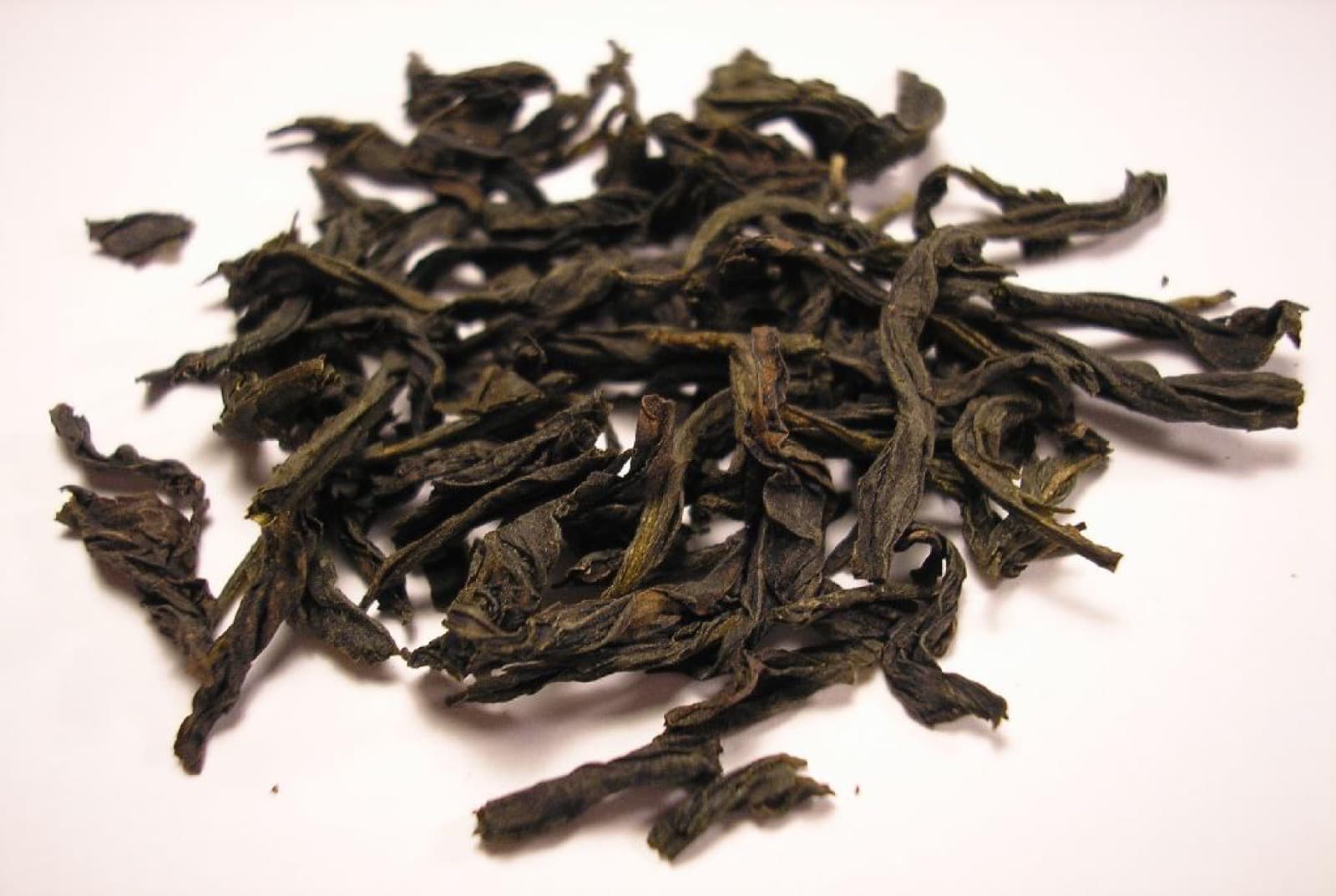
Oolong tea is the most fascinating category in the tea world because it refuses to sit still. Made from the same plant as green and black tea, Camellia sinensis, it is partially oxidized, conventionally described as landing anywhere between 10% and 80% along the spectrum (a descriptive range, not a measurement). That single flexible step is why one oolong can taste like a fresh lilac garden and another like toasted chestnuts and honey.
If you have only met tea through supermarket bags, oolong is where things get genuinely interesting. It rewards attention without demanding a ceremony, and a good one can be re-steeped five or six times, changing character with each cup. This guide walks through what oolong actually is, the main styles worth trying, how the flavors break down, and a brewing method that gets the best out of your leaves.
Quick answer
- ✓Oolong is partially oxidized tea, sitting between green (unoxidized) and black (fully oxidized).
- ✓Styles range from green, floral, and creamy to dark, roasted, and honeyed depending on oxidation and roast.
- ✓Most oolongs are meant to be steeped multiple times, revealing new notes each round.
- ✓Use water around 185–205°F and short steeps (30–60 seconds Western-style) to avoid bitterness.
- ✓Caffeine sits in the moderate range, roughly between green and black tea.
What makes a tea an oolong?
The defining feature of oolong is partial oxidation. After the leaves are picked, they are withered and then bruised (rolled, shaken, or tumbled) to break cell walls and let oxygen react with the leaf. The maker halts this process with heat at a chosen moment. Stop early and you get a light, green-leaning oolong; let it run longer and you get a darker, fruitier one.
That control is what separates the six true teas. Green tea is heated almost immediately to prevent oxidation, black tea is fully oxidized, and oolong lives in the wide middle. If you want the full family tree, our overview of the types of tea shows exactly where oolong fits. Many of the world's most prized oolongs come from Fujian and Guangdong in China and the high mountains of Taiwan, though the category is far broader than any single origin. Oolong is the most resteepable tea there is — how many times can you steep tea gives the counts by type.
Tea & gear for this guide
Hand-matched Amazon picks with strong owner ratings. As an Amazon Associate, Tea & Peace earns from qualifying purchases.
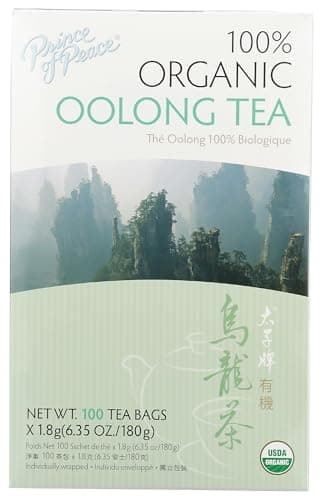
Prince of Peace Organic Oolong Tea, 100 Tea Bags – 100% Organic Black Tea
Partially oxidized oolong with layered flavor — 4.6★ across 8,786 ratings.
Shop Now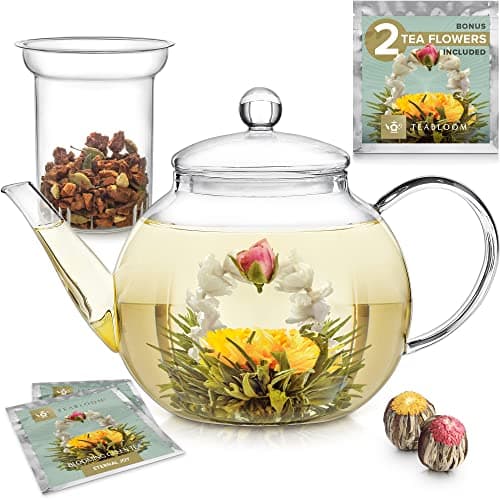
Teabloom Stovetop & Microwave Safe Glass Teapot with Removable Loose Tea
Borosilicate glass teapot with a removable infuser — 4.6★ across 26,185 ratings.
Shop Now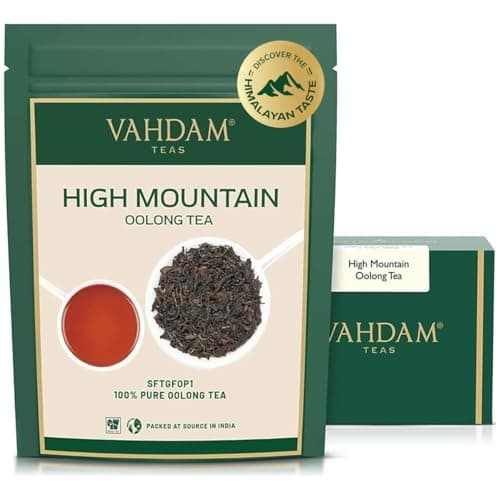
VAHDAM, High Mountain Oolong Tea Leaves From Himalayas (50+ Cups, 3.53oz)
Partially oxidized oolong with layered flavor — 4.6★ across 3,925 ratings.
Shop NowProduct prices and availability are accurate as of September 14, 2026 and are subject to change. Any price and availability information displayed on Amazon at the time of purchase will apply.
The oolong flavor spectrum
Because oxidation is a dial rather than a switch, oolong covers an enormous range. It helps to picture it as a gradient from green and floral on one end to dark and roasted on the other.
| Style | Oxidation | Typical notes |
|---|---|---|
| Green/jade oolong | 10–30% | Lilac, orchid, fresh cream, sweet grass |
| Floral high-mountain | 20–40% | Butter, honeysuckle, stone fruit |
| Medium roast | 40–60% | Toasted grain, apricot, caramel |
| Dark roast | 60–80% | Roasted nuts, dark honey, cocoa, mineral |
A lightly oxidized Taiwanese oolong like a high-mountain Jin Xuan can taste almost milky, with a natural buttery texture and no additives. A heavily roasted rock oolong from the Wuyi mountains, by contrast, tastes of warm stone, dried fruit, and roasted grain. Both are oolong. This is why 'oolong flavor' is nearly impossible to pin down in one line.
Oolong styles worth trying first
A few names show up again and again for good reason. Starting with these gives you anchor points across the spectrum:
- Tieguanyin (Iron Goddess) — the famous Anxi oolong, usually light and floral in its modern jade style, though traditional roasted versions still exist.
- Da Hong Pao — the classic Wuyi rock oolong, roasted, mineral, and deep. A great introduction to the dark end.
- Ali Shan / Li Shan — Taiwanese high-mountain oolongs, creamy and fragrant, grown at elevation for slow, sweet growth.
- Dan Cong — Phoenix oolongs from Guangdong, celebrated for mimicking specific aromas like orchid, almond, or honey.
- Jin Xuan (Milk Oolong) — naturally buttery and smooth; note that some cheap versions are artificially flavored, so buy from a maker who is transparent.
If you enjoy exploring by origin, our guide to Chinese oolong tea goes deeper on the classic mainland styles and their mountains.
How to brew oolong tea well
Oolong is forgiving enough for a mug and rewarding enough for careful brewing. Here is a reliable Western-style starting point:
- Use about 1 heaping teaspoon (roughly 3 grams) of leaf per 8 oz cup.
- Heat water to 185–205°F — cooler for green, floral oolongs; hotter for dark, roasted ones.
- Steep 30–60 seconds for the first infusion, then taste.
- Add 15–30 seconds to each following steep. Good oolong gives you three to six infusions.
The biggest mistake is over-steeping a rolled oolong, which packs a lot of leaf into a tight ball. Those pellets unfurl and keep releasing flavor, so long steeps turn harsh fast. Short and repeated beats long and single. For the broader principles behind water temperature and leaf ratios, see our guide on how to make tea.
Gongfu brewing: getting more from your leaves
If you fall for oolong, the gongfu method is where it truly opens up. The idea is simple: use a small vessel, a lot of leaf, and many very short steeps. A typical setup uses a 100–150 ml gaiwan filled about one-third with leaf, water just off the boil, and steeps starting around 10–20 seconds.
The payoff is watching a single oolong evolve. The first steeps might be floral and bright; the middle rounds turn sweet and full; the later ones settle into gentle mineral or roasted notes. You are effectively tasting the tea's whole arc rather than averaging it into one mug. Our gaiwan guide covers the vessel and pour technique if you want to try it, and the Tea & Peace homepage collects our brewing and cold-brew methods across every tea. You do not need expensive gear to start — a small teapot and a timer will teach you most of what matters.
How much caffeine is in oolong?
Oolong lands in the moderate range, generally between green and black tea, though the overlap is wide. A cup usually falls somewhere around 30–50 mg of caffeine, depending on the leaf, the amount used, water temperature, and steep time. Because oolong is often re-steeped, the caffeine is also spread across several cups rather than delivered all at once.
The practical takeaway: oolong tends to give a smooth, steady lift rather than a sharp spike, thanks partly to L-theanine, an amino acid in tea that pairs with caffeine for a calmer kind of alertness. If you are caffeine-sensitive, favor lighter first steeps and drink earlier in the day. Tea is a beverage, not a stimulant regimen — listen to your own body rather than chasing numbers.
A short history and the name behind the tea
Oolong is a relatively young category compared to green tea, generally traced to the Fujian province of China several centuries ago, with the Wuyi mountains and later Anxi county as its historic heartlands. From there the craft spread to Taiwan in the 19th century, where high-mountain growing turned oolong into a national specialty and produced some of the world's most sought-after leaves.
The name itself is charming and a little mysterious. Wulong (乌龙) means 'black dragon' in Chinese, and several folk stories try to explain it — one tells of dark, twisting leaves resembling a dragon; another of a tea farmer named Wu Liang (later corrupted to Wulong) who discovered oxidation by accident when a deer distracted him and his picked leaves sat oxidizing before he returned. Whether or not the legends are literally true, they capture something real about oolong: it was born from the discovery that letting the leaf partially oxidize created flavors neither green nor black tea could reach.
That middle path is why tea people often call oolong the connoisseur's category. It demands the most skill from the maker — timing the oxidation, the rolling, and often a careful roast — and rewards the drinker with the widest range of any single tea type. Understanding this lineage makes each cup a little richer, and it explains why traditional oolong regions guard their methods so closely.
Storing oolong so it stays fresh
Oolong keeps better than green tea but still fades with poor storage. Its enemies are air, light, heat, moisture, and strong odors. Keep leaves in an opaque, airtight container away from the stove and spice rack.
Green, lightly oxidized oolongs are best enjoyed within a year or so, while heavily roasted oolongs are more stable and some are even aged intentionally, mellowing over years. A quick reference:
- Light/jade oolong: drink within 6–12 months for peak aroma.
- Roasted oolong: stable for a year or more; flavor deepens slightly.
- Aged oolong: deliberately stored and sometimes re-roasted; a specialty category.
If your oolong smells flat or papery, it is likely stale rather than spoiled — safe to drink, just past its best.
From our testing notes
A useful home test: brew the same rolled oolong two ways — one 3-minute Western steep versus four 20-second gongfu steeps. The gongfu rounds almost always taste sweeter and more layered because the leaves never get pushed into bitterness, which is the clearest demonstration of why short-and-repeated beats long-and-single with oolong.
Sources & further reading
- USDA FoodData Central — Beverages, tea, Oolong, brewed (16 mg caffeine per 100 g) (read 2026-09-10)
- FDA — Spilling the Beans: How Much Caffeine is Too Much? (per 12 fl oz: green tea 37 mg, black tea 71 mg, coffee 113–247 mg; 400 mg/day guidance) (read 2026-09-10)
- Oolong — Wikipedia
- Camellia sinensis — Wikipedia
Frequently asked questions
Is oolong tea green tea or black tea?
Neither, exactly. Oolong is its own category made from the same plant, defined by partial oxidation. It sits between green tea (unoxidized) and black tea (fully oxidized), which is why some oolongs taste green and floral while others taste dark and roasted.
Does oolong tea have caffeine?
Yes. Oolong contains a moderate amount, usually somewhere around 30–50 mg per cup, roughly between green and black tea. The exact amount depends on the leaf and how you brew it.
How many times can I steep oolong tea?
Most quality oolongs give three to six infusions Western-style, and even more with the gongfu method. Rolled oolongs especially keep unfurling and releasing new notes, so re-steeping is part of the experience rather than a way to stretch cheap tea.
What does oolong tea taste like?
It depends entirely on the style. Lightly oxidized oolongs taste floral, creamy, and fresh, while heavily oxidized and roasted ones taste of toasted nuts, dark honey, and stone fruit. There is no single oolong flavor, which is part of its appeal.
Is milk oolong made with milk?
No. The name refers to a naturally buttery, creamy texture in certain cultivars like Jin Xuan. Be aware, though, that some inexpensive milk oolongs are artificially flavored, so buy from a seller who states whether flavoring was added.
What water temperature is best for oolong?
Use about 185–195°F for light, floral oolongs and 200–205°F for dark, roasted ones. Cooler water protects delicate aromatics; hotter water draws out the deeper roasted notes.
Is oolong tea good for you?
Oolong is a minimally processed tea that many people enjoy as part of a balanced routine, and like other teas it contains antioxidants and L-theanine. That said, tea is a beverage, not a treatment, and you should talk to a healthcare professional about any specific health goal.
Can I cold brew oolong tea?
Absolutely, and it is delicious. Cold brewing brings out oolong's floral sweetness with almost no bitterness. See our recipe for cold brew oolong tea for ratios and timing.
Is oolong tea good for weight loss?
The honest answer is that it's a pleasant drink, not a weight-loss tool. Some small studies suggest tea polyphenols and caffeine may nudge metabolism slightly, and oolong appears in a lot of marketing on that basis — but the effects measured are modest and don't approach what diet and activity do. Where oolong genuinely helps is as a satisfying, essentially calorie-free replacement for sweetened drinks. That substitution is real and worth making; the metabolic claims are oversold.