
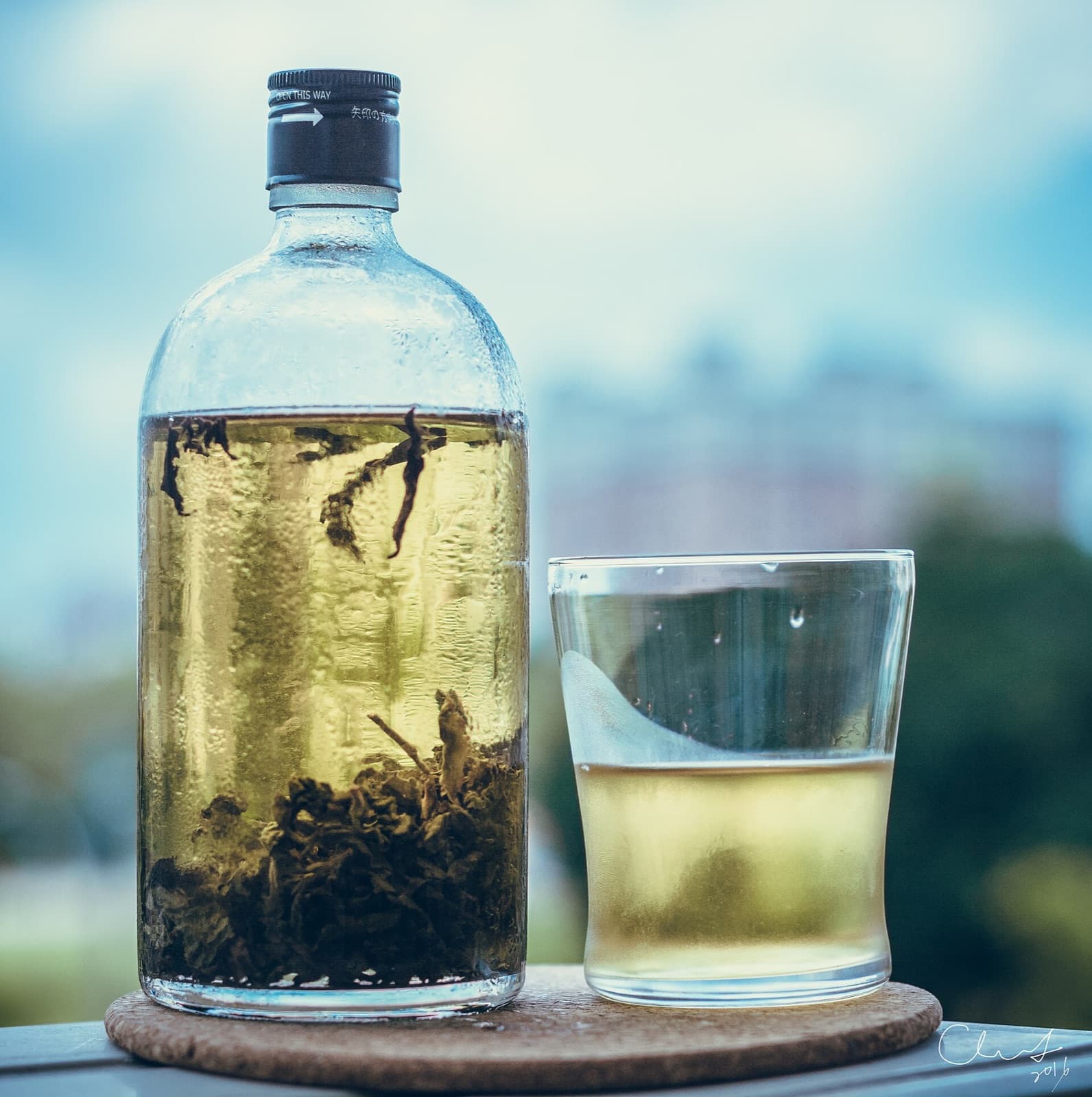
Can you brew tea in cold water? Yes. Any tea — bagged or loose, black, green, oolong, white or herbal — will steep in cold water. The catch is time: what takes three minutes in boiling water takes six to twelve hours in the fridge, because cold water extracts slowly. In exchange you get a cup with noticeably less bitterness, a little less caffeine, and no kettle involved at all. Below is what actually happens in the water, which teas work best, how to do it with ordinary tea bags, and the one food-safety rule that matters.
Quick answer
- ✓Yes — every tea steeps in cold water; plan on 6–12 hours in the refrigerator instead of minutes.
- ✓Cold water extracts fewer tannins and less caffeine, so the result is smoother and slightly milder than the same tea brewed hot.
- ✓Regular tea bags work; use about one bag per 8 oz, or one family-size bag per quart, and steep in the fridge, not on the counter.
- ✓Green, white, oolong and hibiscus are the best cold-water teas; black is fine but benefits from a slightly longer steep.
- ✓Cold-brewed tea is perishable: keep it refrigerated and drink it within a few days.
Yes — and Here Is Why It Works
Tea is a solution of compounds pulled out of the leaf by water, and water pulls them out at any temperature; heat only sets the speed. Hot water is fast and indiscriminate — a 2015 study in the Journal of Food Science and Technology describes hot infusion as having rapid extractive power but also degrading some compounds, while cold infusion extracted a higher level of the leaf's catechins, only with slow kinetics. In plain terms: cold water gets there, it just takes hours, and it is gentler about what it takes.
The practical consequence is the flavor. The astringent tannins that make over-steeped hot tea harsh extract very slowly in cold water, so even a 12-hour cold steep rarely turns bitter. The aromatic and sweet compounds extract fine. That is why cold brew tea tastes rounder and sweeter than the same leaf brewed hot, and why it is the easiest way to make a green tea that never goes bitter.
So the question is not whether cold water can brew tea. It is how long you are willing to wait, and how cold. Refrigerator-cold (around 40°F) is slower than room temperature but safer, and the extra hours are unattended.
Tea & gear for this guide
Hand-matched Amazon picks with strong owner ratings. As an Amazon Associate, Tea & Peace earns from qualifying purchases.

Tiesta Tea - 6-Pack Cold Brew Variety, Loose Leaf, Medium to Non
Tea made for smooth, low-bitterness cold brewing — 4.6★ across 8,891 ratings.
Shop Now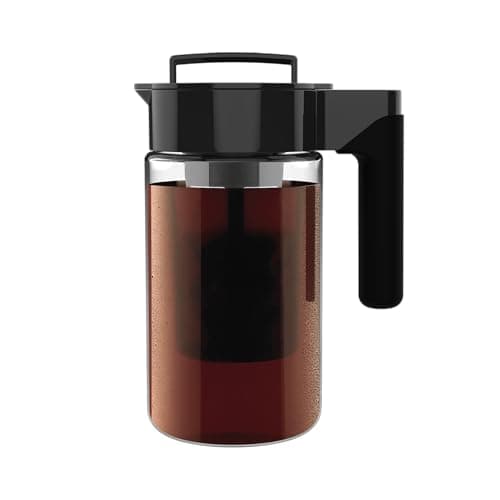
Takeya Deluxe Cold Brew Coffee Maker - BPA-Free Tritan Pitcher with
Airtight brewing pitcher — doubles for cold-brew tea — 4.6★ across 67,470 ratings.
Shop Now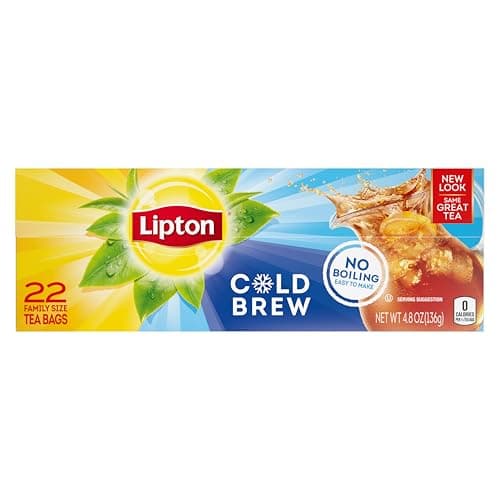
Lipton Cold Brew Iced Tea Bags, Family Size Zero Calories, Easy-To-Make
Tea made for smooth, low-bitterness cold brewing — 4.8★ across 2,206 ratings.
Shop NowProduct prices and availability are accurate as of September 25, 2026 and are subject to change. Any price and availability information displayed on Amazon at the time of purchase will apply.
What Changes: Taste, Caffeine, Color
The same tea bag in cold and hot water gives two recognizably different drinks.
| Hot-brewed (3–5 min) | Cold-brewed (6–12 h) | |
|---|---|---|
| Bitterness / astringency | moderate to high, rises with time | low, stays low |
| Sweetness and aroma | present, fades as tannin builds | forward, clean |
| Body | fuller | lighter |
| Caffeine | full extraction | somewhat less, extracts slowly |
| Color | darker, can cloud when chilled | lighter, stays clear |
Taste is the headline: less bitterness, more of the tea's own sweetness, a lighter body. Black tea loses some of its malty weight; green tea loses the grassy edge that makes many people add sugar; hibiscus turns from sour to tart-and-fruity.
Caffeine extracts more slowly in cold water, so a cold brew of the same leaf for the same volume usually has somewhat less caffeine than a hot brew, though a very long cold steep narrows the gap. For scale, the FDA lists a 12-ounce serving of brewed green tea at 37 mg of caffeine and black tea at 71 mg; cold-brewed versions generally land under those figures. Our cold brew tea caffeine guide has a chart by tea type. Cold brewing is not decaffeination — it is a modest reduction.
Color is lighter and, usefully, stays clear. Hot-brewed black tea often clouds when chilled as tannins and caffeine bind; cold-brewed tea never forms that haze, which is one reason cafés cold-brew their iced tea.
Which Teas Brew Best in Cold Water
Every tea works, but some are made for it.
- Green tea is the star. Cold water skips the bitterness that boiling water causes, and the result is sweet and faintly savory. Japanese sencha and Chinese Dragonwell both cold-brew beautifully — see cold brew green tea for the method and the best green tea for cold brew picks.
- White tea cold-brews delicate and sweet; give it the longer end of the range.
- Oolong, especially the floral rolled kinds, turns into a peachy, aromatic iced tea with near-zero bitterness.
- Black tea works well and is the classic iced-tea base; it wants the longer steep (8–12 hours) to build body, and a slightly heavier dose than green.
- Hibiscus and fruit tisanes are excellent cold — deep color, tart, refreshing.
- Chamomile, mint and rooibos cold-brew gently but taste thinner than hot; most people prefer these hot or hot-brewed-then-chilled.
The teas that gain least are heavily roasted or smoked ones (Lapsang, dark roasted oolong), whose character comes from compounds that want heat. They are drinkable cold-brewed, just muted.
How to Brew Tea in Cold Water with Regular Tea Bags
You do not need special "cold brew" bags; they are simply cut finer to speed extraction. Ordinary bags work with a longer steep.
- Dose. One standard tea bag per 8 ounces of water, or 3 to 4 bags per quart. For family-size iced-tea bags, follow the box — Lipton's cold-brew family bags, for instance, are rated at one bag per quart.
- Add cold water. Filtered tastes cleaner. Refrigerator-cold or tap-cold both work; the fridge is slower but safer.
- Cover and refrigerate. 6 to 8 hours for green, white and oolong; 8 to 12 for black and hibiscus. Overnight suits everything.
- Remove the bags. Squeeze gently or not at all — squeezing pushes out the little tannin that did extract.
- Serve within a few days, over ice if you like; it is already cold.
Loose leaf works the same way at about 1 tablespoon per 8 oz; the cold brew tea ratio guide covers grams and batch sizes, and the cold brew tea bags guide compares purpose-made bags with ordinary ones. Whichever you use, the leaf comes out; it does not keep steeping safely in the jug for days.
The Food-Safety Rule That Matters
Hot brewing pasteurizes tea; cold brewing does not. Tea leaves are a dried agricultural product, cold water is not sterile, and a sweet, room-temperature liquid is something microbes enjoy. This is why the method is refrigerator cold brew, not counter cold brew.
The practical rules follow the general food-safety guidance for perishable foods: keep the brew in the fridge at 40°F or below, do not leave it out for more than a couple of hours at a stretch, and treat it as a perishable drink with a shelf life of a few days rather than a week. Our how long does cold brew tea last guide gives the day-by-day picture. "Sun tea" — a jar left in a warm window for hours — is the one version of cold-water tea worth avoiding for exactly this reason: it spends the whole steep in the temperature range where bacteria grow fastest, for no flavor benefit over the fridge.
Cold Water vs Iced Tea vs Room-Temperature Steeping
Three methods get confused under "cold tea," and they are not the same drink.
Cold-water brewing steeps the leaf in cold water from the start: slow, smooth, lightly caffeinated, no kettle.
Iced tea, in the traditional sense, is hot-brewed tea chilled afterward — usually brewed double-strength so the ice does not water it down. It keeps more of the tea's body and tannin, and it is faster: twenty minutes rather than eight hours. The how to make iced tea guide covers it, and cold brew vs hot brew tea compares the two side by side.
Room-temperature steeping — leaf in tap-temperature water on the counter for an hour or two — is a middle path some people use for a quick, mild green tea. It works, and it is faster than the fridge, but it should be drunk promptly rather than stored, for the food-safety reasons above.
If you want the smoothest possible cup and have the time, cold-water brewing in the fridge wins. If you want tea in the next half hour, brew it hot and chill it.
From our testing notes
We split one box of ordinary supermarket black tea bags into three jars: hot-brewed 4 minutes then chilled, cold-brewed 8 hours in the fridge, and cold-brewed 16 hours. Tasted side by side the next day, the hot-brewed jar had clouded and was clearly the most astringent; the 8-hour jar was light, sweet and clear; the 16-hour jar had caught up in body and was our favorite for plain drinking, still with less bite than the hot one. Same bags, same water — the only difference was heat and time.
Sources & further reading
- Lantano C. et al., 'Effects of alternative steeping methods on composition, antioxidant property and colour of green, black and oolong tea infusions', J Food Sci Technol 2015 — cold infusion extracts more catechins with slow kinetics (read 2026-09-10)
- FDA — Spilling the Beans: How Much Caffeine is Too Much? (37 mg green / 71 mg black per 12 fl oz) (read 2026-09-10)
- CDC — Four Steps to Food Safety (refrigerate perishables within 2 hours, 1 hour above 90°F; fridge at 40°F or below) (read 2026-09-10)
- Lipton — Cold Brew Black Iced Tea Family Size tea bags (one bag per quart; cold water directions) (read 2026-09-10)
- Wikipedia: Cold brew tea
Frequently asked questions
Can you put a tea bag in cold water?
Yes. A tea bag steeps in cold water exactly as it does in hot, only much more slowly — allow 6 to 12 hours in the fridge instead of a few minutes. Use one standard bag per 8 oz of water, or follow the count on a family-size box, and remove the bags when it is done.
How long does tea take to brew in cold water?
Six to eight hours for green, white and oolong tea; eight to twelve for black tea and hibiscus. Overnight in the refrigerator covers all of them. Fine-cut teabags extract a little faster than whole loose leaf.
Does tea brewed in cold water have caffeine?
Yes, but usually somewhat less than the same tea brewed hot, because caffeine extracts more slowly in cold water. It is a reduction, not decaffeination — a long cold steep of black tea is still a caffeinated drink. Herbal teas such as chamomile, hibiscus and rooibos have no caffeine either way.
Is cold-brewed tea safe to drink?
Yes, when it is brewed and stored in the refrigerator and drunk within a few days. Cold brewing does not pasteurize the tea the way hot water does, so keep it at 40°F or below, don't leave it out for hours, and avoid 'sun tea' brewed in a warm window.
Can you brew green tea in cold water?
Green tea is the best candidate of all. Cold water extracts its sweetness without the bitterness that hot water causes, so cold-brewed green tea is smooth and faintly savory with no need for sugar. Steep 6 to 8 hours in the fridge.
Do you need special cold brew tea bags?
No. Purpose-made cold-brew bags are cut finer so they extract in minutes rather than hours, which is convenient, but any ordinary tea bag reaches the same place with a longer steep. Use regular bags overnight and the result is the same drink.
Why does my cold-brewed tea taste weak?
Usually too little tea or too little time. Cold water needs both a slightly heavier dose than hot brewing — about one bag or a tablespoon of leaf per 8 oz — and the full 6 to 12 hours. Black tea in particular tastes thin if it is pulled at four hours.
Can you brew tea in cold water on the counter instead of the fridge?
You can steep at room temperature for an hour or two for a quick, mild cup, but drink it promptly. For a longer steep, use the refrigerator: it is slower, but it keeps the tea in the safe temperature range the whole time and the result is cleaner.
Does cold water brewing work for herbal tea?
Hibiscus, fruit blends and mint cold-brew well — hibiscus especially, turning deep red and tart. Chamomile and rooibos extract but taste thinner cold than hot; many people hot-brew those and chill them instead.