
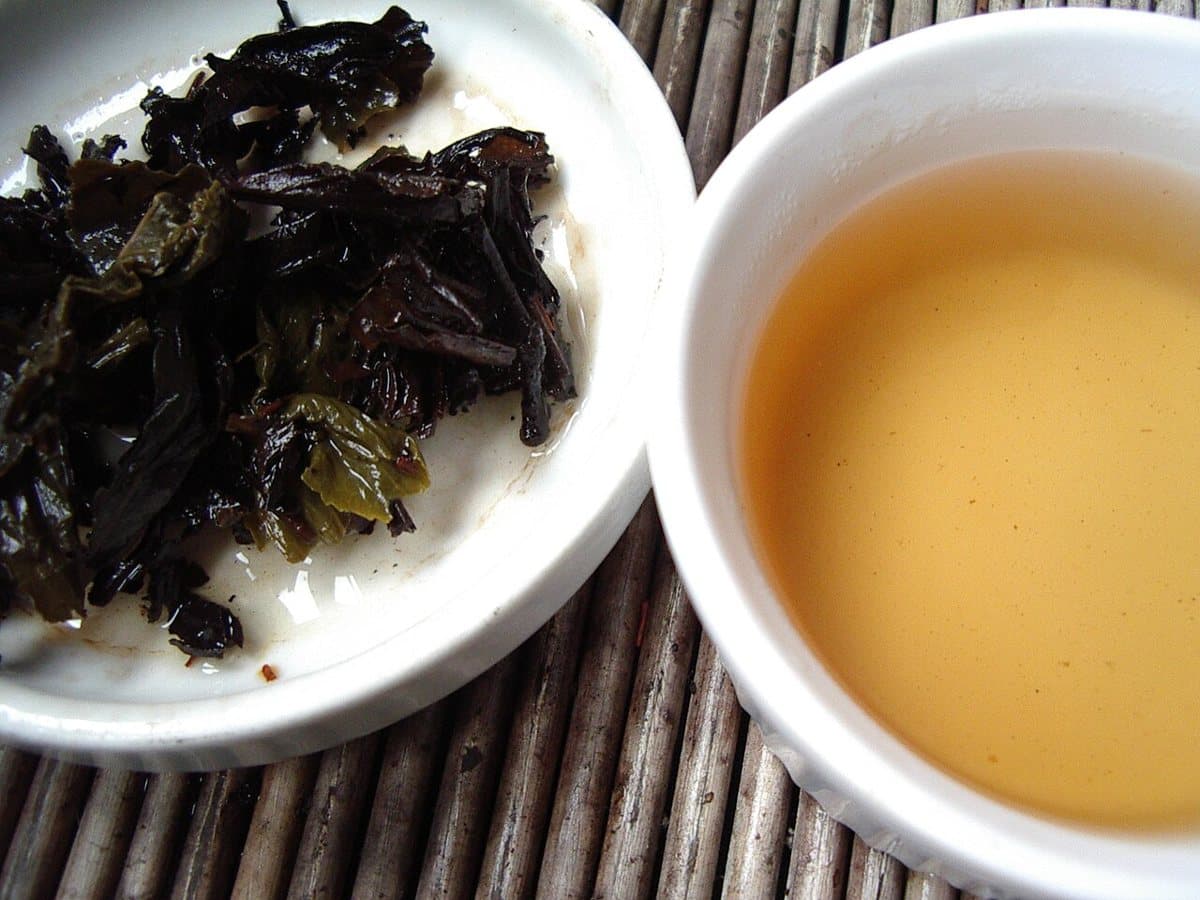
What does oolong tea taste like? Ask three tea drinkers and you'll hear three answers — "like flowers and butter," "like toasted grain and honey," "somewhere between green and black tea" — and all three are right, because oolong isn't one flavor. It's the widest flavor category in tea, spanning everything from creamy gardenia to dark roasted stone fruit depending on the cultivar, the oxidation level, and the roast. This guide walks the range end to end, in plain sensory language, so you can pick the oolong that matches what you actually want in the cup.
The Short Answer: Between Green and Black, but Not a Blend
Oolong is partially oxidized — conventionally described as anywhere from about 10% to 80%, a range tea makers use descriptively rather than measure — which places it between unoxidized green tea and fully oxidized black tea. But it doesn't taste like green tea mixed with black tea. Partial oxidation, combined with the bruising and rolling that defines oolong processing, creates flavors neither of its neighbors has: orchid and gardenia florals, buttered-popcorn creaminess, honey, toasted grain, ripe peach, and a distinct returning sweetness in the throat after you swallow (Chinese tea culture calls it hui gan).
The practical takeaway: if green tea reads too grassy for you and black tea too heavy, oolong is almost certainly where your tea lives. Our oolong tea guide covers the category's history and processing; this page stays focused on what actually lands on your palate.
Tea & gear for this guide
Hand-matched Amazon picks with strong owner ratings. As an Amazon Associate, Tea & Peace earns from qualifying purchases.
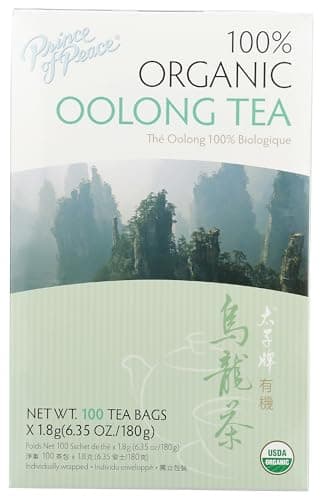
Prince of Peace Organic Oolong Tea, 100 Tea Bags – 100% Organic Black Tea
Partially oxidized oolong with layered flavor — 4.6★ across 8,786 ratings.
Shop Now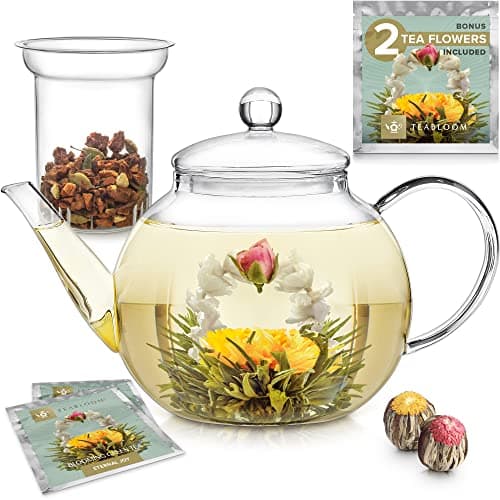
Teabloom Stovetop & Microwave Safe Glass Teapot with Removable Loose Tea
Borosilicate glass teapot with a removable infuser — 4.6★ across 26,185 ratings.
Shop Now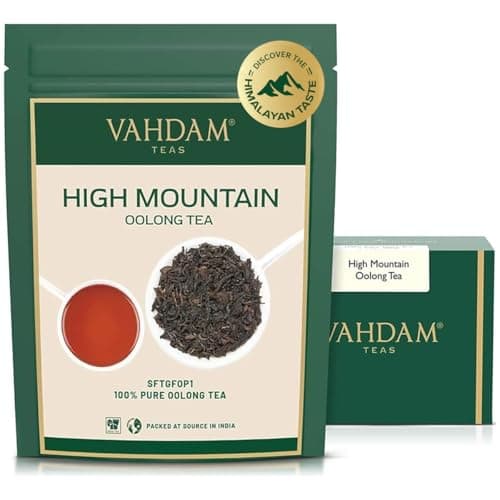
VAHDAM, High Mountain Oolong Tea Leaves From Himalayas (50+ Cups, 3.53oz)
Partially oxidized oolong with layered flavor — 4.6★ across 3,925 ratings.
Shop NowProduct prices and availability are accurate as of September 15, 2026 and are subject to change. Any price and availability information displayed on Amazon at the time of purchase will apply.
Light Oolongs: Floral, Creamy, Almost Sweet
Lightly oxidized oolongs (10–30%) are rolled into tight green pellets that unfurl dramatically in hot water. Tieguanyin — "Iron Goddess of Mercy" — is the archetype: the aroma is unmistakably floral, close to fresh gardenia or lilac, and the taste follows with a smooth, almost buttery body and no bitterness when brewed correctly. People tasting a good Tieguanyin for the first time routinely ask whether something was added to it. Nothing was; that's the leaf.
Taiwanese high-mountain oolongs (Alishan, Li Shan) push the creamy direction further — milky texture, cool alpine florals, a finish that tastes faintly of sugarcane. Jin Xuan, a Taiwanese cultivar often sold as "milk oolong," carries a natural custard note so pronounced that honest vendors have to clarify it isn't flavored (though cheap "milk oolongs" often are — a genuinely useful thing to check before buying).
If you drink coffee with cream, or you loved jasmine tea but want more body, start here.
Dark Oolongs: Roasted, Honeyed, Mineral
Push oxidation past 40% and add a charcoal roast, and oolong changes character completely. Wuyi rock oolongs — Da Hong Pao is the famous one — taste of toasted grain, dark honey, dried apricot, and a wet-stone minerality the Chinese call yan yun, "rock rhyme," after the cliffs the bushes grow on. There's often a cocoa edge in the finish. Nothing about them is grassy or light; a good rock oolong drinks closer to a fine black tea than to anything green, yet keeps a fragrance black tea can't reach.
Dan Cong oolongs from Phoenix Mountain are the strangest and most rewarding corner of the dark range: single-bush teas bred for generations to mimic specific aromas — almond, ginger flower, orange blossom, grapefruit. A "honey orchid" (Mi Lan Xiang) Dan Cong genuinely smells like its name, with no flavoring involved.
Roasted oolongs also age well, mellowing into deeper fruit and losing any roast harshness — one reason they're a favorite among collectors.
What Oolong Is Made Of (and Why That Sets the Flavor)
All oolong comes from the same plant as every true tea — Camellia sinensis — so the flavor differences are made, not grown. Three levers matter most:
Oxidation — after picking, the leaves are bruised (traditionally shaken in bamboo baskets) so enzymes darken the leaf edges. Stop early and the tea stays floral and green-leaning; run long and it develops fruit and honey.
Roasting — many oolongs are finished over charcoal, once or repeatedly. Roast adds toast, caramel, and stability, and softens sharp edges.
Cultivar — Tieguanyin, Jin Xuan, Shui Xian, and the Dan Cong bushes each carry distinct aromatics before processing even begins, the way wine grapes do.
That three-way matrix is why "what does oolong taste like" has no single answer — and why exploring oolong feels closer to exploring wine regions than to switching tea brands. The types of tea overview shows where oolong sits among the six true tea categories.
How Brewing Changes the Taste
The same oolong can taste noticeably different depending on how you brew it. Water just off the boil pulls out roast, body, and fruit; water at 185°F favors florals and cream. Short, repeated gongfu steeps unfold the tea in stages — aroma first, body in the middle rounds, sweetness at the end — while a single Western-style steep averages everything into one (still pleasant) cup. Our tea steeping times chart has the exact windows.
Two brewing notes specific to oolong: first, give rolled oolongs a quick 5-second rinse with hot water and discard it — the pellets open faster and the first proper steep tastes fuller. Second, don't throw the leaves out after one brew. Oolong is the most resteepable tea there is; stopping at one infusion is like leaving a concert after the opening song.
Oolong also cold brews beautifully — 8 to 10 hours in the fridge yields a peachy, floral iced tea with near-zero bitterness. The cold brew oolong tea guide covers it.
A Tasting Vocabulary for Oolong
Half the difficulty of choosing oolong is that vendor descriptions use a shared vocabulary nobody explains. A working glossary, in plain terms:
- Floral — gardenia, lilac, orchid; the signature of light oolongs. If a light oolong doesn't smell floral, it's stale.
- Creamy / buttery — a texture as much as a taste: the liquid feels thicker, coating rather than rinsing. Strongest in Jin Xuan and high-mountain Taiwanese teas.
- Roast / toast — from charcoal finishing: toasted grain through dark caramel. A quality roast integrates; a rushed one tastes like the outside of burnt toast and fades with a second steep.
- Mineral (yan yun) — the wet-stone impression in Wuyi rock teas; less a flavor than a sensation at the sides of the tongue.
- Hui gan — the returning sweetness in the throat seconds after swallowing. The single most reliable marker separating good oolong from average; cheap tea stops at the swallow.
- Orchid / honey / stone fruit — the Dan Cong aromatic families; taken literally, they're accurate.
With those six terms you can read any serious vendor's list and predict the cup — and describe what you liked well enough to be steered to your next tea.
Oolong vs Green, Black, and Pu-erh: A Taste Comparison
Where oolong actually sits, palate-wise:
- Vs green tea: oolong is rounder and less vegetal. Green tea's signature notes are grass, steamed greens, and umami; light oolong swaps those for flowers and cream. If green tea's astringency bothers you, light oolong will feel like relief — see how to brew green tea if you'd rather fix the green tea instead.
- Vs black tea: dark oolong shares black tea's depth but is more aromatic and less tannic. Black tea grips your palate; roasted oolong glides over it and finishes sweeter.
- Vs pu-erh: ripe pu-erh is earthy, damp, and grounding — forest floor in a cup. Even the darkest oolong stays brighter and more fragrant. Aged sheng pu-erh gets closer to old oolong territory, but keeps a camphor edge oolong never develops.
No other tea category covers this much ground. That's oolong's honest selling point: whatever you already like in tea, some oolong does a version of it.
Which Oolong Should You Taste First?
A practical starting sequence, from safest to most adventurous:
- Tieguanyin (light, floral) — the crowd-pleaser. If you only try one oolong, make it this.
- Taiwanese high-mountain or Jin Xuan (creamy) — for anyone chasing the buttery, milky end.
- Da Hong Pao or another Wuyi rock oolong (roasted) — for black tea and coffee drinkers.
- A Mi Lan Xiang Dan Cong (aromatic, complex) — once you're hooked and want to see how far the category goes.
Buy from vendors who state the harvest season and origin; vague "oolong tea" with no region listed is usually the flattest version of the style. Our Chinese oolong tea guide names specific teas worth seeking out, and the teaware guide covers the gaiwan — the one inexpensive tool that makes oolong tasting dramatically more interesting.
How Age and Storage Change Oolong's Taste
Unlike green tea, which only loses with time, oolong has a second act. Light, unroasted oolongs are at their floral peak within a year and then fade — buy those fresh and store them sealed, cool, and dark, because their aromatics escape through any gap. Roasted oolongs are the opposite case: well-stored, they mellow over years, the roast receding into dried fruit and honey, and aged Wuyi or Dongding oolongs are deliberately cellared and re-roasted by collectors the way pu-erh is aged.
For everyday storage, the rules are short: airtight, away from light, away from the spice cupboard (tea absorbs neighboring smells with enthusiasm), and no refrigeration — condensation on cold leaf does more damage than the months it theoretically saves. An opened bag of rolled oolong drunk within three months never needs more thought than that.
If a light oolong has gone dull on you, one rescue is worth knowing: brew it hotter and longer than you normally would, gongfu style, and it often gives up a last round of honeyed depth even after the top notes have gone — a graceful retirement via the gongfu method.
From our testing notes
Side by side in identical gaiwans, we brewed a spring Tieguanyin and a Da Hong Pao for a friend who 'didn't like tea.' She described the Tieguanyin as 'flowers and warm milk' and the Da Hong Pao as 'toast with honey, almost coffee' — and refused to believe both came from the same plant species with no flavoring. That pair remains our standard demonstration of oolong's range: one category, two teas, almost no overlap.
Sources & further reading
Frequently asked questions
Is oolong tea sweet or bitter?
Brewed correctly, oolong leans sweet — floral-sweet when light, honey-sweet when roasted — with far less bitterness than green or black tea. Bitterness in oolong usually means water too hot or a steep too long, not a bad tea.
Does oolong tea taste like green tea?
Light oolongs share green tea's freshness but replace its grassy, vegetal notes with florals and a creamier body. Dark roasted oolongs taste nothing like green tea at all — they sit much closer to a fragrant black tea.
Why does my oolong taste weak or flat?
Rolled oolongs need heat and time to open. Use water at 195–205°F, give the pellets a quick rinse first, and use enough leaf — the tight balls look deceptively small dry. If it's still flat, the tea itself may be low-grade or stale; oolong with no stated origin usually is.
Do oolong tea pellets dissolve when brewed?
No — those hard little pellets are whole leaves rolled tightly during processing. In hot water they slowly unfurl back into full leaves, often tripling in volume. If your 'oolong' dissolves, it's instant tea powder, not oolong.
Does oolong tea taste like milk tea from boba shops?
Boba-shop 'oolong milk tea' starts from a roasted oolong base, so the underlying toastiness is genuine — but sugar and milk dominate the drink. Brewed plain, a roasted oolong gives you that same toasty backbone with honey sweetness instead of syrup; Jin Xuan 'milk oolong' gives the creamy impression without any milk at all.