

Learning how to make chai tea from scratch starts with a smell — whole cardamom and cinnamon knocking around a pot of simmering milk, filling the kitchen the way no tea bag ever will. Real masala chai is not steeped; it is simmered, so the black tea, spices, milk, and sweetener cook together into something warm, creamy, and deeply fragrant.
It is also genuinely easy. Once you have a handful of common spices, a pot, and about ten minutes, you can make a cup that leaves any powdered mix or coffee-shop syrup far behind. This recipe covers the spice blend (the masala), the exact method, the ratios that make it rich rather than watery, and the variations — dairy-free, stronger, sweeter — so you can make it your own.
Quick answer
- ✓Chai is simmered, not steeped — tea, spices, and milk cook together in a pot.
- ✓The core spices are cardamom, cinnamon, ginger, cloves, and black pepper.
- ✓Use a strong black tea like Assam so the flavor holds up against the milk.
- ✓A good starting ratio is 1:1 water to milk, adjustable to taste.
- ✓Whole, lightly crushed spices beat pre-ground for aroma and depth.
The masala: what goes in the spice blend
Chai's soul is its masala, the spice mix. There is no single correct recipe — every family and street vendor tweaks it — but a classic, balanced blend uses these:
- Green cardamom (4–5 pods) — the signature aroma of chai; slightly crush the pods.
- Cinnamon (1 stick) — warm and sweet.
- Fresh ginger (a few thin slices, or 1/2 tsp dried) — heat and brightness.
- Cloves (2–3) — deep and pungent; a little goes a long way.
- Black peppercorns (3–4) — a gentle warmth that lifts the whole cup.
Optional additions include star anise, fennel, nutmeg, or a bay leaf. The trick is to use whole spices, lightly crushed in a mortar or under the flat of a knife. Whole spices release their aromatic oils slowly during the simmer, giving a rounder flavor than pre-ground powder, which can taste dusty and muddy. This recipe below makes two generous cups.
Tea & gear for this guide
Hand-matched Amazon picks with strong owner ratings. As an Amazon Associate, Tea & Peace earns from qualifying purchases.

Oregon Chai Original Dry Chai Latte Mix, 3 Pound (Pack of 1)
Spiced masala chai to simmer with milk — 4.6★ across 11,405 ratings.
Shop Now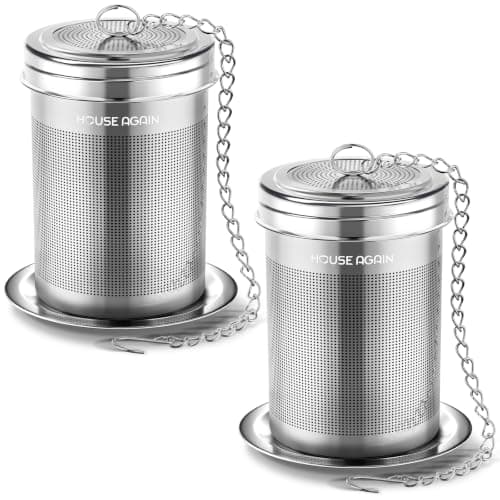
HOUSE AGAIN Tea Infuser, Extra Fine Mesh Tea Infusers for Loose Tea, 18/8
Fine-mesh stainless infuser for any loose tea — 4.6★ across 26,441 ratings.
Shop Now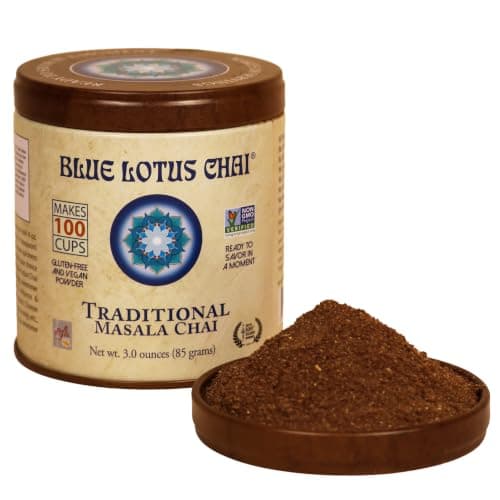
Blue Lotus Chai - Traditional Masala Chai - Makes 100 Cups - 3 Ounce
Spiced masala chai to simmer with milk — 4.4★ across 7,476 ratings.
Shop NowProduct prices and availability are accurate as of September 14, 2026 and are subject to change. Any price and availability information displayed on Amazon at the time of purchase will apply.
Choosing the tea and milk
The tea matters more than people expect. Because chai is diluted with milk and stands up to bold spices, you need a strong, malty black tea — a robust Assam or a breakfast blend is ideal. A delicate Darjeeling or a green tea would simply vanish. Our black tea guide explains why Assam's briskness makes it the natural base. Loose leaf or a plain black tea bag both work; use about 2 teaspoons of loose leaf for two cups.
For the milk, whole dairy milk gives the creamiest, most traditional result, but chai is very friendly to alternatives. Full-fat oat milk is the best dairy-free stand-in because it froths and thickens similarly; almond and soy work too, though they can taste thinner. Whatever you choose, the milk is added to the pot and simmered — not just splashed in cold at the end — which is what gives real chai its body.
Step-by-step: the simmering method
Here is the full method for two cups. Total time is about 10 minutes.
- Crush the spices. Lightly crush 4–5 cardamom pods, 3 cloves, and 4 peppercorns; slice the ginger and break the cinnamon stick.
- Simmer the spices in water. Add the spices to 1 cup of water in a small saucepan. Bring to a boil, then simmer for 3–4 minutes to infuse the water.
- Add the tea. Stir in 2 teaspoons of loose black tea (or 2 bags). Simmer 1–2 minutes.
- Add the milk. Pour in 1 cup of milk and any sweetener (2–3 teaspoons of sugar or honey). Return to a gentle simmer.
- Simmer to strength. Let it bubble gently for 2–4 minutes. The longer you simmer, the stronger and more infused it gets. Watch it so the milk doesn't boil over.
- Strain and serve. Pour through a fine strainer into cups. Serve hot.
The two things that separate great chai from watery chai are simmering the spices before the milk goes in, and giving it enough time on the heat. Rushing either step leaves the spices under-extracted.
Getting the ratio and strength right
The most common home mistake is chai that tastes thin or milky-but-bland. It almost always comes down to ratio. A dependable starting point is 1:1 water to milk — equal parts, as in the recipe above. From there:
- For a richer, creamier cup, shift toward more milk (2:3 water to milk).
- For a stronger, more tea-forward cup, use more tea leaf and simmer a bit longer, not more spice.
- For more spice punch, increase the cardamom and ginger first — they carry the aroma — before touching the cloves and pepper, which can dominate.
Sweetness is traditional and part of the balance; chai is usually noticeably sweet, which offsets the spice heat and tea tannins. Start with about a teaspoon per cup and adjust. If you want to master the underlying black-tea brewing that this builds on, see how to make tea, and the Tea & Peace homepage collects our other brewing methods and cold-brew recipes.
Variations to make it your own
Once the base method is second nature, chai becomes a playground:
- Iced chai: brew it strong and a touch sweeter, then pour over ice. The extra strength survives the dilution.
- Chai latte / masala chai latte: froth extra hot milk and pour it over a strong spiced tea concentrate for a coffee-shop-style drink at home.
- Vegan chai: full-fat oat milk plus a little extra simmering time gives the closest dairy-free texture.
- Caffeine-free chai: swap the black tea for rooibos — it takes the spices and milk beautifully, as noted in our herbal tea guide.
- Make-ahead concentrate: simmer a strong batch of just spices, water, and tea (no milk), strain, and refrigerate for up to five days. Add hot milk to a splash of concentrate whenever you want a quick cup.
Each of these starts from the same simmered foundation — you are just changing one variable at a time.
What 'chai tea' actually means
A small language note that clears up a lot of confusion: chai simply means 'tea' in Hindi (and in many languages, from Turkish çay to Russian chai). So 'chai tea' is literally 'tea tea.' In India you would just ask for chai, and the spiced, milky version most Westerners picture is more precisely called masala chai — 'spiced tea.'
None of this makes 'chai tea' wrong to say; it is simply how the phrase settled into English, the way 'naan bread' did. But knowing the real meaning helps you order and shop with confidence. When a café sells a 'chai latte,' it means a masala chai concentrate combined with steamed, frothed milk. When a box says 'chai spice,' it means the masala blend. And when someone in India hands you a small glass of chai, it is the everyday, sweet, spiced, milky brew this recipe recreates.
Common mistakes and how to avoid them
If your homemade chai isn't matching the version you love from a good Indian restaurant or street stall, it is almost always one of these fixable issues:
- Weak, watery chai — usually too little tea or not enough simmering. Add more leaf and give it another minute on the heat rather than piling on spice.
- Bland spice — pre-ground, stale spices, or adding them too late. Simmer whole, freshly crushed spices in the water first so their oils have time to infuse.
- Bitter or scorched taste — the milk boiled too hard or too long. Keep it at a gentle simmer and watch the pot; milk climbs fast.
- Not sweet enough to balance — traditional chai is noticeably sweet, which offsets the spice heat and tea tannins. If it tastes 'off,' a little more sweetener often fixes what feels like a spice problem.
- Cloves or pepper taking over — these two are powerful. Scale them back and let cardamom and ginger lead.
Chai is very forgiving once you know these levers. Change one variable at a time — usually tea strength or simmer time first — and you will dial in your ideal cup within a couple of batches.
Storing spices and leftover chai
Whole spices are the secret to good chai, and they keep their aroma far longer than ground ones — whole cardamom and cloves stay vibrant for a year or more in an airtight jar away from light and heat, while pre-ground versions fade in a few months. Buying whole spices and crushing them per batch is both cheaper and better.
Brewed chai is best fresh, but a spice-and-tea concentrate (made without milk) keeps in the fridge for about five days in a sealed jar — arguably the single most convenient upgrade to your morning routine, since a cup is then just a splash of concentrate plus hot milk. Chai already mixed with milk should be refrigerated and used within a day or two and gently reheated, never boiled hard again. If it separates slightly on reheating, a quick whisk brings it back together.
From our testing notes
A worthwhile test if you doubt the whole-spice advice: make one batch with lightly crushed whole cardamom and cloves and another with the same quantity pre-ground. The whole-spice cup is noticeably brighter and cleaner, while the ground version tastes flatter and slightly dusty. The oils in intact spices release gradually during the simmer, which is exactly the effect you want.
Sources & further reading
- FDA — Spilling the Beans: How Much Caffeine is Too Much? (per 12 fl oz: green tea 37 mg, black tea 71 mg, coffee 113–247 mg; 400 mg/day guidance) (read 2026-09-10)
- USDA FoodData Central — Beverages, tea, black, brewed (20 mg caffeine per 100 g) (read 2026-09-10)
- Masala chai — Wikipedia
- Cardamom — Wikipedia
Frequently asked questions
What spices go in chai tea?
The classic core is cardamom, cinnamon, ginger, cloves, and black pepper, with cardamom being the signature aroma. Optional add-ins include star anise, fennel, nutmeg, and bay leaf. Use whole spices, lightly crushed, for the fullest flavor.
What kind of tea is used in chai?
A strong, malty black tea, most traditionally Assam. It needs to be bold enough to stand up to the milk and spices, so breakfast blends work well too. Delicate teas like Darjeeling or green tea get lost in the cup.
Do you simmer chai or just steep it?
Real masala chai is simmered, not steeped. The spices and tea cook in water first, then milk and sweetener are added and gently simmered together. This simmering is what gives authentic chai its rich body and deep spice flavor.
Can I make chai without dairy?
Yes. Full-fat oat milk is the best dairy-free option because it thickens and froths like dairy. Almond and soy milk also work, though they can taste a bit thinner. Add and simmer the plant milk just as you would dairy.
How do I make a chai concentrate to save time?
Simmer a strong batch of spices, water, and black tea together without milk, then strain and refrigerate for up to five days. To serve, add hot milk to a splash of the concentrate. It turns a from-scratch drink into a one-minute morning routine.
Is chai tea high in caffeine?
Chai has moderate caffeine because it uses black tea, roughly 40–70 mg per cup depending on strength — usually less than coffee. For a caffeine-free version, swap the black tea for rooibos, which takes the spices and milk just as well.
How do I make chai for a crowd without it going bitter?
Simmer the spices and milk together first, then add the tea leaves off the heat for the final few minutes. Long boiling is what turns chai harsh — the spices need the time, the tea doesn't. For a large batch, make a strong spice-and-milk base ahead, keep it warm, and steep the tea in at the end just before serving. It scales cleanly and everyone gets it fresh rather than stewed.