
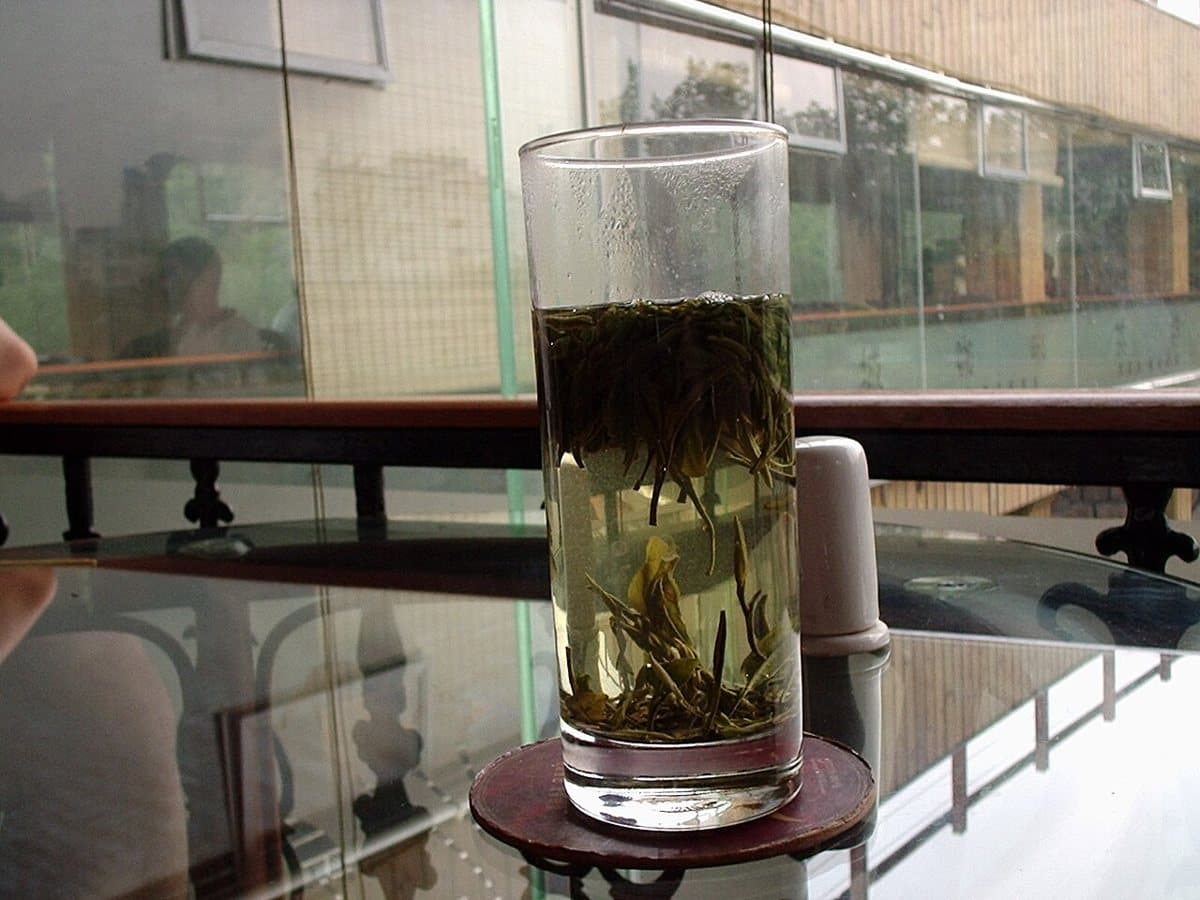
Learning how to brew loose leaf tea without an infuser turns out to be less of a workaround and more of a rediscovery — for most of tea's history, nobody owned one. A bag of good loose tea arrives, the infuser is missing or was never bought, and the kitchen already contains six perfectly good solutions. Some are traditional (hundreds of millions of people drink "grandpa style" tea daily), some are improvised, and one — the humble French press — might already be the best tea brewer in your house. Here are all six, ranked by how little they demand of you.
Method 1: Grandpa Style (the Zero-Equipment Classic)
The traditional everyday method across China: put the leaves straight in the glass, pour hot water on top, drink.
- Add a modest pinch of leaf — about half your usual dose, 1–2 teaspoons per tall glass.
- Pour water at the right temperature for the tea (cooler for green; the tea steeping times chart has the numbers).
- Wait a minute or two. Most leaves sink as they saturate.
- Sip from the top. Refill with hot water whenever the glass drops to a third full — the leaves keep giving for hours.
Two tricks make it graceful: use less leaf than normal, because the leaves never stop steeping, and never drain the glass — that bottom third is your dilution buffer against bitterness, and topping up early keeps strength steady. Whole-leaf teas with large, well-shaped leaves behave best (they sink; dusty broken leaf floats and follows your lip). Green teas, jasmine, and light oolongs are the natural fits — it's how most of the tea in Chinese tea culture is actually drunk on an ordinary Tuesday.
Tea & gear for this guide
Hand-matched Amazon picks with strong owner ratings. As an Amazon Associate, Tea & Peace earns from qualifying purchases.
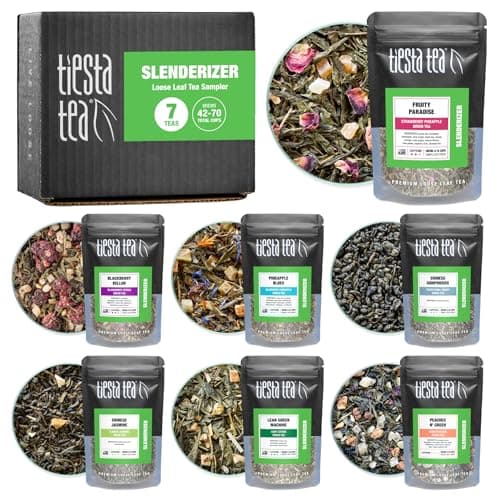
Tiesta Tea - 7 Green Teas Dry Flight Sampler, Loose Leaf, Medium Caffeine
Bright, grassy loose-leaf green tea — 4.6★ across 8,891 ratings.
Shop Now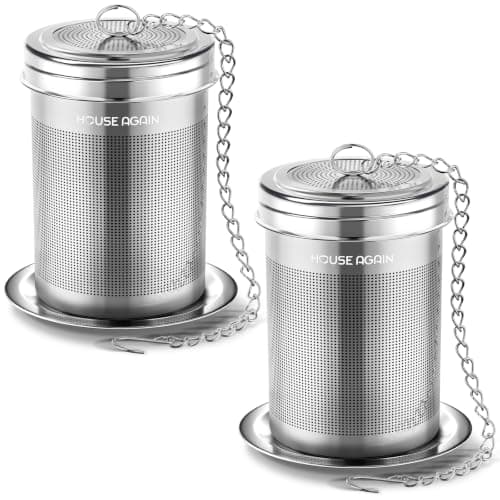
HOUSE AGAIN Tea Infuser, Extra Fine Mesh Tea Infusers for Loose Tea, 18/8
Fine-mesh stainless infuser for any loose tea — 4.6★ across 26,441 ratings.
Shop Now
Tiesta Tea - Top 8 Favorites Sampler Set, Loose Leaf, Up to 80 Cups, High
Bright, grassy loose-leaf green tea — 4.6★ across 8,891 ratings.
Shop NowProduct prices and availability are accurate as of September 14, 2026 and are subject to change. Any price and availability information displayed on Amazon at the time of purchase will apply.
Method 2: The Two-Cup Pour (Steep and Decant)
The most controlled infuser-free method — functionally identical to using a teapot:
- Steep the leaves loose in one mug or a small saucepan, with proper timing.
- When the timer sounds, pour the tea slowly into a second mug, holding the leaves back.
- Drink from cup two; the steep has fully stopped.
The pour itself does most of the straining: tip slowly along the rim and surface tension holds nearly all the leaf in cup one. A few escapees sink harmlessly. This is the method to use when timing matters — a delicate Darjeeling, a green tea you don't want stewed — because unlike grandpa style, extraction actually ends. It's the same steep-then-stop principle every how to make tea method comes down to, minus the hardware. Bonus: the second steep just needs fresh water in cup one.
Method 3: Fork, Slotted Spoon, or Small Sieve
The two-cup pour with a safety net. Hold an ordinary fork or slotted spoon across the receiving mug's rim as you pour and it catches the strays; a small mesh sieve (the kind sold for flour or cocktail straining) catches everything down to fine fannings.
A kitchen sieve is honestly the sleeper pick of this whole page: it costs a few dollars, strains a whole pot at once, rinses clean in seconds, and handles the fine-broken teas that defeat the surface-tension pour. If your loose tea is a small-leaf breakfast blend or a crumbly herbal, this is the method that keeps your last sip leaf-free.
Worth saying plainly: at this point you've assembled 90% of an infuser out of things you own. If you find yourself here daily, a proper basket infuser costs less than a box of tea bags and steeps better than any improvisation — the best tea infuser roundup covers the ones worth owning. Until then, the sieve does the job with zero shame.
Method 4: Make Your Own Filter Bag
For travel mugs, thermoses, and desk tea where loose leaves would be a nuisance:
- Coffee filter: spoon leaves into the center, gather the edges, tie with kitchen string (or a strip of the filter itself). Sturdy and tasteless.
- Paper towel (unprinted, unscented): same fold in a pinch; single steep only.
- Fillable paper tea bags — sold in packs of 100 for a few dollars — are the tidy version of the same idea and turn any loose tea into a pantry of instant tea bags for a fraction of pre-bagged prices.
Avoid cheesecloth unless it's been boiled first (loose weave, and new cloth carries a sizing taste) and skip anything perfumed or dyed. Fill bags loosely — leaves need room to expand to double or triple their dry size, and a crammed bag brews weak. This is also the honest answer to "can I get tea-bag convenience with loose leaf tea quality?" — yes, for about a cent per bag.
Method 5: The French Press You Already Own
A French press is a large infuser wearing a coffee costume: leaves in the bottom, hot water, steep with the plunger up, press gently at the timer, pour. The mesh strains everything, the glass shows you the color, and an 8-cup press brews tea for four in one go.
Two cautions. First, press gently and just far enough to separate leaves from liquid — mashing the leaves to the bottom squeezes out tannic harshness, exactly like oversteeping. Second, if the press also makes coffee, deep-clean it first: coffee oils cling to the mesh and ghost into delicate tea. A baking-soda scrub of the plunger screen (same trick as in how to clean a teapot) clears it; heavy coffee households may want a cheap dedicated press for tea.
Pour fully once steeped — tea left standing on leaves in the press keeps extracting even after pressing, so decant into cups or a second vessel rather than letting it sit.
Method 6: Cold Brew — No Straining Skill Required
Cold brewing sidesteps the infuser problem almost entirely: leaves go loose into any jar of cold water, the fridge does the work overnight, and one lazy pour through any of the strainers above (or even careful decanting — cold-soaked leaves settle firmly to the bottom) finishes the job. No timing pressure, no bitterness risk, no heat.
Use about 1.5× your hot-brew leaf dose, steep 6–12 hours depending on the tea, and drink within three days. The how to make cold brew tea guide covers everything, and the cold brew tea ratio chart scales it from a single jar to a party pitcher.
It's also the most forgiving introduction to whatever loose tea you're holding: cold brewing flatters green teas, oolongs, and blacks alike, and a jar plus a kitchen sieve is the entire equipment list.
Matching the Method to the Tea You're Holding
Not every method suits every leaf, and the pairing logic is short:
| Your tea | Best no-infuser method | Why |
|---|---|---|
| Whole-leaf green, jasmine | Grandpa style | Leaves sink, stay sweet through refills |
| Delicate black (Darjeeling) | Two-cup pour | Timing control matters most |
| Breakfast blends, broken leaf | Sieve or DIY bag | Fine particles need real filtration |
| Rolled oolong | French press | Room to unfurl + full decant |
| Herbal chunks (chamomile, mint) | Two-cup pour or press | Big pieces barely need straining |
| Anything, in summer | Cold brew | Zero timing, zero equipment pressure |
Two pairings to avoid: grandpa style with tannic breakfast blends (endless steeping turns them bitter by mid-cup) and DIY paper bags with big-leaf oolongs (the leaves need triple their dry volume, and a tied bag denies it). If a tea fights the first method you try, the fix is usually switching methods, not switching teas — the same leaf that turns harsh steeping freely in a mug behaves perfectly through a two-minute timed pour.
The Cleanup Question (Honest Answers)
The quiet reason people buy infusers isn't brewing — it's the wet leaves afterward. The no-infuser cleanup ranking, best to worst:
Cold brew jar wins: one strain at pour time, then leaves slide out with a rinse. DIY filter bags are second — the whole mess lifts out and bins in one motion. French press is fine if you tap the leaves into the bin while they're still cohesive (dried-on leaves a day later are the punishment). Grandpa style is nearly effortless since the leaves stay in one glass all day. The two-cup pour leaves you swirling leaves out of a mug under the tap — thirty seconds, but the least tidy thirty seconds here.
Don't pour leaves down the sink; even small amounts accumulate in traps. They compost beautifully, and a small bowl by the sink that migrates to the bin or garden once a day removes the friction entirely. Used leaves also pre-rinse the vessel: a swirl of hot water with the spent leaves lifts most of the tannin film before it sets, which keeps the weekly proper cleaning trivial.
From our testing notes
We brewed the same Himalayan green tea all six ways in one afternoon. The French press and two-cup pour tied for best cup — indistinguishable from a basket infuser in a blind sip. Grandpa style was the surprise: with a half-dose of leaf it stayed sweet through three top-ups over two hours, though the first sip carries a floating leaf or two until they sink. The tea ball we tested for comparison came dead last — the packed wad in the middle was still half-dry after four minutes.
Sources & further reading
Frequently asked questions
Can you put loose tea leaves directly in the cup?
Yes — that's grandpa style, the standard way tens of millions drink tea daily in China. Use about half your normal leaf dose, let the leaves sink, sip from the top, and refill with hot water before the cup empties. Whole-leaf teas work far better than broken bagged-grade leaf.
Is it safe to swallow tea leaves?
Completely. Tea leaves are edible — matcha is nothing but pulverized leaves consumed entirely. Stray leaves in a sip are a texture issue, not a safety one.
What's the best substitute for a tea infuser?
A small kitchen mesh sieve, used to strain a steeped cup into a second cup. It's a few dollars, catches even fine-broken leaf, and outperforms most novelty tea balls — which cram leaves too tightly to steep well anyway.
Can I use a coffee filter for loose tea?
Yes, two ways: as a DIY tea bag (leaves in the middle, gather and tie) or draped in a mug and used to strain a brewed cup through. Filters are flavor-neutral and hold back everything, including tea dust.
How do you make loose tea in a French press?
Leaves in the empty press (a teaspoon per cup), water at the right temperature, plunger up while it steeps, then press gently just until leaves and liquid separate, and pour it all out. Don't mash the plunger down hard, and don't let brewed tea sit in the press — it keeps extracting.
Why does grandpa-style tea not get bitter?
Three reasons: less leaf than a normal steep, the water cooling steadily below aggressive extraction temperature, and constant dilution as you top up. Choose a forgiving tea (green, jasmine, light oolong) and it stays pleasant for hours. A tannic breakfast black is the one style that will fight you.
Do tea balls work as well as basket infusers?
Not really — the classic clamshell tea ball packs leaves too tightly for water to circulate, so it under-extracts the middle of the wad. Every method on this page that gives leaves free room (grandpa, two-cup, French press, cold brew) brews a fuller cup than a stuffed ball.
How much loose leaf tea per cup without an infuser?
Steep-and-strain methods: the normal 1 teaspoon (2–3 g) per 8 oz. Grandpa style: halve it, since steeping never stops. Cold brew: 1.5× the normal dose to offset cold water's gentler extraction.
Can I rebrew the same loose leaves later in the day?
Yes — good whole-leaf tea takes two to four steeps. Leave the strained leaves in cup one (or the press) and just add fresh hot water, a bit longer each round. Same-day only; spent wet leaves shouldn't sit overnight at room temperature.