
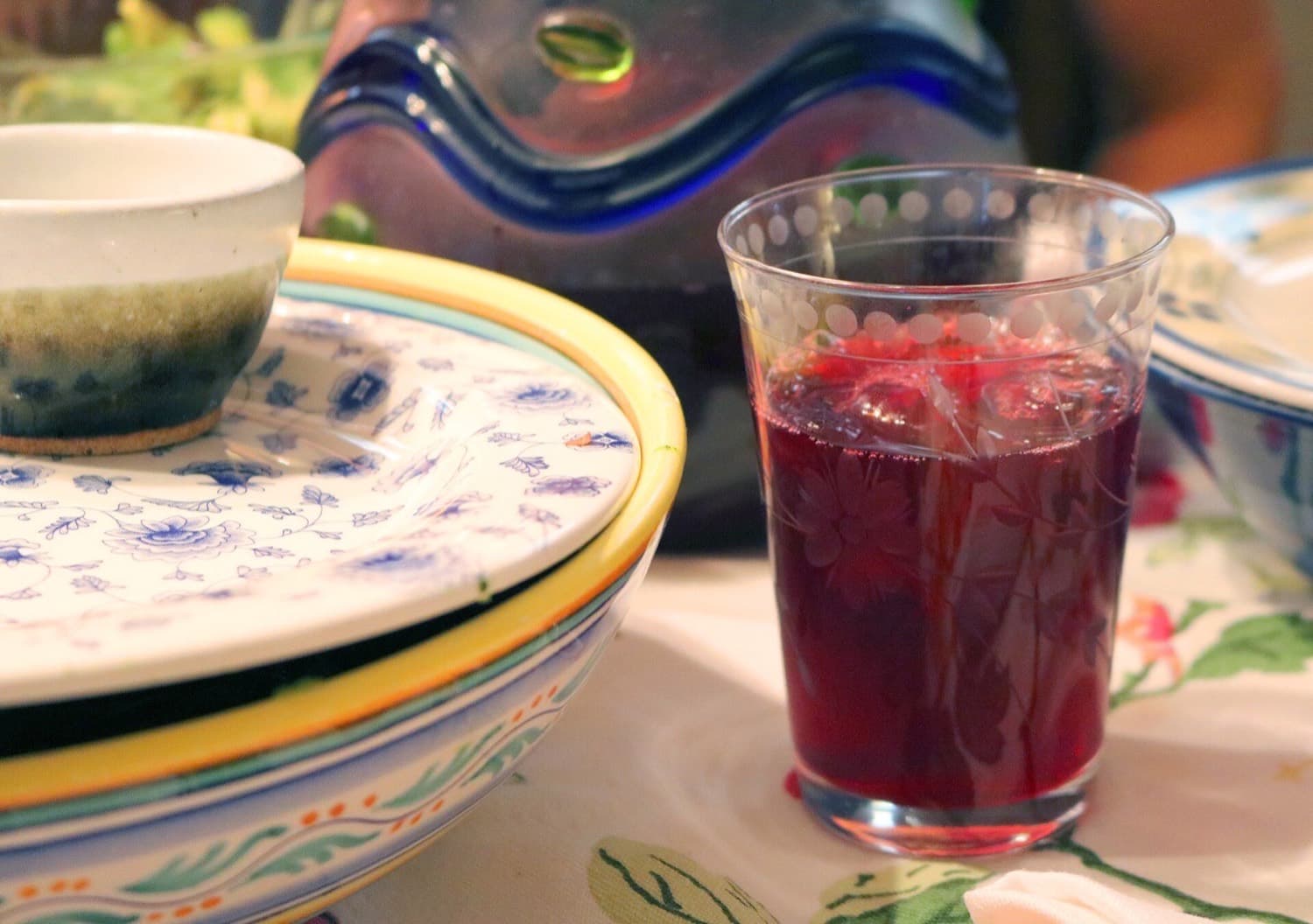
Hibiscus tea turns water an astonishing deep ruby-red within about 60 seconds of steeping — one of the fastest, most dramatic color changes in the whole world of infusions. That vivid crimson cup is tart and cranberry-bright, naturally caffeine-free, and just as good poured over ice as sipped hot.
Made from the dried calyces (the fleshy sepals) of the Hibiscus sabdariffa flower, it is one of the most widely enjoyed herbal drinks on earth, known as agua de Jamaica in Mexico, karkade in Egypt and Sudan, and bissap across West Africa. This guide covers what hibiscus tea tastes like, how to brew it hot and cold, how to tame its tartness, how it is enjoyed around the world, and — kept firmly lifestyle-framed — what to make of the wellness talk around it.
Quick answer
- ✓Hibiscus tea is a caffeine-free tisane made from dried Hibiscus sabdariffa calyces.
- ✓Flavor is tart and cranberry-like, with a striking ruby-red color.
- ✓It brews fast — 5 minutes hot, or a few hours cold-brewed for a smoother cup.
- ✓Sweeten with honey, sugar, or fruit to balance the natural tartness.
- ✓Enjoyed worldwide as agua de Jamaica, karkade, and bissap — hot or iced.
What hibiscus tea is made from
Hibiscus tea is brewed from the dried calyces of Hibiscus sabdariffa, a species also called roselle. These are not the showy petals you might picture — they are the deep-red, fleshy cup-shaped parts that remain after the flower blooms and fades. Dried, they look like dark crimson curls, and they release their color and tartness into water almost immediately.
Because it comes from a flower and not the tea plant, hibiscus is a tisane — a herbal infusion rather than a true tea. That places it in the same broad family covered in our herbal tea guide, alongside chamomile, peppermint, and rooibos. Its two defining traits, the tartness and the color, both come from natural plant acids and pigments (anthocyanins) concentrated in those dried calyces.
Tea & gear for this guide
Hand-matched Amazon picks with strong owner ratings. As an Amazon Associate, Tea & Peace earns from qualifying purchases.
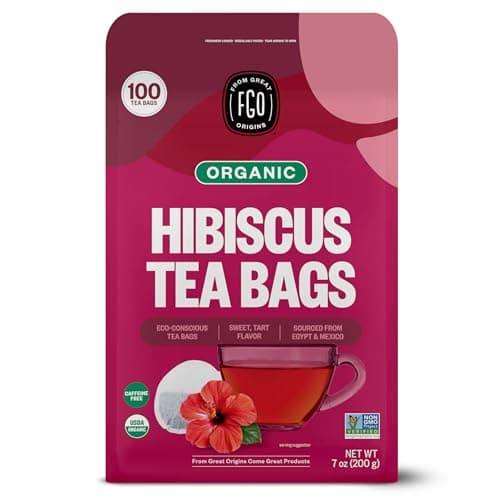
FGO Organic Hibiscus Tea, 100 Count, Eco-Conscious Tea Bags
Tart, ruby-red hibiscus — great cold — 4.6★ across 19,808 ratings.
Shop Now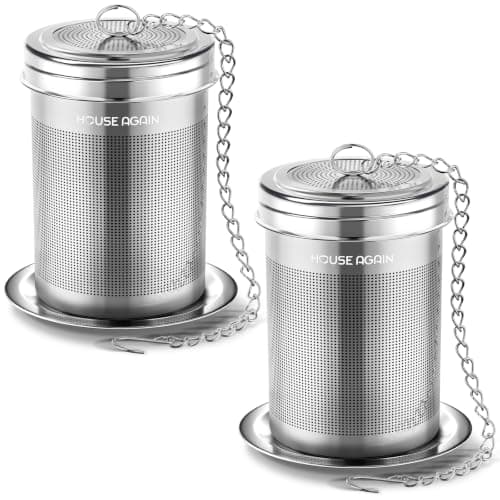
HOUSE AGAIN Tea Infuser, Extra Fine Mesh Tea Infusers for Loose Tea, 18/8
Fine-mesh stainless infuser for any loose tea — 4.6★ across 26,441 ratings.
Shop Now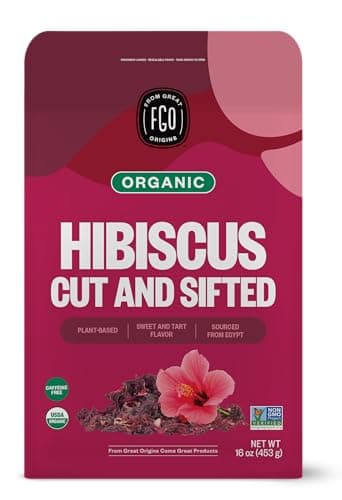
FGO Organic Hibiscus Flowers, Cut and Sifted, 16oz Bulk Resealable Bag
Tart, ruby-red hibiscus — great cold — 4.6★ across 19,808 ratings.
Shop NowProduct prices and availability are accurate as of September 14, 2026 and are subject to change. Any price and availability information displayed on Amazon at the time of purchase will apply.
What hibiscus tea tastes like
The flavor is best summed up in one word: tart. If you like cranberry juice, pomegranate, or sour cherry, hibiscus will feel familiar. It has a clean, fruity acidity with a slightly floral edge and, brewed strong, an almost wine-like depth.
That acidity is the whole personality of the drink. Brewed light, it is refreshingly zippy; brewed strong or steeped long, it becomes intensely sour and needs balancing. Unlike black tea, it has no tannins to turn bitter and no caffeine to add briskness, so the sourness is really the only thing to manage. Most people find their sweet spot by pairing it with a little sweetener and something bright — citrus, ginger, or mint all play beautifully against the tart base.
How to brew hibiscus tea (hot)
Hibiscus is forgiving and quick. A simple hot method:
- Use about 1–2 teaspoons of dried hibiscus (or one tea bag) per 8 oz cup — it is potent, so start on the lighter side.
- Pour fully boiling water, 208–212°F, over the flowers.
- Steep 5 minutes. You will see the red develop within seconds; the flavor deepens over the full steep.
- Strain, then sweeten to taste.
Because there are no tannins, you cannot really 'over-steep' it into bitterness — but you can make it very sour, so taste as you go. For a large batch, a good starting ratio is about 1/4 cup dried hibiscus per quart of water. The same brewing fundamentals that apply to any tisane apply here, dialed to full boiling heat as covered in how to make tea.
How to make iced and cold-brew hibiscus tea
Hibiscus may be at its very best cold. The tartness reads as crisp and thirst-quenching over ice, which is exactly why agua de Jamaica is a summer staple. Two routes:
- Quick iced: brew it hot and strong (double the flowers), sweeten while warm so the sugar dissolves, then pour over a full glass of ice.
- Cold brew: steep hibiscus in cold water in the fridge for 2–4 hours, then strain. This gives an exceptionally smooth, clean cup with a gorgeous jewel color.
Cold brewing takes the edge off without dulling the flavor, and it is nearly impossible to mess up. Our full recipe for cold brew hibiscus tea walks through ratios and add-ins, and the Tea & Peace homepage is our hub for cold-brew methods across every tea. A squeeze of lime and a few mint leaves turn a basic pitcher into something special.
Balancing the tartness: sweeteners and add-ins
Left plain, hibiscus can be bracingly sour for many palates. The good news is that it takes to sweetening and blending better than almost any other tisane. Some reliable pairings:
| Add-in | What it does |
|---|---|
| Honey or sugar | Rounds and softens the acidity |
| Lime or orange | Amplifies the fruity brightness |
| Fresh ginger | Adds warmth and a spicy counterpoint |
| Mint | Cools and freshens, great over ice |
| Cinnamon or clove | Turns it into a warming spiced drink |
| Apple or berry juice | Sweetens naturally and deepens the fruit |
A classic move is hibiscus with a cinnamon stick and a little sugar, served hot in cooler months — essentially the karkade style found across Egypt and Sudan. Start with less sweetener than you think you need; hibiscus tastes sweeter as it cools.
Hibiscus around the world
Few drinks are as globally beloved under as many names. The same ruby infusion turns up on every inhabited continent:
- Mexico & Central America: agua de Jamaica, served cold and sweet, a fixture of taquerias and home kitchens.
- Egypt, Sudan & the Middle East: karkade, drunk hot in winter and iced in summer, often at celebrations.
- West Africa: bissap (Senegal) or zobo (Nigeria), frequently blended with mint, ginger, or pineapple.
- Caribbean: sorrel, a spiced hibiscus drink traditional at Christmas.
This worldwide reach is one reason hibiscus feels so approachable — it is not a niche specialty but an everyday drink for hundreds of millions of people. Trying the regional versions is a low-effort way to travel through a single ingredient.
Caffeine-free, all day long
One of hibiscus tea's most practical virtues is that it contains no caffeine at all. That makes it a genuine any-time drink: with lunch, in the afternoon slump, or in the evening when you would never touch black tea or coffee.
For anyone cutting back on caffeine, hibiscus is a particularly satisfying swap because its bold flavor and rich color make it feel like a 'real' drink rather than a compromise. It also plays well in caffeine-free blends — a little hibiscus adds color and tartness to milder tisanes like rooibos or apple. If your reason for reaching for herbal cups is winding down at night, our calming tea guide covers gentler evening options, though hibiscus's brightness makes it more of a refresher than a sedative.
A lifestyle note on hibiscus 'benefits'
Hibiscus is frequently discussed in wellness circles, and it does contain natural plant compounds like anthocyanins and vitamin C. Some small studies have looked at hibiscus and things like blood pressure, which is why you will see it mentioned often. But it is important to keep this in perspective.
Hibiscus tea is a beverage, not a medicine. Enjoy it for its flavor, color, and ritual, not as a treatment. A few honest caveats:
- Its acidity can bother some people on an empty stomach or with reflux.
- If you take blood-pressure or other medications, or are pregnant, ask a healthcare professional before drinking large, concentrated amounts regularly.
- No single drink 'detoxes' or cures anything.
The reasonable stance is the one we take across the site: a lovely, hydrating, caffeine-free drink that happens to be gorgeous — sipped for pleasure, with any specific health question directed to a professional.
Buying and storing dried hibiscus
Dried hibiscus is inexpensive and widely available — look for it as loose 'flor de Jamaica' in Latin grocery stores, as 'karkade' in Middle Eastern shops, or in the bulk-herb or tea aisle. Loose dried calyces are usually a much better value than boxed bags and let you control strength.
Storage is simple: keep it in an airtight container away from light, heat, and moisture, and use it within about a year for the brightest color and flavor. Good dried hibiscus should look deep burgundy and smell faintly tart and fruity; if it has faded to a dull brown and lost its aroma, it is stale rather than unsafe — still drinkable, just weaker. Because a little goes a long way, even a modest bag makes a lot of tea.
From our testing notes
A concrete brewing observation: hibiscus releases its color almost instantly but its flavor more gradually. In a side-by-side, a 1-minute steep is already deep red but tastes thin, while a 5-minute steep is only slightly darker yet dramatically more tart and full. Color, in other words, is a poor guide to strength here — taste and time are the reliable ones.
Sources & further reading
Frequently asked questions
Does hibiscus tea have caffeine?
No. Hibiscus tea is completely caffeine-free because it is made from a flower rather than the tea plant. That makes it a good choice any time of day, including the evening, when you want flavor without a stimulant.
What does hibiscus tea taste like?
Tart and fruity, very much like cranberry or sour cherry, with a slightly floral note and a striking ruby-red color. Brewed strong it becomes quite sour, which is why most people add a little sweetener or pair it with citrus, ginger, or mint.
How do you make hibiscus tea less sour?
Use a little less hibiscus, steep for a shorter time, and sweeten with honey or sugar while the tea is still warm so it dissolves fully. Adding fruit juice, orange, or a cinnamon stick also softens and rounds out the tartness.
Can I drink hibiscus tea every day?
Many people enjoy it daily as a caffeine-free everyday drink. If you take medication, are pregnant, or have concerns like reflux (its acidity can be an issue for some), it is worth checking with a healthcare professional. It is a beverage, not a treatment.
Is hibiscus tea better hot or iced?
Both are great, but many people find it shines iced — the tartness reads as crisp and refreshing, which is why cold agua de Jamaica is so popular. Cold brewing for a few hours in the fridge gives an especially smooth, clean cup.
What is agua de Jamaica?
It is the Mexican name for cold, sweetened hibiscus tea, a beloved everyday drink served in homes and taquerias. 'Jamaica' (pronounced ha-MY-kah) refers to the hibiscus flower itself, not the country. Karkade and bissap are the equivalent drinks in Egypt and West Africa.
Is hibiscus tea good for blood pressure?
You will see this claim often, and some small studies have explored it, but hibiscus tea is a beverage and not a substitute for medical care. If you are managing blood pressure or take medication, talk to your doctor rather than relying on tea. Enjoy it for its taste, not as therapy.
Can hibiscus tea interact with medications?
It can, and this is worth taking seriously rather than dismissing. Hibiscus has a mild blood-pressure-lowering effect, so it may compound the action of antihypertensive medication, and there's some evidence it affects how the body processes certain drugs. If you take blood pressure medication, diuretics, or are pregnant, ask a pharmacist or doctor before making it a daily habit. An occasional cup is not the concern; a liter a day alongside medication is worth a conversation.