
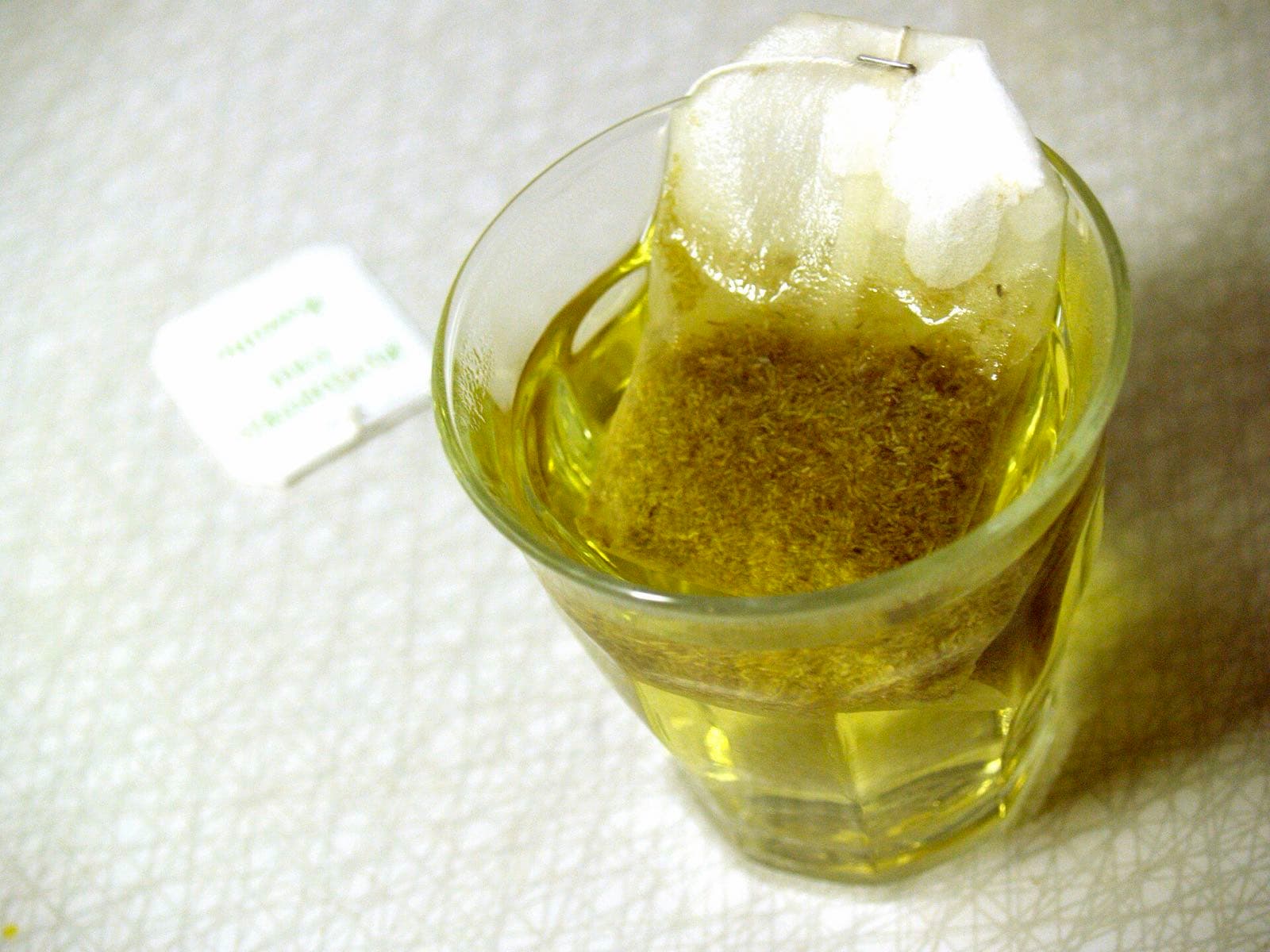
Lift the lid on a cup of chamomile tea and the first thing that reaches you is the smell: soft, honeyed, faintly like baked apple, rising from a liquor the color of pale straw. It is the cup many people reach for when the day is winding down, partly because it is naturally caffeine-free and partly because the flavor itself is so gentle that it asks nothing of you.
That gentleness can make chamomile easy to overlook, and easy to brew badly. A rushed two-minute dunk gives you warm, faintly grassy water; a properly covered, full-length steep gives you something round and almost sweet. This guide covers what the plant actually is, what to expect in the cup, how to brew it hot and how to get a chilled version safely, how to buy good flowers, and what the US National Institutes of Health does and does not say about it. Throughout, the numbers come from named sources you can check.
A daisy in your teacup: the plant behind the brew
The chamomile tea most people drink is made from German chamomile, Matricaria chamomilla (the NIH also lists the synonyms Matricaria recutita and Chamomilla recutita). It is an annual member of the daisy family, Asteraceae, native to southern and eastern Europe and now grown on every continent. The plant stands roughly 15 to 60 cm (6 to 24 in) tall and carries small flower heads with white petals around a domed yellow center, which is exactly what you see when you tip a pouch of loose chamomile into your palm.
There is a second plant sold under the same name: Roman chamomile, Chamaemelum nobile. The NIH's National Center for Complementary and Integrative Health (NCCIH) notes the two types and focuses its fact sheet on the German one, which is also the one that dominates supermarket tea bags. If a box simply says "chamomile tea," it almost always contains German chamomile; specialty sellers who use Roman chamomile usually say so on the label.
The name itself is a clue to the aroma. It comes from the Greek chamaimēlon, "earth-apple," a reference to the apple-like scent of the plant. The flowers also carry a small amount of essential oil, which turns blue when distilled because of a compound called chamazulene. That is why German chamomile is sometimes called "blue chamomile," even though nothing in your cup will look blue.
Because chamomile tea is not made from Camellia sinensis, the tea plant, it is technically a tisane or herbal infusion rather than a "true" tea. You will see both words used; our herbal tea guide explains the distinction and where chamomile sits among the other popular tisanes.
Tea & gear for this guide
Amazon picks matched to this guide. As an Amazon Associate, Tea & Peace earns from qualifying purchases.
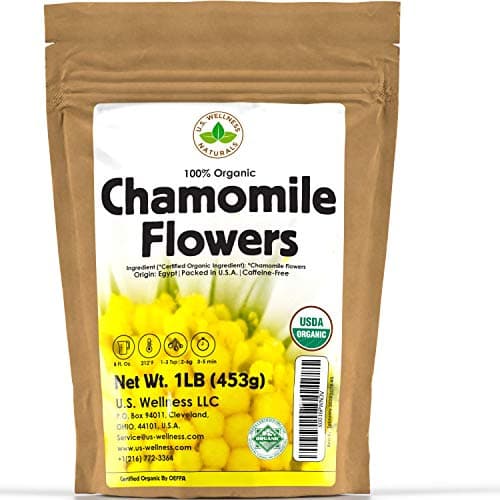
Chamomile Tea 1LB (16Oz) 100% CERTIFIED Organic
Whole chamomile flowers taste far more of chamomile than the dust in some bags, as the buying section notes.
Shop Now

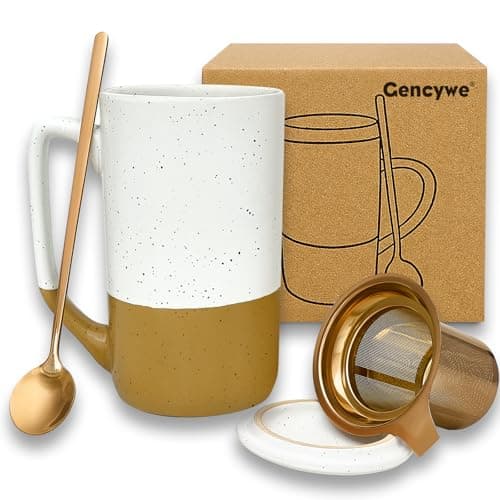
Gencywe Ceramics Large Tea Cup with Loose Leaf Infuser
A lidded infuser mug. Covering it while it steeps keeps the aroma in.
Shop Now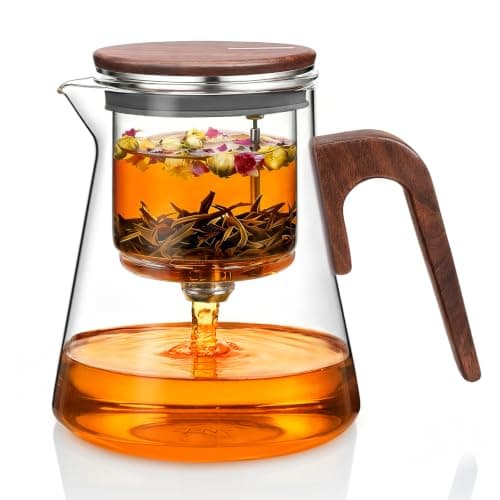
ZENS Magnetic Glass Infuser Teapot for Loose Leaf Tea
A pitcher with an infuser for the chilled-chamomile section.
Shop Now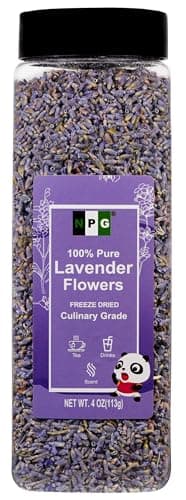
NPG Freeze Dried Lavender Flowers 4 Oz
Lavender, a common chamomile pairing in evening blends.
Shop NowProduct prices and availability are accurate as of October 29, 2026 and are subject to change. Any price and availability information displayed on Amazon at the time of purchase will apply.
What does it taste like, and why does it vary so much?
Good chamomile tea tastes mellow, floral and lightly sweet, with that apple note in the aroma and a soft, almost hay-like finish. It has none of the astringent grip of black tea, because it contains no tea tannins to speak of, and it is not sour like hibiscus. Most people describe it as soothing in flavor before they ever think about anything else.
The variation between brands is real, and it comes mostly from what is inside the bag:
- Whole flower heads keep more of their aroma than finely milled material. Loose chamomile that still looks like tiny dried daisies usually brews a rounder, sweeter cup.
- Fannings and dust (the fine powder in many standard bags) brew fast but taste flatter and can turn slightly bitter if left too long.
- Freshness matters more than people expect. The aroma lives in volatile oils, so a box that has sat open for months tastes duller than a sealed one.
- Blends change the profile entirely. Chamomile with lavender, lemon balm, mint or honey flavoring is common, and many "sleep" blends are mostly something else with chamomile as a supporting note.
- Brewing time is the variable you control. A short steep under-extracts the honeyed body and leaves only a grassy edge.
If your last chamomile tea tasted like nothing, the fix is usually a fuller steep with the cup covered, or a switch to whole flowers. If it tasted medicinal or bitter, try a fresher box, fewer flowers, or a blend with a little mint or citrus.
Brewing a hot cup the way the tea association suggests
The Tea Association of the USA's steeping chart groups herbal teas together at 212°F (100°C) for 3 to 6 minutes, with one teaspoon of loose tea or one tea bag per 6 oz cup of water. Chamomile tea sits comfortably inside that guidance, and the full boil is not just about flavor. The UK Tea & Infusions Association advises that herbal and fruit infusions are intended to be brewed with freshly boiled water.
In practice, a reliable hot cup looks like this. Bring fresh, cold water to a full boil. Put one bag, or about a teaspoon of whole dried flowers, in a mug or pot for each 6 oz of water. Because whole flower heads are light and fluffy, a heaping teaspoon of them weighs less than a level teaspoon of dense black tea, so do not be shy with loose flowers. Pour the boiling water over, cover the cup with a saucer, and wait. Covering matters more for chamomile than for most teas, because the aromatic oils are exactly what you are trying to keep in the cup rather than in the kitchen air.
Start tasting at the 5-minute mark. Chamomile is forgiving, and if you prefer a fuller cup you can let it go to the top of the 3 to 6 minute window. Strain loose flowers through a fine mesh; the tiny florets can slip through coarse infusers. Honey and a thin slice of lemon are the classic additions, and a splash of milk works surprisingly well with whole-flower chamomile.
A chilled glass without cutting corners
Chamomile tea makes a lovely iced drink, but it is not a tea you should simply drop into cold water and leave overnight unless the package specifically tells you to. The UK Tea & Infusions Association, citing the European trade body Tea & Herbal Infusions Europe, is explicit: herbal and fruit infusions labeled as cold brew products are designed to be prepared with cold water, but if a product is not labeled that way, you should always prepare it first with freshly boiled water, even if you plan to cool it and pour it over ice. Dried flowers are an agricultural product, and the boil is the step that makes the infusion safe.
So the method for most chamomile tea is "hot bloom, then chill." Brew a concentrated batch with boiling water, using roughly double the flowers for the volume, cover it and steep for the full time. Strain, let it cool on the counter for a short while, then refrigerate. Pour over plenty of ice, which dilutes the extra strength back to normal. Keep the pitcher in the fridge at or below 40°F and treat it like any other brewed drink.
If you want true cold brewing, look for a chamomile tea product sold as a cold-brew bag and follow its instructions. Our dedicated guide to cold brew herbal tea walks through both approaches and explains the safety reasoning in more depth. And if your heart is set on the fully cold, overnight style with real tea leaves, our main cold brew tea guide is where that method shines, since Camellia sinensis teas are typically handled differently from dried herbs.
Buying chamomile that actually tastes of something
Most of the disappointment people feel with chamomile tea comes from the box, not the brewing, so it is worth a minute at the shelf. Start with the ingredient list. A single-ingredient product should say chamomile flowers and nothing else; a blend should list its ingredients in descending order, so you can tell whether chamomile is the main event or a garnish. If added flavorings or sugar are present, the UK Tea & Infusions Association notes these should appear on the ingredients list.
Next, look at the form. Whole flower heads are easy to recognize: small, intact, yellow centers with some white petals still attached. They tend to cost more per cup but are the best route to the sweet, apple-like aroma. Standard chamomile tea bags are convenient and perfectly pleasant when fresh, but because the material is finely cut, it loses aroma faster once the box is opened. Pyramid bags often sit somewhere between the two.
Then think about storage. Chamomile's appeal lives in its volatile oils, which fade with air, light and warmth. Buy a size you will finish within a reasonable time, keep it in an airtight, opaque container away from the stove, and do not store it next to strong spices or coffee, since dried flowers absorb odors readily. If a pouch smells of almost nothing when you open it, it will brew a cup of almost nothing.
Finally, if you are allergy-prone, read the next section before you buy. The same daisy-family heritage that gives chamomile its charm is also the reason some people should approach it carefully.
What the NIH says about chamomile and health
Chamomile has a long reputation. NCCIH notes that it was described in ancient medical writings and was an important medicinal herb in ancient China, Egypt, Greece and Rome, and that today it is promoted for everything from the common cold and indigestion to anxiety and insomnia. The honest summary of the modern evidence is more modest than the reputation.
According to NCCIH, studies of chamomile for specific conditions have not produced sufficient reliable evidence to rate clinical usefulness. Some preliminary studies suggest a chamomile dietary supplement might help with generalized anxiety disorder, but that is a supplement, not a mug of tea. On sleep specifically, NCCIH says there is very little information, and that a 2019 review found one study on insomnia, which showed no benefit. That does not stop a warm, caffeine-free drink from being a pleasant part of an evening routine; it simply means the comfort of chamomile tea is the ritual, not a proven sleep effect.
On safety, NCCIH describes chamomile as likely safe when used orally in amounts commonly found in teas and other foods. Side effects are uncommon but can include nausea, dizziness and allergic reactions, including severe ones. People allergic to related plants such as ragweed, chrysanthemums, marigolds or daisies are more likely to react. NCCIH also notes chamomile might have some estrogen-like effects, possible interactions with birth control pills, warfarin and some other drugs, and that little is known about its safety during pregnancy or breastfeeding.
Tea is a beverage, not a treatment. If you take any medication, have an allergy history, are pregnant, or are drinking chamomile hoping to manage a health condition, talk with your doctor or pharmacist first.
Where chamomile fits in an evening routine
Seen plainly, chamomile tea earns its place for three practical reasons. It has no caffeine: USDA FoodData Central lists brewed chamomile at 0 mg caffeine and about 1 calorie per 100 g, which makes it one of the few warm drinks you can have at any hour without thinking about your caffeine total. Chamomile tea also has a gentle flavor that does not need sugar to be enjoyable. And it is quick, needing only a kettle and five minutes.
That combination makes it a natural anchor for a wind-down habit. Many people use the act of boiling water and waiting for the steep as a signal that work is over, the same way others use a short walk or a book. If that idea appeals, best teas for sleep compares chamomile with other caffeine-free options such as rooibos and peppermint.
A few small habits make the cup better. Use a lidded mug or a small pot so the aroma stays in. Drink chamomile tea warm rather than scalding, which lets the delicate honey and apple notes come through. If you like it sweet, a teaspoon of honey is enough; chamomile has its own soft sweetness. And if you find yourself reaching for it in summer, brew a concentrated pot after dinner, chill it overnight, and you have a ready iced drink for the next afternoon, made the safe way with a proper boil first.
Worth knowing
Reference point, built from cited numbers: USDA FoodData Central lists brewed chamomile at 0 mg caffeine per 100 g, against 20 mg for brewed black tea and 12 mg for brewed green tea in the same database. Combined with the Tea Association of the USA's 3 to 6 minute herbal steep, that makes chamomile one of the few warm drinks you can brew at full strength late in the evening without adding to your caffeine total.
Sources & further reading
- NIH National Center for Complementary and Integrative Health — Chamomile fact sheet (read 2026-10-11)
- USDA FoodData Central — Beverages, tea, herb, brewed, chamomile (fdcId 174156: 0 mg caffeine per 100 g) (read 2026-10-11)
- Tea Association of the USA — How to Brew steeping guide (herbal 212°F, 3 to 6 minutes) (read 2026-10-11)
- UK Tea & Infusions Association — FAQs about infusions (boiled water unless labeled cold brew) (read 2026-10-11)
- Wikipedia — Matricaria chamomilla (botany, etymology) (read 2026-10-11)
- CDC — Four Steps to Food Safety (refrigerator at or below 40°F) (read 2026-10-11)
Frequently asked questions
Does chamomile tea have caffeine?
No. USDA FoodData Central lists brewed chamomile tea at 0 mg of caffeine, because it is made from dried chamomile flowers rather than the tea plant. Check the label on blends, though, since some mix chamomile with green or black tea.
Is chamomile tea really a tea?
Not botanically. True teas come from Camellia sinensis; chamomile comes from a daisy-family flower, so it is technically an herbal infusion or tisane. In everyday speech, though, almost everyone calls it chamomile tea.
How long should I steep chamomile tea?
The Tea Association of the USA recommends 3 to 6 minutes at 212°F (100°C) for herbal teas. For chamomile, covering the cup and steeping toward the longer end of that range gives a fuller, sweeter cup.
Can chamomile tea help me sleep?
The evidence is thin. NCCIH says there is very little information on chamomile and insomnia, and a 2019 review found one study on insomnia that showed no benefit. Many people still enjoy it as part of a calm evening routine, but for ongoing sleep problems talk to a health professional.
Who should avoid chamomile tea?
NCCIH notes that people allergic to ragweed, chrysanthemums, marigolds or daisies are more likely to react to chamomile. It also flags possible interactions with warfarin, birth control pills and some other medicines, and says little is known about use during pregnancy or breastfeeding. Ask your doctor or pharmacist if any of those apply to you.
Can I cold brew chamomile tea overnight?
Only if the product is labeled for cold brewing. The UK Tea & Infusions Association advises preparing other herbal infusions with freshly boiled water first, even if you plan to chill them. Our cold brew herbal tea guide explains the hot-bloom-then-chill method.
What is the difference between German and Roman chamomile?
German chamomile is Matricaria chamomilla, the annual plant used in most tea bags. Roman chamomile is Chamaemelum nobile, a different species. NCCIH lists both, and products using Roman chamomile usually say so.
What does chamomile tea go well with?
Honey and a slice of lemon are the classic pairings. Chamomile also blends nicely with mint, lemon balm, lavender and citrus peel, and a splash of milk works with fuller, whole-flower brews.
Is loose chamomile better than tea bags?
Whole flower heads usually keep more aroma than the finely cut material in standard bags, so they tend to taste sweeter and rounder. Fresh bags are perfectly good, though, and are easier to brew consistently.
Can I drink chamomile tea every day?
NCCIH describes chamomile as likely safe in the amounts commonly found in teas and other foods. If you have allergies to daisy-family plants, take medications, or are pregnant, check with a clinician about regular use.
Why does my chamomile tea taste bitter?
Bitterness usually comes from very fine, dusty material steeped too long, or from old flowers that have lost their sweet aroma. Try a fresher box or whole flowers, and taste at the 5-minute mark rather than leaving the bag in indefinitely.