
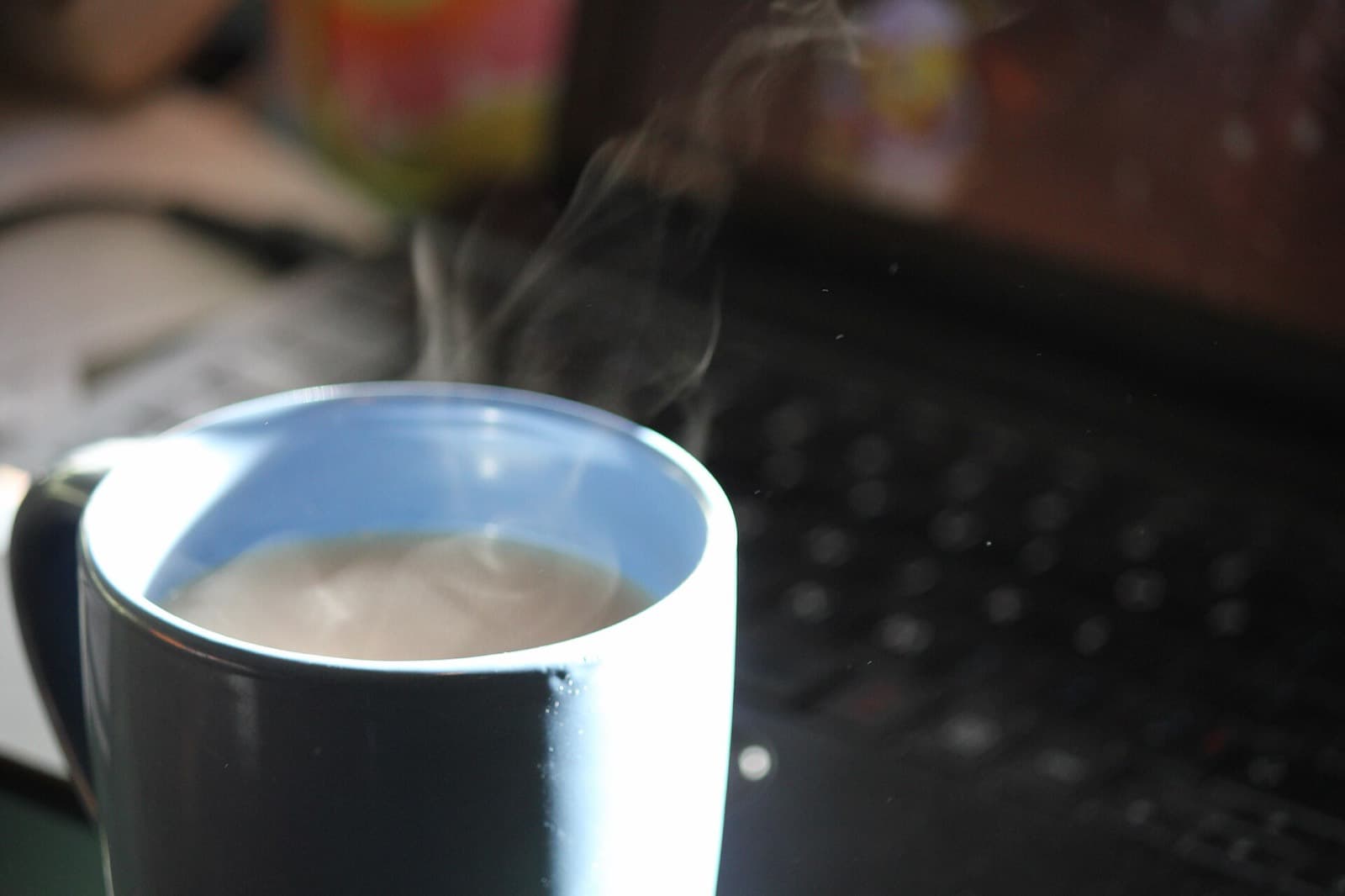
The safe temperature to drink tea is best understood as a ceiling rather than a single number: the World Health Organization's cancer agency, IARC, defines "very hot" beverages as anything consumed above 65°C (149°F), and classified drinking them as probably carcinogenic to humans in 2016. That line is about the temperature of the tea as it reaches your mouth — not the temperature of the water you brew it with, which for black tea is often 90°C or more.
Those two temperatures get confused constantly. Brewing heat is about extraction: hot water pulls flavor out of the leaf. Sipping heat is about your mouth, throat and skin. A cup can be brewed correctly at near-boiling and still be too hot to drink for several minutes afterward. Research measuring real mugs of tea found black tea still above 65°C after ten minutes of cooling.
This guide sets out what the evidence actually says — the IARC evaluation, the large Iranian studies behind the 60°C and 65°C figures, burn data on scalds — and what it does not say, then turns it into practical habits. It is general information about a beverage, not medical advice.
Quick answer
- ✓IARC (WHO) defines 'very hot' drinks as above 65°C / 149°F and classifies drinking them as probably carcinogenic (Group 2A).
- ✓Brewing temperature (often 90–98°C for black tea) is not drinking temperature; let the cup cool before sipping.
- ✓In one study, black tea in a 230 ml ceramic mug was still above 65°C after 10 minutes; milk lowered the starting temperature.
- ✓Scalds happen fast: CPSC says 140°F (60°C) water can cause third-degree burns in six seconds.
- ✓Waiting a few minutes, adding milk, or checking with a thermometer are simple ways to drink below the 65°C line.
Brewing Temperature and Drinking Temperature Are Different Numbers
Tea is made hot because heat extracts flavor. The UK Tea & Infusions Association recommends water at 90–98°C for black tea and around 80°C for green tea. Those are brewing targets — the temperature of the water when it meets the leaf — and they are well above any temperature anyone recommends drinking at.
Drinking temperature is what matters for safety, and it is a separate question. The International Agency for Research on Cancer (IARC), the cancer agency of the World Health Organization, drew its line at the drinking end: in its 2016 evaluation, "very hot" refers to any beverage consumed at a temperature above 65°C. Cooling between kettle and lips is the whole gap between a correct brew and a safe sip.
That gap also explains why the same advice can sound contradictory. Our tea water temperature chart tells you to use boiling or near-boiling water for black and herbal tea, and this page tells you not to drink tea above 65°C. Both are true. You brew hot, then you wait.
The distinction matters most for people who drink tea quickly, in large quantities, or straight from a freshly poured pot — habits the research below links to higher risk.
Tea & gear for this guide
Amazon picks matched to this guide. As an Amazon Associate, Tea & Peace earns from qualifying purchases.
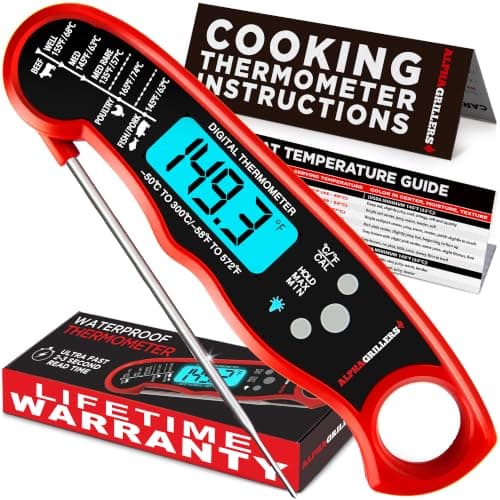
Alpha Grillers Instant Read Meat Thermometer Digital
An instant-read thermometer to see whether a cup is under the 65°C (149°F) line.
Shop Now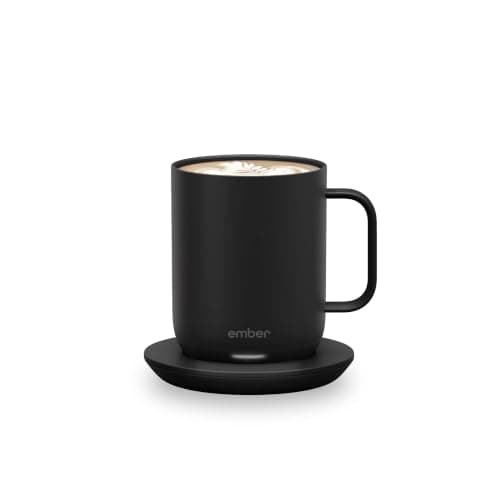
Ember Temperature Control Smart Mug 2
A temperature-control mug you can set to a sipping temperature.
Shop Now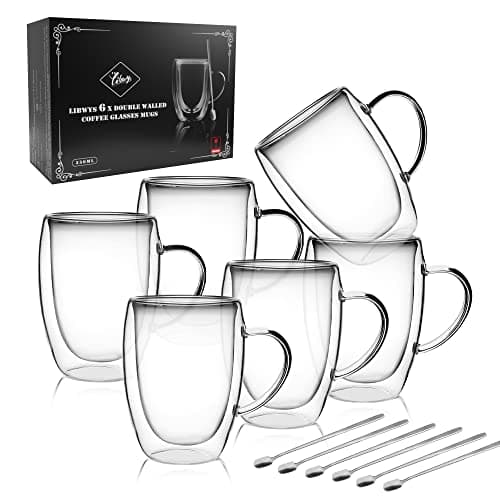
LIBWYS 6 Pack Double Walled Coffee Cups Glasses Mug 12oz Borosilicate
Double-wall glasses stay cool to hold, which helps with the scald section.
Shop Now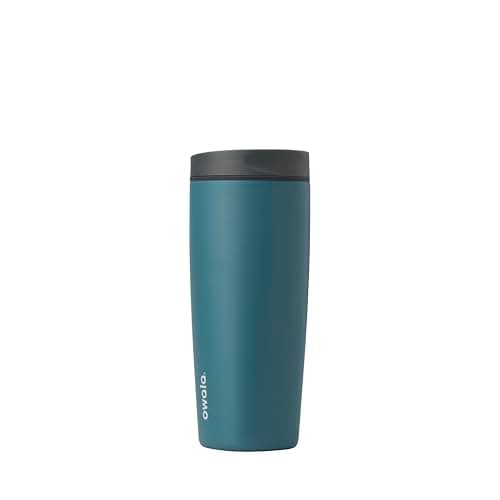
Owala SmoothSip Slider Insulated Stainless Steel Coffee Tumbler
A spill-proof lid, from the section on children, older adults and spills.
Shop Now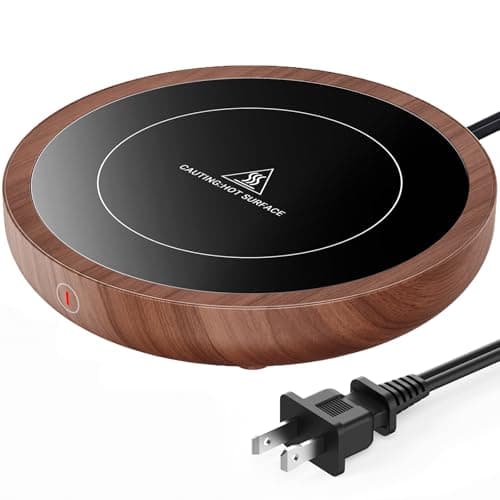
SWEETFULL Coffee Mug Warmer, Electric Cup Warmer for Desk
A mug warmer holds a cup warm, not scalding, while it sits.
Shop Now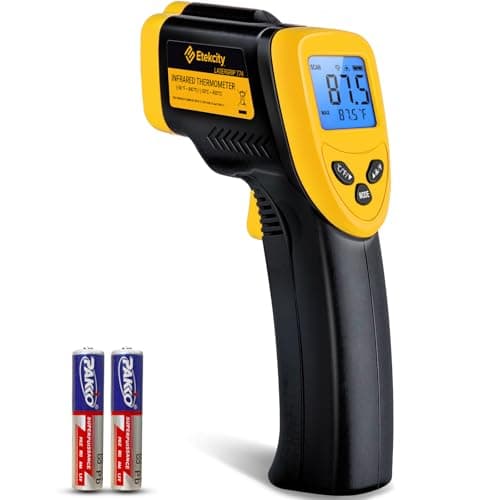
Etekcity Infrared Thermometer Laser Temperature Gun 774
An infrared thermometer to check a cup's temperature without touching the tea.
Shop NowProduct prices and availability are accurate as of October 29, 2026 and are subject to change. Any price and availability information displayed on Amazon at the time of purchase will apply.
What the WHO's Cancer Agency Actually Concluded
On 15 June 2016, an IARC working group of 23 scientists published its evaluation of coffee, maté and very hot beverages, summarized that day in The Lancet Oncology and later in full as Volume 116 of the IARC Monographs. The key points, as stated in IARC's press release:
- Drinking very hot beverages was classified as probably carcinogenic to humans (Group 2A), specifically for cancer of the oesophagus.
- The classification was based on limited evidence from epidemiological studies showing positive associations between oesophageal cancer and drinking very hot beverages, plus limited evidence from animal experiments with very hot water.
- Studies in places such as China, Iran, Turkey and South America, where tea or maté is traditionally drunk at about 70°C, found that oesophageal cancer risk increased with the temperature at which the beverage was drunk.
- IARC's director said the results suggest it is the temperature, rather than the drinks themselves, that appears to be responsible.
- Drinking coffee, and drinking maté at temperatures that are not very hot, were both "not classifiable" (Group 3).
Two things the evaluation did not say are just as important. IARC stated that the proportion of oesophageal cancer cases that may be linked to very hot beverages is not known. And IARC's own explainer on Volume 116 states that its classification indicates the strength of the scientific evidence that something can cause cancer, and does not give any indication of the level of risk associated with exposure.
So the honest summary is: there is enough evidence to treat very hot drinks as a probable hazard, and the line IARC used is 65°C at the point of drinking. Tea itself is not the concern.
The Golestan Studies Behind the 60°C and 65°C Figures
Much of the measured evidence on tea temperature comes from Golestan province in northern Iran, a region with high rates of oesophageal squamous cell carcinoma and a tradition of drinking a lot of hot black tea. Two studies are especially useful because researchers measured temperatures rather than only asking about them.
Islami et al., BMJ, 2009. In a cohort of 48,582 people, nearly all drank black tea regularly, averaging over one litre a day. Measured drinking temperatures were below 60°C for 39.0%, 60–64°C for 38.9%, and 65°C or higher for 22.0%. In the linked case-control study (300 cancer cases, 571 controls), drinking "hot" tea was associated with roughly twice the odds of oesophageal cancer compared with lukewarm or warm tea (odds ratio 2.07), and "very hot" tea with about eight times the odds (8.16). Timing told the same story: compared with waiting four or more minutes after pouring, drinking within 2–3 minutes had an odds ratio of 2.49, and within two minutes, 5.41.
Islami et al., International Journal of Cancer, 2019/2020. This prospective study followed 50,045 people aged 40–75 for a median of 10.1 years, with 317 new cases. Objectively measured tea temperature of 60°C or higher was associated with a 41% higher risk (hazard ratio 1.41) compared with below 60°C. Drinking 700 ml or more a day at 60°C or above was associated with about a 90% increase compared with drinking less than 700 ml a day below 60°C.
These are associations in a specific population with very high consumption, and smoking, alcohol and other factors also cause oesophageal cancer. But they point in one consistent direction: hotter, faster and more is riskier, and a few minutes of waiting is part of the difference.
Scalds: The More Immediate Hazard
Long-term cancer risk is not the only reason drinking temperature matters. Hot tea burns skin and mouths quickly, and the time it takes is shorter than most people assume.
The US Consumer Product Safety Commission gives these figures for hot water and adult skin:
| Water temperature | Exposure that can cause a third-degree burn (most adults) |
|---|---|
| 150°F (66°C) | 2 seconds |
| 140°F (60°C) | 6 seconds |
| 130°F (54°C) | 30 seconds |
| 120°F (49°C) | 5 minutes |
The CPSC notes that most tap-water scald injuries and deaths involve older adults and children under five, and recommends household water heaters be set to 120°F.
Freshly made tea is far hotter than any row in that table. A 2008 analysis in the journal Burns (Brown and Diller, University of Texas at Tyler) states that tea, hot chocolate and coffee are frequently served at 160–185°F (71–85°C), and that brief exposures in that range can cause significant scald burns. A spilled cup of fresh tea is a burn hazard measured in seconds, not minutes.
That is one more reason to treat "let it cool" as part of making tea, not an optional extra — and to keep freshly poured cups, teapots and kettles out of reach of small children.
How Hot Is a Freshly Made Cup of Tea?
The average hot cup of tea starts well above the 65°C line, and a published measurement shows how far above.
A 2010 study at the McIndoe Burns Centre in East Grinstead, UK (Jamnadas-Khoda et al., Burns) made common drinks under controlled conditions — 230 ml ceramic mugs, water boiled in an electric kettle, teabags, a room held at 22°C — and recorded temperatures over ten minutes. Its findings:
- Milky drinks started coolest, at 75–77°C.
- Black tea and black coffee stayed above 65°C even after cooling for ten minutes.
- Adding sugar made no difference to the cooling rate.
- Skimmed and full-fat milk cooled at very similar rates.
- Adding 10 ml of milk rather than 5 ml lowered the starting temperature and made the drink cool faster.
The authors concluded that a cup can still cause a full-thickness burn after ten minutes of cooling or after adding cold milk.
Together with Brown and Diller's 160–185°F serving range, that means a fresh cup without milk can take longer than ten minutes to drop below 65°C.
How Fast Does Tea Cool? What Is Measured and What Isn't
People often want a simple timetable — how hot is tea after 5 minutes, 10, 20? The honest answer is that the measured data covers only part of that range, and the rest depends heavily on your cup.
What is measured:
- At 10 minutes, black tea in a 230 ml ceramic mug in a 22°C room was still above 65°C (Jamnadas-Khoda et al., 2010).
- With milk, the starting temperature was lower (75–77°C for milky drinks) and more milk cooled the drink faster.
- Time from pouring to drinking matters in real life: in the Golestan studies, drinking within two minutes of pouring was associated with higher risk than waiting four minutes or more (BMJ 2009), and drinking within two minutes versus six or more (International Journal of Cancer).
What is not measured in any source we could verify: a reliable cooling curve for tea at 15 or 20 minutes in typical home conditions. That curve changes with the size and material of the mug, whether it was pre-warmed, whether it has a lid, how full it is and the room temperature — so a single "after 20 minutes it is X degrees" figure would be invented precision. We have chosen not to print one.
The practical solution is a cheap one: a food thermometer. Check your own usual mug once at 5, 10 and 15 minutes, and you will know your own cooling curve far better than any general table could tell you. If that is too fussy, the evidence-backed habits are simpler — wait several minutes, add milk if you take it, and don't sip from a just-poured cup.
The Temperatures That Matter, in One Table
Every number below comes from a source cited on this page. It is a reference, not a recommendation to aim for any particular figure.
| °C | °F | What it is | Source |
|---|---|---|---|
| 90–98 | 194–208 | Recommended brewing water for black tea | UK Tea & Infusions Association |
| ~80 | ~176 | Recommended brewing water for green tea | UK Tea & Infusions Association |
| 71–85 | 160–185 | Typical serving temperature of tea and coffee | Brown & Diller, Burns 2008 |
| 75–77 | 167–171 | Starting temperature of milky drinks in a 230 ml mug | Jamnadas-Khoda et al., Burns 2010 |
| ~70 | ~158 | Temperature at which tea or maté is traditionally drunk in high-risk regions | IARC press release, 2016 |
| above 65 | above 149 | IARC's definition of "very hot" when consumed | IARC press release, 2016 |
| 60 | 140 | Threshold used in the Golestan prospective study; also, CPSC: third-degree burn in 6 seconds | Islami et al. 2019; CPSC |
| 60 ± 8.3 | 140 ± 15 | Preferred drinking temperature of coffee in a 300-person dataset | cited in Brown & Diller 2008 |
| ~57.8 | ~136 | Modelled optimum serving temperature balancing taste and scald risk (coffee) | Brown & Diller 2008 |
| 49 | 120 | CPSC-recommended maximum for household hot water | CPSC |
Read from top to bottom, the table shows the journey a cup of tea makes: brewed in the 80s and 90s, served in the 70s and low 80s, and only reaching the low 60s and below after it has had time to cool. The safe temperature to drink tea, on the IARC definition, sits somewhere below the 65°C row — and the comfortable temperature many people actually prefer, judging by the coffee data, sits around 60°C.
Simple Ways to Drink Tea Below 65°C
None of this means giving up hot tea. It means adding a pause between the pot and the first sip.
- Wait. The Golestan data compared drinking within two minutes of pouring with waiting four to six minutes or more. A few minutes is a small price.
- Add milk if you take it. Jamnadas-Khoda's measurements found milky drinks started at 75–77°C and that a larger splash cooled the drink faster.
- Take small first sips. If the first sip is uncomfortable, the tea is telling you something.
- Measure once. A food thermometer in your usual mug, once, replaces guesswork with your own numbers.
- Go cold when the weather allows. Iced tea and cold brew sidestep the issue entirely; our cold brew tea hub and how to make iced tea guide cover both, and can you drink green tea cold covers what changes when a hot-brewed cup cools all the way.
What doesn't help: brewing black tea with cooler water to make it "safer." That only makes it thin, and the cup still has to cool. Brew at the temperature the tea needs, then wait.
Children, Older Adults and Spills
The groups most at risk from hot drinks are the ones least able to protect themselves from spills.
The Jamnadas-Khoda paper opens with the scale of the problem in the UK: scalds are the commonest cause of paediatric burns leading to hospital admission, most children's scalds happen in the kitchen (49%), and about three children under five a day are scalded by pulling a cup of a hot beverage onto themselves. Its authors argue for better caregiver education precisely because a cup that has been sitting for ten minutes, or has had milk added, can still cause a serious burn.
The CPSC's tap-water guidance makes the same point about age: most scald injuries and deaths involve older adults and children under five. Its 120°F recommendation for household water heaters exists because thinner or less responsive skin burns at lower temperatures and in less time.
Simple precautions follow from that:
- Keep hot cups, teapots and kettle cords away from table and counter edges.
- Don't hold a hot drink while holding a child.
- Use a lidded mug when carrying tea around the house.
- For older relatives with reduced grip or sensation, a lidded, stable mug and a cooler serving temperature reduce both spill and burn risk.
This page is general information about a beverage, not medical advice. For a burn, follow first-aid guidance and seek medical care for anything more than a minor scald. If you have symptoms such as difficulty or pain when swallowing, or concerns about cancer risk, talk to a doctor.
Worth knowing
Reference point (compiled from cited sources, not a kitchen test): put the numbers in order and a cup of black tea makes a long trip — brewed at 90–98°C (UK Tea & Infusions Association), served at roughly 71–85°C (Brown & Diller 2008), still above 65°C ten minutes later in a 230 ml ceramic mug (Jamnadas-Khoda 2010) — before it falls under IARC's 65°C 'very hot' line. The waiting, not the brewing, is where drinking temperature is decided.
Sources & further reading
- IARC (WHO) Press Release No. 244, 'IARC Monographs evaluate drinking coffee, maté, and very hot beverages', 15 June 2016 — 'very hot' = above 65°C; Group 2A (read 2026-10-11)
- IARC — 'Debunking the myths of the Monographs: Volume 116' (classification indicates strength of evidence, not level of risk) (read 2026-10-11)
- Loomis D. et al., 'Carcinogenicity of drinking coffee, mate, and very hot beverages', Lancet Oncol 2016;17(7):877–878 (read 2026-10-11)
- Islami F. et al., 'Tea drinking habits and oesophageal cancer in a high risk area in northern Iran', BMJ 2009;338:b929 (read 2026-10-11)
- Islami F. et al., 'A prospective study of tea drinking temperature and risk of esophageal squamous cell carcinoma', Int J Cancer 2020;146(1):18–25 (read 2026-10-11)
- Brown F., Diller K.R., 'Calculating the optimum temperature for serving hot beverages', Burns 2008;34(5):648–54 (read 2026-10-11)
- Jamnadas-Khoda B. et al., 'How would you like your tea, vicar?', Burns 2010;36(3):356–9 — measured cooling of tea in 230 ml mugs (read 2026-10-11)
- US Consumer Product Safety Commission — Avoiding Tap Water Scalds (Document 5098) (read 2026-10-11)
- UK Tea & Infusions Association — How to make a perfect brew (black 90–98°C, green ~80°C) (read 2026-10-11)
Frequently asked questions
What's a safe temperature to drink tea?
Below 65°C (149°F) at the moment you drink it, using the WHO cancer agency's definition of 'very hot' beverages. The Golestan prospective study used 60°C as its threshold. Brewing water can and should be hotter; the cup just needs time to cool.
What is the average temperature of a hot cup of tea?
Tea and coffee are frequently served at 160–185°F (71–85°C), according to Brown and Diller's 2008 analysis in Burns. In one measured study, milky drinks started at 75–77°C in a 230 ml mug.
How hot is tea after 10 minutes?
Still hot. In Jamnadas-Khoda et al.'s 2010 measurements, black tea in a 230 ml ceramic mug at 22°C room temperature stayed above 65°C after ten minutes. Milk lowered the starting temperature and sped cooling.
How hot is tea after 5 or 20 minutes?
No source we could verify publishes a dependable figure for typical home mugs at those times, because mug size, material, lid and room temperature all change the cooling rate. A food thermometer in your own mug will give you a reliable answer in one try.
Does hot tea cause cancer?
IARC classified drinking very hot beverages (above 65°C) as probably carcinogenic, based on limited evidence for oesophageal cancer, and said temperature rather than the drink appears responsible. Tea drunk at cooler temperatures was not the concern. For personal risk questions, talk to a doctor.
Is 70°C too hot to drink tea?
By IARC's definition, yes — 70°C is above the 65°C 'very hot' line, and it is the temperature at which tea or maté is traditionally drunk in the high-risk regions IARC described. Let it cool a little longer.
Does adding milk make tea safe to drink sooner?
It helps. Milky drinks started at 75–77°C in the Jamnadas-Khoda study, and more milk cooled the drink faster. But the same study warned that milky tea could still cause a serious burn if spilled.
Why should I use boiling water if I can't drink it that hot?
Because brewing and drinking are different jobs. Hot water extracts flavor from black and herbal tea; the UK Tea & Infusions Association recommends 90–98°C for black tea. Brew hot, then let the cup cool before drinking.
How hot does water have to be to scald?
The CPSC says most adults suffer third-degree burns from 150°F (66°C) water in two seconds, 140°F (60°C) in six seconds and 130°F (54°C) in thirty seconds. Freshly poured tea is hotter than all of these.
Is iced tea or cold brew a safer choice?
From a temperature standpoint, yes — there is no scald or very-hot-beverage concern. Our cold brew tea hub covers the method; just refrigerate it and follow normal food-safety storage.