
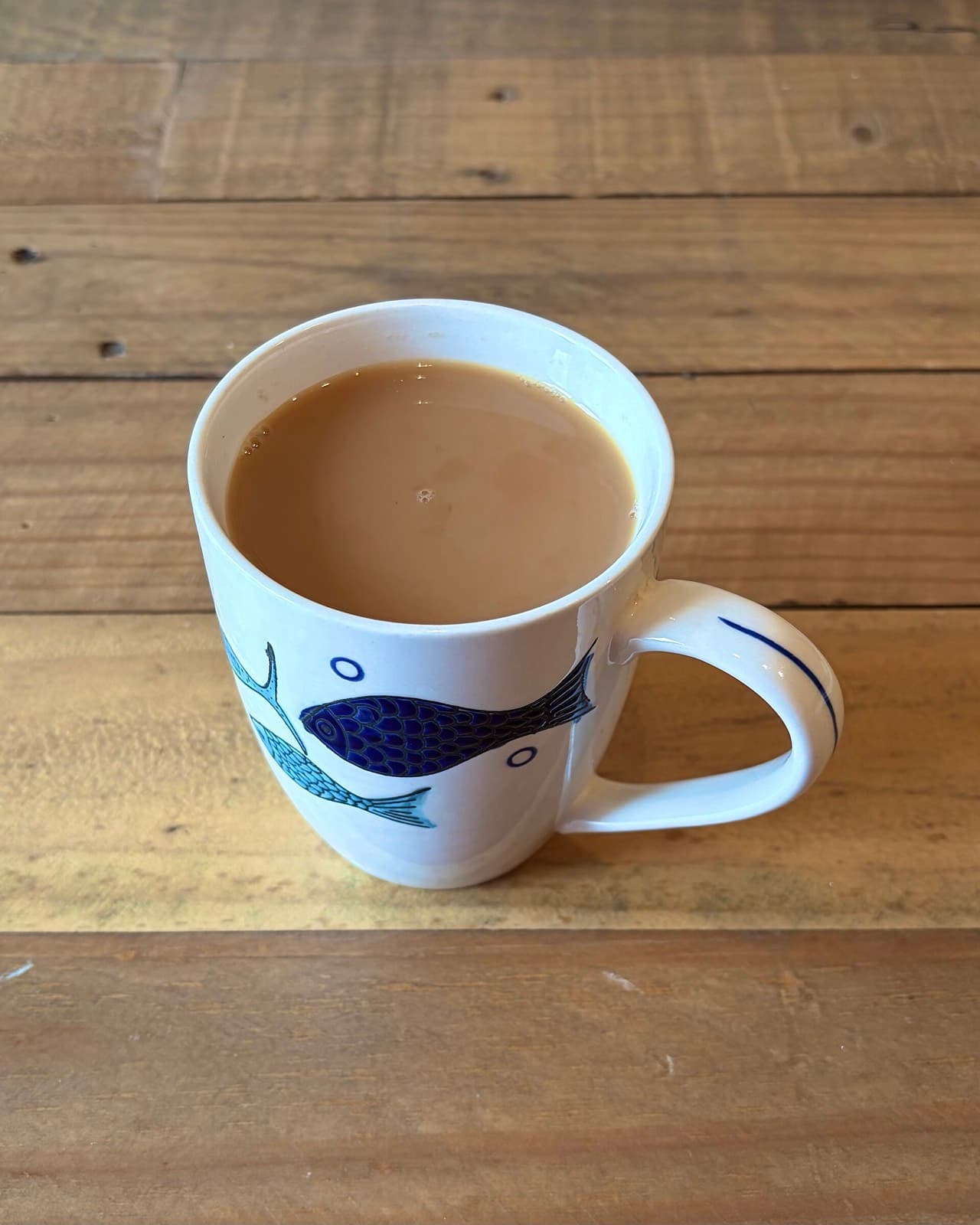
What exactly is in a cup of english breakfast tea, and why does one brand taste toasty and mellow while another is so brisk it almost squeaks? The short answer is that “English Breakfast” is a style, not a recipe. It names a blend of robust black teas chosen to be drunk in the morning, usually with milk, and every company decides for itself which teas go into the box.
That freedom is why the comparison matters more than the definition. Once you know which origins usually sit behind the name — and how they differ from the Assam-heavy Irish blends and the extra-strong Scottish ones — you can read a label and predict the cup before the kettle boils.
Below, the blends are laid side by side first, then broken down into their parts, followed by the history (which is more American than the name suggests), a brewing method that holds up to milk, and the caffeine numbers, each traced to a named source.
Quick answer
- ✓English Breakfast is a style, not a fixed recipe: a blend of strong black teas, most often Assam, Ceylon, and Kenyan, sometimes with Keemun.
- ✓Irish Breakfast leans harder on Assam; Scottish blends are built to be stronger still.
- ✓Brew with water at 90–98°C (194–208°F) for about 3–5 minutes and add milk after the bag comes out.
- ✓As a black tea, it carries roughly 47 mg of caffeine per 8 fl oz on USDA figures, about half the 95 mg USDA data give for the same cup of brewed coffee.
English, Irish, and Scottish breakfast blends side by side
All three “breakfast” teas are blends of black tea built for milk, and none of them has a legal or standard formula. The differences are in emphasis — which origins dominate and how finely the leaf is cut. The table below sets out how reference sources and individual blenders describe them.
| English Breakfast | Irish Breakfast | Scottish Breakfast | |
|---|---|---|---|
| Usual base | Assam, Ceylon, and Kenyan teas predominate; Keemun in some pricier blends | Heavily weighted toward Assam, often with a softer Kenyan tea | Strong Assam and Ceylon, often with Assam CTC (cut-tear-curl) |
| Typical character | Full-bodied, robust, rich | Malty, strong, reddish cup | Darkest and strongest of the three |
| Milk? | Usually | Almost always in Ireland | Built for it |
| Example from one blender | Harney & Sons' English Breakfast is all Chinese black tea | Harney & Sons' Irish Breakfast is 100% Assam | Harney & Sons' Scottish Morn: Assam, Ceylon, and Assam CTC |
Two things stand out. First, one company can make all three styles from quite different teas, so the brand matters as much as the name.
Second, strength comes from cut as well as origin. Irish blends, according to the Wikipedia summary of Irish breakfast tea, tend to use broken leaves that steep faster and release more flavor per leaf, and Scottish blends lean on CTC Assam for the same reason. If you find English breakfast tea too gentle with milk, an Irish or Scottish blend is the logical next step; if you find it too harsh plain, look for one with Ceylon or Keemun in the mix.
Our guide to types of tea shows where these blends fit within black tea as a whole.
Tea & gear for this guide
Amazon picks matched to this guide. As an Amazon Associate, Tea & Peace earns from qualifying purchases.
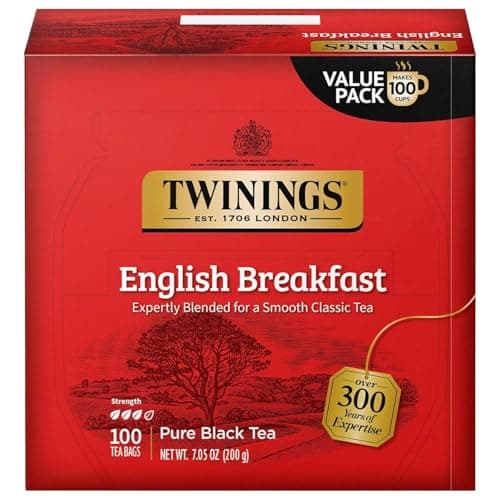
Twinings English Breakfast Black Tea Individually Wrapped Bags
English Breakfast blend, the subject of this page.
Shop Now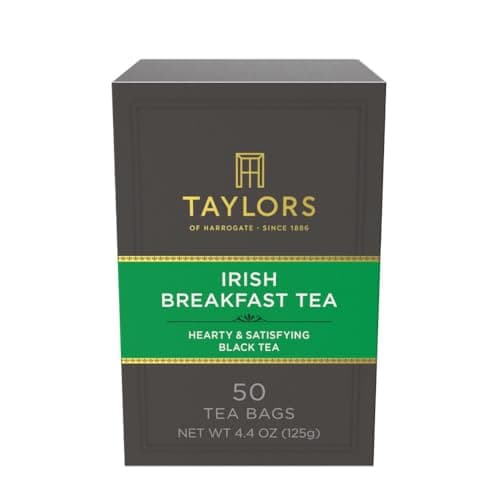
Taylors of Harrogate Irish Breakfast
Irish Breakfast, stronger and maltier, from the side-by-side comparison.
Shop Now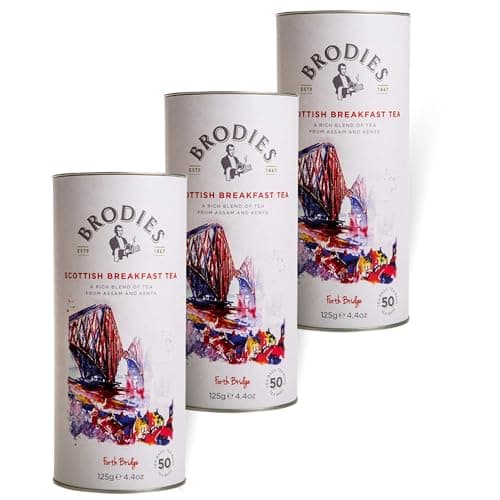
Brodies Estd 1867 Scottish Breakfast Tea 50 Count
Scottish Breakfast, the strongest of the three.
Shop Now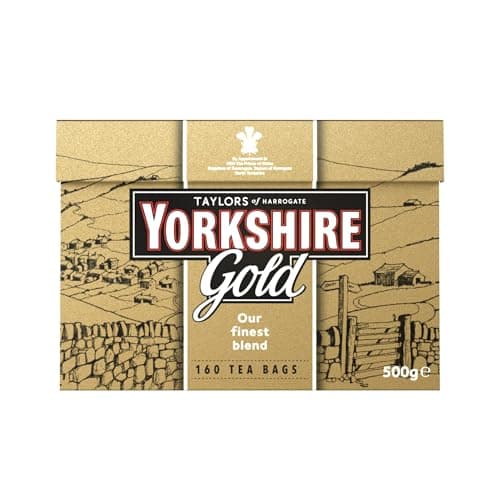
Yorkshire Tea, Gold, Black Tea Bags
A British everyday tea bag of the kind brewed strong with milk.
Shop Now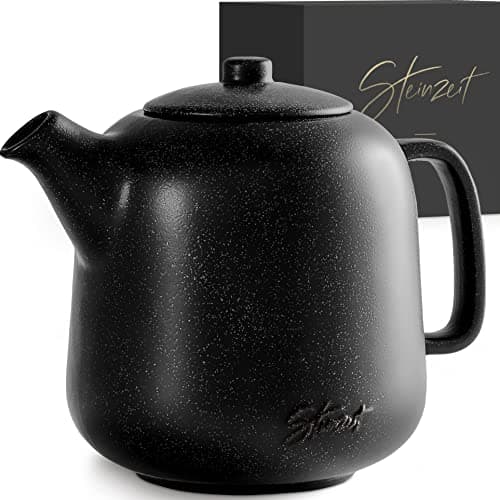
Steinzeit Design Tea Pot (44 oz)
A ceramic teapot holds heat for a full four- or five-minute brew.
Shop Now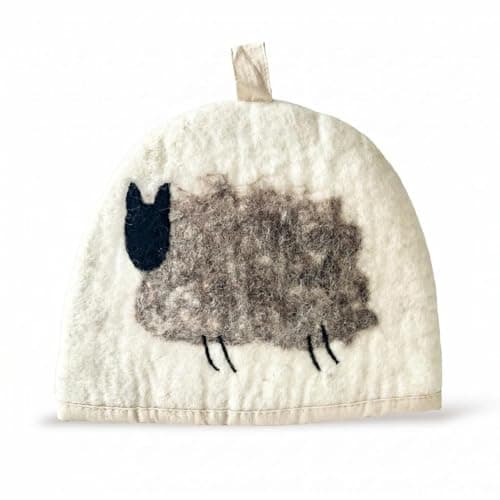
Glaciart One Wool Teapot Cozy Kettle Cover
A tea cozy keeps the pot hot for a second cup.
Shop NowProduct prices and availability are accurate as of November 2, 2026 and are subject to change. Any price and availability information displayed on Amazon at the time of purchase will apply.
The teas inside the box
Most English breakfast blends draw on the same handful of producing regions. Each contributes something different, and the UK Tea & Infusions Association — the industry body for British tea — publishes recommended brewing times for the single-origin versions of these teas:
| Component | What it adds to the blend | UKTIA brewing time | Milk? (UKTIA) |
|---|---|---|---|
| Assam (India) | Malt, weight, dark color | 3–4 min | With or without |
| Ceylon (Sri Lanka) | Brightness and a clean, brisk finish | 3–4 min (Dimbula) | With or without |
| Kenya | Strength and deep color; brews quickly | 3–4 min | With |
| Keemun (China) | Smooth, lower astringency, a hint of toast | not listed | — |
The “what it adds” column is the conventional description of each origin, which our black tea guide expands on; the times and milk recommendations come straight from the UKTIA table.
The proportions are the blender's secret. More Assam pushes the cup toward malt; more Ceylon makes it livelier; more Kenyan leaf gives a strong, dark cup quickly.
Harney & Sons gives a useful outline of how the sources changed: in the early 1800s, English breakfast drinkers would have had black tea from China; later, many British drinkers moved to the brisker teas of India and Ceylon; and after the Second World War, Africa became a major source. It is a manufacturer's account of its own category, but it explains why one English breakfast tea can taste like Keemun and another like Kenya.
Where the name came from: three competing stories
Despite the name, the history of English breakfast tea is a tangle of English, American, and Scottish claims, and none of them has been nailed down with a single original document.
The general custom. Drinking a blend of black teas with breakfast is a long-standing British and Irish habit, and the term “breakfast tea” has been used by sellers since at least the late 18th century.
The New York merchant. One account, credited to a period Journal of Commerce article, dates the blend to 1843 and a New York tea merchant named Richard Davies, an English immigrant who started with a base of Congou and added Pekoe and Pouchong, selling it for 50 cents a pound. Its success is said to have spawned imitators and popularized the name. Researchers who went looking for that original article could not find it, though they did find the same story in an 1876 edition of the Daily Alta California, which cited “a New York commercial journal” and dated the tea to 1844. An 1884 American publication also noted that Bohea teas were known in the US trade as “English Breakfast.”
Queen Victoria at Balmoral. In Britain, the blend's popularity is partly credited to Queen Victoria, who is said to have tasted a breakfast blend at her Scottish residence, Balmoral, in 1892 and taken a supply back to London — after which the generic blend picked up the “English” prefix.
How to brew a cup that stands up to milk
A breakfast blend is designed to be brewed strong enough to survive milk, so the method is simple but the details matter. This sequence follows the UK Tea & Infusions Association's published guidance:
- Use freshly drawn cold water and boil only what you need. The association advises against re-boiling, which reduces dissolved oxygen and flattens the taste.
- Measure one tea bag or one rounded teaspoon of loose tea per cup. For a pot, the basics in how to make tea apply.
- Pour water at 90–98°C (194–208°F) — for black tea, just off the boil is right.
- Steep for the time on the pack, typically 3–4 minutes for Assam, Ceylon, and Kenyan teas. Some blenders go longer: Harney & Sons lists 5 minutes at 212°F for its English Breakfast and 4–5 minutes for its Irish Breakfast.
- Remove the bag or leaves before adding milk. If you brew in a mug, the association says “milk in last is best” and suggests taking the bag out first.
- Add milk and sugar to taste.
Milk is not mandatory. Many people drink a Ceylon-forward breakfast blend black, especially in the afternoon. But milk is common: the UKTIA's own FAQ says 57% of tea drinkers add dairy milk.
If the tea tastes stewed, cut the steep by a minute; if it tastes weak under milk, add more leaf. Our tea steeping times chart lists other teas.
Black, with lemon, or iced?
English breakfast tea is usually pictured with milk, but it is a useful base for other drinks, too, because its blend of strong black teas has enough body to carry ice, citrus, or spice.
With lemon. A slice of lemon works best with Ceylon-forward blends, which are brighter to begin with. Choose lemon or milk, not both.
Iced. Brew it hot at about double strength, then cool it gradually before chilling or pouring over ice. Ohio State University Extension's guidance explains that iced tea turns cloudy when tannins are released as tea is cooled too rapidly, and recommends adding cool water to bring the temperature down gradually before refrigerating or adding ice. Our iced black tea guide covers the full method.
Cold brew. Put the tea in cold water in the refrigerator and leave it for six hours to overnight, the window Ohio State's extension guidance describes for refrigerator brewing. Cold steeping pulls out fewer harsh notes, so a breakfast blend that is brisk when hot turns smooth and malty cold. The method is the same as in our cold brew black tea guide, and the main cold brew tea hub explains ratios and steep times in more depth.
Spiced. A strong breakfast blend makes a good base for homemade chai.
Caffeine compared with Earl Grey, green tea, and coffee
Because it is a straight black tea blend, English breakfast tea has the caffeine of black tea, which is more than green tea and less than brewed coffee. Here is how the figures line up, using government data and one manufacturer's own statement:
| Drink | Caffeine | Source |
|---|---|---|
| Brewed black tea, per 100 g | 20 mg | USDA FoodData Central |
| Brewed black tea, 8 fl oz (237 g) | ≈ 47 mg | calculated from USDA figure and USDA portion weight |
| Black tea, 12 fl oz | 71 mg | FDA |
| Green tea, 12 fl oz | 37 mg | FDA |
| Regular brewed coffee, 12 fl oz | 113–247 mg | FDA |
| Harney & Sons English Breakfast, per cup | 40–60 mg | manufacturer's product page |
Earl Grey is also a black tea, so a cup of each brewed the same way lands in the same range; any difference comes from the leaf and steep time, not the bergamot. For context, the FDA cites 400 mg a day as an amount not generally associated with negative effects for most healthy adults, while noting that sensitivity varies. If you are pregnant, take medication, or have a health condition, ask a clinician rather than relying on a general figure.
Decaf breakfast blends are widely sold, but the FDA notes that decaffeinated teas still contain some caffeine.
Worth knowing
Reference comparison built from manufacturer and industry data, not a tasting: one blender's three breakfast teas use three different bases — Harney & Sons' English Breakfast is all Chinese black tea (5 min at 212°F), its Irish Breakfast is 100% Assam (4–5 min at 212°F), and its Scottish Morn combines Assam, Ceylon, and Assam CTC (5 min). The same three names from a supermarket brand will usually be Assam, Ceylon, and Kenyan blends instead, which is why the label's ingredient line tells you more than the name.
Sources & further reading
- English breakfast tea — Wikipedia (blend components; Davies 1843, Daily Alta California 1876, Balmoral 1892) (read 2026-10-11)
- Irish breakfast tea — Wikipedia (Assam-weighted blends, broken leaf) (read 2026-10-11)
- Harney & Sons — English Breakfast product page (Chinese black tea; history of sourcing; 5 min, 212°F; 40–60 mg per cup) (read 2026-10-11)
- Harney & Sons — Irish Breakfast product page (100% Assam; 4–5 min, 212°F) (read 2026-10-11)
- Harney & Sons — Scottish Morn product page (Assam, Ceylon, Assam CTC; 5 min) (read 2026-10-11)
- UK Tea & Infusions Association — How to make a perfect brew (90–98°C; brewing times by origin; milk in last) (read 2026-10-11)
- UK Tea & Infusions Association — Tea FAQs (57% of tea drinkers add dairy milk) (read 2026-10-11)
- USDA FoodData Central — Beverages, tea, black, brewed (20 mg caffeine per 100 g; 8 fl oz = 237 g) (read 2026-10-11)
- USDA FoodData Central — Beverages, coffee, brewed, prepared with tap water (40 mg caffeine per 100 g; 8 fl oz = 237 g) (read 2026-10-11)
- FDA — Spilling the Beans: How Much Caffeine is Too Much? (per 12 fl oz: black tea 71 mg, green tea 37 mg, coffee 113–247 mg; 400 mg/day) (read 2026-10-11)
- Ohio State University Extension, Live Smart Ohio — Is Sun Tea Safe? (refrigerator brewing six hours to overnight; cloudy iced tea) (read 2026-10-11)
Frequently asked questions
What is English breakfast tea made of?
It is a blend of black teas, most often Assam, Ceylon, and Kenyan, with Keemun included in some more expensive blends. There is no fixed recipe, so each company chooses its own mix; Harney & Sons, for instance, makes its version entirely from Chinese black tea.
What is the difference between English breakfast and Irish breakfast tea?
Irish breakfast blends are usually weighted more heavily toward Assam, giving a maltier, stronger cup that is almost always drunk with milk. English breakfast tends to be more balanced, with Ceylon and Kenyan teas alongside the Assam.
Is English breakfast tea stronger than Earl Grey?
Both are black teas, so their caffeine is similar when brewed the same way. English breakfast often tastes stronger because it is blended for body and milk, whereas Earl Grey's base is frequently lighter so the bergamot can come through.
Do you put milk in English breakfast tea?
Usually, yes — it is blended to take milk. The UK Tea & Infusions Association suggests adding milk last and removing the bag first when brewing in a mug, but drinking it black or with lemon is perfectly fine.
How long should English breakfast tea steep?
About 3–5 minutes. The UK Tea & Infusions Association lists 3–4 minutes for the Assam, Ceylon, and Kenyan teas that make up most blends, while some blenders recommend 5 minutes. Follow the time on the pack, and shorten it if the tea turns bitter.
Why is it called English breakfast tea?
The name reflects its use as a strong morning tea, but its origins are disputed. One account credits an 1843 New York merchant, Richard Davies, while in Britain its popularity is partly credited to Queen Victoria tasting a breakfast blend at Balmoral in 1892.
Can you make iced tea with English breakfast tea?
Yes. Brew it hot at double strength and cool it gradually, or cold brew it in the fridge for six hours to overnight. The blend's body keeps it from tasting watery over ice.